Daiichi Sankyo Strengthens Its Leadership in Lung Cancer ADC Therapeutics with Proprietary DXd Platform
Daiichi-Sankyo
Pharmaceutical R&D Developer
Preface
Recently, the 2023 World Conference on Lung Cancer (WCLC) has successfully concluded. At the conference, Daiichi Sankyo showcased the latest clinical advancements of its core ADC products, which are developed based on the proprietary DXd platform, for the treatment of non-small cell lung cancer (NSCLC, accounting for about 80%-85% of lung cancer cases, including adenocarcinoma and squamous cell carcinoma) and small cell lung cancer (SCLC).
So, what surprises has Daiichi-Sankyo brought in the field of lung cancer?
01
HER3-DXd: Break the Undruggable Spell
The human epidermal growth factor receptor family is a small group consisting of four members: EGFR (ERBB1/HER1), HER2 (ERBB2), HER3 (ERBB3), and HER4 (ERBB4). These four members are highly homologous and all are transmembrane proteins. They activate downstream signaling pathways by forming homodimers or heterodimers with themselves or other members of the family, thereby regulating cell growth, division, and repair. They are also closely related to the occurrence and development of many tumors.
Among which EGFR、HER2 has become a star target in the field of cancer treatment, with multiple drugs approved for marketing.Compared with them, HER3Much quieter.
From 1989Year HER3Since the target was discovered, 30Years have passed, and there is still no treatment available for HThe targeted drug for HER3 has been approved for marketing. The main reason is that the activity of the HER3 tyrosine kinase domain is extremely low, leading researchers to once believe that HER3 entirely depends on the activity of its family members and does not have significant functions of its own. Therefore, the HER3 target has long been overlooked in cancer treatment.
As research deepens, scientists have discoveredAlthoughHER3 alone does not have carcinogenic effects when overexpressed, but when itWith neuregulin (NRG) After binding with the ligand, it will interact with otherIn HER2, as a representative receptor tyrosine kinase (RTK), forms heterodimers, subsequently leading to the activation of the PI3K/AKT and MEK/MAPK signaling pathways, promoting tumorigenesis and metastasis.
Moreover, HER3 is highly expressed in various types of tumors, such asColorectal cancer, gastric cancer, squamous cell carcinoma of the head and neck, breast cancer, lung cancer, etc., among which inEven in NSCLCReach 83% is quite high. Moreover, HER3Has also been proven to be associated with EGFR、HRelated to the resistance mechanism of ER2 treatment. Therefore,TargetedHER3 is expected to become a new treatment for advanced and metastatic NSCLC, etc.
At the beginning of the research and development, due to HER3 has low intrinsic kinase activity, cannot form homodimers, and cannot be made into a small molecule kinase inhibitor., therefore, the pharmaceutical companies that entered the market earlier mostly focused on monoclonal antibodies. However, around HThe development or combination therapy of ER3 monoclonal antibody has largely ended in failure, involving giant pharmaceutical companies such as Roche, Amgen, and Daiichi Sankyo.
HER3The target once fell into质疑 about "whether it can become a drug". After a period of silence, bispecific antibodies, ADC(Antibody-Drug Conjugates) Technology for HER3Target research and development has brought new hope, especially ADC。Compared with monoclonal antibodies, ADC induces tumor cell death by promoting receptor endocytosis and degradation.No need to rely entirelyHER3 Induces Cancer Cell Death, this is AThe Advantages of DC.
Currently, Daiichi-Sankyo's HER3 ADC ProductsHER3-DXdPromising clinical outcomes have been achieved in lung cancer.HER3-DXdAdopted the previously terminated HER3 Monoclonal Antibody Patritumab (U3-1287),Combine it with toxin Dxd (DS-8201The exact same toxin) is combined via a cleavable linker to form ADC Product HER3-DXd (U3-1402)),DAR8.
At this year's World Lung Cancer Conference (WCLC), Daiichi Sankyo Company Limited presented for the first time the results of HER3-DXd in treating advanced EGFR-mutated NSCLC patients who had previously received EGFR TKI and platinum-based chemotherapy (PBC). In the phase II clinical study named HERTHENA-Lung01,At the median follow-up timeWithin 18.9 (range: 14.9-27.5) months, the objective response rate (ORR) confirmed by BICR in 225 patients treated with HER3-DXd (5.6 mg/kg)For29.8%, medianProgression-Free Survival (mPFS) was 5.5 months, with a preliminary median overall survival (mOS) of 11.9 months.
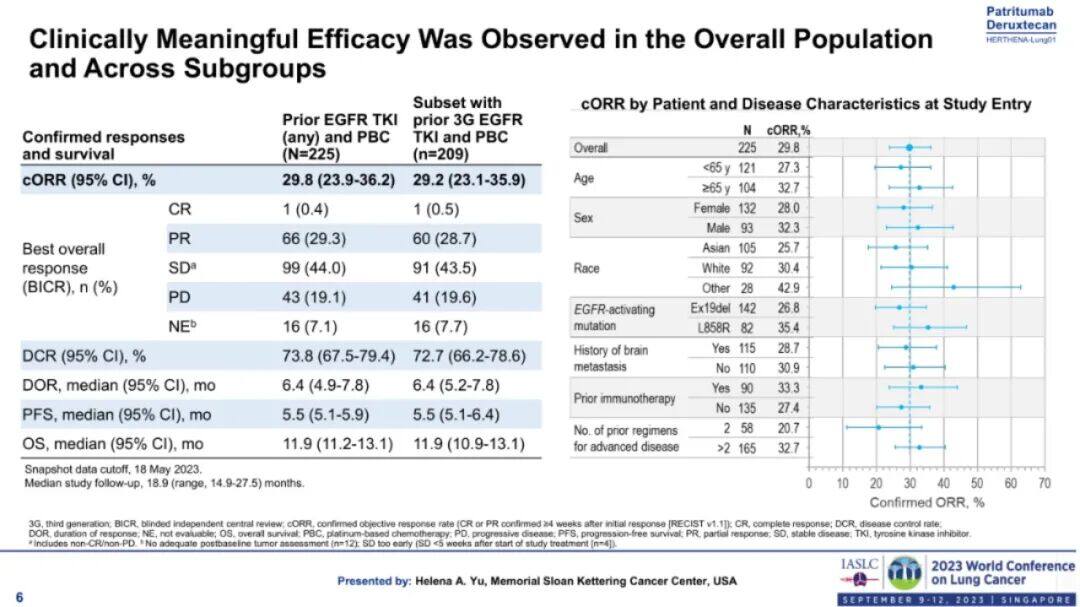
HER3-DXd demonstrated clinically meaningful efficacy in the overall population and across subgroups.(Source: 2023WCLC)
In patients with brain metastases (n=30, without receiving radiotherapy) in,The results showed that inIn BICR-confirmed central nervous system (CNS) treatment-responsive patients, the ORR was 33.3% (95% CI: 17.3–52.8%); among these patients,HaveNine patients achieved complete intracranial remission.(CR),1 case achieved partial intracranial relief(PR),13 cases of stable disease(SD).ObservedCNS Duration of Response (DOR)For8.4 months (95% CI: 5.8–9.2).
From the above clinical results,For previously treatedFor EGFR-mutated NSCLC patients, HER3-DXd is a promising therapy.The Future May Reshape Advanced NSCLC Treatment Landscape.
02
T-DXd(DS-8201):
Building New Barriers and Heights in the Field of Lung Cancer
T-DXdIs the first A launched by Daiichi-Sankyo.DC drugs, withExcellent efficacy,T-DXd has changed the treatment landscape in the field of breast cancer.FromApproved by the FDA in 2019Listed,DS-8201 has been approved for five indications, involving later-line treatment for HER2-positive advanced breast cancer, second-line and subsequent treatment for HER2-positive advanced gastric cancer, second-line treatment for HER2-positive advanced breast cancer, and HER2-low breast cancer.And in 2In August 2022, T-DXd made history again as the FDA granted accelerated approval for T-DXd in the treatment of HER2-mutated advanced NSCLC. This is also the first ADC drug targeting HER2 for NSCLC to be approved for marketing.
In 2023 WCLC: Results of T-DXd in Pre-Treated HER2-Mutated Metastatic NSCLC Patients Announced. This study is named DESTINY-Lung02.IIn the Phase I clinical study, subjects were divided into two groups, with 102 cases randomly assigned to the T-DXd 5.4mg/kg group and 50 cases to the other group.Randomly assigned toT-DXd 6.4mg/kg Group.The median follow-up times were11.5 months and 11.8 months.
ThroughThe BICR-confirmed ORR was 49.0% (95% CI, 39.0%-59.1%) and 56.0% (95% CI, 41.3%-70.0%), respectively, with a median DOR of 16.8 months (95% CI, 6.4-NE) and NE (not evaluable, 95% CI, 8.3-NE), and a median PFS ofFor9.9 months (95% CI, 7.4-NE) and 15.4 months (95% CI, 8.3-NE).
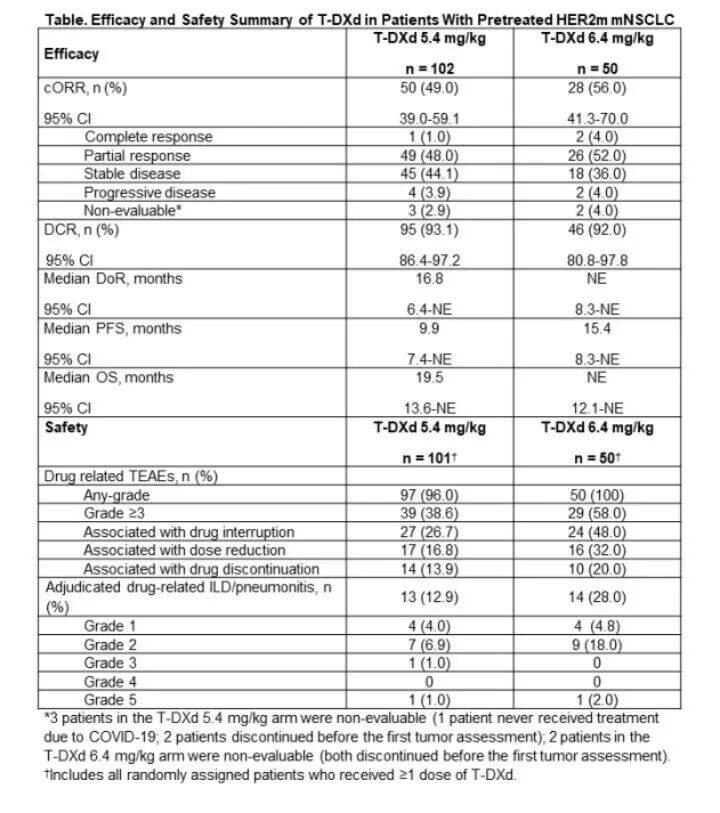
DESTINY-Lung02 Phase II Clinical Study Updated Data (Source: WCLC Official Website)
From the above results, it can be seen that T-DXd 5.4 and 6.4 mg/kg in HER2MutationDemonstrated robust and durable efficacy as well as acceptable safety in patients with metastatic NSCLC.
03
Dato-DXd(DS-1062):
Breakthrough in Popular Targets
In addition to the classic popular target HER2,TROP2 Gradually BecomesForADC Product LayoutThe second hotspot.TROP2 is highly expressed in a variety of solid tumors, including breastAdenocarcinoma, urothelial carcinoma, cervical cancer, and endometrial cancer, etc., have overexpression rates as high asMore than 80% in NSCLC, gastric cancer, ovarian cancer, etc.The overexpression rate also reachedMore than 55%. Therefore, TROP2 ADC is considered one of the ADC drugs with very promising market prospects.
According to Frost & Sullivan data, it is expected that byBy 2030, the global market size for TROP2 ADC is expected to reach $25.9 billion.And currently, there are onlyTrodelvy, a TROP2 ADC, has been approved for marketing.Daiichi Sankyo, of course, would not pass up this opportunity.
Daiichi Sankyo's Dato-DXdIs a new type of TROP2 ADCProduct. At this year's WAt CLC, Daiichi Sankyo Company Limited announced Dato-DXd inAdvanced without driver gene mutation/Clinical data in patients with metastatic NSCLC, in this study named TROPION-Lung04In the Phase Ib clinical study,Patients were enrolled respectivelyAcceptDato-DXd (4 mg/kg, Cohort 1/3; 6 mg/kg, Cohort 2/4) + Durvalumab (PD-L1 inhibitor, 1120 mg, all cohorts) + 4 cycles of Carboplatin (AUC 5, Cohort 3/4).
The results showed,In treatment-naive patients (1L), the ORR was 50.0% and the DCR was 92.9% in Cohort 2 (doublet therapy), while the ORR was 76.9% and the DCR was 92.3% in Cohort 4 (triplet therapy); In the overall population (1L/2L+), the ORR was 47.4% in Cohort 2 and 71.4% in Cohort 4. The ORR benefit of the triplet regimen was generally higher than that of the doublet regimen, and responses were observed across all levels of PD-L1 expression.
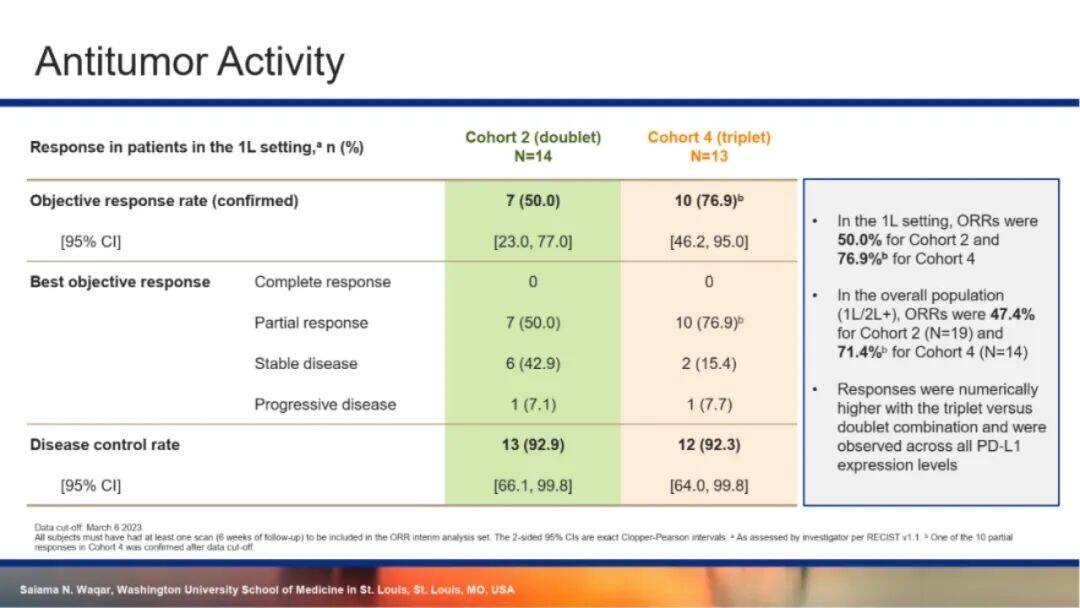
Tumor Response Results for Cohort 2 and Cohort 4 (Source: 2023 WCLC)
In the cohortIn cohorts 2 and 4, no new safety signals were observed. The most common adverse reactions includedIncluding stomatitis, alopecia, and nausea. Grade ≥3 in the triplet regimen.The incidence of adverse reactions was higher in the triple combination group, mainly hematological adverse events.
Another noteworthy point is that, compared with T-DXd has made most companies admit that they cannot surpass it and give up catching up.In ChinaThere isMany companies have laid outTROP2 ADC。According to Shanghai Securities News, currently in ChinaNearlyTen ADC drugs targeting TROP2 are under development, with Bio-Thera, Hengrui Medicine, and Dox Biotech among those involved.
04
I-DXd(DS-7300):
A for Small Cell Lung CancerDC
B7-H3 is a transmembrane immunomodulatory protein that is overexpressed in several tumor types, including SCLC.InSIn CLC patients, 65% of patients exhibit B7-H3 overexpression, which is associated with poor disease prognosis.Daiichi Sankyo's I-DXd is a novel ADC drug targeting B7-H3.WillB7-H3 IgG1 Monoclonal Antibody Through StabilizationConnector and Potent TopoisomeraseI inhibitor-drug conjugates, thereby enhancing targeted tumor cell death and reducing systemic drug exposure.
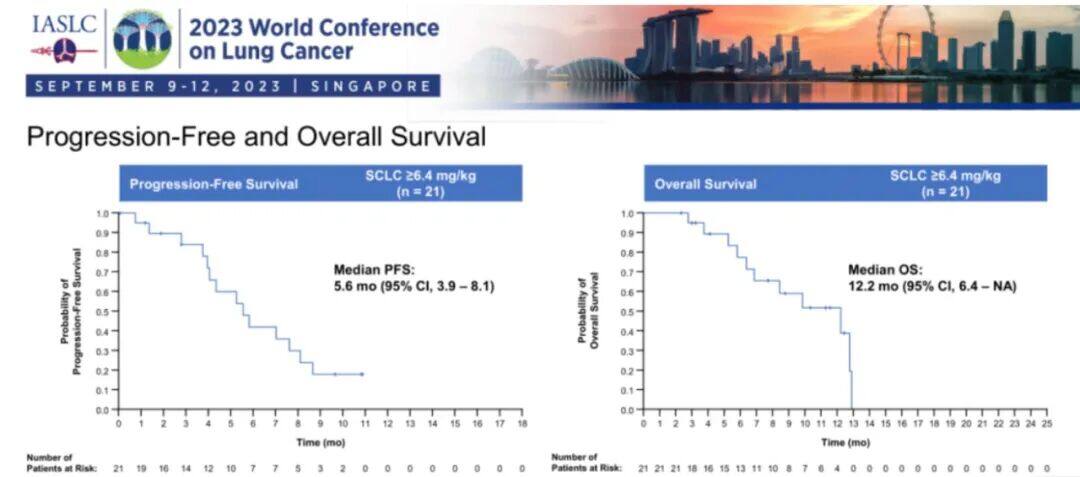
At this year's WCLC, I-DXd treatmentAdvanced MetastaticI/II Phase Clinical Trial Results for SCLC Patients Announced:I-DXd TreatmentORR was 52.4%,mPFS was 5.6 months,mOS was 12.2 months. This preliminary resultDisplayThe Clinical Potential of I-DXd in the Treatment of SCLC.
In conclusion
Lung cancer is one of the major types of cancer globally, with a large patient population and a significant market size. The oncology field has always had ""The saying 'Those who get lung cancer get the world' in ADCEqually applicable in the field. Daiichi Sankyo leverages T-DXd's advantages and commercial achievements have established its reputation as a global leader in ADC innovation.
WithHER3-DXd、Dato-DXd、I-DXdResearch progress continues to advance, Daiichi Sankyo to expand from breast cancer into lung cancer comprehensively, continuously contributing to the fight against cancer in its own way. And this might just be the beginning; as technology continues to advance in the future, Daiichi-Sankyo may keep expanding and further enhancing AThe Indications and Imaginative Space of DC.