

Takeda Bets $580M on AcuraStem’s Novel PIKfyve-Targeting ASO Therapy for ALS
AcuraStem
Developer of New Drugs for the Treatment of Nervous System Diseases
▲October 21, General Cell Drug Development Forum · Free for a limited timeRegistration Open
September 28, 2023 / eMedClub News /--Recently,AcuraStem Incorporated Announces $580 Million Licensing Agreement with Takeda to Co-develop and Commercialize the Company’sPIKfyve ProgramAccording to the terms of the agreement, Takeda will obtain the global exclusive license for AcuraStem's PIKfyve program. AcuraStem will be responsible for providing assistance.Advance AS-202 into Clinical TrialsAnd characterize potential backup ASO (antisense oligonucleotide) therapies, Takeda is responsible for all other development activities, including clinical development, regulatory affairs, and global commercialization. If all future clinical, regulatory, and commercial milestones are achieved within the term of the agreement, AcuraStem can receive upfront and milestone payments totaling up to approximately $580 million.
PIKfyve is a new therapeutic target for ALS. In February this year, Justin Ichida, a stem cell scientist at the University of Southern California, published inCell The study elucidated the mechanism of PIKfyve - inhibiting PIKfyve kinase activates aNon-traditional protein clearance mechanisms, involving the exocytosis of proteins prone to aggregation. Research indicates that this mechanism applies to nearly all forms of ALS tested, highlighting the potential of PIKfyve inhibition across various disease models.
ALS is a complex neurodegenerative disease, divided into sporadic (sALS) and familial (fALS) types,Sporadic ALS refers to patients who do not carry known gene mutations that cause ALS, accounting for more than 90%.. Due to the unclear pathogenesis, there are currently few disease-modifying treatments under development for sporadic ALS. In May 2021, AcuraStem Incorporated obtained approval from the United States.Ministry of National DefenseThe ALSRP Therapeutic Development Award from the Congressionally Directed Medical Research Programs (CDMRP) granted $1 million due to the significant potential of the drug candidate AS-202 in treating sporadic ALS.

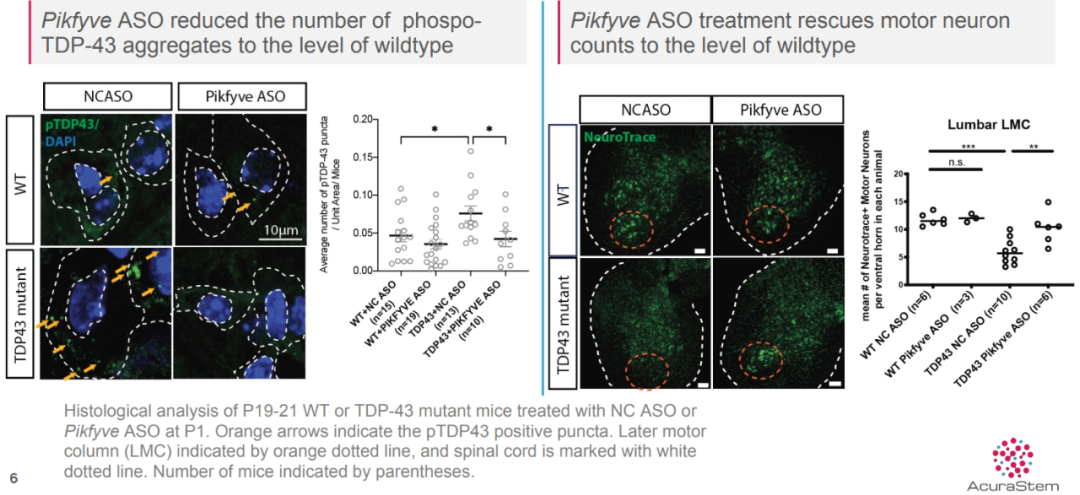
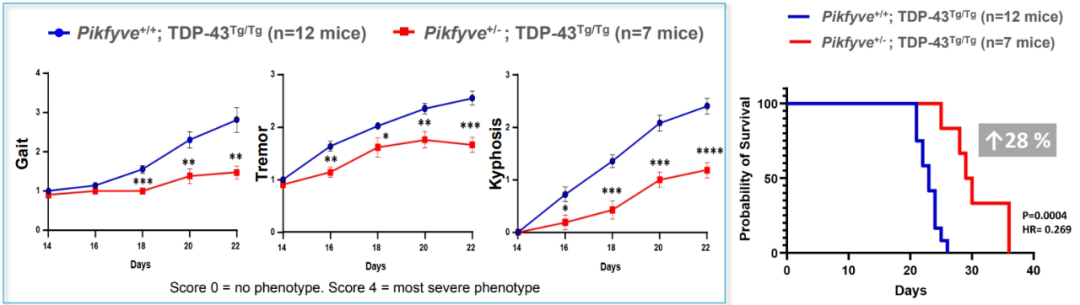
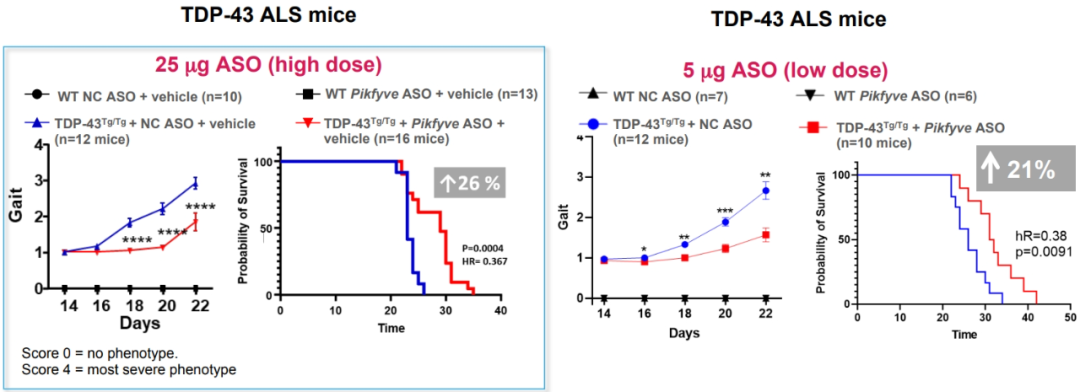
AS-202, screened from the iNeuroRx® technology platform, is a treatment for ALS.Innovative ASO Therapy, which can reduce the levels of the lipid kinase PIKfyve, while targeting the pathological accumulation of ALS-related protein TDP-43. This approach not only addresses the aggregation issue of TDP-43 but also improves its function, representing aUnique Dual Mechanism of ActionIt has the potential to address unmet needs in ALS and other TDP-43 proteinopathies, such as frontotemporal dementia (FTD). This novel therapeutic mechanism was initially discovered by Dr. Justin Ichida, co-founder of AcuraStem, in patient-derived disease models (2018, Shi Y et al., Nature Medicine) and was exclusively licensed to AcuraStem by the University of Southern California’s innovation center. It was further developed on AcuraStem's iNeuroRx® disease modeling platform (February 2023, Hung S-T et al., Cell). Researchers at AcuraStem have further demonstrated that ASO-mediated PIKfyve inhibition can restore motor function, reduce neurodegeneration, and improve survival across multiple in vivo models of ALS and FTD.
Focusing on therapies targeting PIKfyve, AcuraStem adopts an innovative treatment strategy that emphasizes addressing neurodegeneration by clearing toxic protein aggregates and preserving healthy neuronal function, while Verge Genomics appropriately restores neuron function in ALS patients through PIKfyve inhibitors.Endosome/Lysosome Function, improve intracellular transport, and ultimately achieve the effect of treating neurodegeneration.Same Target, Different Approaches, but they have all gained recognition from industry giants. On September 9, Verge Genomics announced a multi-target collaboration with Alexion, AstraZeneca's rare disease company, to identify novel drug targets for rare neurodegenerative and neuromuscular diseases, with potential milestones reaching up to $840 million.Milestone payment. AcuraStem's initial focus was also on developing small molecules targeting PIKfyve, but during head-to-head testing in vivo, it was found that the duration of small molecule inhibition was short, andASO can suppress it for a month, and it has been decided to prioritize the development of ASO therapy.
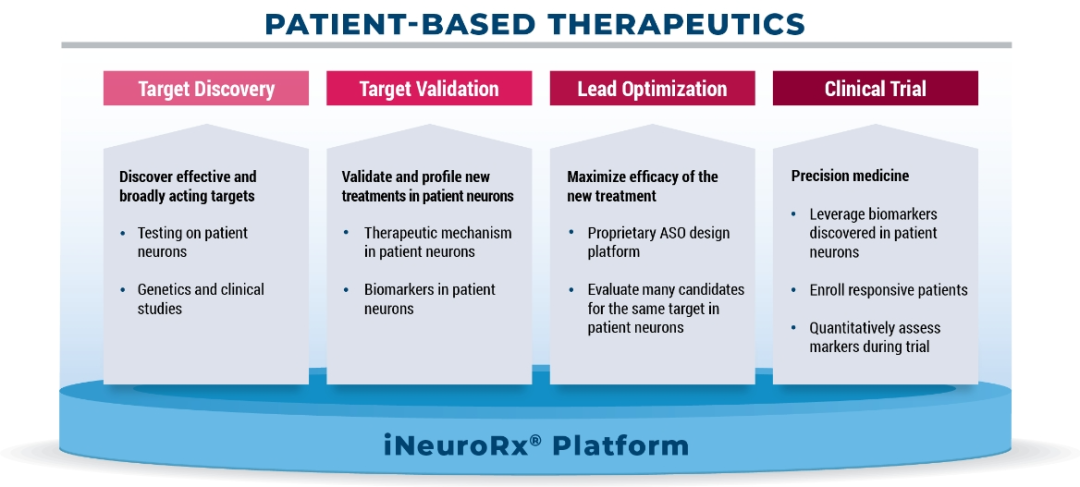
AcuraStem is generating accurate reflections of diseases (ALS, FTD, and CMT).Individual Patient ModelThe inventor and leader. The iNeuroRx® technology platform, established by a world-class ASO team, falls under "Patient-Based Therapeutics" and utilizes patient samples through cell reprogramming.Patient-Specific Model, accurately reflecting the key aspects of disease generation in patients' DNA, and then utilizing advanced bioinformatics technology and machine learning to quantify disease characteristics in the model, while observing the effects of new drug targets across different patient types. This approach is fundamentally different from animal models that implant pathology into mice. It not only aids in the development of target-engagement biomarkers and guides clinical medication but also provides a standardized reference for more targeted trials with a higher likelihood of success.
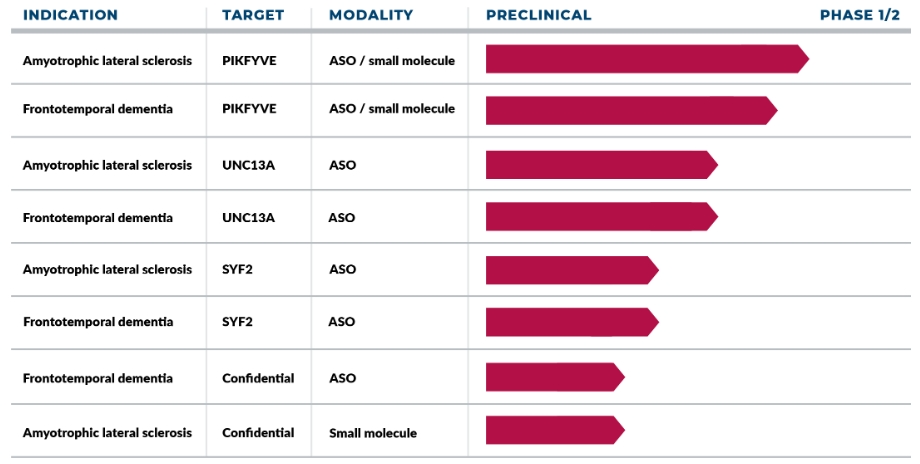
AcuraStem was founded in 2016 by Sam Alworth and Dr. Justin Ichida,Founded by Dr. Paul August and Dr. Qing Liu, AcuraStem is committed to the continuous improvement of its patient-based iNeuroRx® technology platform.Innovative, effective, and widely applicable(Treatment methods for various indications of neurodegenerative diseases) and quickly bring treatment programs to patients.For ALS and FTD, AcuraStem currently holds the SYF2 and UNC13A projects.The SYF2 pathway is a pre-mRNA splicing factor in NTC. Studies have shown that inhibiting SYF2 can enhance the TDP-43 protein signal in neuronal nuclei, achieving the effect of reducing TDP-43 deposition within cells.This pathology covers approximately 97% of ALS, 45% of FTD, and 57% of Alzheimer's disease cases.By reducing SYF2 levels and removing toxic aggregates, TDP-43 pathology was reversed, and its function was improved in patient models on AcuraStem's iNeuroRx® platform and in TDP-43 mouse models.Notably, SYF2 inhibition may reduce TDP-43 aggregation by increasing cytoplasmic RNA levels.Currently, AcuraStem is actively working to advance these programs from successful preclinical stages to clinical trials, with the ultimate goal of bringing these promising therapies to patients.
References:
Exciting Live Broadcast Preview
Press and hold to scan the QR code and participate immediately ↓
Recommendation
1
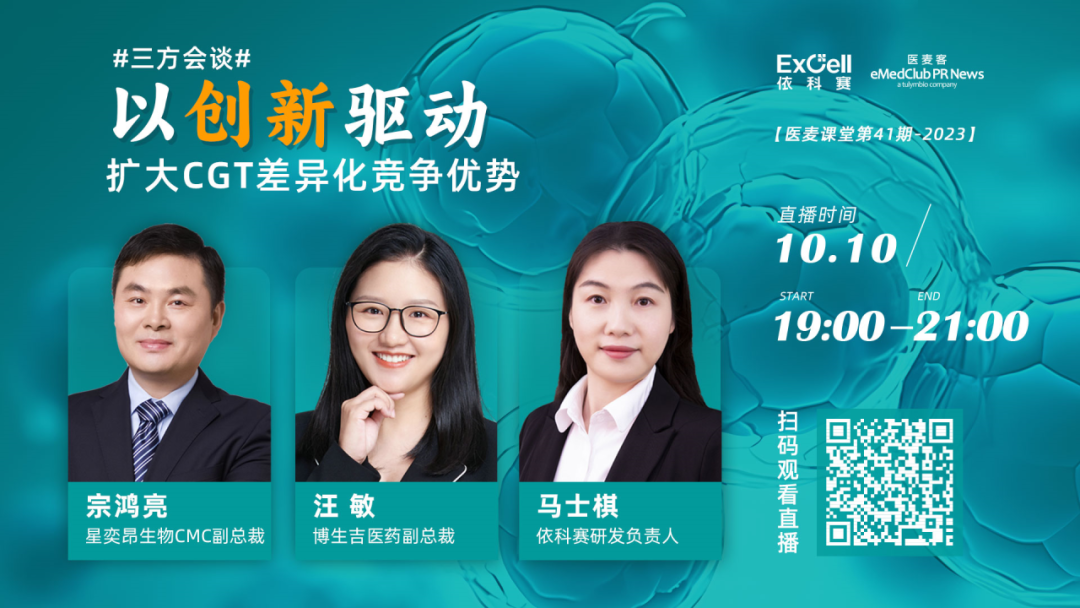
October 10th (Tuesday) 19:00-21:00
Expanding CGT's Differentiated Competitive Advantage through Innovation-Driven Strategies
Recommendation
2
October 18th (Wednesday) 14:00-15:30
The Dormant mRNA: Quality is the Key to the Kingdom



DianDian "Share”、“Like" and "In Progress", give me a little recharge~"