

Novo Nordisk's RNAi Therapy Nedosiran Receives FDA Approval for Primary Hyperoxaluria Type 1
Novo Nordisk
Insulin Developer and Manufacturer

On September 29, the FDA's official website showed that Novo Nordisk's RNAi therapy nedosiran was approved for marketing to treatType 1 PrimaryHyperoxaluria (PH1)。

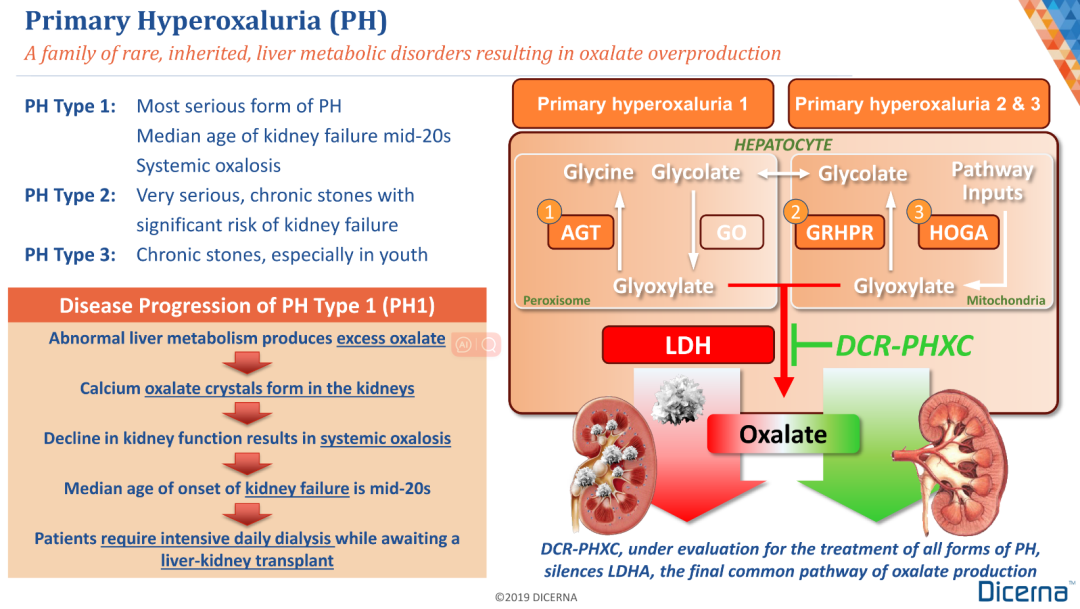
Primary Hyperoxaluria (PH) is a rare, life-threatening genetic disorder. There are three known subtypes of PH (PH1, PH2, and PH3), each caused by different gene mutations. These mutations lead to the deficiency of corresponding enzymes, resulting in excessive oxalate production. Oxalate is the end product of metabolism, and its overproduction and accumulation can cause recurrent kidney stones, nephrocalcinosis, and chronic kidney disease, which may progress to end-stage renal disease requiring intensive dialysis. PatientsImpaired kidney function ultimately leads to the accumulation of oxalate in a wide range of organs, including the skin, bones, eyes, and heart.
Combined liver-kidney transplantation is a treatment option for PH1 or PH2. However, liver-kidney transplantation is invasive, donor availability is limited, and patients need to take immunosuppressants for life to prevent organ rejection.Rejection reaction. Genetic studies show that approximately 8,500 people in the U.S. are affected by PH, and researchers estimate that over 80% of patients remain undiagnosed. Currently, there is only one approved treatment available.Only for the treatment of PH1 patients.
Nedosiran is developed by Dicerna using its proprietary GalXC™ RNAi technology platform.RNAI TherapyNedosiran is designed to inhibit lactate dehydrogenase A (LDHA), an enzyme that catalyzes the final step in the oxalate production pathway.2November 18, 2021, Novo NordiskAnnounced a $3.3 Billion AcquisitionDicerna, obtained the drug.
In November 2021, Dicerna Pharmaceuticals announced nedResults of the pivotal Phase II PHYOX™2 clinical trial for osiran. Patients treated with nedosiranPatients with Primary Hyperoxaluria (PH)Including PH1 and PH2 types, the difference in urinary oxalate (Uox) excretion from baseline compared to the placebo group was statistically significant (p<0.0001). Additionally, compared with placebo, a significantly higher proportion of patients receiving nedosiran achieved and maintained normal or near-normal Uox levels at two or more consecutive follow-ups after Day 90 (p=0.0025).
A post-hoc subgroup analysis of subjects with higher baseline Uox levels (at least one value ≥1.6 mmol) showed a significant increase in Uox reduction among subjects treated with nedosiran (p=0.0186). InPHYOX™2These robust and sustained reductions in Uox levels observed in the China cohort were primarily driven by the PH1 subgroup.nedosiranThe reaction-driven, and according to post-hoc analysis, this subgroup met the primary endpoint and key secondary endpoints. A consistent reduction in Uox was not observed in PH2 subjects.
Copyright © 2023 PHARMCUBE. All Rights Reserved.
Welcome to forward, share, and reasonably cite. When citing, please clearly indicate the source of the article.For reprint, please leave a message or send a message to the WeChat Official Account backend, and indicate the name and ID of the official account.
Disclaimer: The information in this WeChat article is for general reference only and should not be directly used as decision-making content. PharmaCube assumes no responsibility for any loss incurred by any party due to the use of the content herein.

PharmaCube Reader Survey Questionnaire
Thank you for your companionship and we look forward to your feedback.
Scan the QR code to provide valuable suggestions