

Middle Eastern Capital Pours into China's Healthcare Sector: Aggressive Secondary Market Buys and Strategic Primary Market Investments
Huadong Medicine
Large Comprehensive Pharmaceutical Product Developer
Oricell Therapeutics
Developer of Tumor Immunocyte Products
Dongbao Pharma
Pharmaceutical R&D, Manufacturing, and Sales Company
As China's overall economic scale expands and its economy has maintained steady growth over the years, global capital has begun to increase its investment in China, with Middle Eastern capital being no exception. Moreover, the scope of investment has expanded from traditional sectors like energy and manufacturing to emerging industries such as biomedicine.
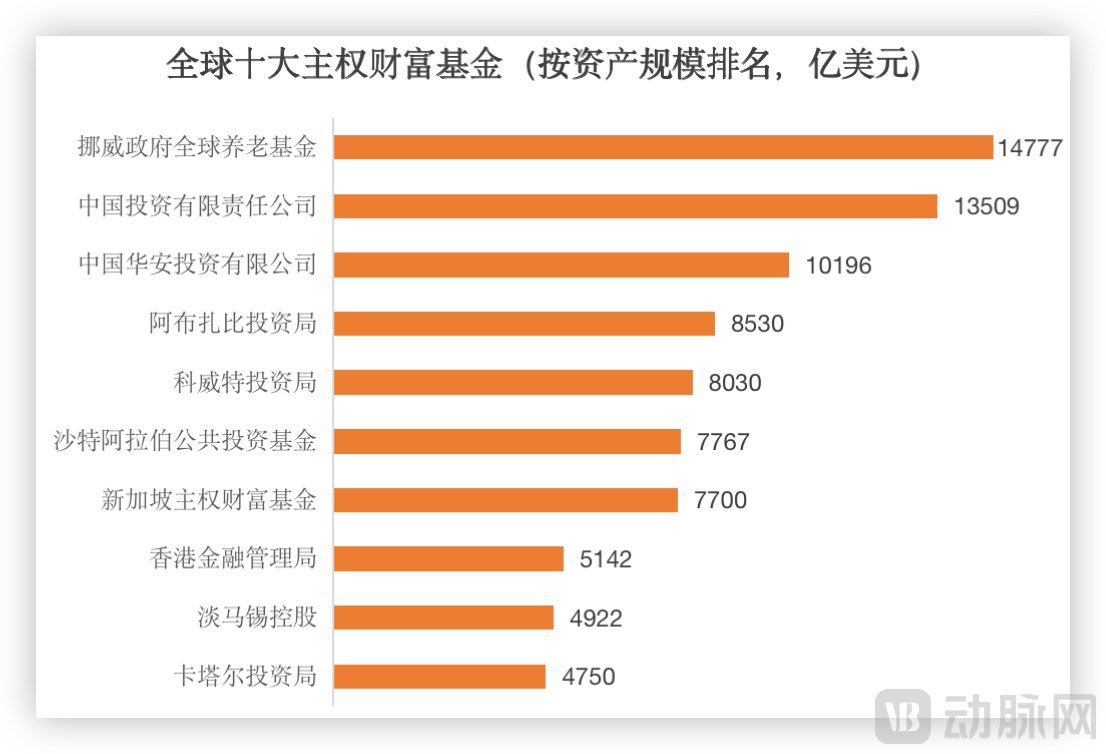
Asset Size of Middle Eastern Sovereign Wealth Funds, Data from SWFI
Among the world's top ten sovereign wealth funds, four are from the Middle East. Since the beginning of this year, the Abu Dhabi Investment Authority and the second-largest Kuwait Investment Authority have been leveraging their "financial prowess" to continuously sweep up assets in China’s secondary market. Meanwhile, in the primary market, Middle Eastern capital is also stepping out from behind the scenes into the spotlight. In the future, Middle Eastern capital may become a force to be reckoned with in China's healthcare and large health industry.
Middle Eastern capital is betting on China with real money, and allocating Chinese assets is becoming a common strategy for Middle Eastern capital.
Recently, according to a report by the South China Morning Post, Saeed Al-Shehri, Deputy Minister of Investment of Saudi Arabia, revealed that the Ministry of Investment of Saudi Arabia (MISA) intends to open an office in the Greater Bay Area to expand its operations in southern China. Just a few days earlier, in early September, Mubadala Investment Company, the second-largest sovereign wealth fund of the UAE after Abu Dhabi Investment Authority, established an office in Beijing.
Previously, the Kuwait Investment Authority established offices in Beijing and Shanghai in 2011 and 2018 respectively. In 2021, the Abu Dhabi Investment Office opened an office in Beijing. At the end of 2021, the Saudi Public Investment Fund submitted a QFII (Qualified Foreign Institutional Investor) application to the China Securities Regulatory Commission and planned to open an office in China.
Opening an office is just the beginning, as the Abu Dhabi Investment Authority and the Kuwait Investment Authority continue to "buy, buy, buy" in the secondary market.
According to Choice data, as of the first half of this year, the two largest sovereign funds in the Middle East, Abu Dhabi Investment Authority and Kuwait Investment Authority, have appeared in the top 10 list of circulating shareholders of 62 listed companies, with a combined stock market value exceeding 13.7 billion yuan. In addition to continuing to strengthen their layout in the upstream and downstream industrial chains of petrochemical energy, Middle Eastern capital has also accelerated its pace in emerging sectors such as medical pharmaceuticals.
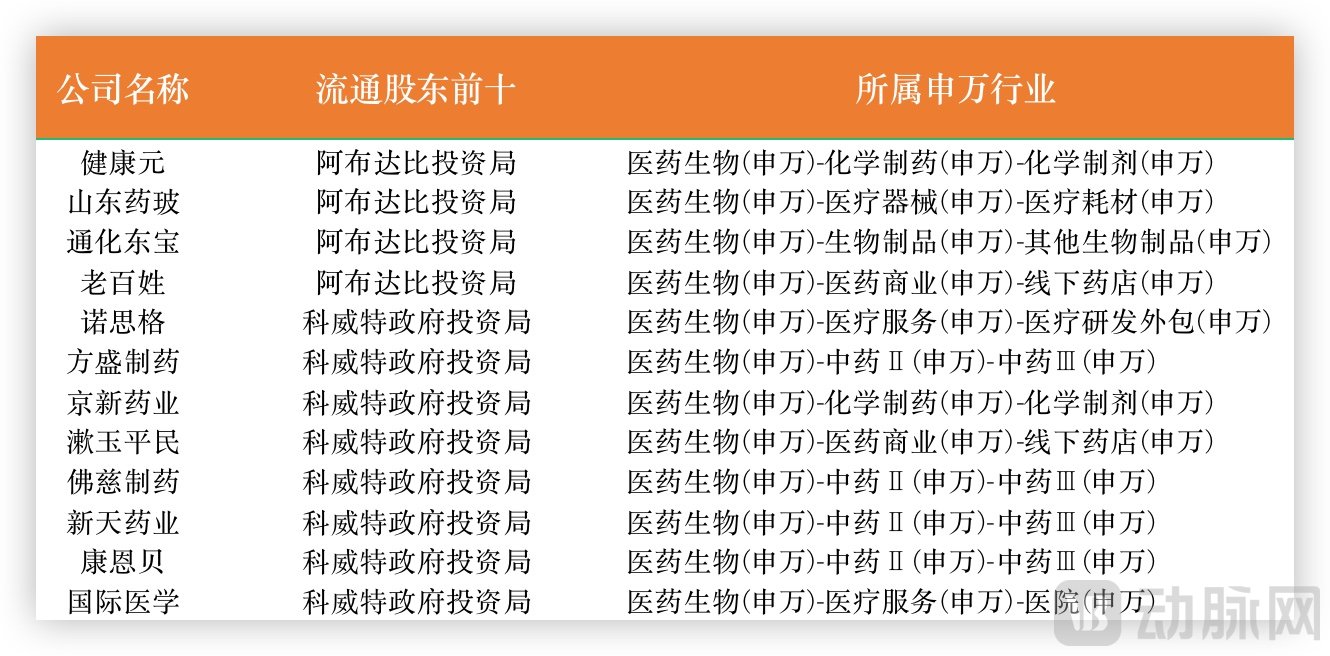
List of Medical Enterprises with Middle Eastern Capital in the Top Ten Circulating Shareholders, Data from Choice
The Kuwait Investment Authority began purchasing stocks of companies such as Conba, Fangsheng Pharmaceutical, Jingxin Pharmaceutical, and China Resources Sanjiu in the fourth quarter of last year, becoming one of the top ten circulating shareholders in several companies. The Abu Dhabi Investment Authority also entered the top ten list of circulating shareholders in companies like Tonghua Dongbao Pharmaceutical Co., Ltd., Laobaixing, and Health Yuan.
According to the half-year report data, Conba's revenue increased by 22.19% year-on-year during the reporting period; net profit attributable to shareholders increased by 143.01% year-on-year. Meanwhile, all major business segments grew over 30% year-on-year. During the reporting period, the net profit attributable to shareholders of Fangsheng Pharmaceutical increased by 68.86% year-on-year, and basic earnings per share increased by 66.67% year-on-year.
From the past investment experiences of Middle Eastern capital, financial returns are only part of the investment considerations. These sovereign funds place more emphasis on long-term investment value, such as the development prospects of the invested industry and the operational capabilities of the invested enterprises. Moreover, the most important factor is whether there will be room for future cooperation that can introduce their industries to the Middle East for local implementation, thereby promoting the upgrading of their own industrial structure.
Middle Eastern capital has been purchasing in the secondary market, and among the top ten circulating shareholders, pharmaceutical companies are predominant.
Taking Tonghua Dongbao Pharmaceutical Co., Ltd., invested in by the Abu Dhabi Investment Authority, as an example. It is a leading company in China for the production of recombinant human insulin. Since successfully developing China’s first recombinant human insulin in 1998, the company spent a decade overcoming industrialization challenges such as production capacity, yield, and manufacturing time. This resulted in the construction of a ton-scale insulin API production line with an annual capacity of 3,000 kilograms, characterized by fewer steps, high yield, and superior quality.
Thus, China has become the third country in the world capable of industrial-scale production of insulin API, breaking the monopoly of foreign enterprises in the market. Meanwhile, the production base has also become China's first biologics facility to pass EU certification, with products that now possess international competitiveness.
According to financial report data, in 2022, the market share of human insulin from Tonghua Dongbao Pharmaceutical Co., Ltd. increased to 40.50%, surpassing Novo Nordisk, ranking first in China. Meanwhile, Tonghua Dongbao has also initiated overseas registration for human insulin and insulin analogs. The Phase III clinical trial for human insulin registration in the EU has been fully completed, and the marketing authorization application for human insulin injection has been officially accepted by the European Medicines Agency. If approved successfully, it will further expand international market opportunities. Additionally, various tasks related to the EU and US FDA compliance projects for the glargine insulin and aspart insulin production bases are proceeding in an orderly manner.
Tonghua Dongbao Pharmaceutical Co., Ltd. has also made progress in the development of GLP-1 receptor agonist hypoglycemic drugs, which have attracted much attention. Currently, the marketing authorization registration application for the Liraglutide Injection was accepted by the National Medical Products Administration in June 2022, with approval expected by the end of 2023. Meanwhile, Tonghua Dongbao has signed an "Exclusive Licensing Cooperation Agreement for Overseas Markets of Liraglutide" with Kexing Biotech, and the two parties will collaborate to expand into overseas markets for the Liraglutide Injection.
In addition, insulin APIs have been exported to European countries such as Poland, Georgia, and Bangladesh, as well as neighboring Asian countries. Tonghua Dongbao Pharmaceutical Co., Ltd. has currently established business connections with companies in Eastern Europe, Southeast Asia, West Asia, Central Asia, the Middle East, Africa, and the Americas to varying degrees, paving the way for subsequent international production and overseas commercial implementation.
According to the Global Burden of Disease, Injuries, and Risk Factors Study funded by the Bill & Melinda Gates Foundation, there were approximately 529 million people with diabetes globally in 2021. The Middle East and North Africa had the highest prevalence of diabetes, at about 9.3%. The study predicts that the prevalence of diabetes in this region is expected to reach 16.8% by 2050. In the future, diabetes will place a heavy burden on the healthcare systems of this region.
According to WHO data, prevalent diseases in the Middle East include cardiovascular diseases, diabetes, and cancers, especially lung, stomach, liver, and hematological cancers, which show a high incidence trend in Gulf countries. Therefore, there is significant demand for products related to early screening, early diagnosis, early treatment, and interventional therapies.
Relying on their financial advantages, many Middle Eastern countries have already established world-class hospitals and built clinical research resource support systems, laying a solid foundation for the future upgrading of the medical industry. On the other hand, Gulf countries are also sending positive signals to the healthcare industry. For instance, the UAE has created DuBiotech, a park offering tax incentives, along with Dubai Healthcare City, while Saudi Arabia’s "Vision 2030" plan aims to introduce cutting-edge medical resources as a key strategic initiative.
This shows that the "buy-buy-buy" strategy of Middle Eastern capital is not only focused on financial returns but also reflects a forward-thinking approach to investing in the future.
According to data from a research report by Industrial Securities, the proportion of Chinese assets in the Abu Dhabi Investment Authority surged from 1.9% in 2018 to 22.9% in May 2023. Behind this aggressive buying spree lies the urgent need for Middle Eastern countries to upgrade their own industries.
Taking Saudi Arabia as an example, since 2016, the Saudi Ministry of Health has launched multiple public-private partnership programs and lifted shareholding restrictions for foreign investors the following year. The aim is to expand and improve the healthcare system through domestic and international private investment. In 2020, following the outbreak of the pandemic, Saudi Arabia allocated approximately USD 44.5 billion in its budget with plans to privatize nearly 300 hospitals by 2030, while also enhancing medical education and digital transformation.
According to a report by Colliers International, it is estimated that by 2030, Saudi Arabia will need to add 26,000 to 43,000 hospital beds, along with 69,000 doctors, 64,000 nurses, and 42,000 related professionals. Currently, 60%, 57%, and 19% of these three professions in Saudi Arabia are occupied by expatriates.
As the medical industry upgrade begins in Saudi Arabia, medical education will also be upgraded from traditional courses to more cutting-edge medical education, including frontier technologies such as artificial intelligence, data analysis, and medical robotics entering the scope of education, enhancing the professionalism of medical personnel. All of these require the introduction of more medical resources.
At the same time, Colliers International predicts that by 2030, the proportion of Saudi Arabia's population aged over 60 will significantly increase. With changes in demographic composition and advancements in technology, Saudi Arabia will also establish advanced specialized medical centers, similar to other developed countries, to complement the current model of general hospitals and small clinics, thereby meeting the growing healthcare demands of its residents. This will provide business opportunities for investors and operators.
From the past investment experiences of Middle Eastern capital, it is not difficult to see that it adopts a strategy of using investment as a starting point, followed by localization, and then upgrading its own industrial structure.
As the new energy vehicle industry in China is developing vigorously, within a short span of 10 days in June this year, three Middle Eastern capital entities—Saudi Arabia, Jordan, and the UAE—successively invested in three Chinese new energy vehicle companies: Human Horizons, Great Wall Glory, and NIO. Additionally, Middle Eastern countries such as the UAE and Saudi Arabia have formulated plans for their future energy structures and are actively introducing related industries.
The "two-way rush" between Middle Eastern capital and China's new energy industry is also based on this: China is already the global manufacturing center and technological highland for new energy. For Middle Eastern countries looking to transform, hitching a ride on China’s bandwagon is a natural choice. Whether internal combustion engine vehicles continue to advance or new energy vehicles take over in the future, Middle Eastern countries will remain in an unbeatable position.
Despite being known for its oil, Middle Eastern countries are steadfast on the path of industrial upgrading and transformation. What demonstrates their determination to embrace future changes and their swift, decisive actions is the external investments made by various Middle Eastern capitals.
"Wading Across the River by Feeling the Stones" with Chinese Experience is Becoming a New Choice for Middle Eastern Capital.
Middle Eastern countries are transitioning from oil-based economies to diversified development, such as Saudi Arabia's "Vision 2030 Plan" and the UAE's "2025 Digital Government Strategy," both of which advocate for the vigorous development of non-oil industries. Taking Saudi Arabia as an example again, in Q2 of this year, Saudi Arabia announced that it would designate four special economic zones within its borders, each leveraging its own strengths to create engines of economic growth. At the same time, more tax incentives, relaxed market access, and simplified approval processes will be granted to these four special economic zones to attract more investment and talent.
The accelerated transformation of Middle Eastern countries will also bring more opportunities to Chinese companies. Along with diversified development, bringing solutions and business models verified in the Chinese market to the Middle East and implementing them according to local conditions will provide local residents with high cost-effective products and services.
"China Solution + Localized Application" may become a new consideration factor for Middle East capital investment.
In addition to China's secondary market, in recent years, Middle Eastern capital has also begun to emerge in the primary market.
Although the development of new drugs in China is relatively lagging behind, with fewer types and quantities of new drugs approved each year, for investors, this may not be an opportunity. Meanwhile, pharmaceutical companies' attempts to expand overseas in recent years, whether through license-out or by building their own overseas sales teams, have stepped onto the stage of the global market, drawing attention from overseas investors.
For example, Qrigincell Therapeutics, invested in by the Qatar Investment Authority, has received FDA Orphan Drug Designation for its self-developed autologous GPRC5D-targeted chimeric antigen receptor T-cell product, OriCAR-017, used to treat relapsed/refractory multiple myeloma. This designation plays a positive role in accelerating the clinical development and future registration and market launch of the product.
The financing of HASON, participated by Mubadala Investment Company, Abu Dhabi's sovereign wealth fund, ranks among the top 10 global healthcare investments and financings in the first half of this year. It is also the only transaction that occurred in China on the list. This company, established just three years ago, gained prominence by acquiring five products from Takeda Pharmaceutical at one go as well as Roche’s long-acting broad-spectrum cephalosporin antibiotic. Mubadala's investment also demonstrates its boldness in participating in the primary market.
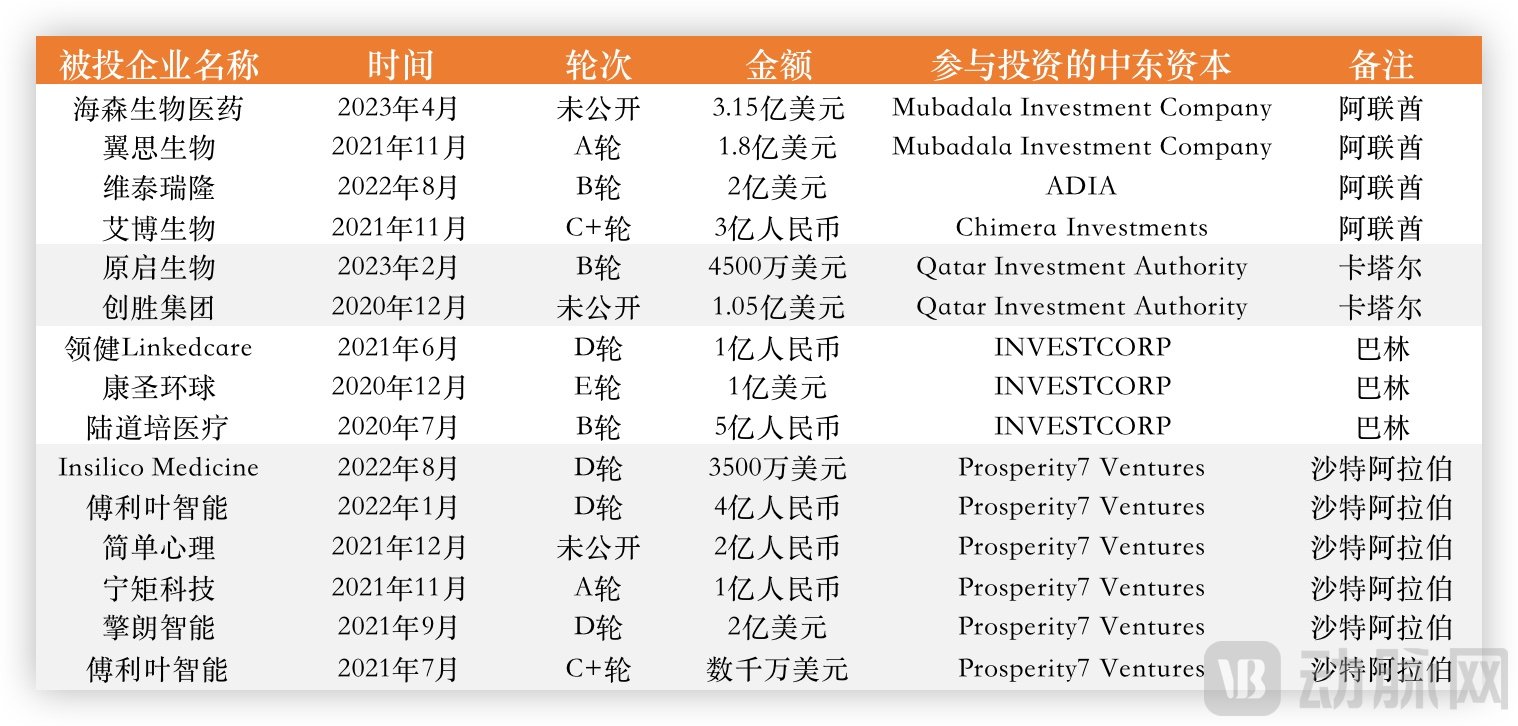
Medical enterprise financing events participated by Middle Eastern capital in China in recent years, data sourced from VCBeat
It is not only Middle Eastern capital participating in the Chinese market, but Chinese companies are also accelerating their entry into the Middle Eastern market.
Huadong Medicine announced in June 2022 that it had reached a strategic cooperation with Gulf Pharmaceutical Industries PJSC, a leading enterprise in the Middle East. The latter will obtain the development, production, and commercialization rights for the two indications—diabetes and weight management—of the drug Liraglutide Injection in 17 countries across the Middle East and North Africa, including the UAE, Saudi Arabia, Egypt, Kuwait, Oman, and Bahrain.
Junshi Biosciences also announced at the end of 2022 a licensing and commercialization collaboration with multinational pharmaceutical company Hikma Pharmaceuticals PLC. The collaboration will focus on the development and commercialization of toripalimab in 20 countries across the Middle East and North Africa (MENA) region, including Saudi Arabia, the United Arab Emirates, Qatar, Jordan, Morocco, and Egypt.
The enormous demand unleashed by the transformation of Middle Eastern countries will become a significant increment in the future global medical market.
Middle East Capital's Participation in Primary Market Investments Carries More Significance at This Current Juncture.
Over the past 20 years of China's economic development, US dollar capital has played a significant role. Many of China’s leading internet companies relied on dollar capital during their early stages. Currently, due to various factors, dollar capital investment in China has slowed down. According to data from the venture capital database Crunchbase, investments by US investors in China this year have reached near historic lows, with only 17 deals occurring from January to April, compared to 426 deals in 2021. Data from PitchBook shows that in Q2 this year, US investor activity in China fell by 91% year-on-year.
Overall, China's primary market is in a downturn, with the gradual exit of dollar capital making RMB funds the main players in investment. The single structure of investors has also shifted project selling points from growth-driven to operation-driven, making predictable revenue a key factor for securing financing. For the market, diversified development models are necessary to fill the void left by departing dollar investors, and previously low-profile Middle Eastern capital is now stepping into the spotlight.
Middle Eastern Capital Investment in China Actually Dates Back a Long Way. For Instance, the Abu Dhabi Investment Authority Made Its Move as Early as 1992 When the Chinese Market Opened Up to Overseas Investors. It's Just That Over the Years, Middle Eastern Capital Has Been More Accustomed to Staying Behind the Scenes in the Role of a Limited Partner (LP). For Example, One of the Main Investors in SoftBank’s Vision Fund is the Saudi Public Investment Fund, a Middle Eastern Sovereign Wealth Fund, and About One-Third of the Vision Fund’s Capital Eventually Flows into Chinese Companies.
As dollar capital retreats, Middle Eastern sovereign funds are stepping into the spotlight.
Earlier this year, Shenzhen introduced the Saudi Arabian Fund, a Middle Eastern sovereign fund, for the first time. This led to the establishment of Blue Ocean Taikoo (Shenzhen) Private Equity Investment Fund Co., Ltd., with its first fund surpassing 1 billion US dollars in size, located in Shenzhen's Xiangmihu International Venture Capital and Investment Street. In February, Alibaba, together with eWTP Arabia Capital — where the Saudi sovereign fund is a major contributor — raised 1 billion US dollars, with healthcare being one of the fields they invest in.
When it comes to spending money on investments, Middle Eastern capital has rarely hesitated. However, the withdrawal of dollar-backed capital, aside from high-level factors, has also been driven by the market's own downturn. In this context, why is Middle Eastern capital betting on China?
The Chinese market is the world's other relatively stable economy outside of the United States, and the continued purchasing by Middle Eastern capital in China is a microcosm of the economic and trade cooperation between the two sides over the past few decades.
According to foreign trade data from 2022, the trade volume between China and Middle Eastern countries reached $507.152 billion in 2022, a year-on-year increase of 27.1%. The bilateral trade volume in 2022 has reached four times that of 15 years ago. In the past five years, trade between China and Middle Eastern countries has grown from $262.5 billion to $507.2 billion, nearly doubling, with an average annual growth rate of nearly 15%, showing a steady upward trend. Meanwhile, in 2022, China's exports to Middle Eastern countries amounted to $228.9 billion, while imports were $278.2 billion, making the trade structure between the two sides more balanced.
With the increasing frequency of trade between the two regions, the scale of Middle Eastern capital investment in China is also expected to grow significantly in the future.
For Middle Eastern capital, investing in China's capital market and seeking cooperation with Chinese enterprises supports their own countries' transformation and development plans, with the healthcare and wellness industry being a crucial component. For Chinese healthcare companies, the entry of Middle Eastern capital can also provide an opportunity for revaluation. Moreover, when entering the Middle Eastern market, assistance from local capital—whether in equity mergers and acquisitions, joint operations, establishing joint ventures, or compliance approvals—can facilitate smoother progress.
In the current environment, changes in market capital structure are an indisputable fact. In such a reshuffling period, the entry of a new source of capital like Middle Eastern capital will undoubtedly bring more vitality to the sluggish market.
As the saying goes, "A duck knows when the water in the spring river warms up," and multinational pharmaceutical companies have a keen sense for which markets hold more "profit potential."
In May this year, Virax Biolabs signed an agreement to establish a regional headquarters in Dubai Science Park, UAE. In June, AbbVie signed a cooperation agreement with the UAE, aiming to utilize precision medicine to analyze individual genetic makeup and optimize disease treatment strategies. In July, French pharmaceutical giant Sanofi collaborated with Arabio and Lifera, pharmaceutical companies wholly owned by Saudi Arabia's sovereign wealth fund, to promote vaccine production in the country and establish a new manufacturing plant locally.
What these giants are eyeing is the potential market in the Middle East that remains to be tapped.
According to data from a report by EY, the Gulf countries currently have a population of approximately 540 million, with rapid population growth, indicating significant market potential. Whether in terms of patient accessibility, regional reach, research capabilities, or policy support, the Gulf region, especially Saudi Arabia, represents a vast blue ocean market for pharmaceuticals. In June this year, at the China-Arab Cooperation Forum Entrepreneurs Conference, Chinese and Arab parties signed over 30 economic and investment cooperation agreements worth more than $10 billion, covering various fields including healthcare.
For enterprises, the Middle East, with its "promising financial prospects," is both a hotbed and a battlefield, offering opportunities as well as fierce competition. Only by strengthening internal capabilities can they gain an edge in this two-way race of capital and market.