When Membrane Proteins Meet AI: Accelerating Targeted GPCR Drug Discovery

DP Technology
Simulation R&D Platform Developer

Using MegaR technology, Vozon Biotech has systematically obtained more than 30 high-purity GPCR proteins with their extracellular portions maintaining a natural conformation, and resolved several high-resolution cryo-EM structures of GPCRs in complex with ligands/drugs, including previously difficult-to-express and purify GPCR proteins and their structures.For example, WoZhen Bio has been the first internationally to purify the popular drug targets CCR8 and GPRC5D proteins and analyze their three-dimensional atomic structures in the ligand-free state.
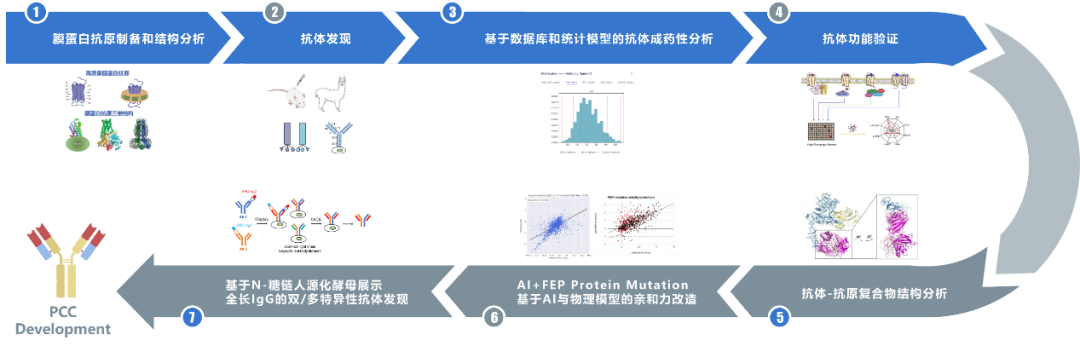
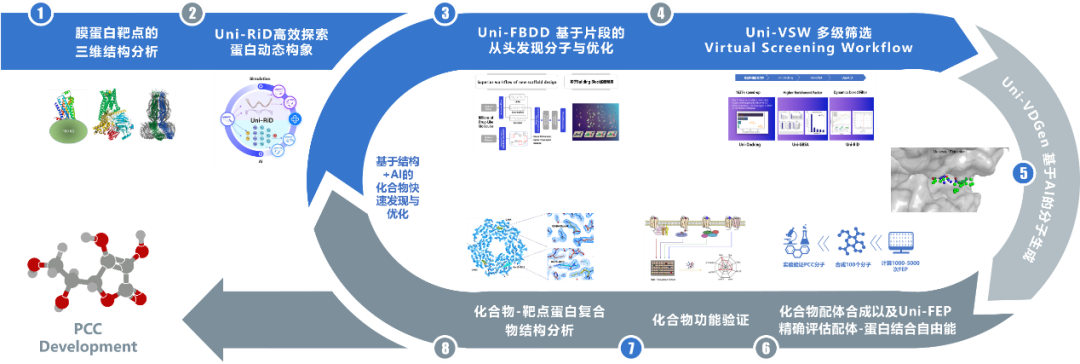 SBDD+AIDD-Based Targeted GPCR Small Molecule and Antibody Drug Discovery and Optimization Platform
G Protein-Coupled Receptor(G-protein coupled receptor,GPCR)The largest multi-transmembrane receptor protein family in the human body, encoding about 800 members. GPCR is an important drug target for treating a variety of diseases such as central nervous system disorders, heart disease, diabetes, and cancer.
According to incomplete statistics, the FDA has approved 475 drugs targeting GPCRs, accounting for approximately 34% of marketed drugs. Among about 800 GPCRs, only 134 have become drug targets, accounting for less than 17%. This shows the great potential for the development of drugs targeting GPCRs.
Hundreds of GPCR molecules with significant drug development potential have molecular weights in the ~37-50 kD range, such as the rhodopsin-like family, which accounts for 80% of the total number of GPCRs. These small-molecular-weight GPCRs are difficult to resolve at high resolution using cryo-electron microscopy.
The common practice in academia and industry is to use GPCR in combination with agonists, prompting these GPCR targets to be in an active state, thereby forming a complex with the G protein in the downstream signaling pathway. The structure of the complex is then obtained using cryo-electron microscopy to study the agonist. Since approximately 50% of GPCR drugs are antagonists or inverse agonists, these ligands bind to GPCRs, preventing further complex formation with G proteins. This makes the related cryo-EM structure resolution highly challenging and hinders the development of related drugs.MegaR technology eliminates the need to activate GPCRs, effectively addressing the challenge of high-resolution cryo-EM structure analysis for GPCR complexes with antagonists or inverse agonists, thereby advancing the development of related drugs.
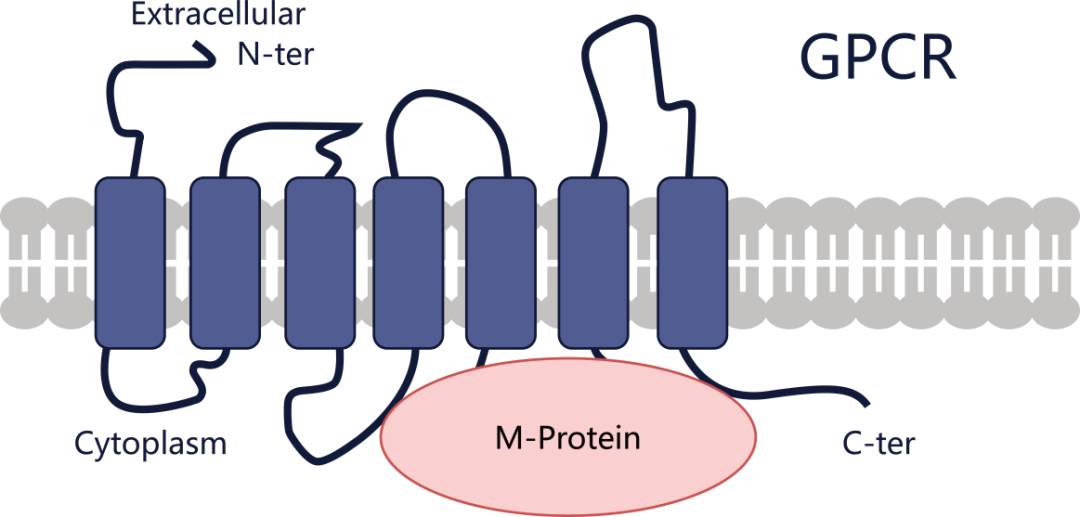
MegaR technology fuses a tag of only about 30 amino acid residues in length to GPCRs through genetic engineering, and then this tag forms a high molecular weight complex with other proteins. This approach minimizes the impact of engineering modifications on the native conformation of GPCRs.
Compared with other technologies and methods, the biggest advantage of MegaR technology is that the fusion tag does not alter the natural conformation of the GPCR transmembrane helices and extracellular regions, and it offers better stability than wild-type GPCRs. Currently, WoZhen Bio has successfully utilized MegaR technology to resolve the complex structures of GPCRs from subfamilies A, B, and C with antagonists or inverse agonists. GPCRs modified by MegaR technology can also bind to agonists, thus aiding in the structural study of GPCRs in active states that cannot effectively form GPCR-G protein complexes.

In recent years, tumor immunotherapy has achieved revolutionary breakthroughs. Studies have shown that in the tumor microenvironment, regulatory T cells(Treg)There is a high enrichment and specific expression of CCR8. Targeting CCR8 to inhibit Treg activity or deplete Treg cells could potentially enhance the cytotoxicity of immune cells in the tumor microenvironment. Currently, numerous biotech companies and pharmaceutical enterprises are actively developing antibodies and small molecule drugs targeting CCR8. Many pharmaceutical companies are closely following the progress in the structural biology of CCR8, hoping to use structural information to gain an advantage in the race for CCR8-targeted drugs. However, the small molecular weight and difficulty in expressing CCR8 have become bottlenecks in resolving its three-dimensional structure.
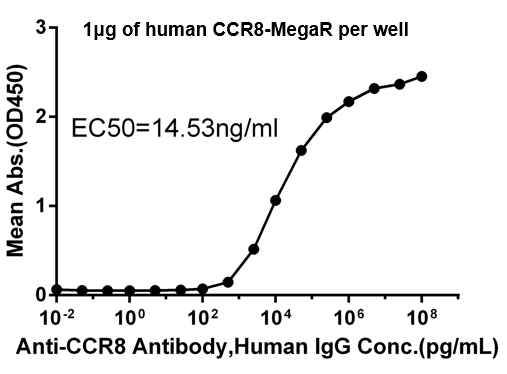
WoZhen Bio utilizes MegaR technology to obtain the cryo-EM structure of CCR8 at a resolution of 3.24Å, without disrupting the native conformation of CCR8's transmembrane helix and extracellular region. This provides unique value for the precise design of small molecule or antibody drugs targeting CCR8.
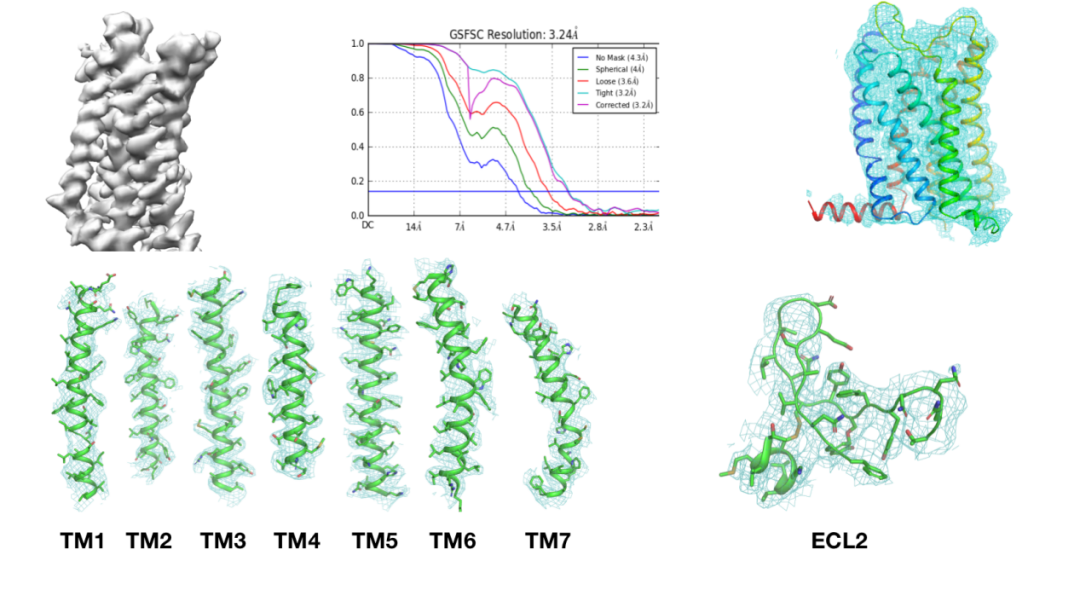
The orphan receptor GPRC5D is emerging as a new and popular target for treating multiple myeloma. Currently, various therapeutic approaches targeting GPRC5D include bispecific antibodies, ADCs, CAR-T cells, and CAR-NK cells. Leveraging the strong advantages of its MegaR technology, Vozon Biotech has obtained the cryo-EM structure of GPRC5D for the first time internationally.
In summary, MegaR technology offers multiple advantages in GPCR drug development: 1. It makes some difficult-to-express GPCRs easier to express; 2. It increases the stability of certain GPCRs with poor stability; 3. It meets the molecular weight requirements for cryo-EM structure analysis without requiring the GPCR to be in an active state; 4. The extracellular portion retains the structure of the native protein, making it not only a high-quality antigen for immunized animals but also applicable for DEL screening, SPR, and ITC.
Biotech companies and pharmaceutical enterprises will benefit from MegaR Technology Platform of Vozon Bio, reducing costs and increasing efficiency in the early-stage R&D process of GPCR small molecules and antibody drugs, standing out in the competition for innovation and excellence.
(The above content is organized from the report "Next-Generation GPCR Precision Drug Development Based on MegaR Technology Platform")
 Scan the WeChat QR code, add the editor of the Biologics Circle, and those who meet the requirements can join.
Biological Products WeChat Group!
Please indicate: Name + Research Direction!


All reproduced articles in this official account are intended to convey more information, with clear attribution of sources and authors. Media or individuals who do not wish to be reproduced can contact us at cbplib@163.com, and we will immediately proceed with deletion. All articles represent the views of the authors and do not reflect the position of this website.