

Sandoz Emerges as Europe's Largest Generic Drugmaker with Independent IPO and Robust Biosimilars Pipeline

Sandoz
Global Supplier of Novel Patent Medicines

Novartis
Drug Development and Manufacturing
On October 4 local time, Sandoz, the former Novartis biosimilar subsidiary, was listed on the Swiss Stock Exchange and adopted American Depositary Receipts (ADRs) in the United States.Discussions about Novartis' divestiture of Sandoz have been ongoing for a long time, until last August when Novartis confirmed the plan to spin off Sandoz. With the successful independent listing of Sandoz, Europe's largest generic drug company was thus established.
The cycle of unity leading to division and division leading to unity is a recurring narrative in the commercial operations of multinational corporations (MNCs). In 2003, Novartis consolidated all its generic drug businesses under the Sandoz brand. Twenty years later, Sandoz, with revenue of tens of billions of US dollars, was "spun off" by Novartis due to its relatively modest profit margins: In 2022, Novartis' innovative drug business achieved a core operating profit margin of 36.90%, while Sandoz's was only 20.58%.
For Novartis, simplification and focus have been the defining features of its strategy in recent years, with streamlining efforts beginning as early as 2018. Given the pipeline cliffs and new competitive landscape that multinational corporations (MNCs) have faced in recent years, and up against Pfizer, which gained massive cash flow from its COVID-19 vaccine, as well as Novo Nordisk and Eli Lilly, whose businesses have soared due to their metabolic disease pipelines, Novartis needs more than ever to break through with innovative drugs that are differentiated or even disruptive.
Sandoz, now operating independently again, has been fueling its growth through acquisitions. In an era of significant budgetary pressures, generics help ensure the sustainability of healthcare systems while also freeing up funds necessary for the development of innovative medicines.
In the MNC spin-off events, newly established companies often perform better and experience a second growth phase due to being freed from the constraints of large corporations. The futures of both Novartis and Sandoz are more promising and worth anticipating.
Can the new Sandoz become the leader in generic drugs?
Sandoz's anti-infective and biosimilar businesses date back to the mid-20th century. Sandoz currently offers approximately 1,000 medicines, covering a wide range of therapeutic areas, and remains the world's largest producer of generic antibiotics as of 2020, reaching about 500 million patients globally.
In 2003, when Novartis officially merged all its generic drug businesses under Sandoz, it was a period of vigorous development for the global generic drug industry—many blockbuster drugs' patents had expired in the 1990s, triggering a surge in the mass production of generic drugs.
In recent years, generic drug prices have faced downward pressure. In the U.S. market, major payers such as commercial insurance companies and the government are pushing to reduce drug costs, directly impacting the prices of generics. For instance, according to data from Elsevier, a U.S.-based pharmaceutical information services company, the average price of the top 100 widely used generic drugs in the U.S. dropped by approximately 4.5% in 2019. Countries around the world are working to lower drug prices; Europe, Japan, and China are all implementing centralized procurement or price control policies.
With the significant and continuous decline in generic drug prices, the growth in prescription volume has hit a bottleneck.In the U.S. market, generic drugs account for 90% of prescriptions, already reaching a ceiling. The growth of the generic drug market is sluggish, and the profit levels of major generic drug companies are being challenged. This is also the main reason for Novartis to divest its generic drug business.
At the same time, as more Indian and Chinese companies join the global generic drug production, established generic drug manufacturers face greater competitive pressure, and their profit margins are further compressed.
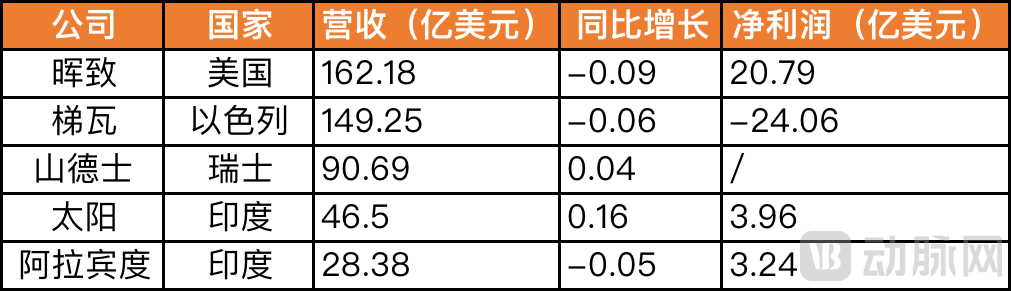
Top 5 Global Generic Drug Revenue in 2022
From the 2022 global generic drug revenue data, it can be seen that both Viatris and Teva, two major generic drug giants, experienced revenue declines, with the latter even reporting a net loss. Sandoz's revenue last year, adjusted for currency impact, increased by 4%, but with revenue just over $9 billion, there is still a considerable gap to reach the goal of becoming the global generic drug leader set by Sandoz CEO Richard Saynor.
To secure the leading position in the generic drug sector, launching new biosimilar products in Europe and the United States is Sandoz's primary task moving forward.The development of biosimilars is complex, and the difficulty of replication is high. Their price and profit margins are much higher than those of chemical generics. Among many generic pharmaceutical giants, Sandoz was the earliest to enter the biosimilar market. Sandoz's Filgrastim biosimilar was the first biosimilar in the U.S., launched in 2015.
According to Sandoz's financial reports, the company's biosimilar revenue from 2020 to 2022 was $1.791 billion, $1.925 billion, and $1.928 billion, accounting for 19%, 20%, and 21% of the annual revenue, respectively.
Since the separation from Novartis had long been a certainty, to highlight its strengths and future market value, Sandoz has continuously focused on biosimilar assets in recent years, either through direct investment or biosimilar collaborations. According to Sandoz's prospectus, the company will soon launch four key biosimilar products, including Humira, Tysabri, Prolia, and Eylea, which have combined annual sales exceeding $40 billion.
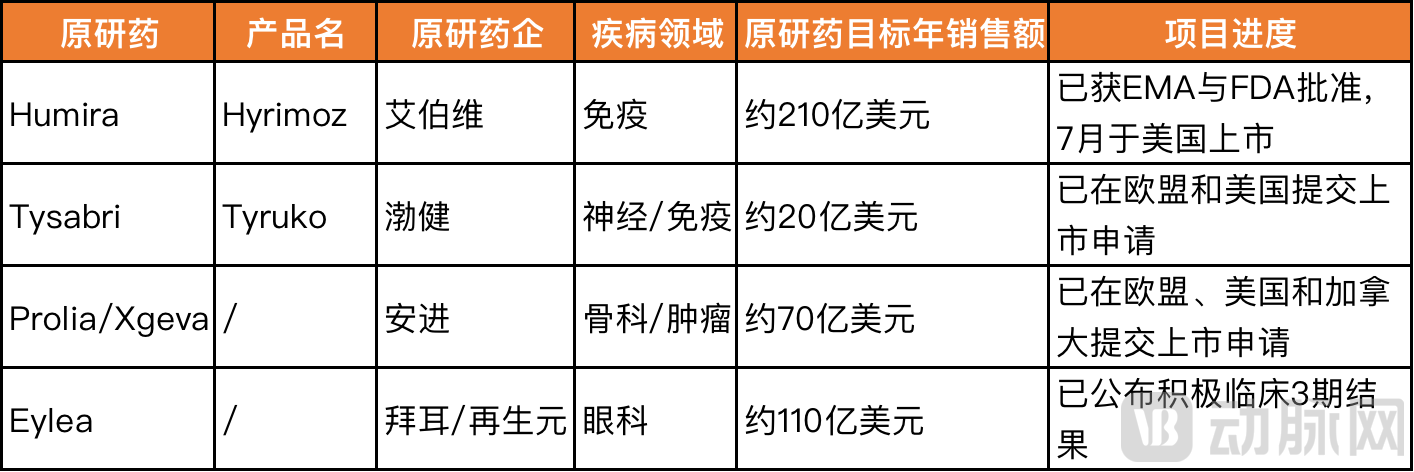
Sandoz's Four Key Biosimilar Products, Compiled from the Company's IPO Prospectus
Sandoz also acquired a biosimilar of Roche's cancer drug Avastin from Bio-Thera Solutions; purchased Coalesce to obtain three different types of inhalers, which helped strengthen its existing portfolio of respiratory drugs; reached distribution and cooperation agreements with pharmaceutical company Adalvo in the United States for six unnamed biosimilar products; and entered into a commercialization agreement with Samsung Bioepis to acquire the rights to the latter’s Stelara biosimilar.
In the first half of 2023, Sandoz's net sales reached approximately US$4.8 billion, increasing by 8% year-on-year. As the company’s strategic moves begin to bear fruit and another wave of blockbuster drugs approach patent expiration, the independent Sandoz is set to make a push for the top position in the industry.
What does Novartis need more?
The patent cliff that benefits generic drug manufacturers spells anxiety and crisis for multinational corporations (MNCs): Novartis will face patent expirations for 11 products between 2023 and 2025, including its key revenue driver, the cardiovascular drug Sacubitril/Valsartan (Entresto), which contributed $2.915 billion to Novartis' revenue in the first half of this year.
BioPharma Dive专栏曾指出:前所未有的专利悬崖和降低通胀法案IRA肯定会对制药工业带来极大的冲击,加上药物研发复杂程度提高,制药工业本身研发效率下降,管线补充将异常困难,由此,全球制药将进入一个产品减少的时代。
Facing a more fiercely competitive market, Novartis once again emphasized "All in Innovative Medicines" at this year's JPM conference.
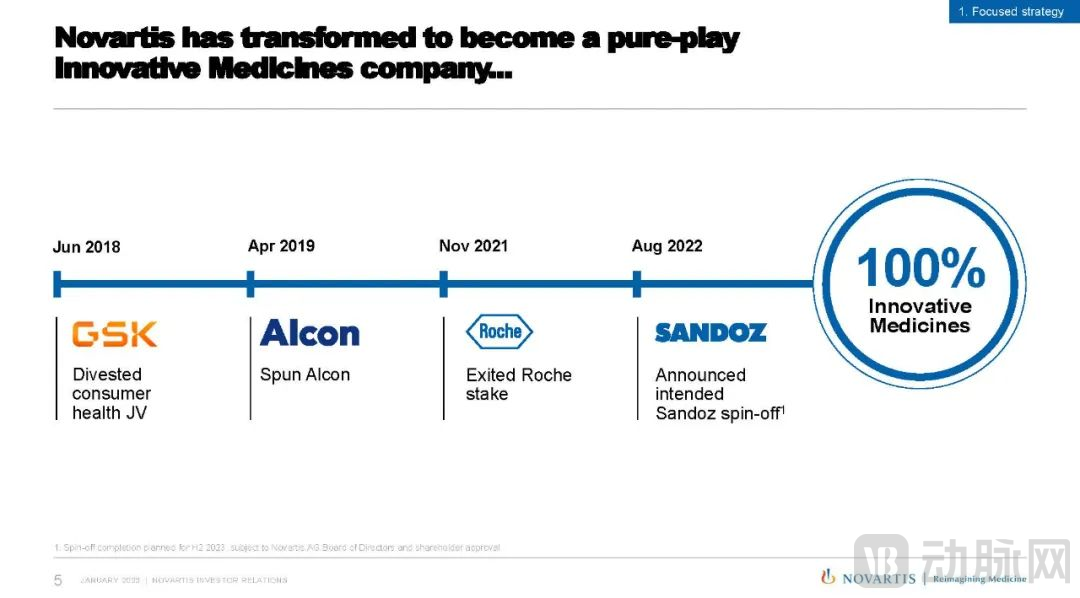
On the one hand, it is about divestment and streamlining:From 2018 to today, Novartis has exited the consumer health and medical device fields, spun off Alcon, sold its Roche equity, transferred the commercial rights of some ophthalmology products to Bausch + Lomb, and now split off its generics business, Sandoz.
On the other hand, it is innovation and buy-in.Novartis can be called a leader in the fields of CGT, small nucleic acid drugs, and nuclear medicine in terms of investment and output.Novartis states its focus on targeted protein degradation, cell therapy, gene therapy, radiation therapy, and xRNA technology platforms. The acquisitions or introductions in the past two years clearly demonstrate "consistency between knowledge and action."
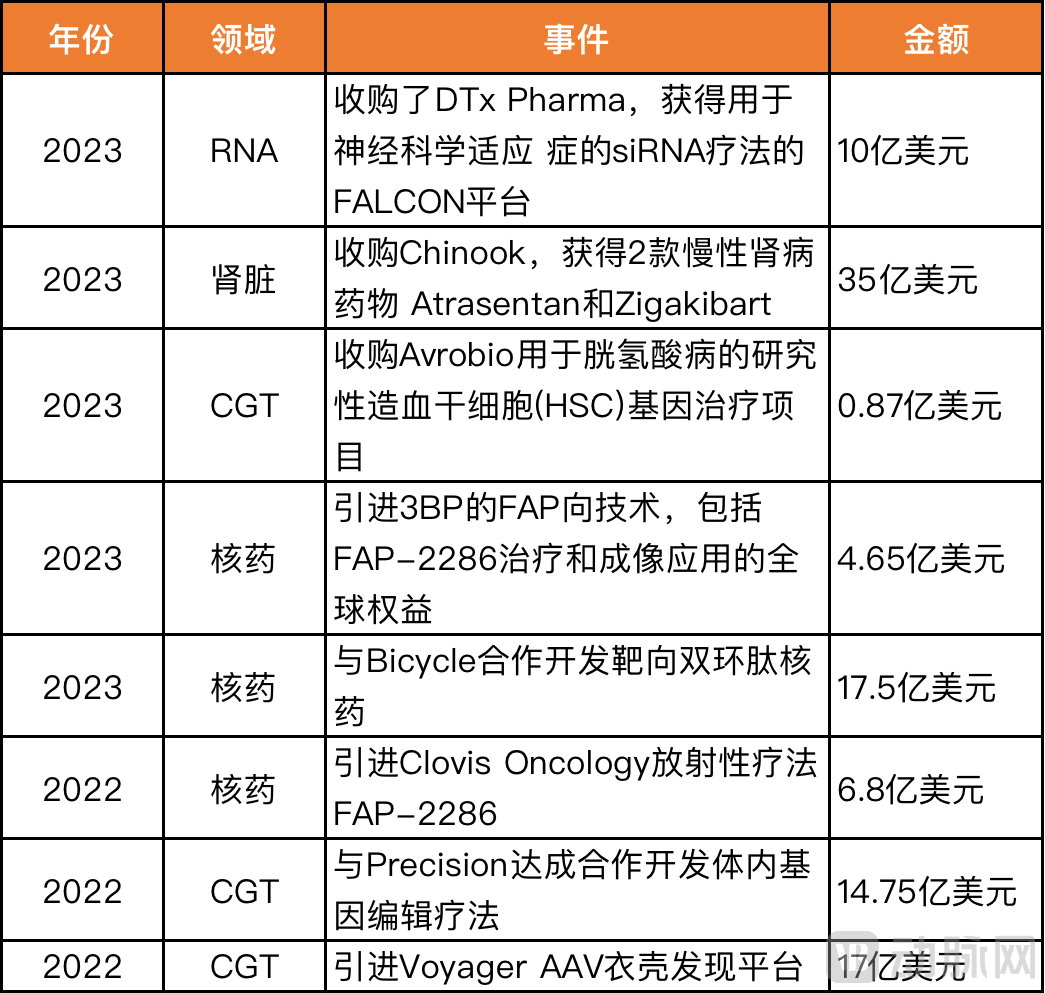
Novartis' Partially Acquired Assets in Recent Years
Notably, Novartis, a pharmaceutical company that consistently ranks among the top 10 global companies by market value, has yet to produce a blockbuster product worth tens of billions of dollars and lacks a heavyweight product in the oncology field.Although Novartis has focused on five key areas, including oncology, its stronger expertise lies in cardiovascular/renal and immunology indications, which have low synergy with oncology. In the first quarter of this year, the company also made significant cuts to its cancer pipeline.
This may be the reason why Novartis' strategy differs significantly from other MNCs, lacking the luck to produce a blockbuster drug but having more of a genetic predisposition to embrace new technologies.
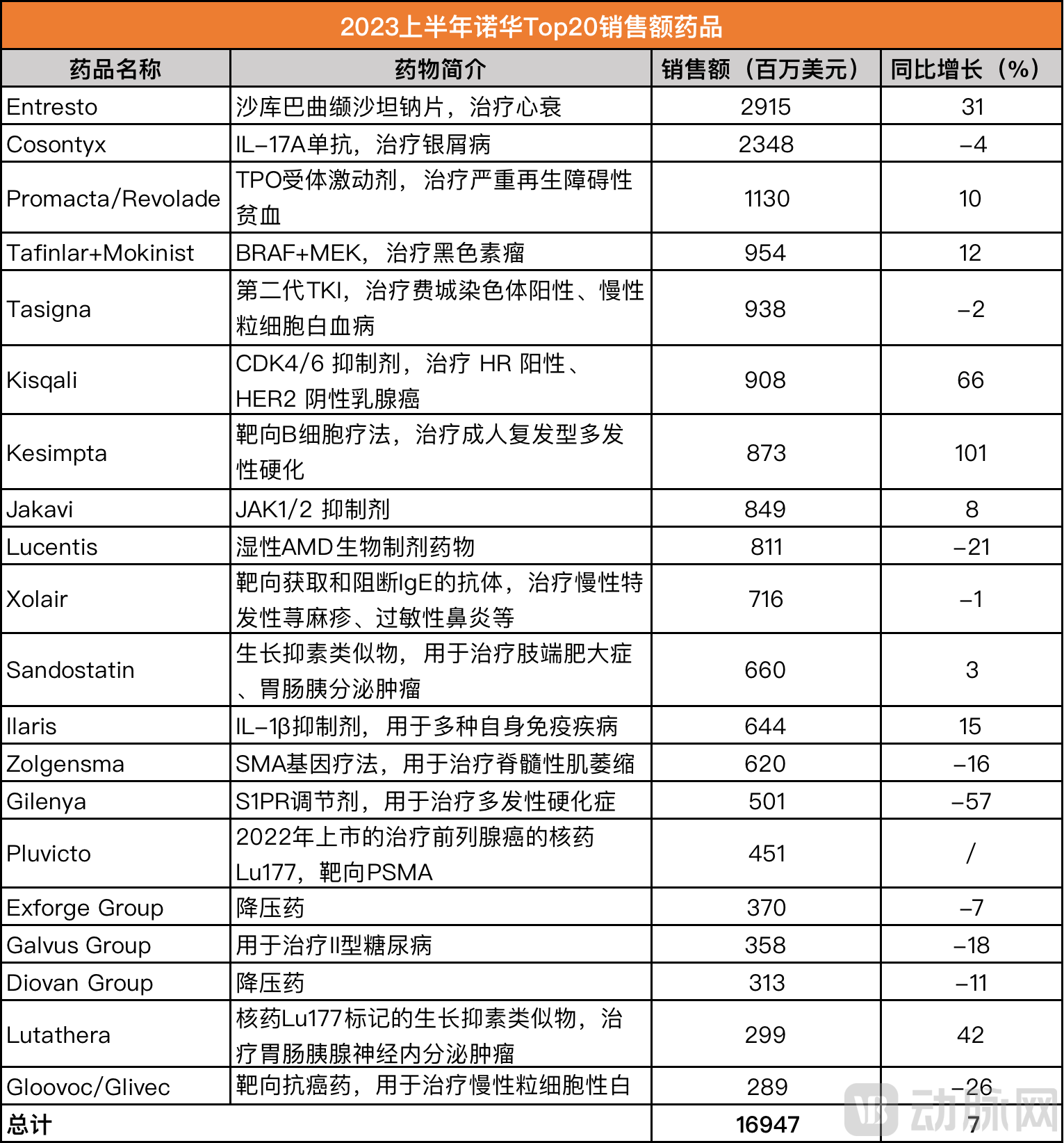
From the top 20 best-selling drugs of Novartis in the first half of this year, some innovative therapies have become important sources of profit.For example, two nuclear medicine products: one was approved for marketing at the end of last year for the treatment of prostate cancer.PluvictoSales quickly reached $450 million for the treatment of gastrointestinal pancreatic neuroendocrine tumors.LutatheraSales reached nearly $300 million, a year-over-year increase of 42%. Additionally, the latest Phase 3 clinical trial data for its expansion into first-line treatment is optimistic, indicating further market expansion.ZolgensmaAs a profit benchmark for gene therapy, despite a year-on-year drop in revenue, it still contributed $620 million.
In addition, Leqvio, the first siRNA new drug targeting PCSK9 for lipid-lowering, saw its sales increase nearly threefold in the first half of this year, reaching 142 million U.S. dollars.Leqvio has received positive market feedback due to its twice-a-year dosing interval. According to Novartis, the future sales growth of Leqvio can be compared to that of Entresto.
From the Top 20 drugs, it can also be seen that the breadth of Novartis' product line is one of its distinctive features. Continuously expanding and optimizing its product portfolio, and successfully commercializing innovative therapies to enhance the profitability of innovative drugs, are Novartis’ strong suits. Last year, Novartis’ revenue from innovative drugs reached $41.296 billion, accounting for 81.70% of its total income.
Despite a rich pipeline layout, there are still gaps in the pipeline, lacking mid-to-late stage projects. The launch of most promising new products, including Pelacarsen, Remibrutinib, and Lanalumab, is expected in 2025 or later.
But Novartis, after several years of bold reforms, has taken a different path from other MNCs. With an increasingly streamlined structure, Novartis will rely on flexibility and innovation focus to navigate upcoming market changes.
After the split, what will happen to the days?
It is not uncommon for large pharmaceutical companies to make adjustments to their generic drug businesses or healthcare operations. Last year, GSK spun off its consumer health business, which now operates independently as Haleon; in 2021, Merck & Co. divested its biosimilars, women's health, and established medicines portfolio to form Organon; in 2019, Pfizer’s Upjohn merged with Mylan to create Viatris, which itself is currently undergoing further restructuring as part of its growth strategy.
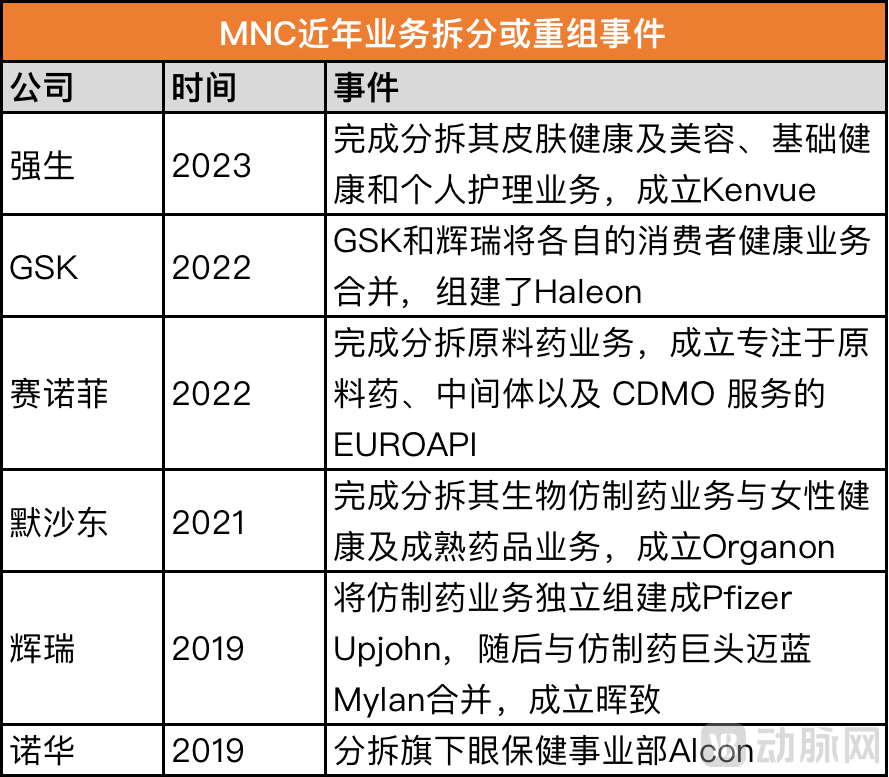
Splitting not only reduces the complex management issues brought about by the parent company overseeing the whole situation, but also gives the spun-off companies a "new lease on life."
One of the most successful cases in MNC spin-offs is undoubtedly Abbott's spin-off of AbbVie.AbbVie was spun off from Abbott, a company not particularly strong in innovative drugs, in 2013, with an initial market value of only $18 billion. A decade after the split, AbbVie achieved total revenue of $58.054 billion and its current market value has reached $263 billion, surpassing Abbott's $168 billion. After being incubated within Abbott, AbbVie exited at the right time, gaining significant capital returns. If AbbVie’s operations had remained within Abbott for continued development, Humira might have been its last blockbuster drug.
Haleon, which became independently operational just last year, has also seen considerable growth.Its products cover five major categories of health products: oral, pain management, respiratory, digestive, and nutrition. The company's revenue was $14.25 billion, a year-on-year increase of 9%, and its operating profit was $3.3 billion, a year-on-year increase of 5.9%.
Alcon, which split from Novartis in 2019, had "troubling" revenue before the separation: when Novartis began acquiring Alcon's shares in 2008, its turnover was $6.3 billion, and by 2018, it had only reached $7.1 billion, with a severe -9% drop in performance occurring during that period.
After the spin-off, Alcon operates with greater flexibility and focus,Including increasing R&D investment, which exceeded 1 billion US dollars in 2021. The company also made some acquisitions to supplement its product portfolio, such as Aerie and Ivantis, and launched new performance-driving products like the Clareon intraocular lens and Precision 1 contact lenses.
In 2022, Alcon's total revenue reached $8.717 billion. In the second quarter of this year, net sales totaled $2.4 billion, representing a 9% increase from $2.2 billion in the second quarter of 2022. Alcon is expected to achieve $10 billion in revenue by 2025, continuing to lead the industry, with its global market share reaching 32% at that time.
The same situation may apply to Sandoz in the future. Sandoz will no longer need to fight for attention within a large company but will become a leader in a niche market, with more flexibility and efficiency in decision-making and resource allocation, unconstrained by Novartis' overall strategy. An analyst commented, "At Alcon, independence unleashed potential, which can serve as a blueprint for Sandoz."