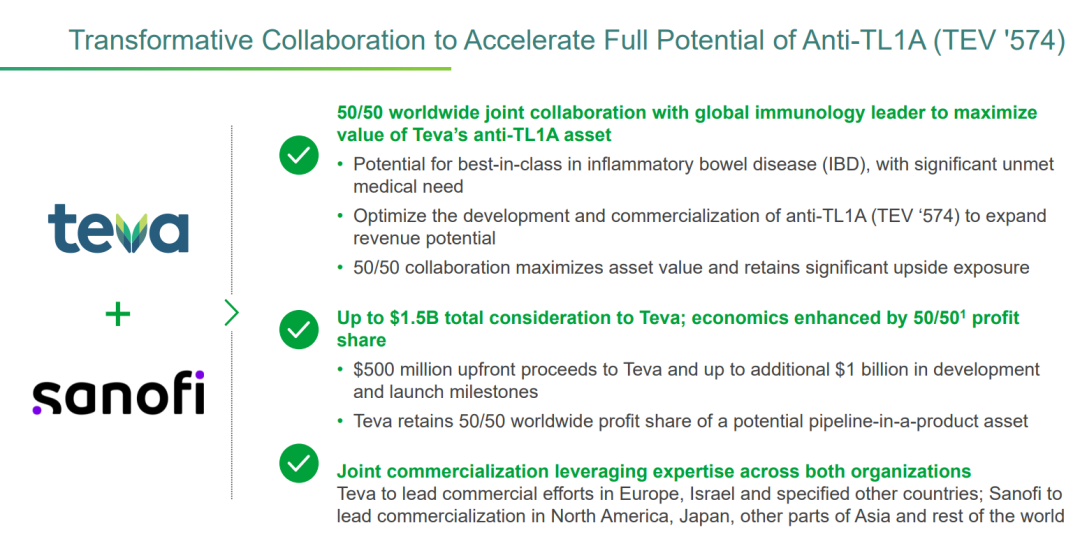
On October 4, Sanofi and Teva's U.S. subsidiary announced a collaboration to developDevelopment of New Anti-TL1A Drug TEV’574 and co-commercialize it; this asset is currently in Phase 2b clinical trials for the treatment of ulcerative colitis and Crohn's disease, two types of inflammatory bowel disease.Sanofi CEO Paul Hudson said:“anti-TL1A"It is a very promising therapy, and we believe that TEV’574 could become the best choice for patients with severe gastrointestinal diseases. This collaboration strengthens our commitment to advancing innovative treatment solutions for inflammatory diseases with high unmet needs and supports our goal of becoming a leader in the immunology industry."
TevaPresident and CEO Richard Francis said:"This is a new era for Teva, and our strong, innovative pipeline is key to our shift toward a growth strategy. This collaboration further validates the great science Teva can deliver through our internally developed anti-TL1A. We are honored to partner with Sanofi, combining their mature capabilities, leadership, and success in immunology and gastroenterology with our own to optimize development and global launch."
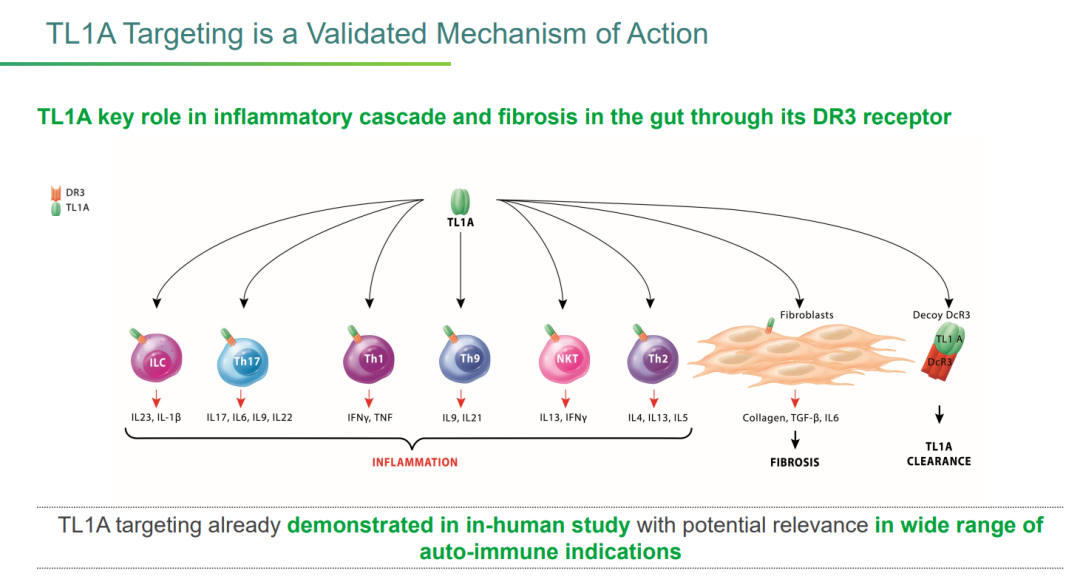
Under the terms of the new collaboration agreement, Teva will receive an upfront payment of €469 million ($500 million) and up to €940 million ($1 billion) in development and launch milestones. Both companies will equally share global development costs and net profits/losses in major markets, while other markets will operate under a royalty arrangement. Sanofi will lead the development of the Phase 3 clinical program. Teva will lead commercialization in Europe, Israel, and certain other specified countries, while Sanofi will lead commercialization in North America, Japan, the rest of Asia, and other regions worldwide. The transaction will become effective upon satisfaction of customary closing conditions. Initial project results are expected to be announced in 2024.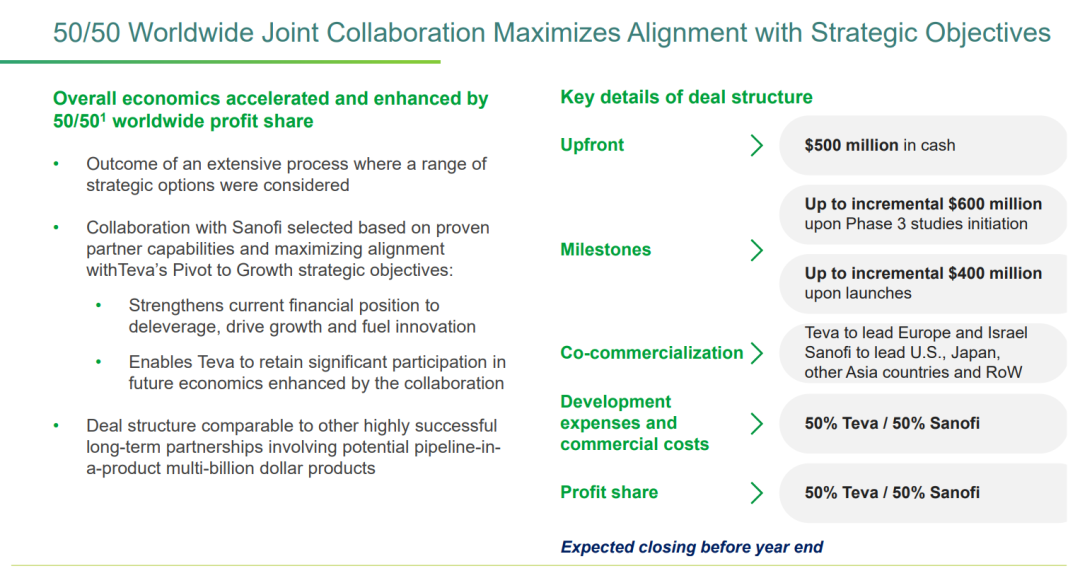 Inflammatory Bowel Disease (IBD) refers to two conditions — Crohn's disease and ulcerative colitis — which are characterized by chronic inflammation of the gastrointestinal tract. Prolonged inflammation results in damage to the gastrointestinal tract. Common symptoms of both conditions include persistent diarrhea, rectal bleeding, abdominal pain, fatigue, and weight loss. It is estimated that approximately 10 million people worldwide suffer from IBD.
Follow the official account below to see the world!