

Shijiazhuang: Home to Over 1,800 Biopharma Firms and 7 Listed Leaders — A Rising Powerhouse in China's Biomedical Innovation

XZenith Biopharm
Researcher and Developer of New Molecular Entity Drugs

CSPC
Innovative Drug Research and Development, Manufacturer

Senlang
Developer of Novel Anti-Tumor Bio-Immunotherapy Drugs

GF Xinde
Financial institutions that focus on investments in the pharmaceutical, TMT, and other industries
NACOL biotech
Biomedical Materials R&D and Production Company
In the early 1950s, not long after the founding of the People's Republic of China, everything was still in a state of rebuilding.
In the field of healthcare, this was manifested in the shortage of medical professionals and medicines. For instance, restricted by technology, China's annual production capacity for the commonly used antibiotic—penicillin—was only a few hundred grams. Due to the scarcity of production, the price per gram of penicillin at that time was even 7.5 times that of a gram of gold, making it unaffordable for the people.
In order to solve this problem, the then Ministry of Light Industry decided to establish an antibiotic factory in China with the aid of the Soviet Union, and a site investigation team was specially set up for this purpose. After several years, the investigation team conducted research in cities with better industrial foundations such as Shanghai, Dalian, Shenyang, and Qingdao. After comprehensively considering factors such as environment, resources, transportation, and air defense, Shijiazhuang eventually stood out and was selected as the factory site.
This plant was later praised as "the Republic's Eldest Son of Medicine," known as North China Pharmaceutical.
On June 3, 1958, the first batch of penicillin produced by North China Pharmaceutical came off the production line. From then on, China completely ended its history of relying on imported penicillin, and Shijiazhuang embarked on a long journey to promote pharmaceutical development. However, for a period after entering the new millennium, due to factors such as the "penicillin price war," price reduction orders for anti-infective drugs, and the clustering of raw material pharmaceutical companies, Shijiazhuang's pharmaceutical path became quite difficult.
However, the transformation is happening now.
On the one hand,Shijiazhuang has begun to promote the transformation of its local pharmaceutical industry towards the biopharmaceutical industry in recent years, frequently introducing significant policies.For example, in 2021, the document "Action Plan for Fully Strengthening and Expanding the Pharmaceutical Industry (2021-2023)" was released, in which Shijiazhuang proposed to break through 100 billion yuan in operating revenue within three years, achieving a leap from a major pharmaceutical city to a strong pharmaceutical city. To this end, Shijiazhuang specifically established the International Biomedical Park in its High-tech Zone to build a bio-cluster with tens of billions of yuan in output.
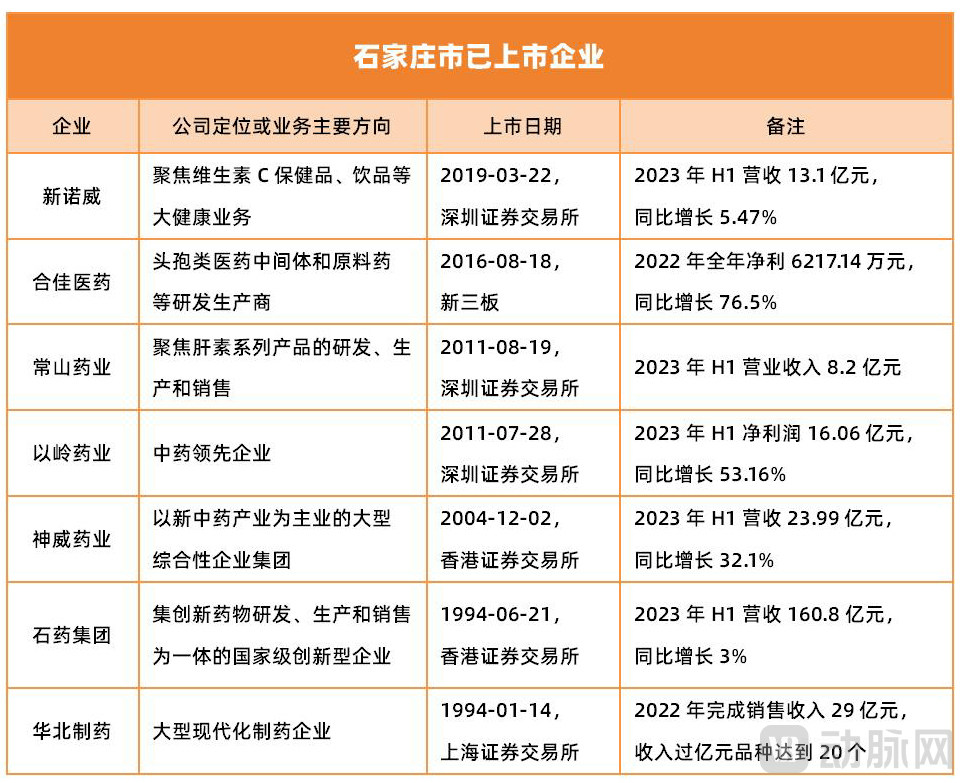
On the other hand,The substantial accumulation of the pharmaceuticals industry in the past has also contributed to Shijiazhuang's medical innovation.: Currently, Shijiazhuang City has more than 1,800 biopharmaceutical enterprises,Seven of the pharmaceutical companies have been listed., including star companies such as North China Pharmaceutical, CSPC, Yiling Pharmaceutical, and XenoPort.
(Data source: VCBeat Database, Qichacha)
In the primary market, medical innovation companies such as NACOL biotech, Hebei Fenisi Biotechnology Co., Ltd., senlangbio, XZenith Biopharm, and Hebai Bio have secured significant financing in recent years, attracting backing from entities like Sunshine Life Insurance, EF Capital, SDIC Capital, Shu Yang Co., Ltd., and Oriental Fortune.More than 20 well-known institutions have come to invest.
"From my observation, Shijiazhuang City has a strong determination to build a biotechnology industry cluster and shows great enthusiasm for innovative drugs and therapies," said Yang Wenqi (a pseudonym at the request of the interviewee), a senior investor, to VCBeat. For instance, Shijiazhuang has attracted WuXi Biologics to establish the largest monoclonal antibody drug production base in northern China.
Obviously, after 70 years, from its origins in the pharmaceuticals industry to its full-scale development into a biotechnology industrial cluster, Shijiazhuang's story of pharmaceutical innovation is entering a new chapter.
Shijiazhuang "Goes All Out":
Policy Boosts Pharmaceutical R&D with Maximum Reward of 120 Million Yuan
When many people talk about the developed areas of biomedicine in China, they usually think of Shanghai and Suzhou, while Shijiazhuang does not have a strong presence.
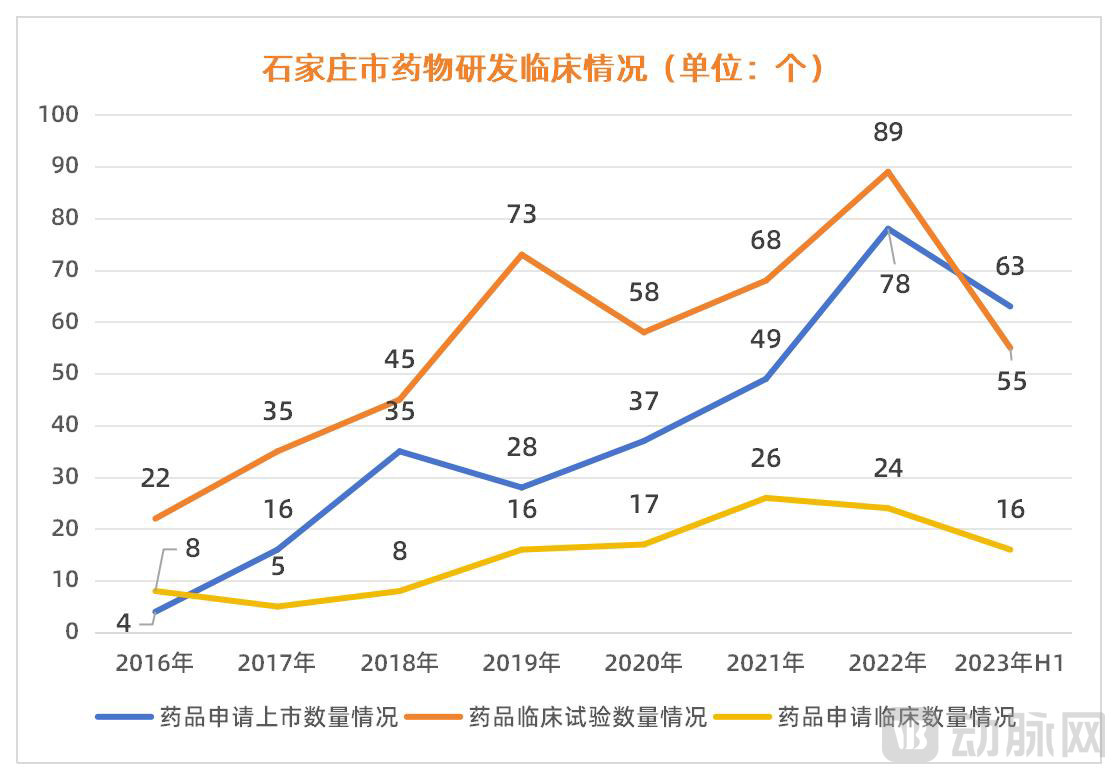
But little-known is,This city, with 70 years of pharmaceutical accumulation, has always been at the forefront of drug research and development in China.According to Yaozhi data, from 2016 to the first half of 2023, the total number of drug marketing applications in Shijiazhuang City was 310, ranking 5th among all cities in China. In addition, whether in the number of drug clinical trials or the number of clinical trial applications, Shijiazhuang ranks among the top cities in China.
(Source: YAOZHI Data - Regional Industry Analysis System, Chart by VCBeat)
This is closely related to Shijiazhuang's recent all-out efforts in the biopharmaceutical industry and its continuous policy support.
VCBeat has found that since the official introduction of the "Shijiazhuang High-tech Zone Policy to Promote the Biopharmaceuticals Industry" in 2017, Shijiazhuang regularly enhances and refines this policy. For instance, the "Further Supporting Policies for the Biopharmaceuticals Industry Development in Shijiazhuang High-tech Zone" was issued in 2019, and the "Several Measures to Support the Next-Generation Electronic Information Industry and Biopharmaceuticals Industry to Take the Lead" was released in 2023.
It is worth mentioning that among several measures, encouraging research and development and promoting the transformation of innovative achievements are the top priorities. For instance, the policy particularly mentions,Rewards will be given for industrialized biologics, chemical drugs, and innovative Chinese medicines of Class I new drugs and Class II improved new drugs, with a maximum of 1.2 billion yuan.
Not only that, but Shijiazhuang City also supports industrialized drugs that are among the top three in passing consistency evaluations in similar generic drugs nationwide.Maximum Reward: 3 Million Yuan, and provide support to the leading talents or teams that introduce and master internationally advanced technologies, generate major projects, drive the development of emerging industries such as biomedicine, and make significant contributions to Shijiazhuang.Up to 100 million yuanProject support funds.
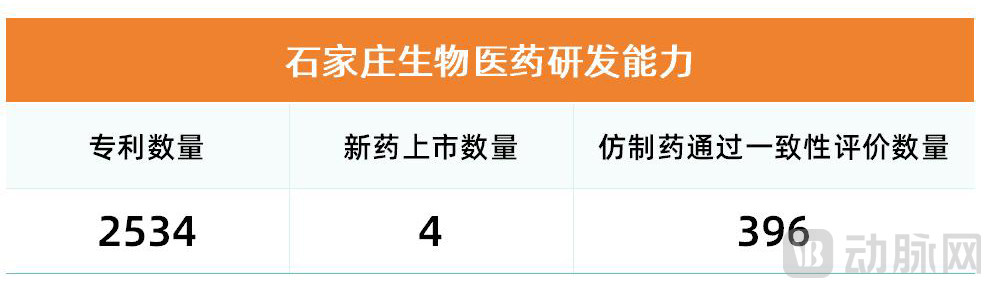
The boost effect of the policy is evident. As of the end of June 2023, Shijiazhuang City had 2,534 patents in the biopharmaceuticals industry, 4 new drug launches, and 396 generic drugs passing the consistency evaluation.
(Data source: YAOZHI Data - Regional Industry Analysis System)
In addition to the reward funds, Shijiazhuang is also promoting the improvement of the investment ecosystem. Earlier this year, Shijiazhuang High-Tech Zone established a total scale ofA new drug fund of 1 billion yuan and an industry mother fund of 5 billion yuan, the fund focuses on the large health industry as a key investment direction to attract major health industry projects to land.
Of course,In addition to the abundance of reward-based and investment-based funds, Shijiazhuang has also spared no effort in intensifying its talent recruitment efforts.
For example, in May this year, Shijiazhuang City issued the "Several Measures (Trial) on Further Strengthening Talent Introduction to Support the Construction of a Modern, International Beautiful Provincial Capital City," with policies mainly covering the introduction of high-level talents, outstanding graduates from universities, and young talents, the construction of innovation platforms, support for enterprises as major talent recruiters, reward and incentive mechanisms, and encouragement for talent innovation and entrepreneurship.
On the ground, in order to concentrate advantageous resources and gather more talents in the biopharmaceutical industry, Shijiazhuang has builtShijiazhuang Human Resources Service Industrial Park, and has established a startup park for Chinese returnee talents. As of June 2023, the park has issued Shijiazhuang Talent Green Cards to more than 8,800 people, and 3,500 talent apartments are currently under construction.
"In recent years, the policy support for biomedicine in Shijiazhuang has been increasing significantly. In terms of proportion, biomedicine and electronic information have become the two major pillars of the city's industry," said Yang Wenqi, a senior investor.
In this process,Whether they are established pharmaceutical companies or new entrants, all are actively responding to the call, accelerating R&D progress, and introducing technical talent, continuously expanding into the fields of innovative drugs or innovative therapies.
The Journey of Innovation Begins:
Established pharmaceutical companies accelerate transformation, while emerging enterprises frequently secure financing
In the industrial journey of transitioning from traditional pharmaceuticals to biopharmaceuticals, what enterprises should prioritize is of utmost importance.
Thanks to policy support and the prevailing trend of a major wave of medical innovation in recent years,Shijiazhuang's enterprises, while stabilizing the fundamentals of pharmaceuticals, are also accelerating their efforts in innovative drugs and therapies.
InCSPCFor example. As a well-established pharmaceutical company, CSPC has been continuously increasing its R&D investment over the years, with an annual R&D budget reaching 4 billion yuan and over 1,000 patent applications submitted each year. In terms of business layout, CSPC has built eight major technology platforms, including nanotechnology formulations and mRNA vaccines, focusing on areas such as oncology, neurology, cardiovascular, immunology, respiratory, metabolism, and anti-infectives, with more than 300 new drugs currently under development.
In addition to expanding its pipeline, CSPC PHARMACEUTICAL GROUP LIMITED is also strategically positioning itself in new technologies. In August this year, CSPC announced that it had reached a strategic cooperation agreement with Insilico Medicine and XtalPi in the field of AI for innovative drug research and development. Based on the agreement, CSPC will fully utilize its own drug R&D experience, combined with the AI technology platforms of the two AI companies in the field of innovative drug R&D, focusing on strategic products with high clinical demand. AI-assisted drug design will be used to improve the efficiency and success rate of new drug screening.
According to the announcement released by CSPC PHARMACEUTICAL GROUP LIMITED, it is expected that over the next five years, the company will launch more than 40 innovative drugs and new formulation medicines, as well as over 60 generic drugs. This includes two ADC drugs currently in Phase 1 clinical trials that have already achieved overseas market entry, as well as several monoclonal antibody drugs.
Both being veteran pharmaceutical enterprisesNorth China PharmaceuticalIt is also increasing R&D investment. The announcement shows that its R&D proportion has increased from 6% to 10%, with a focus on strengthening the R&D of biologics and high-barrier generic drugs.
In specific actions, North China Pharmaceutical has established the largest pharmaceutical microbial strain resource bank in China's pharmaceutical industry, currently preserving 62,000 strains of pharmaceutical microorganisms. Its drug screening technology system derived from microorganisms is in a leading position in China. Additionally, North China Pharmaceutical also possesses four national-level innovation platforms, including the National Engineering Research Center for Microbial Drugs, the State Key Laboratory for Antibody Drug Development, and the National-Local Joint Engineering Laboratory for Antibiotic Enzyme Catalysis and Crystallization.
As of now, the New Drug Company under North China Pharmaceutical can simultaneously conduct research on 10 types of antibody-related bioproducts and develop pilot-scale production processes for five products. For instance, the Ormutivimab Injection, the first recombinant fully human anti-rabies virus monoclonal antibody in China developed by North China Pharmaceutical over 17 years, is the first Class I biological drug approved for marketing in Hebei Province.
In addition to the active transformation of traditional large pharmaceutical enterprises, some innovative companies are also rapidly emerging in Shijiazhuang.
For example, founded in March 2019NACOL biotechNACOL biotech has established a microbial strain library and a GMP-compliant microbial factory by utilizing technologies such as genetic engineering, gene editing, and data simulation, all based on a synthetic biology technology platform. The company is capable of producing biodegradable new materials like proteins, PHA, PLA, PGA, and industrial enzymes at scale. It is reported that NACOL biotech owns a modern synthetic biology laboratory covering over 1,200 square meters and has obtained 15 national patents.
Another example is located in Shijiazhuang High-tech ZoneHebei Fenisi Biotechnology Co., Ltd.Since its establishment 12 years ago, the company has been focusing on the research and development of innovative drugs for autoimmune diseases. Currently, its representative product, FNS007, is about to enter Phase II clinical trials. This product mainly targets patients with rheumatoid arthritis and aims to rebuild immune tolerance through new targets and mechanisms.
Next, let's look at the company focused on the research and application of new technologies in immune cell therapy.senlangbioFounded in 2016, this company focuses on precision treatment for malignant tumors. In September this year, Senlangbio received an official written response from the FDA's Office of Orphan Products Development (OOPD). Its self-developed CAR-T cell product targeting CD7 (SENL101 Autologous T-cell Injection) was granted Orphan Drug Designation (ODD) for the treatment of adult relapsed or refractory T-lymphoblastic lymphoma/leukemia (T-LBL/ALL).
The above-mentioned innovative enterprises have all gained capital favor in the past year or so, which is enough to show that Shijiazhuang has great innovative potential in the construction of innovative drugs and therapies, as well as new technology platforms.
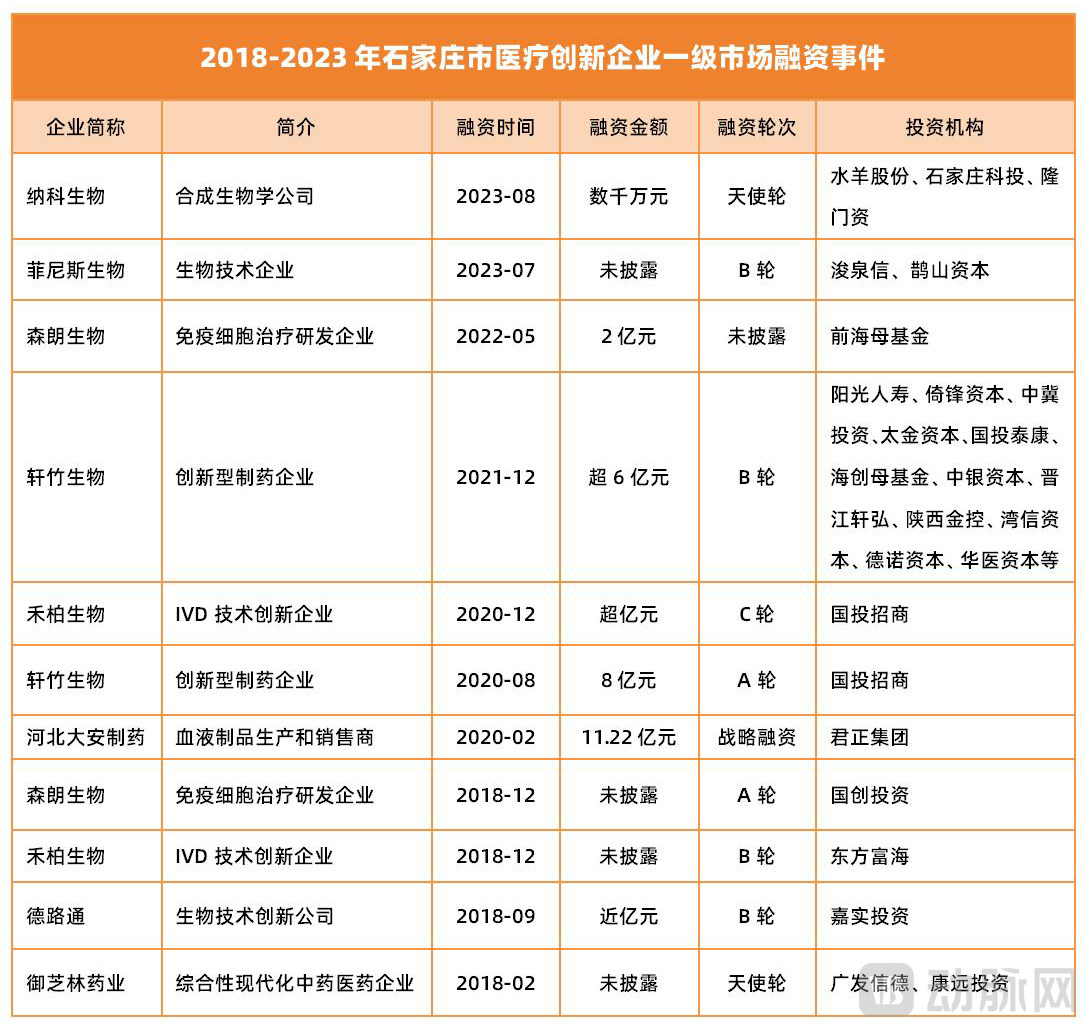
(Data source: VCBeat Database, Qichacha)
"However, it is also important to realize that,Shijiazhuang faces the problem of an unbalanced industrial structure, with the number and quality of innovative enterprises still at a medium to low level. This still requires all parties in the industry to put in more effort to cultivate and support."Senior investor Yang Wenqi said, 'For example, in terms of revenue contribution, the proportion of revenue contributed by leading traditional pharmaceutical enterprises in Shijiazhuang is too large, while the contribution from other innovative companies is very small, showing a characteristic of ‘big head and small body’.'"
Realizing the challenges, Shijiazhuang is seeking a breakthrough.
Build Bigger Imagination:
Focus on the Billion-Level Output Biomedical Industry Cluster, Gradually Breaking the Stalemate
Looking at the development of the global technology industry,A region needs to have industrial cluster advantages and deep collaboration capabilities to form a strong industrial ecosystem.For example, the "Life Science Corridor" established in the Boston area of the United States has gathered more than 600 biotechnology companies and over 40 universities, becoming a hotspot for global biomedicine innovation and entrepreneurship.
Similarly, regions across China are actively building biotechnology industry clusters to achieve deep industrial collaboration and scale growth. Shijiazhuang has also adopted a similar approach.
In 2021, Shijiazhuang launched the construction of the Shijiazhuang International Biomedical Park., with a total investment of 68 billion yuan and a planned area of 28,000 mu. In its objectives, Shijiazhuang International intends to develop the biomedicine parkBuilding a biopharmaceutical cluster worth tens of billions with international competitiveness and regional driving force, as well as a biomedical industry landmark in Northern China.
So, how exactly is this being done? In terms of division, the Shijiazhuang International Biomedical Park is divided into five major functional zones: R&D and Innovation Incubation Zone, Biomedical Industry Zone, Pharmaceutical Preparation Industry Zone, Medical Device and Medical Equipment Industry Zone, and Livable Life and Ecological Zone. The park focuses on developing seven industry sub-sectors, including innovative biologics and chemical innovative drugs.
According to the plan of Shijiazhuang High-tech Zone, the Shijiazhuang International Biomedical Park will be built with international and high-end standards, promoting the transformation of investment attraction to selective investment, and creating a high-end biomedical industry cluster. It was particularly emphasized that the innovative position of enterprises as the main body will be strengthened.Provide comprehensive policy support for drugs entering Phase III clinical trials, and strive to promote the development and market launch of more new drugs.
What have been the results since it began operating two years ago? As of now, CSPC's Jushi Biopharmaceuticals and Wuxi Biologics have settled in the park. A group of companies including Luye Pharma and Huapu Biotech have also moved in. The park has undertaken more than 60 biopharmaceutical projects that were researched and developed in Beijing and Tianjin, and transformed in Shijiazhuang.
Currently,Shijiazhuang International Biomedical Park ranks 8th in comprehensive competitiveness among 211 biomedical industrial parks in China.
In addition to building the park, Shijiazhuang High-tech Zone has also created public technology platforms to support the R&D of biotechnology and pharmaceutical companies. These include more than ten technical platforms such as vaccine technology platforms, antibody drug technology platforms, cell therapy technology platforms, and novel adjuvant platforms, to meet the innovation needs of resident companies.
Attracting more enterprises to develop in Shijiazhuang is also one of the important tasks. To this end, Shijiazhuang adheres to promoting industrial chain investment, with more than 40 key projects totaling 47.5 billion yuan currently being accelerated.
In implementation,For projects entering the local area, Shijiazhuang Technology Venture Capital Co., Ltd. can offer a variety of cooperation models.
For example, most innovative biopharmaceutical enterprises require heavy asset investment before industrialization. At this point, the platform in Shijiazhuang High-Tech Zone can help enterprises acquire land, construct factories according to their needs, and then lease them to the enterprises for use. When the enterprise goes public, the actual invested assets are converted into shares, allowing the platform to grow together with the enterprise.
In addition, Shijiazhuang High-tech Zone also provides models such as build-to-lease and build-to-buyback, as well as support for enterprises to choose the traditional self-acquisition and self-construction model.
It is not difficult to find that Shijiazhuang has been continuously increasing its efforts in achieving breakthroughs in medical innovation and has already made significant progress.
Summary:
The Construction of Medical Innovation Ecosystem is a Long-lasting Race
In recent years, regions across China have been actively developing the pharmaceuticals industry, with both the level of investment and the speed of implementation being unprecedented in the past.
On the one hand, as a sunrise industry, the huge market potential of biopharmaceuticals can provide strong momentum for local governments' future economic growth, promote the transformation and upgrading of the local economy, attract investment, create job opportunities, and drive the development of related industrial chains.
On the other hand, with the aging population and the increase in chronic diseases, healthcare expenditure is on the rise. Seizing the biomedical industry can not only provide economic benefits but also bring significant social benefits, promoting people's well-being.
Therefore, from this perspective, it is undoubtedly an important period for the vigorous development of the pharmaceutical industry.
However,How to develop and promote biotechnology innovation and industrialization quickly and effectively has become a mandatory question for governments at all levels.
After all, the biomedical industry is one that requires long-term incubation, accumulation, and nurturing. While the returns can be high, the risks are equally significant.
VCBeat, based on recent intensive research into the biopharmaceutical industry development in various cities across China, has discovered some pathways worth referencing.For instance, using multinational giants as a fulcrum to first cultivate the industrial chain, and then expand by leveraging key points; another example is strengthening and expanding leading enterprises in the chain, using them as the center to drive and nurture more enterprises for collaborative development, thereby accelerating the overall upgrading of the industry.
Taking Shanghai's Zhangjiang Pharma Valley as an example, it has adopted the aforementioned approach: Zhangjiang Pharma has leveraged foreign enterprise resources to form a complete pharmaceutical industry chain within and around the park. In 1994, Roche Pharmaceuticals became the first multinational pharmaceutical company to settle in Zhangjiang Pharma Valley; around 2005, multinational pharmaceutical companies such as Novartis, Pfizer, and AstraZeneca established R&D centers in Zhangjiang; currently, eight of the world’s top ten pharmaceutical companies have set up R&D centers in Shanghai’s Zhangjiang.
The entry of multinational pharmaceutical companies is only the first step. The rise of China's R&D outsourcing service industry, such as WuXi AppTec, MedChemExpress, and Tigermed, has been concurrent with these multinational firms. This has enabled Zhangjiang Pharm to form a complete biopharmaceutical industry chain, allowing start-ups to leverage the surrounding resources to rapidly advance product development. Thus, the biopharmaceutical innovation ecosystem in and around Zhangjiang Pharm has become vibrant.
Of course,The development of biomedicine must respect market rules, and besides policy support, sufficient market openness should also be maintained.Senior investor Yang Wenqi stated that policies are very important during the development of enterprises, especially in the early stages. However, once an enterprise grows, it should be tested by the market rather than being overly protected.
In addition,Due to the complexity and diversity of medical innovation, the construction of the ecosystem is not an overnight achievement but a "marathon" that takes years.: First, because medical innovation often involves high-risk technology R&D and clinical trials, which require substantial financial support; second, the technologies and policies in the medical field are constantly evolving, and the emergence and application of new technologies take time to be validated and promoted.
Therefore, in this marathon, the joint efforts of local governments, innovative companies in the industry, scientific research institutes, and venture capital institutions are still needed to form an ecosystem that enables innovation to be in a virtuous cycle.
In this way, a single spark can start a prairie fire.
References:
"Shijiazhuang: Innovation Empowers, Strengthening 'Made in China' Pharmaceuticals" — Great Wall Network
"Shijiazhuang: Building a Billion-Dollar Biomedical Industry Cluster" — Contemporary Shaanxi
"Shijiazhuang Biomedical Industry Development Review" — VCBeat Industry Observation