Abogen Biosciences Appoints Dr. Yuan Jijun as President to Lead Preclinical Pipeline Advancement

Abogen
Nucleic Acid Drug Developer
Abogen Biosciences Co., Ltd. (referred to as Abogen) announced today,Dr. Yuan Jijun Appointed as President to Oversee the Advancement and Foundation of the Company's Preclinical Drug Development Pipeline, leading the team to layout the company's proprietary mRNA/LNP technology platform in the development strategy of high-value drug products across different disease areas, efficiently advancing the preclinical development process of various core pipeline products, facilitating more innovative mRNA medical products to enter the clinical stage, and further solidifying the company’s leading position in China’s domestic mRNA drug research and development field.

Dr. Yuan has extensive experience in the field of drug development. He earned his Ph.D. from the Department of Biochemistry at Ohio State University in the United States and conducted postdoctoral research on drug target structures and functions at the University of California, Los Angeles (UCLA). After returning to China, he held positions at several well-known pharmaceutical companies in China, primarily focusing on the development of biologics across major disease areas such as cancer, diabetes, and cardiovascular diseases. The PD-1 antibody drug project he led was the first domestically produced innovative drug of its kind to apply for clinical trials in China and is now commercially available. Additionally, two cell therapy products under his leadership received clinical approval, and seven innovative drug intellectual properties were successfully transferred, involving a total transaction value exceeding 1 billion RMB.
Dr. Yuan joined Abogen in January 2022 as the Executive Vice President of the company, primarily responsible for the research and development of oncology products and business development. Under Dr. Yuan’s leadership, the team has continuously enhanced its R&D capabilities in the field of tumor mRNA innovative drugs. Currently, a portfolio of various mRNA therapies has been established, including cancer immunotherapy, cancer vaccines, and protein replacement, covering high-incidence cancers with large patient populations and significant disease burdens such as lung cancer, hematologic tumors, liver cancer, and cervical cancer. One product received clinical approval in June 2023, and several other products have entered the investigator-initiated trial (IIT) stage, demonstrating the company's advancements in mRNA technology./LNPThe development potential of technology platforms in various disease areas.
Dr. Yuan has深耕多年 in China's innovative pharmaceuticals industry and has profound observations and unique insights into the development of China's pharmaceuticals sector. Two years ago, driven by his passion for mRNA technology, he joined Abogen Biosciences, hoping to explore new treatments for more patients using this disruptive technology to address challenges that traditional R&D methods struggle to overcome. Before taking on this new role, he was interviewed by Drug Hunter Club, where he discussed various topics including the future of mRNA technology, trends in industry development, the evolution and challenges of different forms of cancer drugs, and the planning of Abogen’s oncology pipeline. This interview can be seen as both a summary of reflections on his previous work and an outlook on the future blueprint.
The publication of this article coincides with the 2023 Nobel Prize in Physiology or Medicine being awarded to two key scientists in the development of mRNA technology. As Dr. Yuan stated, the potential of mRNA technology is immense and holds a promising future, but it should also be recognized that there are still many unknown areas in mRNA science and technology that require further exploration.This is also the mission of Abogen Biosciences. The process of new drug development is long and tortuous, and the research and development of mRNA drugs requires the high integration of interdisciplinary and cutting-edge technologies.As one of the few drug development institutions with independent intellectual property rights in mRNA technology and an LNP delivery platform, Abogen's mRNA drug development capabilities have been validated during the development of the COVID-19 vaccine, and relevant experience has been accumulated. In the next phase, the company will continue to invest in the construction of its technological platform capabilities, and constantly verify and enhance these capabilities through the development of various mRNA drug products. It aims to explore the vast potential of this disruptive technology across more disease areas, striving to see domestically developed mRNA drug products reach the market as soon as possible, benefiting patients in China and even globally.

Introduction
Foreword
Before and after the COVID-19 pandemic, a group of new players entered the oncology sector, leveraging the many advantages of mRNA technology—such as high efficiency, safety, shorter production cycles, and lower costs—to bring new hope for treatment across multiple disease areas, including cancer. In 2022, Dr. Yuan Jijun, optimistic about mRNA technology, joined Abogen Biosciences and now serves as the company's president. Dr. Yuan believes that mRNA has numerous advantages in cancer treatment, but as an entirely new technology, understanding of it needs to be enhanced, especially regarding process development and large-scale production, where many challenges still exist.
Interview Summary
Q1:What motivated you to join Abogen Biosciences and engage in mRNA drug development, given your previous experience in antibody and cell therapy drug development within the oncology field?
Dr. Yuan Jijun: Based on previous work and research experience, although I was involved in the development of many antibody drugs and cell therapy drugs at my former innovative drug R&D company, I gradually realized that the development of innovative drugs based on these two forms has approached a bottleneck stage, with research efforts both in and outside China becoming increasingly similar.
On the other hand, I have also noticed the potential of mRNA as a drug modality. With the role that COVID-19 vaccines have played in the global fight against the pandemic in recent years, mRNA has gradually come to the forefront, opening up a whole new landscape for the entire drug development map. I have long been following the progress of nucleic acid drugs. Abogen Biosciences is at the forefront in the mRNA field, both within China and globally. It is one of the few companies in the industry with proprietary intellectual property rights over its mRNA technology platform. It is also one of the very few mRNA companies with experience in large-scale production and clinical operations. I am very willing to leverage my many years of experience in cancer drug development and work on mRNA drug development through such a mature platform.
Q2:From your experience in the development of different drug molecules, what do you see as the greatest opportunity and the biggest challenge for mRNA as a drug modality?
Dr. Yuan Jijun:The greatest opportunity lies in the fact that, compared to antibodies and cell therapies, mRNA can achieve a drug form capable of delivering therapeutics into cells. For many previously undruggable targets, this mRNA-based drug modality may offer potential solutions.
The challenge lies in the fact that mRNA, as a relatively new form of drug, is still not well understood by everyone. Small molecule drug development has become quite mature, antibody drugs have experienced rapid development over the past decade or so, and it has been more than five years since the first cell therapy product came to market. Aside from the COVID-19 vaccine, there are currently no other mRNA products on the market globally. From the perspective of oncology drug development, our understanding of this drug modality still has much room for improvement, particularly in terms of process development and various technical aspects where many challenges remain to be addressed. To this end, Abogen Biosciences continues to invest in platform technologies across mRNA sequence design, delivery, and development processes, hoping to break through more technical barriers and help us better explore the potential of this drug form across various disease areas.
In addition, in terms of industrialization, scaling up production capacity from laboratory cell tests and animal trials to large-scale manufacturing while ensuring the quality needed to supply millions or even tens of millions of people is an entirely different concept. In this regard, I believe that Abogen, having gone through the development of the COVID-19 vaccine, has more experience and advantages in large-scale production compared to most mRNA companies. These experiences and strengths will undoubtedly benefit the development and clinical advancement of our diverse mRNA product pipelines across various disease areas in the future.
Q3:Please provide a brief introduction to the company's oncology business. For the oncology field you are responsible for, what are the key pipelines currently under development by the company?
Dr. Yuan Jijun:Currently, Abogen's pipeline mainly focuses on three disease areas: infectious diseases, cancer, and rare diseases. Among them, in the field of cancer, we are currently focusing on three directions:
1) Tumor immunology, which activates immune cells by expressing cytokines (such as interleukins) to exert anti-tumor activity. This is also a field where our pipeline is relatively advanced. Our mRNA drug product encoding the cytokine IL-12 received IND approval in June.
2) Tumor vaccines, which encode mutated tumor-specific proteins through mRNA to activate the immune system for specific recognition and destruction of tumor cells. Currently, in this field, we have multiple projects entering the human trial (IIT) stage, including an mRNA vaccine for lung cancer and mRNA vaccine products targeting high-incidence cancers such as liver cancer.
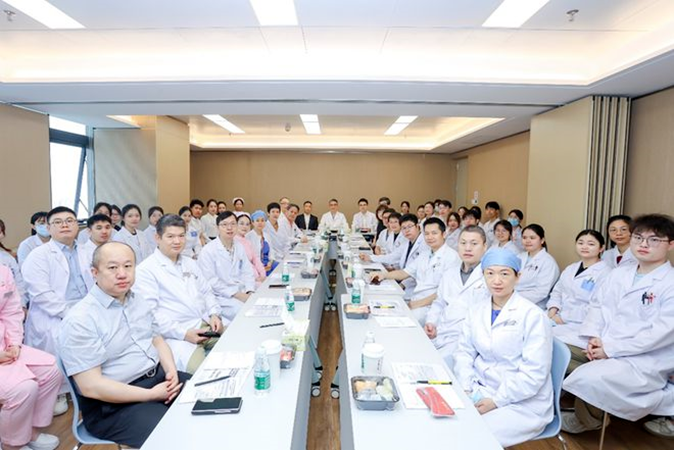
In April 2023, a clinical research project (IIT) for a lung cancer mRNA vaccine (ABOR2013), initiated by the First Affiliated Hospital of Guangzhou Medical University, officially commenced.
Q4:It is understood that Abogen has an IL-12 mRNA tumor product approved for IND, and several similar products targeting the same point have been approved both in China and internationally. What is your view on the current competitive landscape in this field?
Dr. Yuan Jijun:From my personal perspective, many peers in the industry are optimistic about the IL-12 target at present. This is mainly because IL-12 is a highly attractive cytokine that has long been a focus in the field of anti-tumor therapy, with numerous companies investing in the development of related products. However, we have also observed that the development of cytokine-based products, including approved IL-2 and IL-15, in the anti-tumor field has almost always encountered various degrees of setbacks. For us, based on the lessons learned from previous similar product development experiences, our team analyzed the characteristics of the products currently under research. We hope to fully consider future product differentiation during the development process. Meanwhile, by continuously optimizing study designs, we aim to achieve breakthroughs in the IL-12 field.
Compared with products of the same drug type, we have adopted different nucleic acid modification and delivery strategies from our competitors, resulting in distinct drug distribution and immunomodulatory signals, which in turn translate into stronger clinical anti-tumor efficacy.AlsoYesBased on this, in terms of indication selection, compared to most similar products being explored in melanoma, our plan is to include more cancer types that align with China's national conditions in the product evaluation.
Meanwhile, based on preclinical data, our IL-12 mRNA product has demonstrated strong anti-tumor activity and good safety, which will translate into a wider therapeutic window in the clinic, allowing us to evaluate the anti-tumor efficacy of the product across a broader range of doses compared to similar products.
Q5:In your opinion, among various cancer drugs, will products like mRNA-based cancer vaccines replace traditional forms of cancer drugs and become a new trend in future cancer treatment? What are the advantages of mRNA cancer vaccines compared to other types of cancer vaccines?
Dr. Yuan Jijun:In my personal opinion, mRNA, as a drug modality, has the potential to provide entirely new therapeutic approaches to address disease challenges that cannot be solved by certain established drug modalities, tackling issues that previous drug forms could not resolve. This is because drugs like antibodies can only target extracellular drug targets, while mRNA can deliver therapeutics inside cells to address some of these challenges. This is also the reason why I have always been very interested in the mRNA drug modality. However, I think it is unlikely that mRNA drugs will completely replace established drug modalities but can serve as a complement to previous small molecules, antibodies, and cell-based drugs.
Taking tumor vaccines as an example, this concept has actually been around for a long time. Everyone recognizes that it is a great technical approach for treating various cancers, but it has been limited by technological constraints, resulting in a high failure rate. Tumor vaccines developed using traditional technical methods are roughly divided into: cell-based carriers, peptide-based carriers, and direct injection of tumor cells, but none have shown good clinical effects. For instance, cell-based carriers, peptide-based carriers, and direct injection of tumor cells do not present well in the body and are quickly rejected by the immune system, leading to poor clinical outcomes.
In contrast, mRNA tumor vaccines are generally administered through intramuscular injection, allowing the mRNA to be directly delivered into human cells, triggering an immune response that leverages the body's own immunity to kill tumors. This approach offers significant advantages in terms of both safety and efficacy. Additionally, mRNA production is characterized by its rapid speed, making it suitable for the preparation of personalized tumor vaccines. Through gene sequencing of a patient’s tumor, neoantigens can be predicted, but the design and production need to keep pace with the progression of the patient’s tumor within a short timeframe. Currently, only mRNA technology is capable of achieving this effect; related products have already entered Phase III clinical trials abroad, and we are also making corresponding strategic plans.
In summary, what we are seeing with this form of mRNA-based drugs can be said to have enabled many that were previously stagnant.The idea in the early research field provides a whole new technical support. Many things we originally thought were impossible can now be achieved using mRNA technology, and there are many directions it can take. This technology can be used for drug development not only in infectious diseases and cancer, but also in rare diseases, metabolic disorders, chronic illnesses, and more. This is very exciting.
Q6:How to View the Current Trend of Many mRNA Companies, Including Biotechs, Starting to Adopt the CDMO Model?
Dr. Yuan Jijun:From my perspective, a large part of the reason is that the overall environment has entered a relatively low period, and it is expected to remain in a downturn for some time to come. Every company needs to consider the issue of increasing revenue and reducing costs. For example, we see more business development (BD) activities, recent achievements in licensing out, and some biotech companies starting to venture into contract development and manufacturing organization (CDMO) services to help absorb excess capacity. In fact, none of these models are new trends, nor are they exclusive to mRNA companies. Overseas, these are conventional operational models for biotech companies, especially under the current industry conditions, where survival is the top priority.
Q7:What is Abogen's attitude towards external cooperation?
Dr. Yuan Jijun:As we discussed earlier, the fields that mRNA technology can support for drug development are very broad. The COVID-19 pandemic has significantly accelerated the maturation of this technology. As the urgency of the pandemic situation eases, we also see that various fields including oncology, rare diseases, cardiovascular, and autoimmune diseases can utilize mRNA technology for product development. Therefore, there is still a substantial demand for mRNA drug development. Whether companies develop products on their own using this technology or collaborate with partners, both approaches are viable. In this regard, Abogen has always maintained an open attitude, hoping to work with multiple partners to fully leverage this technology and promote the market entry of more excellent products.
Q8:How to View the Involution Competition in the Field of Oncology?
Dr. Yuan Jijun:Internal competition is inevitable. In the field of oncology, everyone tends to choose mature targets and mechanisms for drug development, which involves relatively lower risks but also leads to intense competition. I believe that after a period of fierce competition, everyone will become more mature and rational. Especially given the current unfavorable macro environment, I think each company should consider how to leverage its strengths and focus on what others cannot achieve.
For Abogen Biosciences, the past few years of COVID-19 vaccine development work have provided us with mature industrialization advantages. Therefore, compared to other mRNA companies, we possess significant advantages in research and development, production, and clinical practice. Additionally, we have established our own proprietary mRNA technology platform. Currently, we own over 150 patents and patent applications, covering key technologies such as RNA modification and delivery systems, two-thirds of which are international patents. I believe that if we carefully consider how to leverage these strengths during the product development phase and think through them clearly, there should be no need to overly worry about the issue of excessive competition.
Q9:Why Does the Combination of Moderna's mRNA-4157 Cancer Vaccine and PD-1 Antibody Show Excellent Results? Why Are Tumor mRNA Vaccines Mostly Used in Combination in Clinical Applications? Will There Be More Combination Methods in the Future?
Dr. Yuan Jijun:The combination of tumor vaccines and PD-1 antibodies will be a future trend. The mechanism of tumor vaccines is to teach the immune system to recognize and kill tumor cells, while PD-1 antibodies restore T-cell function by blocking the suppression of the immune system by tumor cells, thereby killing the tumor. The combination of these two therapies is like needing both the accelerator and the brake when driving a car, making combination therapy the most reasonable approach.
Q10:Earlier this year, global mRNA giant Moderna announced its first investment in China, potentially reaching up to 1 billion US dollars. What impact do you think this will have on China's domestic mRNA enterprises?
Dr. Yuan Jijun:I think there will certainly be short-term competition, but in the longer term, the benefits outweigh the drawbacks. It will help drive the local mRNA industry to integrate with international standards more quickly and continue to develop upward.
First, as a world-class R&D institution in the mRNA field, Moderna's entry into China will help bring international operating systems, including operational standards and patents, into the country. This will also promote the growth of China's mRNA enterprises and help Chinese companies better understand international standards. At the same time, it will contribute to the cultivation of domestic mRNA professionals, preparing for future global development.
Secondly, mRNA is still a relatively new form of drug, and overall research in China remains relatively weak. As Moderna enters China, it can bring globally innovative products into the country. Through increased communication and exchange, this will help regulatory authorities gain a deeper understanding of mRNA drugs and provide support for the future listing of mRNA drug products in China.
Q11:What are Abogen's future development plans in the field of oncology?
Dr. Yuan Jijun: In the short-term three-year plan, we hope to push more projects to the POC stage. Currently, we already have several projects entering different stages of human trials. We hope that in the next three years, through more valuable clinical data, we can observe the effects of mRNA drugs in tumor clinical applications, while also deepening our understanding of mRNA drugs themselves.
Mid-term Planning: Currently, we have one oncology product that has entered Phase 1 of clinical trials for registration. We hope that in the next 5-10 years, more products will enter the clinical stage and be approved for marketing.
In the longer term, the long-term plan is to better leverage our technological advantages, create a better product portfolio around the clinical needs of cancer patients, and promote the launch of products in various forms to meet the current urgent demand for drugs in clinical settings. In this regard, first of all, we must ensure that our technology is very solid. Secondly, we are actively seeking cooperation with various peer institutions. The process of drug development is a long one, requiring the integration of a great deal of knowledge and technology, much like a "relay race." Therefore, we hope that through multi-party cooperation, we can incorporate more expertise and knowledge to accomplish this task. In the future, we hope to see innovative mRNA drug products originally developed in China being launched on the market as soon as possible.
End
About Us
Abogen Biosciences Co., Ltd. (referred to as Abogen) is an innovative biopharmaceutical company specializing in the research and development of messenger ribonucleic acid (mRNA) drugs. The company possesses industry-leading, proprietary mRNA and nanodelivery technology platforms and is one of the few mRNA drug development enterprises in China with complete value chain capabilities, covering all aspects from mRNA design, formulation development, to large-scale production. The company has established a diverse product pipeline, spanning multiple fields including infectious disease prevention and treatment (such as the mRNA COVID-19 vaccine), cancer immunotherapy, cancer vaccines, and protein replacement therapies. In September 2022, ARCoV (trade name AWCorna), an mRNA COVID-19 vaccine developed by Abogen, received emergency use authorization in Indonesia, becoming the first self-developed Chinese mRNA vaccine to gain market approval overseas.