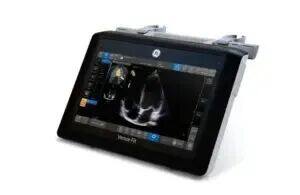
GE HealthCare, headquartered in Chicago, recently announced the launch of its Venue clinical ultrasound system equipped with AI-driven operational guidance.
GE Healthcare stated,The Venue series is among the first of its ultrasound-guided products to include Caption Guidance. The company incorporated this AI-driven imaging guidance technology into its product line after acquiring Caption Health earlier this year.
Caption Guidance is an optional add-on feature that provides new cardiac image diagnostic quality assistance at the point of clinical care. It supports physician operation in various clinical environments, such as emergency rooms, intensive care units, and anesthesiology.
GE Healthcare stated that the Caption Guidance technology provides doctors with step-by-step guidance to obtain ultrasound images for cardiac evaluation. It can assist those who are not ultrasound experts — by addressing the training and skill barriers associated with ultrasound use, which in turn expands the scope of ultrasound application.
According to the latest press release from GE Healthcare, this product may help in the early detection of signs of heart disease. It might also contribute to improving clinical outcomes through early intervention, slowing disease progression, and potentially even preventing hospitalization.
"The Venue series of ultrasound systems support clinical decision-making, even in emergency rooms, by integrating Caption Guidance, an AI-driven software. This device enhances cardiac care and reduces the burden on ultrasound technicians and radiology departments, enabling more physicians to perform scans and triage patients," said Dietmar Seifriedsberger, Global General Manager of GE HealthCare. "This AI software is expected to increase the number of physicians capable of performing cardiac ultrasound scans, which is particularly useful in high-demand and accuracy-critical environments such as emergency or intensive care settings."
The innovative application of Caption Guidance will be further expanded
GE Healthcare now offers Caption Guidance on its Venue clinical ultrasound systems in the U.S. and plans to integrate AI technology into other ultrasound systems, including handheld devices, with the goal of further expanding the application of diagnostic care and the use of ultrasound across various care settings.
Caption Guidance technology belongs to the Verisound technology suite, which was previously part of GE HealthCare's ultrasound digital solutions. Verisound is a new brand that integrates the company’s existing ultrasound AI and digital workflow solutions into a unified platform.
The company plans to debut the Venue series and Caption Guidance in Philadelphia next week. It will also unveil the Verisound brand at the ACEP conference and showcase its new Vscan AIR SL handheld ultrasound technology, which was launched in August.
"We recognize the potential of Caption Health AI in revolutionizing ultrasound applications and have moved quickly to integrate this promising technology to enhance patient care," said Karley Yoder, Chief Digital Officer of GE HealthCare. "Just months after acquiring Caption Health, we have successfully launched Caption Guidance as a powerful new guidance tool on our Venue Family ultrasound systems, making the use of ultrasound at the point of care more efficient and confident, and strengthening our integrated products and solutions."
"We remain committed to leveraging this technology for greater positive impact and plan to expand its applications to include pregnancy, fetal health, and lung disease."
GE Healthcare Continues to Strengthen Cooperation in Imaging and Artificial Intelligence Fields
Coincidentally, in September, GE Healthcare and Mayo Clinic also announced a collaboration in imaging, artificial intelligence, and cancer treatment.
Jan Makela is the CEO of GE HealthCare's imaging business.
GE Healthcare and Mayo Clinic Reach Agreement to Collaborate on Medical Technology, Building on Past Work to Expand Certain Functionalities of GE Healthcare’s Product Portfolio; Four Key Areas of Collaboration EstablishedMagnetic Resonance Imaging, Ultrasound Technology, Artificial Intelligence, and Theranostics - A Cancer Treatment.GE Healthcare Imaging CEO Jan Makela Shares More Details on Partnerships and the Future of Imaging Technology.What led to your decision to collaborate with the Mayo Clinic?
We have a long history of cooperation, development, and joint research with Mayo Clinic. Dr. Callstrom, the chair of radiology at Mayo, and I met about a year ago, and we have been thinking about how to elevate our collaboration and medical technology to the next levels.
We are looking for a direct point of alignment in products where we can collaborate, so we’re not starting from scratch. We’ve discussed the areas where we both feel strongest and most excited about growth... and where we can make the biggest impact.
What is the nature of your partnership? Will Mayo Clinic be a research partner, or will it also participate in the commercialization process?
This will largely involve intellectual property. We have established a basic framework to track where the IP goes. Mayo Clinic can use any product we develop and manufacture. The primary goal of our partnership is to be commercialization partners, but we will use all these products within Mayo Clinic itself first and then aim to promote them more broadly.GE HealthCare currently offers some artificial intelligence features for its MRI machines.
MR scans typically take a very long time, and one key issue is how to make them faster so you don't have to spend 45 minutes in the machine.
Tens of thousands of MRIs have been installed around the world, and we've done a lot of work in artificial intelligence to study how we can quickly generate images. We collaborate with artificial intelligence so that we can achieve better imaging results with less data, which means scans can be performed faster.
With the addition of Mayo, we will continue to explore these product areas, not only enhancing clinical insights, better imaging, and how to make MR more user-friendly and efficient.
Are your hospital customers purchasing these artificial intelligence tools through subscription, or are they embedded in the equipment?
Some artificial intelligence is just embedded software. We have made some system upgrades as a specific type of product for sale, but more often it is sold as a subscription. You purchase it, then renew the subscription, and then receive software updates. So, it has quite a few models. Some customers prefer subscriptions, while others prefer to buy it and purchase its upgrades. Therefore, I think you need a range of solutions.
How Does Therapeutics Work in the Context of Cancer Treatment?
Currently, there are two clinical drugs in use: one is called Pluvicto, and the other is called Lutathera. One is used for neuroendocrine tumors, and the other is used for prostate tumors. Both are suitable for advanced-stage patients.
The general idea is, when a patient has metastatic lesions, where are they and how big are they? There is now a radioactive tracer that attaches to proteins expressed by the tumor. So, the patient is injected with the radiotracer, it goes everywhere the tumors are, and then clinicians can image it on a PET system to measure and characterize the tumor burden.
GE Healthcare Collaborates with Mayo Clinic to Accelerate Imaging and Artificial Intelligence Efforts
It's obvious now that there are many ways to treat cancer, and more recent therapies like cell therapy and gene therapy are targeting cancer. It's somewhat similar because what you do is take the same molecule that attaches to the tumor and then change the isotope to a molecule that emits more radiation. It goes where the cancer is, sticks to the cancer, and then you get heavy radiation into the cancer, so it kills it.
Therefore, it is important to use the same molecule to locate the cancer, determine the dosage, decide the treatment plan, and then use the same molecule with a different isotope to kill the cancer. This way, we can precisely track where the radiation dose is going and how the individual is responding to the tumor, thereby enhancing precise patient care.As a leader in medical technology innovation, GE Healthcare has achieved numerous innovative results in various fields. As the "big brother" in the ultrasound field, GE Healthcare's ultrasound technology development has consistently remained at the forefront globally.
As one of the niche sectors in the medical device industry, the market size of ultrasound medical imaging equipment continues to expand. According to statistics from Signify Research, the global market size of ultrasound medical imaging equipment was 197,683 units in 2019, increased to 211,976 units in 2020, and is expected to further increase to 305,989 units by 2024, with a compound annual growth rate (CAGR) of 9.13%. In China, the market size of ultrasound medical imaging equipment was 39,835 units in 2019, increased to 41,931 units in 2020, and is projected to reach 68,032 units by 2024, with a CAGR of 11.30%.
Currently, ultrasound technology has been deeply integrated with new technologies such as artificial intelligence and 5G. In the future, the application of ultrasound will become increasingly widespread, covering all aspects of diagnosis and treatment, and equipment will also develop in an increasingly specialized direction.
丨Source: Medical Device Innovation Network
Disclaimer: This article is intended solely for the purpose of information transmission and is for reference only. It does not constitute any advice on investment or treatment; please exercise caution. If the content, copyright, or other issues of the work are involved, to protect the rights and interests of both parties, please contact us and we will handle it immediately. If this article is reprinted by any platform, the platform shall be responsible for the article itself; the Medical Device Innovation Network is not responsible for any secondary dissemination caused by reprinting.
P R E V I E W