

Regeneron and Nobel Laureate-Founded Intellia Expand CRISPR Collaboration Beyond the Liver into Neurological and Muscular Diseases

Regeneron
Biopharmaceutical Manufacturer
Intellia Therapeutics
Gene Editing Therapy Developer
▲October 21, General Cell Drug Development Forum · Free for a Limited TimeRegistration Open
October 9, 2023 / eMedClub News /--Recently,Regeneron announced that it will expand its existing collaboration agreement with Intellia Therapeutics to developCRISPR/Cas9-Based Gene Editing Therapy for Neurological and Muscular Disorders. The expanded agreement willCombine Regeneron's proprietary delivery system and antibody-targeted adeno-associated virus (AAV) vector with Intellia's Nme2 CRISPR/Cas9 gene editing technology.
Similar to Katalin Kariko and Drew Weissman, who have just been awarded the 2023 Nobel Prize in Physiology or Medicine for their mRNA vaccine,Jennifer Doudna, co-founder of Intellia, also received this honor in October 2020 with the CRISPR gene editing system.. Intellia, which she founded, is committed to leveraging CRISPR gene editing technology to develop innovative therapies through gene editing both in vivo and in vitro.
Regeneron Senior Vice President and Co-Head of Genetic Medicines Aris Baras said in a statement that genetic medicines have become an attractive therapeutic approach,However, widespread use still faces the limitation of being unable to effectively deliver gene payloads to human cells beyond the liver.Therefore, the long and productive collaboration between Regeneron and Intellia is leveraging new technologies and innovations to unlock the potential of gene therapies, with this partnership specifically targeting neurological and muscular diseases.

Regeneron and Intellia
Soulmates Meet for the First Time,Focused on the Field of Liver Diseases
Under this six-year cooperation agreement, Regeneron will obtain exclusive rights to research and develop 10 gene therapy technologies based on CRISPR/Cas9 gene editing. Among the 10 genes, Regeneron can select up to five non-liver cell-targeted gene editing technologies. However, this cooperation will still exclude non-liver cell-targeted gene editing technologies that Intellia is currently studying or planning to study, as well as target gene editing technologies shared through Intellia's collaborations with other companies.Focus on the treatment of liver diseases。
Safety of In Vivo CRISPR Gene Editing Validated Multiple Times
eMedClub
NTLA-2001
eMedClub
Transthyretin amyloidosis is the first disease for which Intellia and Regeneron have developed and commercialized a gene-editing therapy.To this end, they have developedNTLA-2001 Gene Editing Therapy, the First Systemically Administered CRISPR TherapyNTLA-2001 encapsulates a CRISPR gene-editing system targeting the TTR gene using lipid nanoparticles, offering the potential for a single treatment to potentially cure transthyretin amyloidosis. In June 2021, the two companies announced robust interim Phase I data, which isThe first clinical data supporting the safety and efficacy of in vivo CRISPR gene editing,A single infusion of the candidate drug can significantly reduce the levels of pathogenic proteins without triggering serious safety concerns.
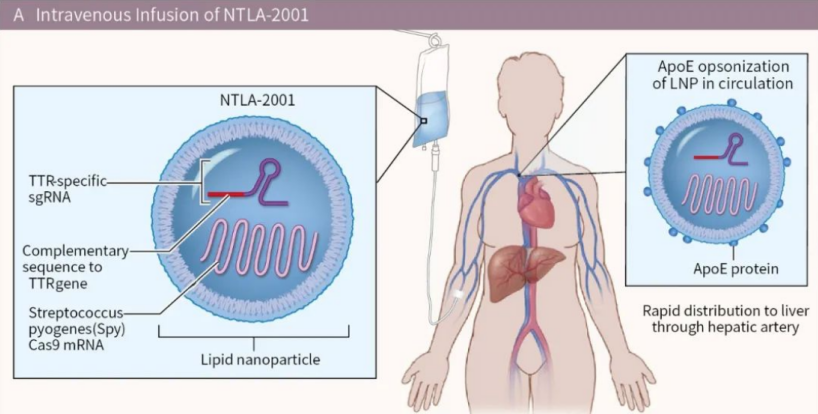 ▲ NTLA-2001 Drug Design and Intravenous AdministrationImage Source: [2]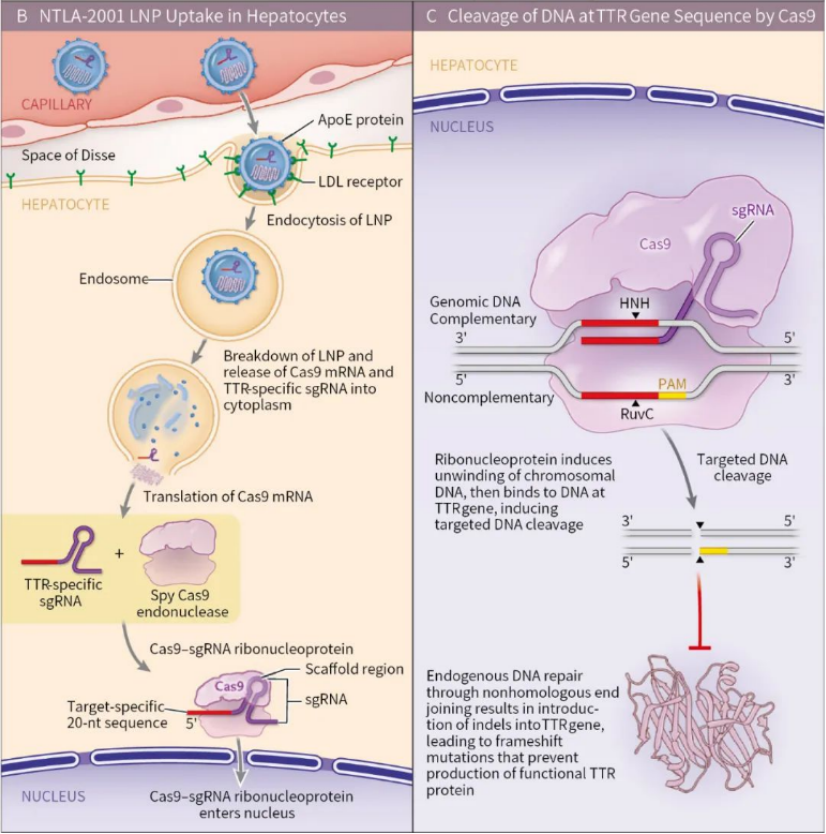
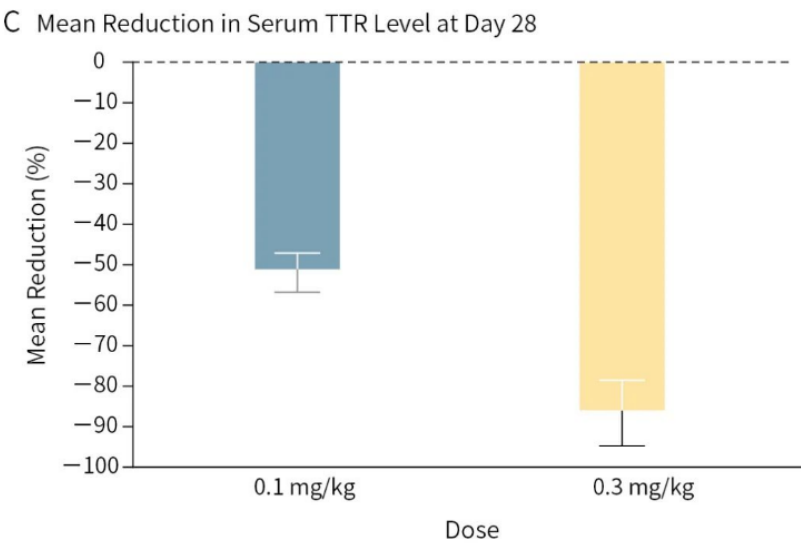
Among them, the first patient completed dosing in November 2020. The trial data disclosed this time involved the first six patients enrolled, with three in the low-dose group (0.1 mg/kg) and three in the high-dose group (0.3 mg/kg). All patients were tested for mutant TTR protein levels in serum on day 28 post-dosing. The results showed that NTLA-2001 demonstrated dose-dependent effects: the TTR expression level in the low-dose group decreased by an average of 52%, while in the high-dose group, it decreased by an average of 87% after 28 days of intravenous administration. Additionally, no serious adverse events were observed 28 days after dosing, and no off-target effects related to the NTLA-2001 dosage occurred.
NTLA-2002
eMedClub
In June this year, Intellia also announced the in vivo CRISPR gene editing therapy.NTLA-2002 Phase 1/2 Clinical Trial Data for the Treatment of Hereditary Angioedema (HAE), demonstrating the potential of this product as a one-time therapy to functionally "cure" HAE.
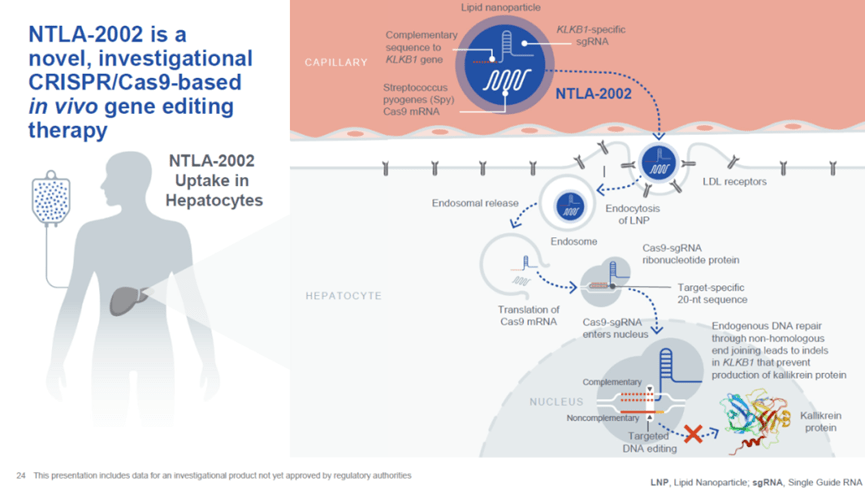
NTLA-2002 is a systemic in vivo gene editing therapy based on CRISPR/Cas9 technology, designed to perform genomic editing on the kininogen B1 gene (KLKB1), which is responsible for encoding the prekallikrein protein. By inactivating KLKB1, NTLA-2002 can permanently reduce kallikrein activity to achieve the goal of curing the disease.NTLA-2002 contains a guide RNA (gRNA) targeting the pathogenic gene, and an mRNA encoding the Cas9 enzyme, which will jointly perform precise editing.。
In this trial, HAE patients received treatment with three different doses of NTLA-2002. The trial results showed that, as of the latest follow-up time, a single dose of NTLA-2002 reduced the average monthly HAE attack rate by 95% in all treated patients. The median follow-up duration was 9.0 months. Importantly, the elimination of HAE attacks was sustained and long-lasting. The three earliest-treated patients in the study had the longest follow-up time, experiencing approximately one year or more without attacks. Additionally, the reduction in HAE attacks persisted consistently among the most severely symptomatic HAE patients. The three patients with the highest historical monthly HAE attack rates at the start of the study (16.8, 14.0, and 4.4 attacks per month, respectively) were attack-free at the end of the 16-week primary observation period and remained so at the latest follow-up. The longest attack-free period in this group has reached 11.5 months and is still ongoing.
Intellia CEO John Leonard once said, "These clinical data demonstrate for the first time that we can precisely edit target cells in the body via a single intravenous injection of CRISPR to treat genetic diseases."
United Efforts, Marching Towards Hemophilia
Regeneron alsoIn June 2020, the partnership was expanded with a $70 million upfront payment and an additional $30 million equity investment, totaling $100 million, adding hemophilia A and B to the target list., while also obtaining the rights to develop in vivo therapeutic targets based on CRISPR/CAS9, and the non-exclusive rights to independently develop and commercialize ex vivo gene editing products. Upon the release of this news,Intellia's stock surged 15%, closing at $20.92 per share, with a gain of 19.47%.It can be seen that the capital market is very optimistic about the in-depth cooperation between the two companies. According to Intellia's website, the two companies are currently conducting new drug research work on a hemophilia B candidate drug, while the hemophilia A project is still in the early research stage.
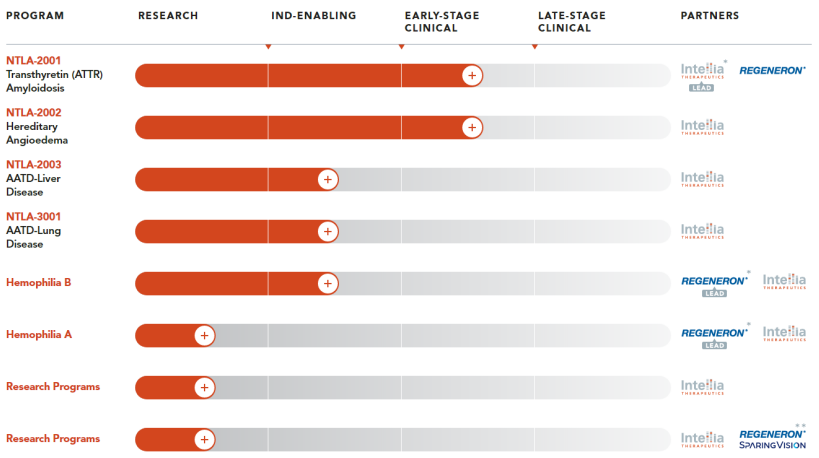
In preclinical studies, the company demonstrated the first CRISPR/Cas9-mediated targeted transgene insertion in the liver of non-human primates, resulting in normal or higher levels of circulating human Factor IX. Factor IX is the clotting protein that is missing or defective in patients with Hemophilia B. These results suggest that transgene insertion can provide a functional Factor IX gene, which encodes the crucial protein.
Conclusion
Many clinical trials of in vivo gene editing therapies are in full swing. However, compared to ex vivo editing,In vivo CRISPR gene editing has high technical barriers, and the clinical translation of products still poses significant challenges.One of the main reasons isLack of safe and effective methods to deliver genome editing tools to a wide range of human tissues and organs, while avoiding risks such as immunogenicity and genetic toxicity.. From the perspective of product development,The selection and design of delivery methods are key to further technological optimization.Therefore, the public is also highly concerned about the reunion of Regeneron and Intellia, and how they will upgrade CRISPR gene editing technology in the field of neurological and muscular diseases. As more pipeline layouts and clinical data are disclosed, the future of medical development will become clearer.
Exciting Live Broadcast Preview
Press and hold to scan the QR code and participate immediately ↓
Recommendation
1
October 10 (Tuesday) 19:00-21:00
Driving Innovation to Expand CGT's Differentiated Competitive Advantage

Recommendation
2
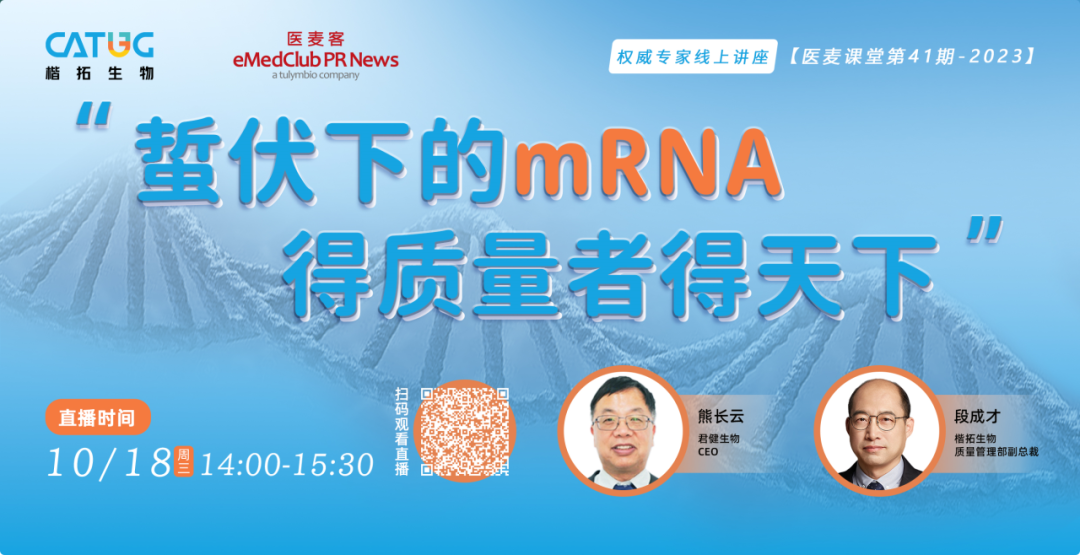
October 18th (Wednesday) 14:00-15:30
The Dormant mRNA: Quality is the Key to the Kingdom


Dian Dian "Share”、“Like" and "In View", charge me up a bit~"