

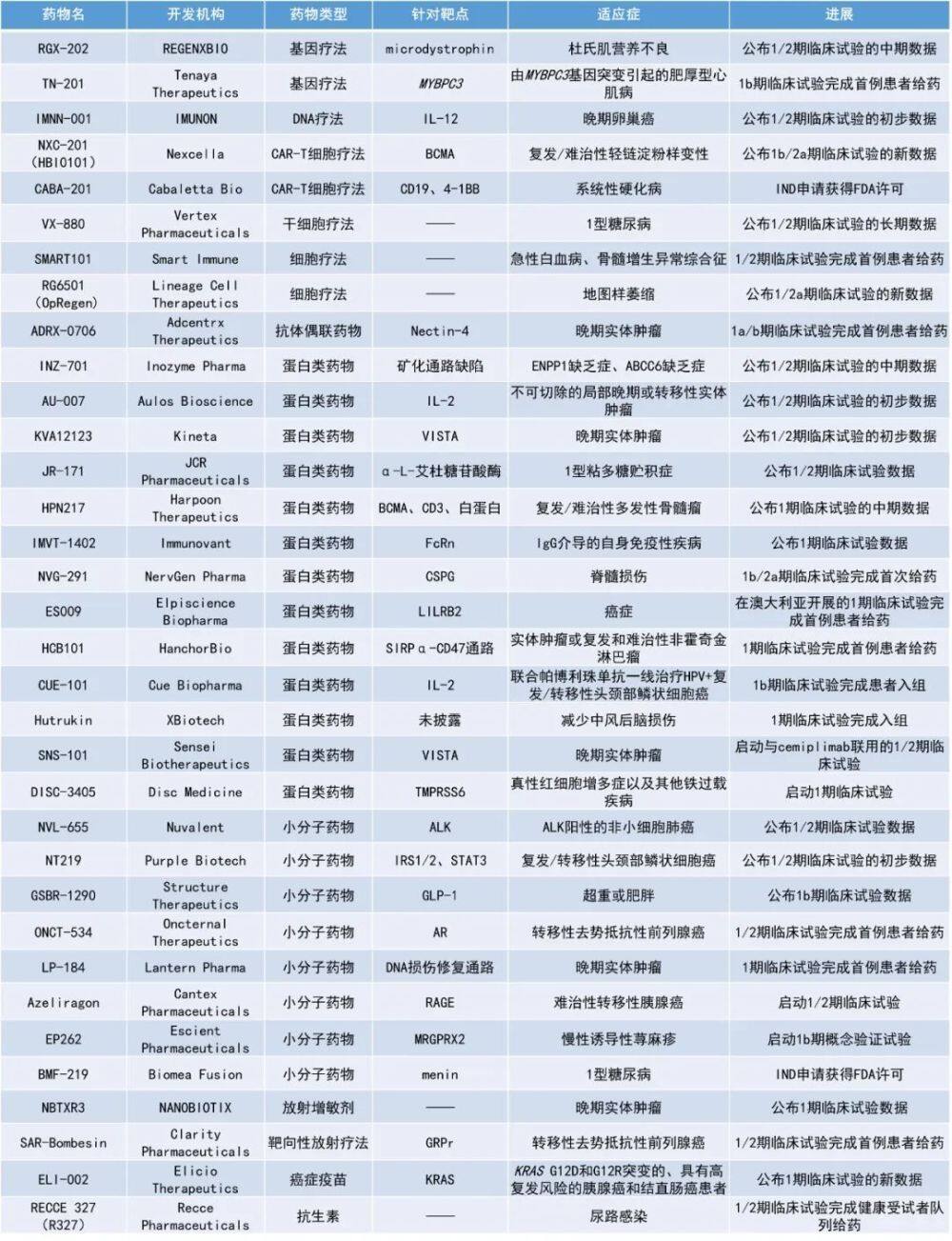
100% Overall Response Rate Achieved by BCMA-Targeted CAR-T Therapy NXC-201; VX-880 Stem Cell Therapy Shows Potential to Cure Type 1 Diabetes

Nexcella
Cell Therapy Researcher
▎Edited by the WuXi AppTec content team
Highlights of This Issue
1. The autologous CAR-T cell therapy NXC-201 targeting BCMA for the treatment of relapsed/refractory light chain (AL) amyloidosis achieved an overall response rate (ORR) of up to 100% and a complete response (CR) rate of 67%.
2. Stem Cell Therapy VX-880, Which Has the Potential to Cure Diabetes, Announces Positive Long-Term Clinical Results: Both Patients with at Least 1 Year of Follow-Up Reached the Primary Endpoint.
3. Early clinical results for the oral glucagon-like peptide-1 (GLP-1) small molecule drug GSBR-1290 are positive, with patients experiencing an average weight loss of nearly 10 catties after 4 weeks of treatment.
4. The novel radiosensitizer NBTXR3, a potential "first-in-class" agent, showed impressive results in elderly patients with locally advanced head and neck cancer, with an ORR of 81.8% and a CR rate of 63.6% in treated lesions.
Organized by the WuXi AppTec content team
NXC-201 (HBI0101): New Data from Phase 1b/2a Clinical Trial Released
Nexcella, Inc. announced new data from the Phase 1b/2a clinical trial of its BCMA-targeted autologous CAR-T cell therapy, NXC-201. The study aims to evaluate the safety and efficacy of NXC-201 in treating relapsed/refractory AL amyloidosis. This data update includes follow-up information on one new patient and eight additional patients (for a total of nine). All patients were relapsed/refractory to daratumumab combination therapies and had received a median of six prior lines of therapy before NXC-201 treatment, none of which had prevented disease progression.
As of the data cutoff on September 20, 2023, the median follow-up time for patients was 7.3 months (2.5-16.5 months). NXC-201 demonstrated potentially meaningful efficacy and durable responses in patients with relapsed/refractory AL amyloidosis.The ORR of the patients was 100% (9/9), and the CR rate was 67% (6/9).The longest duration of response for patients was 19.2 months and is ongoing. Nexcella plans to file a Biologics License Application (BLA) with the FDA for NXC-201 to treat AL amyloidosis after 40 patients have been treated with NXC-201.
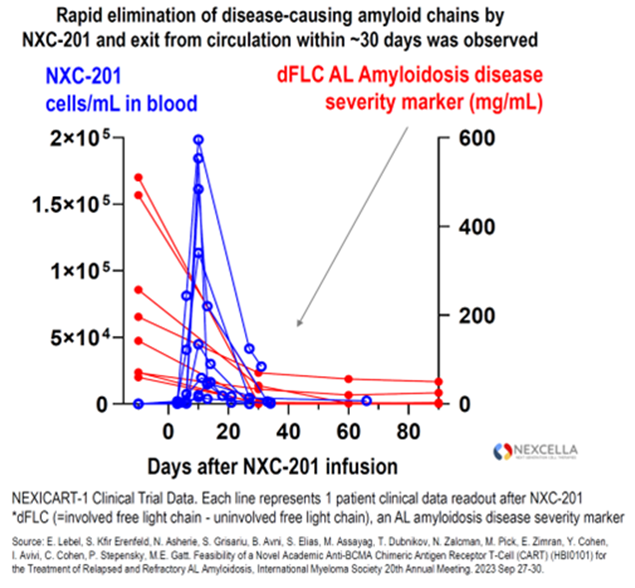
▲Clinical trial results of NXC-201 (Image source: Reference [1])
VX-880: Long-term Data from Phase 1/2 Clinical Trial Announced
Vertex Pharmaceuticals Announces VX-880 Cell TherapyPhase 1/2 Clinical TrialLong-term data for Part A and Part B in the treatment of patients with Type 1 Diabetes (T1D). VX-880 is an investigational stem cell-derived, fully differentiated, insulin-producing allogeneic islet cell therapy. This therapy has the potential to restore the body's ability to regulate glucose levels by restoring islet cell function, including glucose-responsive insulin production.
The results published this time show that all patients in Part A and Part B are currently receiving follow-ups exceeding 90 days, with the implantation of islet cells and endogenous glucose-responsive insulin production confirmed in the Mixed Meal Tolerance Test (MMTT) on Day 90.All patients showed improvement in all blood glucose control indicators, including reduced glycated hemoglobin (HbA1c), decreased or discontinued use of exogenous insulin, etc. Among them, two patients who were followed up for at least one year reached the primary endpoint, achieving insulin independence—meaning no severe hypoglycemic events (SHEs) occurred between 90 days and one year, and their HbA1c levels...
After the data cutoff date, the third patient achieved insulin independence on Day 180. To date, VX-880 has generally been well-tolerated in all dosed patients. Most adverse events were mild or moderate, and no serious adverse events related to VX-880 treatment have occurred.
GSBR-1290: Announcement of Phase 1b Clinical Trial Data
Structure Therapeutics Announces That Its Highly Selective Oral GLP-1 Receptor Agonist GSBR-1290, in Overweight or Obese Healthy IndividualsPhase 1b Clinical TrialPositive results were obtained in China. GSBR-1290 is a small molecule agonist that targets the oral GLP-1 receptor. It is a G protein-coupled receptor agonist designed through Structure's structure-based drug discovery platform and can selectively activate the G protein signaling pathway.
The test results showed,Subjects experienced weight loss after the first week. Subjects receiving the highest dose of GSBR-1290 treatment had an average weight reduction of up to 4.9 kilograms from baseline after 28 days, with a placebo-adjusted weight decrease of up to 4.9%.GSBR-1290 Exhibits Encouraging Safety and Tolerability Profiles with Once-Daily Dosing. No subjects discontinued treatment due to adverse events. The majority of reported adverse events were mild, with no severe or serious adverse events observed.
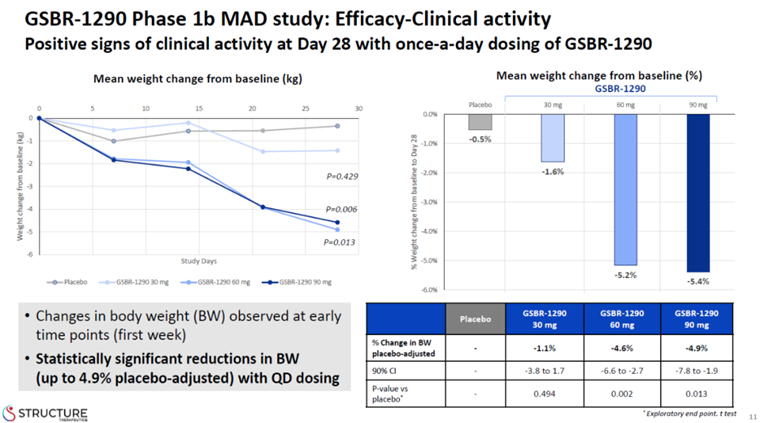
▲Higher doses of GSBR-1290 significantly reduced the body weight of subjects (Image source: Structure Therapeutics official website)
NBTXR3: Phase 1 Clinical Trial Data Released
Nanobiotix Announces Positive Phase 1 Data for NBTXR3, a Potential “First-in-Class” Novel Radiosensitizer, in Elderly Patients with Locally Advanced Squamous Cell Carcinoma of the Head and Neck (SCCHN) Treated with Radiotherapy Activation. NBTXR3 consists of functionalized hafnium oxide (HfO2) nanoparticles, administered via a single intratumoral injection and activated by radiotherapy. Its mechanism of physical action is:Aimed at activating through radiotherapy, inducing massive tumor cell death within the injected tumor, subsequently triggering adaptive immune responses and long-term anti-cancer memory.Thanks to this physical mechanism of action, Nanobiotix believes that NBTXR3 can be extended to any solid tumor treatable with radiotherapy and any combination therapy, especially when combined with immune checkpoint inhibitors.
The results of this study show that radiotherapy-activated NBTXR3 is feasible and well-tolerated in elderly patients (n=56) with a high burden of comorbidities.In evaluable patients (n=44), the ORR of drug lesions was 81.8%, and the CR rate was 63.6%.The median duration of response for NBTXR3-injected lesions has not been reached, indicating that the therapy has durable antitumor efficacy.The median progression-free survival (PFS) was 16.9 months, and the median overall survival (OS) was 23.1 months.In historical data, the median PFS and median OS for similar populations were 9 months and 12 months, respectively. These results support the ongoing global registrational Phase 3 study, which aims to evaluate NBTXR3 for treating elderly patients with locally advanced head and neck cancer.
RGX-202: Interim Data from Phase 1/2 Clinical Trial Announced
REGENXBIO Announces Positive Interim Data from Phase 1/2 Clinical Trial of RGX-202 for the Treatment of Duchenne Muscular Dystrophy (DMD). RGX-202 is an investigational one-time adeno-associated virus (AAV) therapy for DMD, utilizing the NAV AAV8 vector to deliver a novel micro-dystrophin transgene.This transgene includes functional elements of the C-terminal (CT) domain and a muscle-specific promoter to achieve muscle targeting, thereby enhancing resistance to DMD-related muscle damage.
The results announced this time show that three patients tolerated RGX-202 well.Preliminary biomarker data from two patients who completed the three-month evaluation showed robust expression of micro-dystrophin. In one patient, aged 4.4 years, the level of micro-dystrophin expression was 38.8% of the control group.Elevated levels of serum creatine kinase (CK) are associated with muscle damage and are commonly elevated in DMD patients.Researchers observed a 43% reduction in CK levels from baseline in the 4.4-year-old patient at week 10, supporting that RGX-202 may provide clinical improvement for DMD patients.
IMNN-001: Preliminary Data from Phase 1/2 Clinical Trial Released
IMNN-001 is a DNA-based IL-12 immunotherapy developed by IMUNON for the localized treatment of advanced ovarian cancer.IMNN-001Designed using IMUNON's proprietary TheraPlas platform technology,It is an IL-12 DNA plasmid vector encapsulated in a nanoparticle delivery system, capable of achieving cell transfection, followed by sustained secretion of the IL-12 protein in local tissues.
The company is evaluating the dose, safety, efficacy, and biological activity of intraperitoneal injection of IMNN-001 in combination with neoadjuvant chemotherapy (NACT) in newly diagnosed patients with advanced epithelial ovarian cancer, fallopian tube cancer, or primary peritoneal cancer. Interim data from the intent-to-treat (ITT) population show,Compared with the control group receiving NACT alone, the PFS in the NACT+IMNN-001 treatment group was extended by approximately 33%, and the OS data was prolonged by about 9 months compared to the control group.Subgroup analysis showed that, based on receiving NACT treatment, patients who received PARP inhibitors (PARPi) as maintenance therapy and were also treated with IMNN-001 had longer PFS and OS.The median PFS for the PARPi+NACT group and the PARPi+NACT+IMNN-001 group were 15.7 months and 23.7 months, respectively, while the median OS were 45.6 months and not yet reached, respectively.The company stated that continued follow-up is needed to confirm these preliminary observed results.
RG6501 (OpRegen): New Data from Phase 1/2a Clinical Trial Released
Lineage Cell Therapeutics Announces New Early Clinical Data for Its Allogeneic Retinal Pigment Epithelium (RPE) Cell Therapy RG6501 (OpRegen) in the Treatment of Geographic Atrophy (GA) Secondary to Age-Related Macular Degeneration (AMD)
The results showed that the outer retinal structure and visual function of the patient's eye had sustained improvement after the administration of OpRegen cells. OpRegen cells can support the remaining retinal cells within the atrophic area by counteracting host RPE cell dysfunction and loss.Compared with the baseline, the best-corrected visual acuity (BCVA) of five patients in cohort 4 had an average increase of 4.4 letters at 3 months after treatment and an average increase of 12.8 letters at 1 year.Moreover, patients who showed improvement in retinal structure on the first day after receiving subretinal administration of OpRegen continued to show structural improvements in the retina at 24 months post-treatment, as confirmed by optical coherence tomography (OCT).Characteristics of complete RPE and outer retinal atrophy (cRORA) areas have disappeared.The company is still evaluating the durability of retinal structure improvement in patients after OpRegen reaches the primary endpoint at 12 months.
HPN217: Interim Data from Phase 1 Clinical Trial Announced
Harpoon Therapeutics Announces Phase 1 Clinical Data Update for HPN217, a Tri-Specific T-Cell Activating Therapy Targeting BCMA, in Patients with Relapsed/Refractory Multiple Myeloma (RRMM). As of August 12, 2023, a total of 97 patients have been treated with HPN217 across 14 dose-escalation cohorts. The trial enrolled heavily pretreated patients, with 65% having received five prior lines of therapy and 20% having been treated with BCMA-targeted therapies. Among the 19 patients receiving the target dose of 12 mg, manageable tolerability was observed, with a low incidence of cytokine release syndrome (CRS) (16%, all Grade 1-2) and no reported cases of immune effector cell-associated neurotoxicity syndrome (ICANS). Additionally,HPN217 demonstrated robust early clinical activity at this dose, with an ORR of 63%.Seven patients who achieved remission are still receiving treatment, with the median treatment duration continuously extending, currently at 8.3 months (6.0-17.3+).
IMVT-1402: Phase 1 Clinical Trial Data Released
Immunovant Announces Results of Its Neonatal Fc Receptor (FcRn) Inhibitor IMVT-1402 in Healthy Adult SubjectsPhase 1 Clinical TrialPreliminary data. Anti-FcRn antibody drugs are considered highly promising. Their mechanism of action lies in the upregulation of FcRn expression by pro-inflammatory cytokines (such as TNF-α), which extends the half-life of IgG and serum albumin by reducing lysosomal degradation in endothelial and bone marrow-derived cells. Blocking the FcRn-IgG interaction accelerates the degradation of autoantibodies and alleviates the onset of various pathogenic IgG-mediated autoimmune diseases.
The results announced this time show that subcutaneous injection of IMVT-1402 can reduce IgG in a dose-dependent manner, while serum albumin or low-density lipoprotein cholesterol (LDL-C) does not change in a dose-related manner, thereby enhancing its potential as a "best-in-class" FcRn inhibitor. Specifically, no significant decrease in serum albumin from baseline or increase in LDL-C was observed at any tested time point (all p-values > 0.05).After receiving a once-weekly subcutaneous injection of 300 mg IMVT-1402 for a total of 4 weeks, the cohort's total IgG levels decreased by an average of 63% from baseline, while serum albumin did not fall below baseline, and LDL-C did not rise above baseline.The overall safety data were good, and all adverse events were mild or moderate.
INZ-701: Interim Data from Phase 1/2 Clinical Trial Announced
Inozyme Pharma Announces Interim Data from Phase 1/2 Clinical Trial of INZ-701 for the Treatment of ENPP1 Deficiency and ABCC6 DeficiencyInozyme Pharma announced interim data from the Phase 1/2 clinical trial of its investigational therapy INZ-701 for the treatment of ENPP1 deficiency and ABCC6 deficiency. INZ-701 is a soluble recombinant protein with the potential to treat patients with various mineralization disorders. These disorders are primarily associated with mutations in the ENPP1 and ABCC6 genes, which lead to reduced plasma levels of pyrophosphate (PPi), a critical factor in preventing harmful soft tissue calcification and regulating bone mineralization.INZ-701 can fuse the extracellular domain of ENPP1 enzyme with the Fc domain of immunoglobulin IgG1, aiming to restore mineralization pathway defects caused by the deficiency of ENPP1 or ABCC6.
The ongoing trial data shows,INZ-701 may bring clinical benefits to patients with ENPP1 deficiency, including improvements in key biomarkers, patient-reported outcomes, and functional outcomes. In trials targeting patients with ABCC6 deficiency, improvements in Global Impression of Change (GIC) scores were observed across all three dose cohorts.Moreover, INZ-701 was well-tolerated in both trials, demonstrating favorable safety and immunogenicity.

NVL-655: Release of Phase 1/2 Clinical Trial Data
Nuvalent Announces Positive Early Clinical Results for NVL-655, a Next-Generation Brain-Penetrant ALK Inhibitor, in Heavily Pretreated ALK-Positive Non-Small Cell Lung Cancer (NSCLC) PatientsNVL-655 is designed to simultaneously address clinical challenges such as drug resistance, brain metastases, and central nervous system (CNS) adverse events caused by off-target effects associated with tropomyosin receptor kinase (TRK) inhibition.These challenges may limit the use of currently available ALK tyrosine kinase inhibitors (TKIs).
As of June 12, 2023, a total of 57 patients (54 NSCLC patients and 3 patients with other solid tumors) had orally taken NVL-655 at doses ranging from 15 mg to 200 mg once daily.Among ALK-positive NSCLC patients treated with NVL-655, 45% (15/33; 8 pending confirmation) achieved partial response.The dose of NVL-655 is 15-150 mg once daily.The ORR observed in patients harboring ALK resistance mutations at baseline was 65% (11/17), and the ORR in patients treated with lorlatinib (including cases with compound resistance mutations) was 41% (12/29).In addition, early indicators of CNS activity with NVL-655 were observed. Preliminary pharmacokinetic analysis showed that the drug's exposure was dose-proportional.Preliminary pharmacodynamic analysis showed a reduction (including clearance) of ALK fusions and mutant variants in ctDNA.In terms of safety, NVL-655 was well-tolerated, and treatment-related adverse events were generally mild.
NT219: Preliminary Data from Phase 1/2 Clinical Trial Announced
Purple Biotech Announces Preliminary Data from Phase 1/2 Clinical Trial of NT219, a Potential "First-in-Class" Dual Inhibitor of IRS1/2 and STAT3
The results showed that no dose-limiting toxicity was observed in patients from either group. NT219 was well-tolerated both as a monotherapy and in combination with cetuximab. The highest dose of NT219 in combination with cetuximab demonstrated anti-tumor activity.Among the 4 SCCHN patients in the highest dose cohort, 2 confirmed partial responses.In addition,The patient's tissue biopsy results indicate that NT219 has an inhibitory effect on IRS1/2 and STAT3 within the tumor.
ELI-002: Announcement of New Data from Phase 1 Clinical Trial
Elicio Therapeutics Announces New Clinical Trial Data for ELI-002, a Therapeutic Cancer Immunotherapy, in Patients with High-Risk Recurrent Pancreatic and Colorectal Cancers Carrying KRAS G12D and G12R MutationsELI-002 consists of AMP-modified KRAS mutant (mKRAS) peptide segments and an AMP-modified immunostimulatory oligonucleotide adjuvant ELI-004, administered subcutaneously to target lymph nodes.It can generate RAS-specific cytotoxic T cells to attack residual tumor cells after surgery, which is expected to prolong remission in cancer patients and prevent future recurrence.
Previously released data showed that the median recurrence-free survival (RFS) for evaluable patients (22 people) was 16.3 months, and the median overall survival (OS) has not yet been reached. Tumor biomarkers decreased in 77% of patients, and biomarkers were completely cleared in 32% of patients.ELI-002 induced a strong mKRAS-specific T-cell response in 87% of patients.The updated data shows,ForPatients with ELI-002-induced T cell responses above the median had an 86% reduction in the risk of disease progression or death.In terms of safety, ELI-002 demonstrated good tolerability, with no dose-limiting toxicity or treatment-related adverse events ≥ Grade 3.