

Novo Nordisk's RNAi Therapy Rivfloza (Nedosiran) Receives FDA Approval for Primary Hyperoxaluria Type 1

Novo Nordisk
Insulin Developer and Manufacturer

Warm Tips
Peptide Research Society Builds Reader Communication Group~
Industry Exchange, Business Cooperation, Report Consultation
Please add the editor's WeChat for further group joining information.

Product Approval
01

On 2023-9-29, the FDA approved Novo Nordisk's RNAi therapy Nedosiran (brand name: Rivfloza) for marketing, intended to reduce urinary oxalate levels in pediatric and adult patients aged 9 years and above with Type 1 Primary Hyperoxaluria (PH1). In the announcement, Novo Nordisk stated that Rivfloza is expected to officially launch in early 2024. Nedosiran was initially developed by Pharmaceuticals, and on 2021-11-18, Novo Nordisk acquired U.S.-based RNAi therapy company Dicerna Pharmaceuticals for $3.3 billion, obtaining the rights to this therapy.
Among them, Primary Hyperoxaluria (PH) is divided into three types: Type 1, Type 2, and Type 3, with a prevalence of approximately 3 in 1,000,000. PH1 is the most common and also the most severe type. PH1 is a rare hereditary liver disease primarily caused by mutations in the gene encoding human alanine-glyoxylate aminotransferase (AGT), leading to AGT deficiency. Excessive oxalate production in PH1 patients may bind with calcium, causing kidney stones or renal deposition. Due to extensive kidney stone-induced obstructions, most patients progress to end-stage renal failure within a short period. Moreover, severe PH1 patients experience oxalate deposition in multiple parts of the body, damaging the kidneys and related organs (such as the heart and bones), often necessitating liver and kidney transplants. In the United States, it is estimated that over 2,000 people suffer from PH1.
Among them, Rivfloza is a monthly, subcutaneously injected RNAi therapy. It can inhibit the expression of this protein by binding to the mRNA that expresses hepatic lactate dehydrogenase (LDH), a key metabolic enzyme responsible for excessive oxalate production.
Research Progress
01
Recently, Roche announced the analysis results of the RAINBOWFISH study at the 28th World Muscle Society (WMS) Congress. The study evaluated the efficacy and safety of Evrysdi in pre-symptomatic spinal muscular atrophy (SMA) infants from birth to six weeks of age. The data showed significant efficacy and safety of the drug.
Among them, Evrysdi is a splicing modifier of the survival motor neuron 2 (SMN2) gene, designed to treat patients with SMA caused by SMN protein deficiency due to chromosome 5q mutations. Evrysdi is a solution formulation that needs to be administered daily at home via oral administration or nasogastric tube. Evrysdi aims to treat SMA by increasing and sustaining the production of SMN protein in both the central nervous system (CNS) and peripheral tissues. SMN protein is found throughout the body and is crucial for maintaining healthy motor neurons and core motor functions, such as swallowing, speaking, and breathing. In 2018, Evrysdi received PRIME designation from the EMA, and in 2017 it was granted orphan drug designation by the FDA. In 2021, Evrysdi was awarded the British Pharmacological Society’s Drug Discovery of the Year Award and the Society for Drug Discovery’s Drug Discovery Award. Evrysdi has been approved in more than 100 countries and is under review in an additional 15 countries.
02

On October 4, 2023, Moderna announced that its combined mRNA vaccine for COVID-19 and flu showed positive results in early studies and will advance to the final stage of trials. Moderna hopes this combination vaccine (mRNA-1083) will receive market approval by 2025. Last month, Moderna released early clinical data on its mRNA flu vaccine, stating that it triggered a stronger immune response against four strains of the flu virus compared to currently available vaccines.
03

On October 7, 2023, the CDE official website showed that the Class 1 new drug SGB-3403 Injection, independently developed by Suzhou Shengyin Biomedical Co., Ltd., obtained tacit approval for clinical trial application (Acceptance No.: CXHL2300741) for the treatment of hypercholesterolemia.
Among them, SGB-3403 is an RNAi drug targeting PCSK9. This drug is the first innovative RNAi drug developed by Shengyin Biotech, utilizing the company's uniquely innovative next-generation GalNAc conjugation technology to deliver to liver cells, inhibiting the synthesis of PCSK9 protein in the liver through RNAi.
Enterprise Dynamics
01

On October 5, 2023, Twist Bioscience, which focuses on providing high-quality synthetic DNA through its silicon-based platform, announced an antibody discovery, option, and license agreement with Bayer. Under the terms of the agreement, Twist Biopharma Solutions, a division of Twist Bioscience, will use its Library of Libraries to conduct antibody discovery activities targeting specific targets identified by Bayer. Bayer will have the right to select and license antibodies discovered through the collaboration.
Under the terms of the agreement, Twist will receive payments related to the initiation of research and is eligible for fees associated with research milestones and the exercise of license options. Antibody leads discovered through the collaboration that advance to clinical development will be eligible for certain success-based clinical and commercial milestone payments, as well as royalties from product sales. In total, Twist is eligible to receive up to $188 million in clinical and commercial milestone payments and royalties. In return, Bayer will obtain exclusive rights to commercialize the antibody globally.
Among them, Twist Bioscience is a leading and rapidly growing synthetic biology and genomics company that has developed a disruptive DNA synthesis platform to drive the industrialization of bioengineering. The core patented technology of this platform enables a new method of manufacturing synthetic DNA by "writing" DNA on silicon chips.
02

On October 5, 2023, BioVectra and Acuitas jointly announced a technology transfer service agreement, under which BioVectra will adopt Acuitas' first-class LNP technology platform for the production of mRNA-based therapies on a non-exclusive basis.
Among them, Acuitas Therapeutics is a private biotechnology company specializing in the development of lipid nanoparticle-based nucleic acid therapeutic delivery systems. Acuitas Therapeutics' lipid nanoparticle technology is used in the Pfizer-BioNTech developed COVID-19 vaccine COMIRNATY®.
03
On October 8, 2023, ZF BioPharmaceutical Co., Ltd. and GSK signed the "Exclusive Distribution and Co-Promotion Agreement." Under the agreement, GSK will exclusively supply ZF BioPharmaceutical with its recombinant shingles vaccine and grant the company the rights to market, promote, import, and distribute the relevant products within the agreed cooperation region according to the terms. Regarding the shingles vaccine, the collaboration period will last from October 8, 2023, until the end of 2026. The minimum purchase amount for 2024 is RMB 3.44 billion, for 2025 it is RMB 6.88 billion, and for 2026 it is RMB 10.32 billion. The total minimum purchase amount is RMB 20.64 billion.
In addition, the agreement also stipulates that GSK will have the priority to become the exclusive partner of ZF Bio in the co-development and commercialization of any RSV vaccine for the elderly within the cooperation region.
04

On October 7, 2023, Abogen Biosciences announced the appointment of Dr. Ji-Jun Yuan as President. He will be fully responsible for advancing and establishing the company’s preclinical drug development pipeline. Leading the team, he will devise strategies to leverage the company's proprietary mRNA/LNP technology platform for the development of high-value drug products across various disease areas. His role includes efficiently driving the preclinical development process of core pipeline products, facilitating the advancement of more innovative mRNA medical products into clinical stages, and further solidifying the company’s leading position in China’s mRNA drug research and development sector.
Cutting-edge Technology
01
Xing Li, a researcher from the Beijing Institutes of Life Science, Chinese Academy of Sciences, published an article titled "Genetically encoded RNA-based sensors with Pepper fluorogenic aptamer" in Nucleic Acids Research.
The article proposes that sensors for measuring the abundance and signals of intracellular molecules are crucial for understanding the physiological functions of these molecules. Compared with traditional fluorescence protein-based sensors, RNA-based sensors show broader prospects. Many RNA-based sensors have been developed; however, most of these sensors contain RNA G-quadruplex (RG4) motifs, which may fail to fold or be consumed in living cells, leading to suboptimal sensor performance.
In the article, the author reports RNA-based sensors containing Pepper, where Pepper is a fluorescent RNA aptamer without an RG4 motif. These sensors can respond to metabolites, synthetic compounds, proteins, and metal ions both in vitro and in living cells. Their high activation efficiency and selectivity demonstrate their versatility and robustness. S-adenosylmethionine (SAM) is a metabolite produced by methionine adenosyltransferase (MATase), and the SAM-responsive sensor exhibits a fluorescence signal positively correlated with SAM levels. Based on this, the author reveals the biosynthetic pathway of SAM and achieves spatiotemporal monitoring of MATase activity and gene expression in individual living human cells. Additionally, the author constructs a ratiometric SAM sensor to determine the inhibition efficiency of a MATase inhibitor in living cells. In summary, these Pepper-containing sensors provide an effective platform for imaging various cellular targets and their signaling pathways.
Some images are sourced from the internet. If there is any infringement, please contact us for removal.
END

Flagship Report
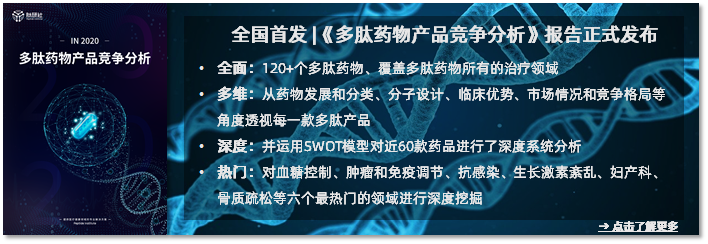

Column Recommendation






Peptide Research Society

In-depth Research Report on Medical Health
"Strategy Team Organization" New Consulting