Sanofi Bets Big on TL1A with $1.5B Deal to Enter IBD Arena, Challenging Blockbuster Therapies
Sanofi
Pharmaceutical R&D Developer

Teva
Drug Developer
Recently, Sanofi announced a collaboration with Teva Pharmaceutical Industries to jointly develop TEV'574, a novel anti-TL1A therapy for the treatment of Crohn's disease (CD) and ulcerative colitis (UC). Sanofi will pay an upfront payment of $500 million, along with up to $1 billion in development and milestone payments.
It is reported that Inflammatory Bowel Disease (IBD), including Crohn's Disease (CD) and Ulcerative Colitis (UC), is known as the "undead cancer." According to a research report by Hua Chuang Securities, as of July 2023, there are only five TL1A-targeted drugs globally that have entered the clinical stage.
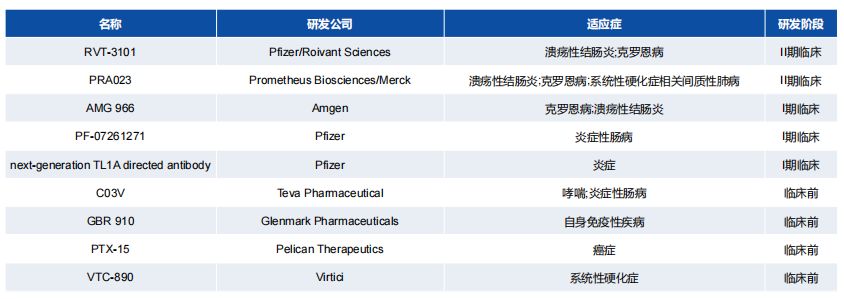
Source of the image: Huachuang Securities
The scarcity of "players" on the track gives the TL1A target one of the basic characteristics of a "dark horse."
01
Protecting the "King of Medicine" in IBD,
And the continuous emergence of blockbuster drugs
According to data from Huachuang Securities, there are approximately 2 million IBD patients in the United States. Although it may seem like a relatively niche disease, it has an enormous drug market size. In 2021, the U.S. IBD drug market was valued at approximately $15 billion.
IBD treatment drugs mainly include anti-inflammatory drugs (aminosalicylic acid), glucocorticoids, immunomodulators, and biologics.
"Report on Chinese Patients' and Doctors' Awareness and Quality of Life of Inflammatory Bowel Disease" shows a survey of CD patients indicating that they consider long-term maintenance of disease remission as the most important factor in CD treatment drugs. In the United States, which serves as a global pharmaceutical trendsetter, biologics have become the dominant treatment for IBD. In 2021, the total sales volume of Entyvio, Humira, and Stelara for IBD indications in the U.S. reached 120 billion U.S. dollars.
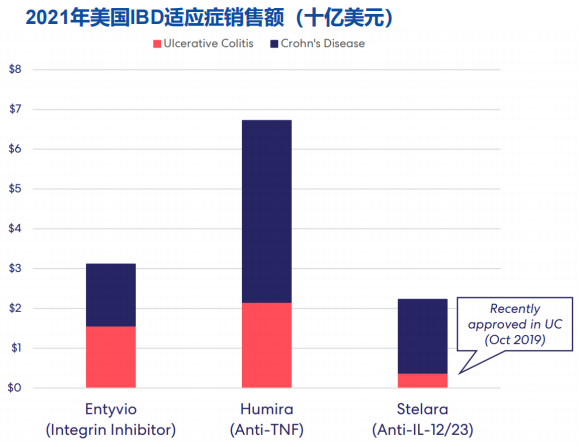
Source of the image: Huachuang Securities
In 2012, Humira, which first ascended to the throne of "the world's best-selling drug," has cumulatively gained approval for 26 indications worldwide. Its versatility across numerous indications has enabled Humira to retain the title of "the world's best-selling drug" for ten consecutive years thereafter.
Notably, the IBD indication is one of the most important "contributors" for Humira to defend its position as the "king of drugs."
In 2021, the global sales of Humira reached $20.694 billion, with the U.S. market being the primary "territory," generating $17.330 billion in sales. Within this primary "territory," the sales contribution for IBD indications was close to $7 billion.
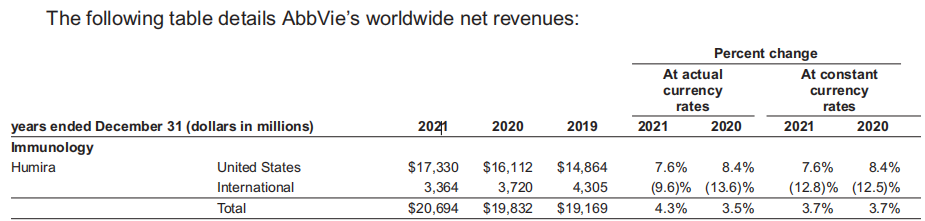
Source of the image: AbbVie 2021 Earnings Report
IBD indications not only support the "blockbuster drug," but also bolster flagship products for multiple multinational pharmaceutical companies.
According to Takeda's 2022 financial report, Entyvio's annual sales reached 720.7 billion yen, making it the top-selling product among its numerous offerings.
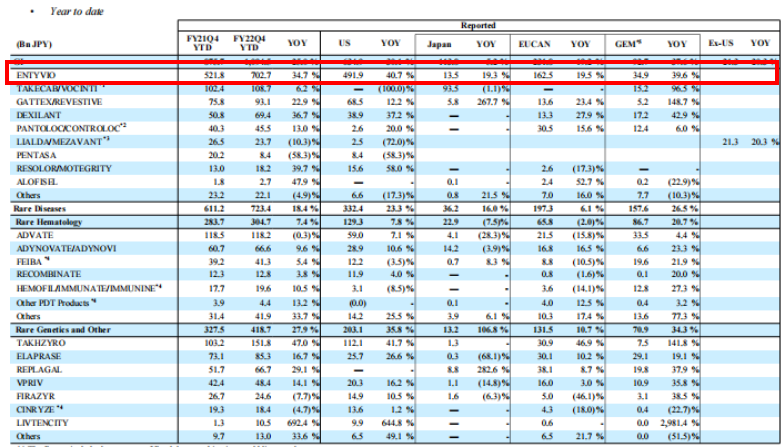
Source of the image: Takeda Pharmaceutical 2022 Annual Report
In addition, there is Stelara. According to Johnson & Johnson's 2022 annual report, Stelara's annual sales reached $9.723 billion, surpassing the second-highest selling product under Johnson & Johnson's pharmaceutical division (DARZALEX) by 21.89%.
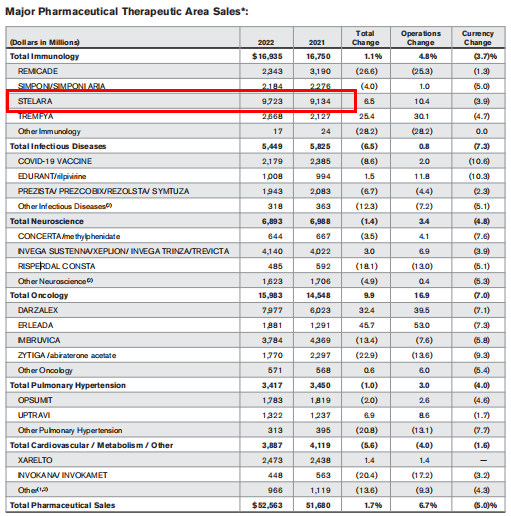
Source: Johnson & Johnson 2022 Annual Report
Even Zeposia, which was only approved in 2021 specifically for the treatment of UC in IBD, has seen rapid market uptake.
According to BMS's Q2 2023 earnings report, Zeposia's sales in the first half of the year reached $178 million, with year-over-year growth rates of 84% in the U.S. market and 75% globally. This performance far outpaces many other products from BMS, similar to the growth rate of another BMS product, Abecma (82% in the U.S. market and 79% globally).
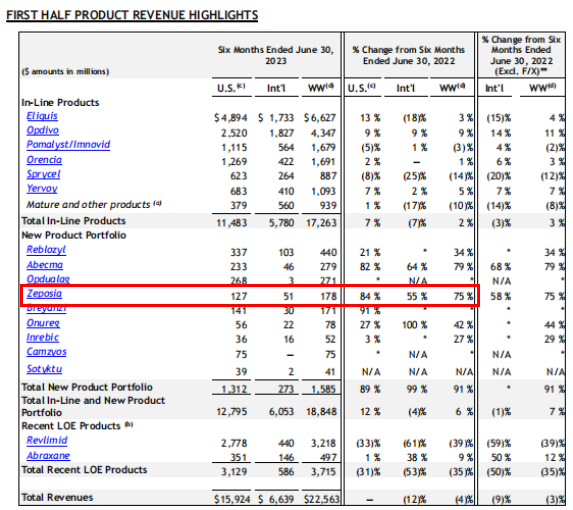
Source: BMS 2023 Q2 Earnings Report
Notably, the CD indication for Zeposia has advanced to Phase 3 clinical trials, and if successfully approved, Zeposia’s sales may experience exponential growth.
The market performance of IBD drugs has further provided a vast and promising space for the TL1A target to thrive after emerging as a "dark horse."
02
Pharmaceutical giants are scrambling to enter the market,
TL1A Track Preheating Mode Activated
TL1A, a member of the TNF superfamily, can independently mediate inflammation and fibrosis. It is associated with immune and fibrotic diseases such as RA, atopic dermatitis, SLE, asthma, and psoriasis. The TL1A blocking mechanism shows broad application potential in inflammatory and fibrotic diseases and has been clinically validated for the treatment of IBD.
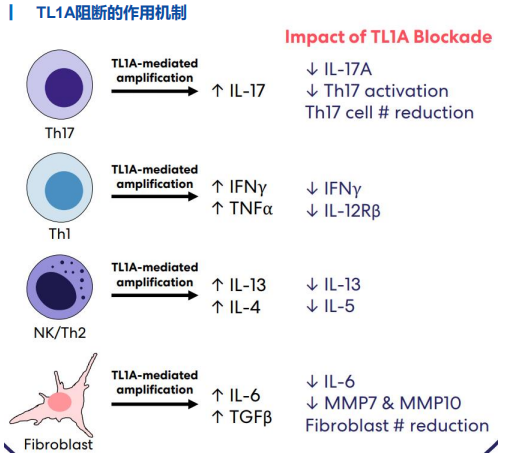
Source of image: Huachuang Securities
Shortly before Sanofi announced a $500 million upfront payment to enter TEV’574, Merck acquired Prometheus for $10.8 billion. Prometheus focuses on autoimmune diseases, and its main candidate in the pipeline, PRA-023 (MK-7240), is a TL1A antibody being developed for the treatment of immune-mediated diseases, including UC and CD, as well as other autoimmune diseases.
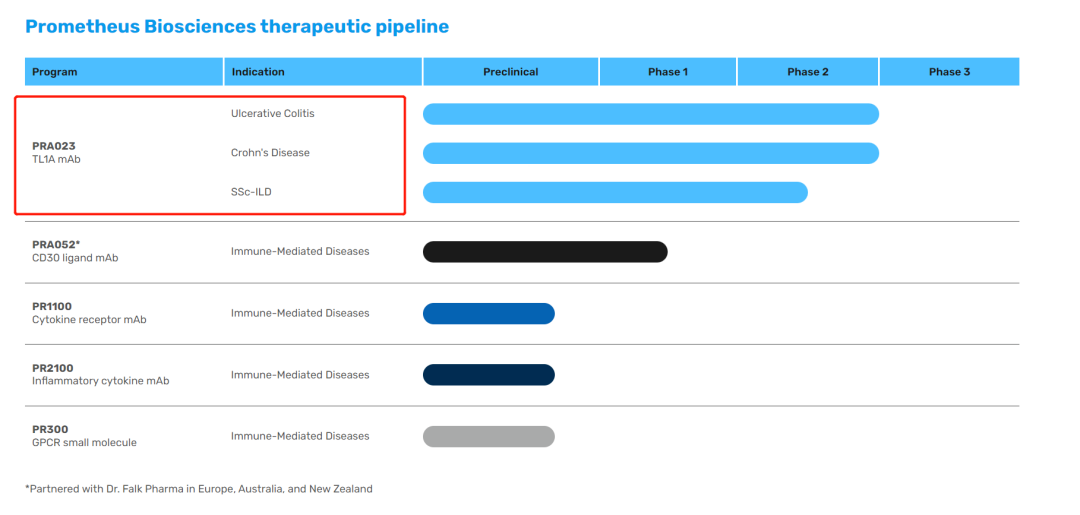
Image Source: Prometheus Biosciences Official Website
The clinical study results of PRA-023 were earlier announced at the 18th European Crohn's and Colitis Organisation (ECCO) Congress. According to data from the Phase 2 ARTEMIS-UC clinical trial for the treatment of UC, the clinical remission rates for the treatment group and the control group were 26.5% and 1.5%, respectively; the endoscopic improvement rates were 36.8% and 6.0%, respectively; and the clinical response rates were 66.2% and 22.4%, respectively.
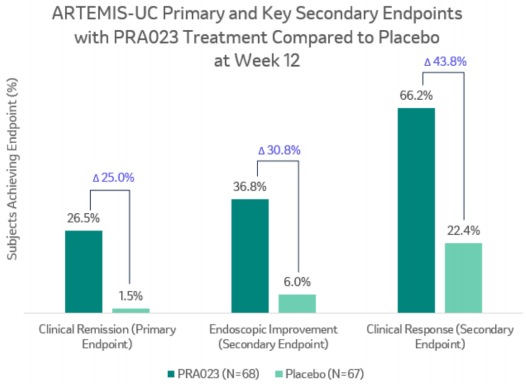
Source of the image: Huachuang Securities
After Merck acquired Prometheus, it accelerated the development process of PRA-023 and registered the Phase 3 clinical trial of MK-7240 on Clinicaltrials.gov on September 25, 2023.
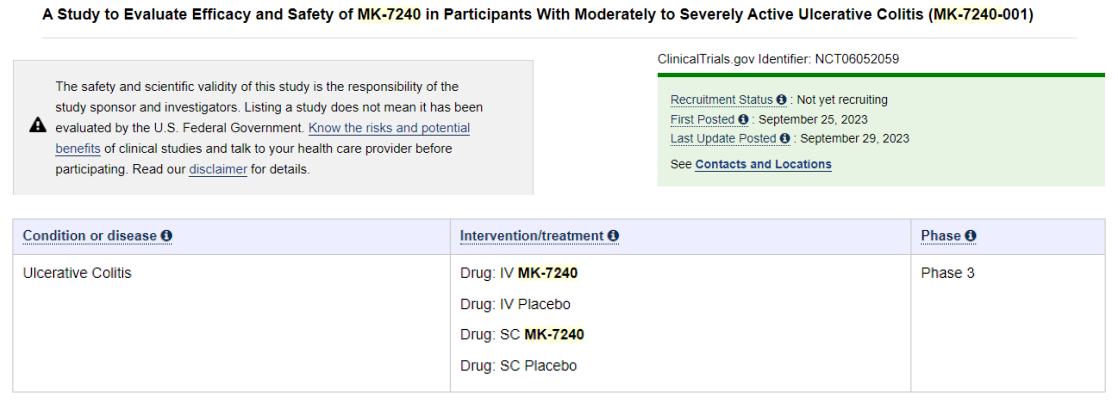
Image Source: Clinicaltrials.gov
Pfizer was the first to enter the TL1A space, even earlier than Merck and BMS.
In December 2022, Pfizer and Roivant Sciences jointly announced the establishment of a joint venture, Vant, focusing on the development and commercialization of TL1A antibody RVT-3101 in UC and other inflammatory and fibrotic diseases.
According to the TUSCANY-2 clinical trial data for RVT-3101, the clinical remission rate was 29% at week 14 and 36% at week 56; the endoscopic improvement rate was 36% at week 14 and 50% at week 56; the endoscopic remission rate was 11% at week 14 and 21% at week 56.
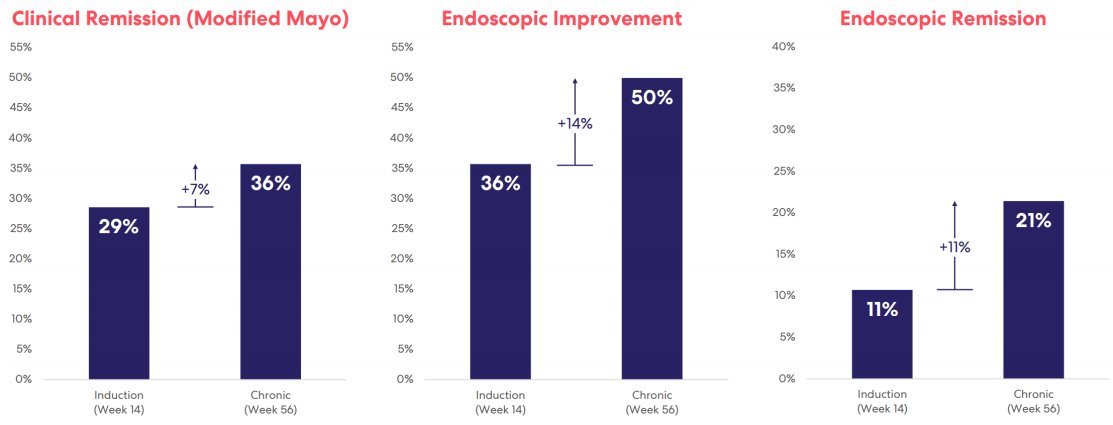
Source of image: Huachuang Securities
What reignited the buzz around RVT-3101, following Pfizer's joint venture with Roivant Sciences to co-develop Vant, was a report from foreign media. In July 2023, the Wall Street Journal reported that Roivant Sciences is nearing a collaboration with Roche to license the TL1A antibody RVT-3101 to Roche in a deal potentially worth over $7 billion.
In less than a year, giants in the multinational pharmaceutical industry such as Pfizer, Merck, and BMS have laid out their plans for TL1A through acquisitions and collaborations. Additionally, Roche's active interest has made the TL1A target field suddenly bustling.
In China, according to data from the prospectus of Quanxin Biotech, the number of IBD patients in China, though fewer than in the U.S., increased from 449,300 in 2017 to 626,300 in 2021 and is expected to reach 1.2 million by 2030; the drug market size also grew, albeit only from USD 480 million in 2017 to USD 885 million in 2021.
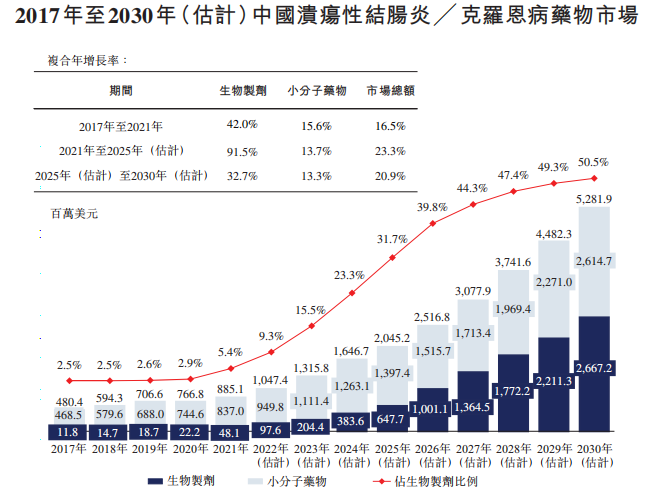
Source of the image: Quanxin Biotech Prospectus
IBD is also known as an industrialized disease, and the prevalence in developing countries is approaching that of developed countries. The low application rate of biologics and the increase in prevalence, compared to markets already dominated by biologics, provide less competitive markets in China for novel therapies. The author predicts that in the next phase, the research and development of the TL1A target will surge in China.
03
Summary
In my opinion, when looking at the TL1A target, one should not be limited to IBD, as it has potential in inflammatory diseases. Perhaps like "the king of drugs," Humira, the approval of IBD indications in the future may just be the beginning for TL1A drugs. Against the backdrop of multiple multinational pharmaceutical companies vying to position themselves in the short term, pharmaceutical companies in China should also plan ahead.
Source: Huachuang Securities; official websites and financial reports of relevant pharmaceutical companies.

Editorial Responsibility: Pea Shooter
Disclaimer: The views expressed in this article are solely those of the author and do not represent the position of Pharma Intelligence. We welcome discussions and additional insights in the comment section; for reprints, please be sure to credit the author and source. If there are any issues regarding the content, copyright, or other aspects of the article, please leave a message on this platform, and we will address it promptly.