Pulse Biosciences and CardioNXT Announce Collaboration to Advance First-in-Human Study of nsPFA Catheter for Atrial Fibrillation Treatment

Pulse Biosciences
Bioelectronic Medicine Product Developer

CardioNXT
Medical Device Manufacturer
Recently, Pulse Biosciences announced a collaboration with CardioNXT to support the company’s planned first-in-human trial study of its nanosecond pulsed field ablation (nsPFA) cardiac catheter, with a focus on treating atrial fibrillation (AF).
Catheter ablation is an effective method for restoring and maintaining sinus rhythm in patients with atrial fibrillation. Currently, the globally prevalent ablation energies are mainly radiofrequency energy or cryo-energy. Both methods have their advantages but also limitations. While eliminating abnormal tissues, they may cause damage to adjacent structures such as the esophagus, coronary arteries, and phrenic nerves, and could potentially lead to pulmonary vein stenosis. Pulsed field ablation technology utilizes high-voltage pulsed electric fields to damage myocardial tissue in the pulmonary veins and vestibule, thereby blocking the conduction of abnormal electrical signals to achieve therapeutic effects for atrial fibrillation. This technology has tissue selectivity, does not harm surrounding blood vessels, nerves, or the esophagus, and employs a non-thermal ablation approach, reducing other tissue injuries caused by high temperatures or freezing, and will not cause pulmonary vein stenosis. Its short discharge time can significantly reduce procedure duration and improve procedural safety. As the third-generation pulsed field ablation technology, the nanosecond pulsed field atrial fibrillation ablation system better addresses issues such as severe muscle contractions during surgery, high anesthesia requirements, and pseudo-isolation.
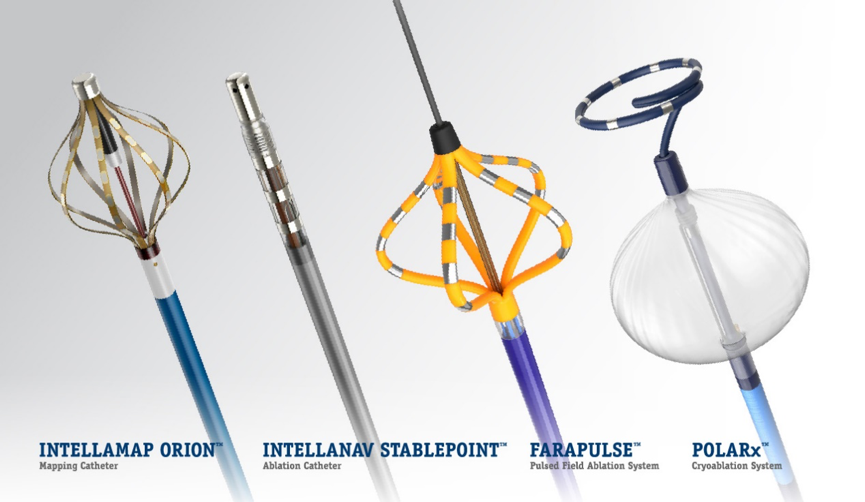
Existing PFA cardiac ablation technologies (including Farapulse, a pioneer in the PFA field acquired by Boston Scientific), all utilize second-generation microsecond pulsed electric field ablation technology. During surgery, issues such as patient twitching and muscle contractions may lead to high anesthesia requirements, further increasing the difficulty of the procedure. Intraoperatively, gas production from blood discharge may elevate the risk of stroke. Postoperatively, there may be problems such as a high one-year recurrence rate or pseudo-isolation in patients. These issues significantly hinder the clinical promotion and commercialization progress of PFA technology. The nsPFA atrial fibrillation ablation system is a third-generation PFA technology specifically designed to address the aforementioned problems of existing PFA ablation technologies. By employing nanosecond pulses, it optimizes the therapeutic electric field distribution, reduces muscle contractions, and improves surgical safety, resolving current challenges such as severe PFA-induced muscle contractions and high anesthesia demands. This enables PFA atrial fibrillation ablation procedures to be performed under analgesia alone, laying a solid foundation for the widespread clinical application of PFA technology.
Pulse Biosciences CEO Kevin Danahy said, "We are pleased to announce this collaboration and the progress we have made in integrating our circumferential nsPFA catheter with the CardioNXT iMap system. The CardioNXT navigation and mapping system is our preferred choice for integration with our novel nsPFA cardiac circumferential catheter. Their iMap system provides dynamic referencing, offering superior accuracy and stability when navigating our catheter to the target tissue area. We are on track to initiate our first-in-human study in the first half of next year and believe this combination has the potential to achieve best-in-class clinical outcomes."
The collaboration will include the full integration of Pulse Biosciences' nsPFA circular ablation catheter and CardioNXT's iMap navigation and mapping system, enabling electrophysiologists to successfully visualize individual cardiac structures and place nsPFA catheters for circumferential ablation of targeted pulmonary veins during atrial fibrillation treatment.
"Pulse Biosciences' nsPFA technology offers a highly differentiated catheter-based solution, and its integration with our system has the potential to provide rapid, accurate, effective, and safe zero-fluoroscopy cardiac tissue ablation for the treatment of atrial fibrillation," said Jerome Edwards, CEO of CardioNXT.
About Pulse Bioscience

Pulse Biosciences is a pioneer in researching, designing, and producing patented Nano-Pulse Field Ablation™ (nsPFA™) technology for critical applications in healthcare. Our current focus is on applying this technology within the field of cardiology. We believe that nsPFA may have various applications in cardiology, including as a potential treatment for atrial fibrillation.
Pulse Biosciences is the inventor and sole owner of Nanosecond Pulsed Field Ablation™ (nsPFA™) technology. We are committed to health innovations that have the potential to improve and extend the lives of patients. Our proprietary nsPFA technology delivers nanosecond pulsed electrical energy to clear cells in a non-thermal manner while preserving adjacent non-cellular tissue.
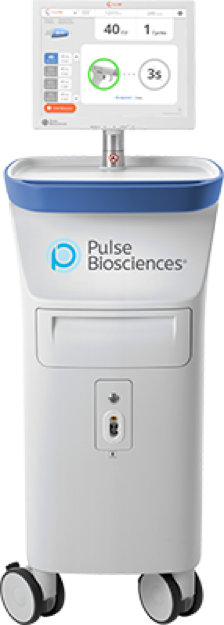
Nanosecond Pulsed Field Ablation (nsPFA) energy is a new technology that has the potential to not only help patients with atrial fibrillation but also assist patients across many different therapeutic areas.
Nanosecond Pulsed Field Ablation™ (nsPFA™) technology utilizes nanosecond pulsed electrical energy for non-thermal cell removal while protecting adjacent non-cellular tissue. The nsPFA platform was developed to connect various types of applicators, ranging from superficial therapies, surgical therapies to catheter-based therapies. Our system has been safely and effectively used to treat over 6,000 patients beyond cardiology.
These ultra-fast electrical pulses have durations ranging from nanoseconds to microseconds. When applied to target tissues, nsPFA energy pulses penetrate cells and alter the function of internal organelles, including mitochondria and the endoplasmic reticulum. A cascade of intracellular disruptions leads to Regulated Cell Death (RCD). Regulated Cell Death (RCD) is a process exhibited by human cells under stress when they are unable to restore cellular homeostasis.
About CardioNXT

CardioNXT has received FDA clearance for its platform technology, which includes the iMap 3D navigation and mapping system, Activate software, the sensor-enabled Axis patient patch, and the sensor-enabled MultiLink catheter.
The CardioNXT technology platform is able to examine problematic heart tissue that causes arrhythmias and precisely deliver instruments to the target tissue.
CardioNXT, Inc. said in a press release that the iMap system is the first of its kind to adopt 3D navigation based on "dynamic referencing" in cardiac procedures. Although dynamic referencing technology is widely used in brain, spine, ENT, and lung surgeries, it has not yet been widely applied in cardiac surgery.
The iMap system achieves cardiac dynamic referencing through a patented combination of electromagnetic and impedance dual-tracking modes, and for the first time utilizes the CardioNXT MultiLink catheter with dual-sensor internal referencing.
The technical opinions in this article do not represent the views of CCI.



CCI Cardiovascular Physicians Innovation Club
Long press the QR code to follow us
Planning:Shen Li/Editor: Chen Baolin
Author: Yin Anyuan /Production: Wang Rui