

Keytruda Opens the Door to Early-Stage Lung Cancer Market, Reinforcing Its 'Blockbuster' Status as BMS, AstraZeneca, Roche, Junshi, and BeiGene Intensify Competition in the Adjuvant Therapy Arena

MSD
Pharmaceutical R&D and Manufacturer
Bristol-Myers Squibb
Biopharmaceutical and Nutritional Product R&D and Sales

AstraZeneca
Biopharmaceutical Manufacturer

Roche
Oncology Drug Research, Development, and Manufacturing
Junshi Biosciences
Innovative Drug Developer

BeOne
Developer of Molecular Targeted and Immune Anti-Tumor Drugs
Non-Small Cell Lung Cancer (NSCLC), as a major indication market in the field of tumor immunotherapy and a "must-contend-for territory," is seeing the market door for early clinical treatment gradually opening.
Recently, media reports revealed that MSD has released the Phase III clinical data of its PD-1 product Keytruda (Pembrolizumab, "K drug") for the treatment of early-stage NSCLC.
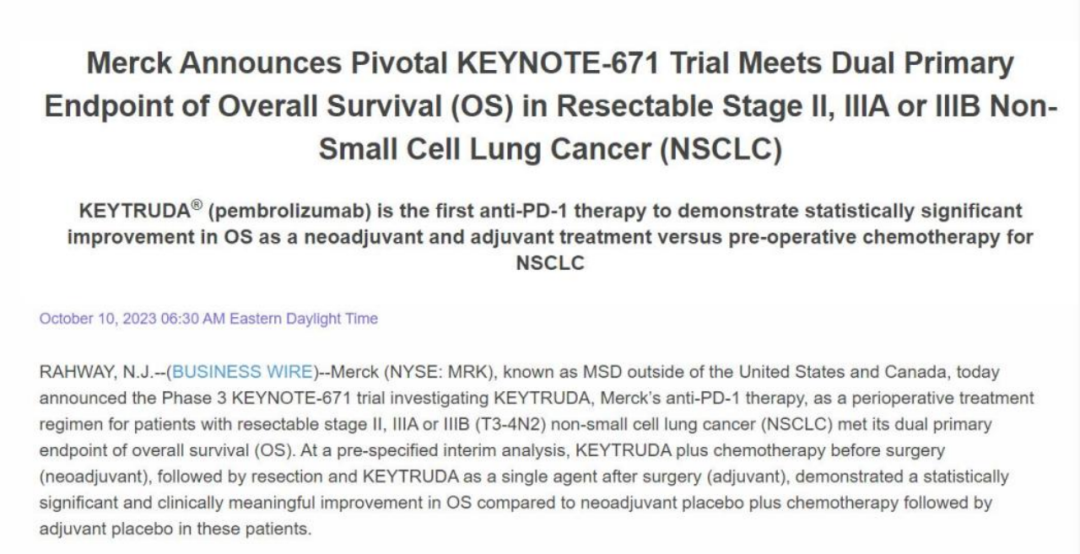
According to the introduction, in this Phase III clinical trial, the use of pembrolizumab before and after surgery significantly extended the long-term survival of patients with stage 2 to 3b NSCLC. MSD responded to the media, stating that the success of the KEYNOTE-671 trial marks the first time immunotherapy has demonstrated a statistically significant overall survival (OS) benefit in early-stage NSCLC patients.
Market analysis points out that the U.S. Food and Drug Administration (FDA) has accepted MSD's supplemental Biologics License Application (sBLA) for a new indication, with review results expected to be announced by October 16, 2023. Positive data from the KEYNOTE-671 clinical trial may potentially redefine the clinical treatment pathway for early-stage non-small cell lung cancer (NSCLC). This significant perioperative clinical advancement could help Keytruda extend its reign as the top-selling drug.
As is well known, lung cancer is one of the deadliest cancers with leading incidence and mortality rates globally. According to 2020 WHO data, there were 2.2 million new cases of lung cancer and 1.8 million deaths caused by the disease worldwide, with non-small cell lung cancer accounting for 81% of all cases. Early screening is undoubtedly one of the key measures to extend the survival time of lung cancer patients, yet gaps remain in the treatment of early-stage lung cancer patients.
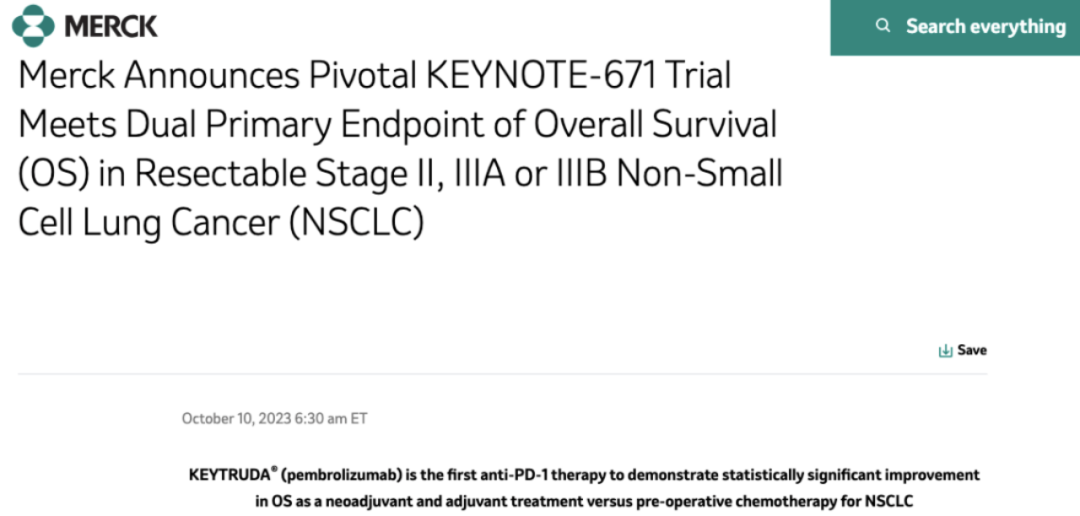
MSD's official website announcement this time pertains to the Phase III clinical trial KEYNOTE-671 study of its PD-1 monoclonal antibody Keytruda for perioperative treatment of resectable Stage II, Stage IIIA, or Stage IIIB NSCLC, which has reached the primary endpoint OS. Compared with placebo plus chemotherapy as neoadjuvant therapy and postoperative placebo as adjuvant therapy, Keytruda combined with chemotherapy as preoperative neoadjuvant therapy and postoperative monotherapy as adjuvant treatment demonstrated statistically significant and clinically meaningful OS improvement in these patients. However, specific data will be disclosed at the 2023 ESMO conference later.
Previously, the FDA had accepted MSD's submission of a new indication for supplemental Biologics License Application (sBLA) and set the PDUFA decision date for October 16, 2023. The specific indication is: K drug in combination with platinum-based chemotherapy as neoadjuvant treatment for patients with stage II, IIIA, or IIIB NSCLC prior to surgery, followed by the drug as monotherapy for adjuvant treatment post-surgery.
It is reported that KEYNOTE-671 is a randomized, double-blind global multicenter Phase III study, which was first initiated in November 2017 (Registration Number: NCT03425643), enrolling a total of 786 patients who were randomly assigned in a 1:1 ratio to the K drug group and the placebo group. It is also the only Phase III study currently using a dual endpoint design of Event-Free Survival (EFS) + Overall Survival (OS) to explore the efficacy and safety of perioperative immunotherapy.
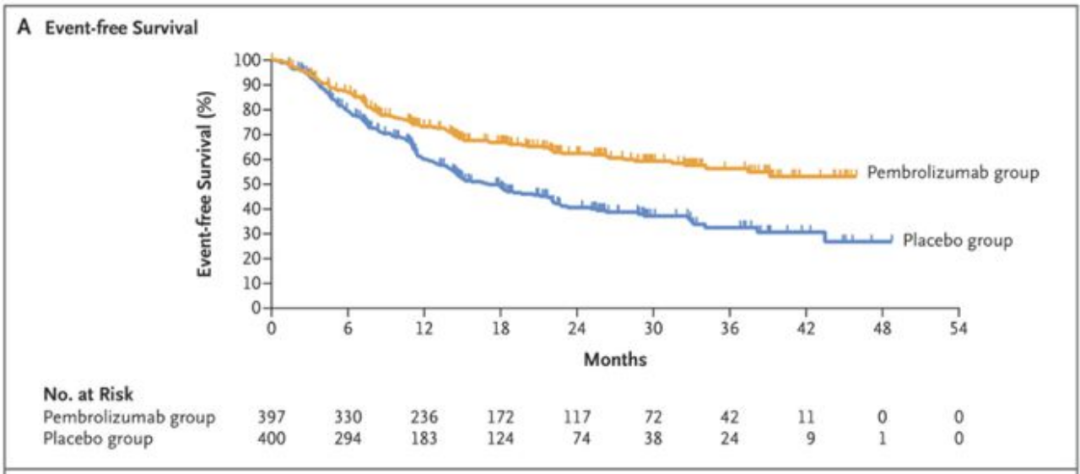
As early as the first half of 2023, MSD announced the interim analysis data of KEYNOTE-671. Based on the perioperative treatment regimen of pembrolizumab compared with the control group, with a median follow-up time of 25.2 months, the combination of pembrolizumab and chemotherapy as neoadjuvant therapy followed by immunotherapy as adjuvant therapy after surgery significantly improved patients' EFS, although the median EFS has not yet been reached (95% CI, 345.1-NR), reducing the risk of disease recurrence, progression, or death in patients with resectable NSCLC by 42%. Compared with the 17-month EFS (95% CI, 14.3-22) observed in patients receiving chemotherapy alone, this represents a significant improvement.
In addition, in the KEYNOTE-671 study, 98.5% of patients in the pembrolizumab plus chemotherapy neoadjuvant treatment group and 95.3% of patients in the chemotherapy neoadjuvant treatment group underwent surgical treatment. Among the patients who underwent surgery, the R0 resection rates were 92% and 84.2%, respectively (Figure 2)12.
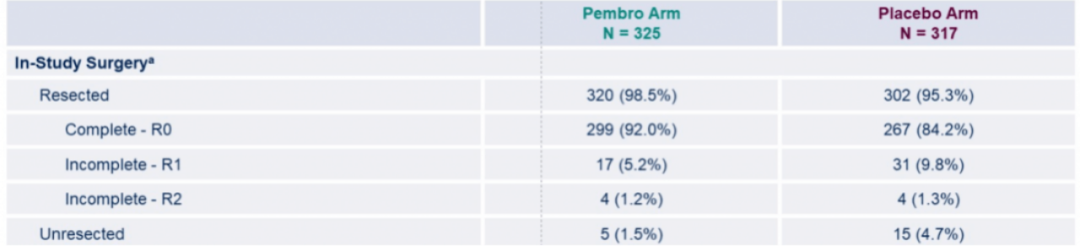
(Figure 2)
According to reports, the KEYNOTE-671 study did not exclude patients with EGFR mutations from enrollment. Data presented at this year's ASCO conference (with a median follow-up of 25.2 months) showed that all pre-specified subgroups of patients, including 33 patients with EGFR-mutant NSCLC (pembrolizumab group n=14, placebo group n=19), benefited from treatment in the pembrolizumab group. This included patients with different histological types, disease stages, PD-L1 expression statuses, and EGFR/ALK mutation statuses. In the EGFR-mutant subgroup, the EFS HR was 0.09 (95% CI 0.01–0.74).
According to publicly available data on ClinicalTrials.gov, pembrolizumab, along with various treatment regimens, has been registered in over 400 trials in total. Among these, five indications in the field of lung cancer have already been approved, covering first-line treatment, second-line treatment, and adjuvant therapy. If this product can succeed based on the KEYNOTE-671 trial and obtain sBLA approval, it means that the indications for pembrolizumab will be extended into a new adjuvant setting.
Against the backdrop of globalized internal competition in PD-1, taking lung cancer as an example, players in the current track are no longer focusing solely on advanced-stage cancer—the "lowest-hanging fruit"—but are gradually expanding to earlier stages and perioperative coverage. As multinational corporations (MNCs) such as MSD, Bristol-Myers Squibb, Roche, and AstraZeneca achieve progress, local companies are also accelerating R&D in niche areas of PD-1, further intensifying the competition within this track.
In fact, apart from the internal competition within the PD-1 track itself, the market competition for early-stage lung cancer presents a completely different landscape compared to the "red ocean" of advanced lung cancer. Various adjuvant therapies have also become one of the key focuses for major pharmaceutical companies.
As early as the 2021 ACCR conference, Bristol-Myers Squibb's nivolumab CheckMate-816 study made a stunning debut with an almost 11-fold benefit in pCR rate, marking the beginning of a milestone in neoadjuvant immunotherapy for non-small cell lung cancer (NSCLC). At the same year’s American Society of Clinical Oncology (ASCO) annual meeting, Roche's PD-1 product atezolizumab also announced the interim results of its IMpower-010 trial. It is understood that IMpower-010 is still the first Phase III clinical study to achieve positive results in adjuvant immunotherapy for early-stage lung cancer. While achieving its own success, it also highlights the significant clinical potential of adjuvant immunotherapy.
In March 2022, the China National Medical Products Administration (NMPA) approved atezolizumab as a monotherapy for adjuvant treatment of patients with Stage II-IIIA non-small cell lung cancer (NSCLC) who have undergone surgical resection and platinum-based chemotherapy, with ≥1% tumor cells (TC) PD-L1 positive staining assessed by testing. This is the first adjuvant immunotherapy indication for NSCLC post-surgery approved in China (based on the IMpower010 study results).
In April 2022, BMS announced the data of the primary endpoint, event-free survival (EFS), from the Phase III clinical study CheckMate 816. The results showed that, compared with chemotherapy alone, patients with resectable non-small cell lung cancer (NSCLC) who received three cycles of nivolumab combined with chemotherapy before surgery had significantly improved EFS benefits.
In June 2022, AstraZeneca announced positive results from the Phase III clinical trial, AEGEAN, which investigated the use of PD-L1 monoclonal antibody durvalumab (Imfinzi) in combination with neoadjuvant chemotherapy for the preoperative neoadjuvant treatment of resectable NSCLC. Compared to neoadjuvant chemotherapy alone, the combination therapy demonstrated a statistically significant improvement in pathological complete response (pCR) at the interim analysis, as well as a statistically significant enhancement in major pathological response (MPR).
At the same time, the new adjuvant treatment concept of "perioperative" has been the subject of multiple Phase III studies both in and outside China, with local companies making significant progress in related research and development. The perioperative adjuvant immunotherapy approach creatively uses immunotherapy drugs both before and after surgery, integrating immunotherapy throughout the entire surgical process, with the aim of maximizing the effects of immunotherapy and allowing patients to benefit more fully from it.
Experts have pointed out that, for patients with operable early- to mid-stage NSCLC, compared with Stage I and II, those in Stage III have a poorer prognosis, stronger heterogeneity, and present challenges such as greater surgical difficulty, more significant postoperative trauma, and higher recurrence rates, making treatment extremely difficult. At the same time, Stage III patients account for approximately one-third of newly diagnosed non-small cell lung cancer patients in China, representing a large patient population with significant unmet clinical needs, urgently requiring new drugs and strategies to extend survival.
At the ASCO Annual Meeting in April 2023, the first interim analysis results of Junshi Biosciences' PD-1 product Neotorch study were announced: the 2-year EFS rate for stage III lung cancer patients using toripalimab + chemotherapy in the perioperative period was as high as 64.7%. Compared with chemotherapy alone, the addition of toripalimab reduced the risk of recurrence, progression, and death by 60% in stage III lung cancer patients. Additionally, in another key indicator, the MPR rate, the toripalimab + chemotherapy group reached 48.5%, an increase of nearly 6 times (8.4% in the chemotherapy group)! The pathological complete response rate (pCR rate) was 28.2%, an improvement of 28 times (1.0% in the chemotherapy group).
Another Chinese giant, BeOne Medicines, also announced in June this year that the Rationale-315 study reported positive results. According to the introduction, this is a randomized, double-blind Phase III clinical study jointly conducted by 44 centers across China. The study investigates the use of tislelizumab combined with platinum-based doublet chemotherapy as neoadjuvant and adjuvant treatment for resectable NSCLC. It is also the first successful Phase III perioperative immunotherapy study for Chinese patients with Stage II/III lung cancer, as well as the largest-scale Phase III study to successfully validate perioperative immunotherapy for lung cancer in the Chinese population.
As the adjuvant treatment in the "perioperative" period for early-stage lung cancer is gradually being addressed, clinical treatment options for related patients will also become increasingly diversified. It is not difficult to see from the clinical trial protocols of major pharmaceutical companies that whether it is neoadjuvant immunotherapy + surgery, surgery + adjuvant immunotherapy, or neoadjuvant immunotherapy + surgery + adjuvant immunotherapy, both clinical practice and the market are still in the exploratory stage. However, it can be foreseen that with the intensifying competition among PD-1 inhibitors in this field, greater progress in related clinical exploration can be achieved, which will not only bring a broader market but also provide patients with treatment options of higher clinical value.
Editor: Mingyao


www.yyjjb.com.cn
Insight into Industry Trends
"Pharmaceutical Economy Newspaper"
Academic Official Account
Focus on the Frontier of Oncology Academia

Terminal Official Account