HomeFirst-in-Class MALT1 Inhibitors: Janssen Leads in Phase I, AbbVie Invests Nearly $1 Billion in Collaboration, with No Domestic Players Yet in Sight
First-in-Class MALT1 Inhibitors: Janssen Leads in Phase I, AbbVie Invests Nearly $1 Billion in Collaboration, with No Domestic Players Yet in Sight
Healthcare Product Manufacturers, Health Service Providers

Ono
Innovative Drug Developer

AbbVie
Innovative Drug Developer

Schrodinger
Supplier of molecular simulation and enterprise software solutions

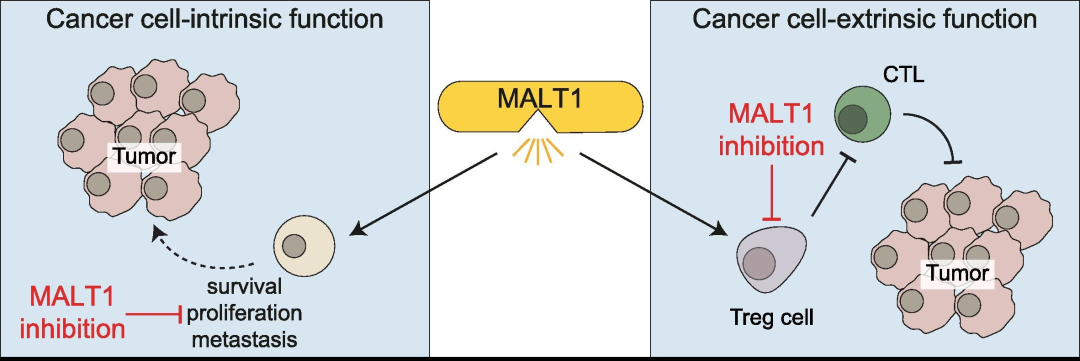
Mucosa-Associated Lymphoid Tissue Protein 1 (MALT1) has emerged as a key regulator of immune signaling, also promoting tumor development through both cancer cell-intrinsic and -extrinsic mechanisms. As an integral subunit of the CARD11-BCL10-MALT1 (CBM) signaling complex, MALT1 exhibits a fascinating dual functionality in lymphocytes. It acts as a scaffold protein to drive the activation of NF-κB transcription factors and functions as a protease by cleaving various substrates to modulate signaling and immune activation. Aberrant MALT1 activity is crucial for the NF-κB-dependent survival and proliferation of malignant cancer cells, facilitated by the caspase-mediated inactivation of negative regulators of the canonical NF-κB pathway, such as A20, CYLD, and RelB. Specifically, lymphomas with increased B-cell receptor signaling are highly dependent on this cancer cell-intrinsic MALT1 protease function, but the survival, proliferation, and metastasis of certain solid cancers are also sensitive to MALT1 inhibition. Moreover, the MALT1 protease exerts cancer cell-extrinsic effects by maintaining the immunosuppressive function of regulatory T (Treg) cells within the tumor microenvironment (TME). In the TME of solid cancers, MALT1 inhibition can convert immunosuppression into pro-inflammatory Treg cells, triggering robust anti-tumor immunity and enhancing the efficacy of checkpoint inhibitors. Thus, the cancer cell-intrinsic and -extrinsic tumor-promoting functions of the MALT1 protease present unique therapeutic opportunities, driving the development of potent and selective MALT1 inhibitors currently under preclinical and clinical evaluation. Figure 1 Intrinsic and extrinsic functions of MALT1 cysteine protease in cancer cells [1]Note: MALT1 enzyme activity in cancer cells drives tumor cell survival, proliferation, and metastasis (left). In the tumor microenvironment (TME), MALT1 activity is crucial for suppressive Treg cells, which impair CTL anti-tumor responses and allow tumor growth (right). The intrinsic and extrinsic functions of MALT1 in cancer cells provide potential targets for MALT1 inhibitors in cancer therapy. Treg: Regulatory T cells; CTL: Cytotoxic T lymphocytes.The discovery of MALT1 protease activity has driven the development of effective and selective inhibitors, which have the potential to be used as anticancer or immunomodulatory drugs. As of the end of 2022, WIPO (World Intellectual Property Organization) listed over 200 patents for MALT1 inhibitors across approximately 50 patent families. Irreversible peptide or peptide-like inhibitors that covalently bind to the catalytic center have helped determine the biological roles of MALT1 in immune and cancer cells, but poor selectivity, suboptimal cellular uptake, and short in vivo half-life have hindered further clinical development of such peptide-derived compounds. Similarly, the small-molecule non-peptide compound MI-2 irreversibly couples with the catalytic cysteine of MALT1 and induces the killing of ABC DLBCL cells both in vitro and in vivo, but limited potency and specificity have impeded its clinical application.MALT1 inhibitors currently in preclinical or clinical development interfere with the unique activation mechanism of the MALT1 protease. Phenothiazine derivatives mepazine and thioridazine are original members of this class of compounds, which inhibit MALT1 in a non-competitive manner by binding to an allosteric pocket between the caspase and Ig3 domains. Inhibitor binding at this site prevents the second activation step of MALT1 by blocking conformational changes in the Ig3 domain, which are necessary for opening the active site and transitioning MALT1 from an inactive to an active state. Structure-guided mutagenesis has demonstrated that mepazine and thioridazine kill ABC DLBCL cells by binding to the allosteric site. As expected for phenothiazine derivatives, mepazine binds to other non-protease targets, and not all effects are mediated by MALT1 inhibition. However, due to its favorable pharmacological properties, mepazine has been successfully used in various preclinical cancer models controlled by either intrinsic or extrinsic MALT1 activity in tumor cells.Based on the structural information of MALT1, different series of allosteric MALT1 inhibitors with higher potency and selectivity have been developed.Novartis' MLT compounds effectively inhibited MALT1, and the lead compounds MLT-943 and MLT-985 demonstrated improved metabolic stability. The increase in in vivo potency resulted in nearly complete MALT1 protease inhibition across different preclinical models, including MALT1-driven lymphomas, but clinical trials for these compounds have not yet been disclosed.In the MALT1 target field, only a few companies' new drugs have entered the Phase I clinical trial stage:As a leader, Johnson & Johnson's Janssen has developed MALT1 inhibitors JNJ-67690246 and JNJ-67856633 and initiated three clinical trials targeting NHL and chronic lymphocytic leukemia (CLL). These drugs have shown promising activity in preclinical ABC DLBCL tumor models.In addition, the safety and efficacy of MALT1 inhibitor programs by Ono Pharmaceutical (Ono-7081), AbbVie (ABBV-525), and Schrodinger (SGR-1505) for B-cell tumors have entered Phase I clinical trials, but the compound structures have not yet been disclosed. A study by Monoperos Therapeutics is currently evaluating the clinical safety and efficacy of the MALT1 inhibitor MPT-018 (the more potent S-enantiomer of methylpiperidinylazine) to reprogram tumor-infiltrating Treg cells and induce antitumor immunity as a single agent or in combination with the anti-PD-1 antibody pembrolizumab in advanced and refractory solid cancers. Thus, research on the protease function and targeting of MALT1 is on the verge of clinical translation to improve cancer treatment.It is worth mentioning that AbbVie's ABBV-525 program was a collaboration reached with India's Lupin Pharmaceuticals in December 2018, granting AbbVie global exclusive rights to develop and commercialize Lupin’s MALT1 inhibitor. Under the terms of the agreement, AbbVie will pay Lupin $30 million upfront for the exclusive license to the program. Upon successful completion of regulatory, development, and commercial milestones, Lupin is eligible to receive up to $947 million in milestone payments. Additionally, Lupin will have the right to receive double-digit royalties from the product’s sales and will retain commercial rights to the program in India.There have been no reports of domestic companies developing MALT1 inhibitors entering clinical or preclinical trials.The discovery of the protease function of MALT1 in 2008 triggered in-depth research into its role in immune and cancer cells. Over the past decade, drug discovery programs have led to the successive development of potent and selective MALT1 inhibitors. At least seven clinical studies have been initiated to evaluate the safety and efficacy of MALT1 inhibition in cancer treatment. While six trials focus on using MALT1 inhibitors for treating NHL and CLL, one trial explores the opportunity to modulate the TME by inhibiting MALT1 to enhance anti-tumor immunity. Safety assessments of MALT1 inhibition are critical for these early clinical studies. Preclinical data suggest that targeting MALT1 is a double-edged sword, capable of inducing tumor cell killing but also leading to the loss of peripheral immune tolerance. In preclinical models, prolonged administration of highly potent MALT1 inhibitors causes systemic reduction of peripheral Treg cells, resulting in IPEX-like (immune dysregulation, polyendocrinopathy, enteropathy, X-linked) autoimmune pathology. However, the reduction of Treg cells and the development of immunopathology largely depend on the duration and intensity of MALT1 inactivation or inhibition and are fully reversible after inhibitor withdrawal. Other preclinical studies indicate that the chemical properties and dosing regimens of MALT1 inhibitors are crucial for achieving optimal therapeutic effects while minimizing safety risks. In summary, there is strong evidence for a therapeutic window for MALT1 inhibition in cancer treatment. However, clinical data must also consider the potential risks of combination therapies, such as simultaneous inhibition of MALT1 and BTK in lymphoma treatment or combining MALT1 inhibitors with ICIs (e.g., anti-PD-1) to enhance anti-tumor immunity.Strong evidence supports the pivotal role of MALT1 protease activity in the survival and proliferation of aggressive lymphomas. Recent studies also indicate that MALT1 governs the growth, migration, and metastasis of non-hematological solid cancers. Moreover, MALT1 activity shapes the cellular composition of the tumor microenvironment (TME), thereby contributing to immune evasion. Notably, tumor-infiltrating Treg cells are particularly susceptible to MALT1 inhibition, transitioning from an immunosuppressive to an immune-activating pro-inflammatory state. Thus, MALT1 functions on two levels, promoting tumor growth through both cancer cell-intrinsic and -extrinsic mechanisms. Ideally, targeting MALT1 could combine direct cytotoxicity to cancer cells with enhanced anti-tumor immunity, and it will be crucial to elucidate which cancer types are most susceptible to this dual-targeting strategy. The cell-autonomous effects of MALT1 inhibition are best understood in BCR-addicted DLBCL, where lymphoma microenvironment (LME) signatures suggest that the presence of suppressive Treg cells correlates with poor prognosis in certain DLBCL subtypes. Furthermore, MALT1 promotes EMT and metastasis in several solid cancers, including TNBC, which is typically enriched with highly suppressive tumor-resident Treg cells.Overall, these data suggest that patients with certain types of hematological or non-hematological malignancies may benefit from the combination of cancer cell-intrinsic and extrinsic MALT1 inhibition. Accurate biomarkers for the activation status of MALT1 in cancer cells and different subpopulations of cells within the TME are needed to better identify which cancer patients are most likely to benefit from this dual-targeting approach. Such biomarkers would also serve as useful tools for monitoring MALT1 target engagement and inhibition in clinical studies. Reference: [1] Function and targeting of MALT1 paracaspase in cancer—The End—