

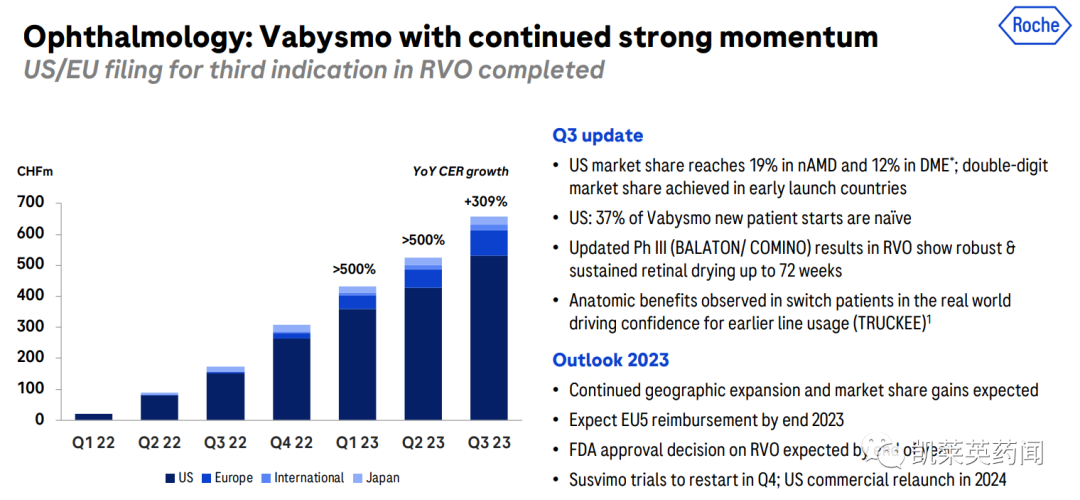
Roche Reports 7% Sales Growth in Q3 2023, Driven by Ophthalmology Bispecific Vabysmo Projected to Exceed $2.2 Billion in Full-Year Sales

Roche
Oncology Drug Research, Development, and Manufacturing

Welcome to follow Asymchem Pharma News
Part.1
2023 Q3 Performance Summary
On October 19, 2023, Roche releasedFinancial Results for the Third Quarter of 2023:At constant exchange rates (CER),Sales Growth of 7% in Q3 2023。Sales Growth of 1% in the First Nine Months,Reach 44.1 billion Swiss francs, excluding COVID-19 business,Sales increased by 9%。
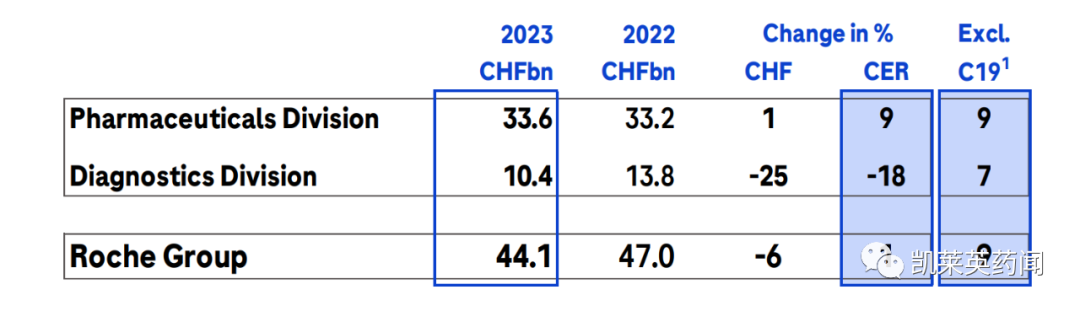
Among them,Pharmaceutical business revenue sales increased by 9%; diagnostic division core business grew by 7%., Due to the surge in demand for COVID-19 testing in 2022, the department's overall sales decreased by 18%.
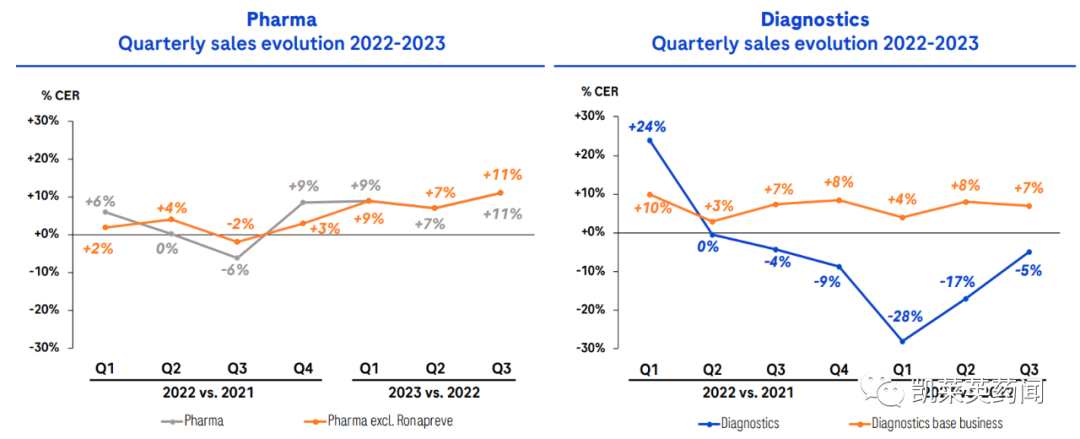
Globally, in the first three quarters, sales in the United States increased by 8%, primarily driven by Vabysmo, Ocrevus, and Hemlibra; sales in Europe grew by 7%, mainly propelled by Germany, the United Kingdom, and France; sales in Japan rose by 10%, largely due to Ronapreve, Polivy, Vabysmo, Hemlibra, Enspryng, and Tamiflu. In China, sales increased by 6%, mainly driven by Tamiflu, Xeloda, Polivy, and Perjeta, overcoming the impact of biosimilars.
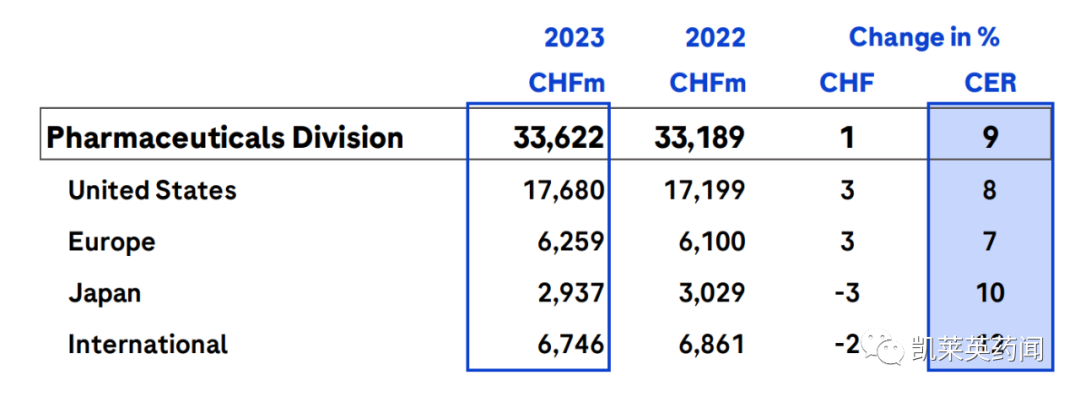
Roche's Five Growth Drivers——Vabysmo (severe eye diseases), Ocrevus (multiple sclerosis), Hemlibra (hemophilia), Polivy (blood cancer), and Evrysdi (spinal muscular atrophy), with total sales reaching 11.2 billion Swiss francs, representing an increase of 3.3 billion Swiss francs compared to the first nine months of 2022.
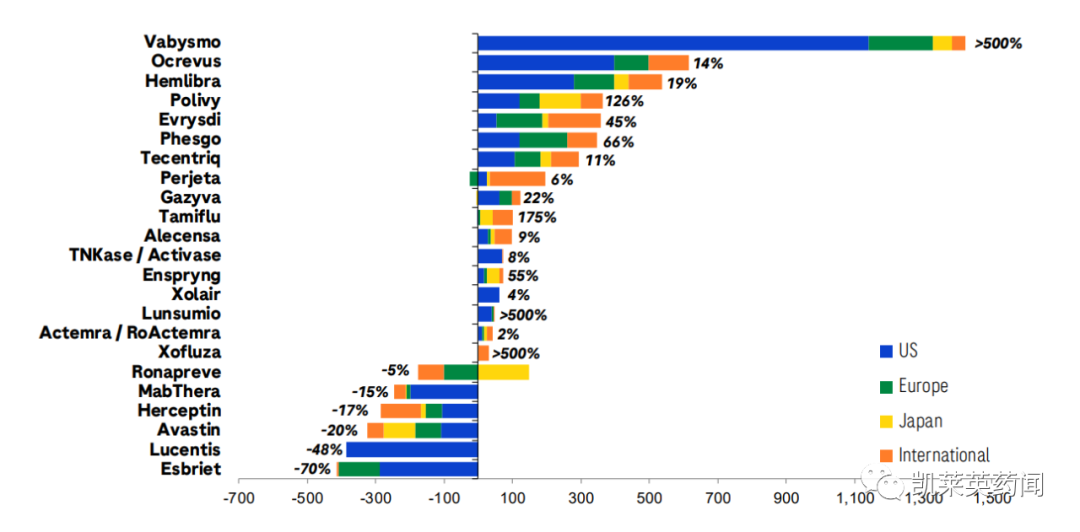
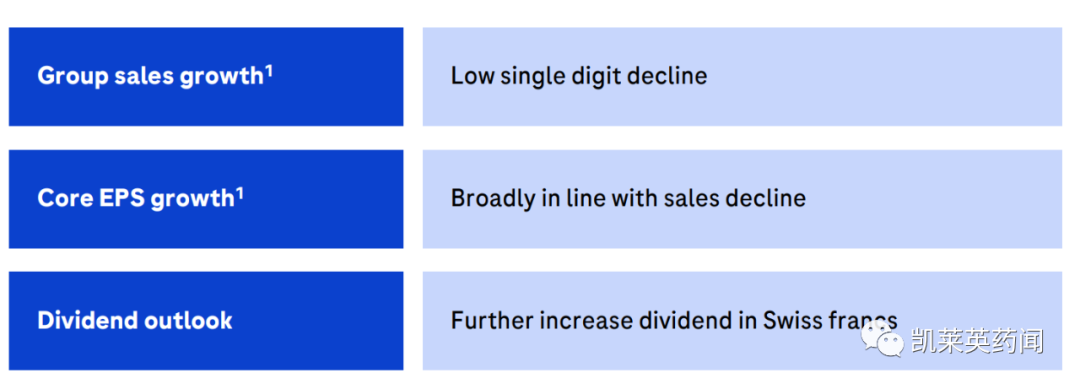
In addition,The company released its 2023 sales performance guidance:
Due to a significant decline of approximately 4.5 billion Swiss francs in COVID-19 product sales, the group's sales are expected to decrease in the low single-digit range (at constant exchange rates). Excluding the decline in COVID-19 sales, Roche anticipates robust growth in the underlying business sales across both divisions.
The target for core earnings per share is to be broadly in line with the decline in sales (at constant exchange rates); the dividend is expected to be further increased in Swiss francs.
Part.2
Key Development Milestones for Q3 2023
1. EU Approves Evrysdi for Treating Infants Under Two Months with Spinal Muscular Atrophy
In July 2023, the European Medicines Agency's Committee for Medicinal Products for Human Use (CHMP) issued a positive opinion recommending the extension of the marketing authorization for Evrysdi (risdiplam) in the EU. This includes infants with genetically confirmed SMA types 1, 2, or 3, or infants with 1 to 4 copies of the SMN2 gene, including those from birth to two months of age. Evrysdi is an SMN2 splicing modifier designed to treat SMA caused by a lack of survival motor neuron (SMN) protein due to mutations in the 5q chromosome. Evrysdi is administered daily as an oral liquid at home, either orally or via a feeding tube. SMN protein is found throughout the body’s tissues, but in SMA patients, the absence of the SMN1 gene leads to a deficiency in SMN protein, causing the death of motor neurons. Evrysdi works by promoting the splicing of the SMN2 gene to increase the production of SMN protein, thereby preserving and improving patients' motor function and quality of life.
2. First Approval of Subcutaneous Form of Cancer Immunotherapy Tecentriq
In September 2023, Tecentriq (atezolizumab) subcutaneous formulation was approved for marketing by the UK Medicines and Healthcare products Regulatory Agency (MHRA) for all indications previously approved for the intravenous formulation of Tecentriq (including certain types of lung cancer, bladder cancer, breast cancer, and liver cancer). Tecentriq is a monoclonal antibody targeting PD-L1 developed by Roche; compared with the time-consuming 30-60 minute intravenous infusion, the subcutaneous injection of Tecentriq takes approximately only 7 minutes. The drug is currently under review by the FDA and the European Medicines Agency (EMA), with the U.S. FDA expected to complete its review by September 15 this year.
3. Positive Phase III data for Alecensa (for early-stage lung cancer) and Ocrevus (subcutaneous injection; for multiple sclerosis) were announced.
In September 2023, Alecensa met the primary endpoint of disease-free survival (DFS) in a pre-specified interim analysis of the Phase 3 ALINA trial. Compared with platinum-based chemotherapy, Alecensa as an adjuvant therapy demonstrated statistically significant and clinically meaningful improvement in DFS among patients with completely resected Stage IB (tumors ≥4 cm) to Stage IIIA ALK-positive non-small cell lung cancer (NSCLC). Alecensa is a second-generation ALK inhibitor approved for treating patients with metastatic NSCLC harboring ALK gene mutations and is currently the first ALK inhibitor proven in a Phase 3 trial to reduce the risk of disease recurrence or death in patients with early-stage ALK-positive NSCLC.
In July 2023, the Phase III OCARINA II trial met its primary and secondary endpoints. The trial evaluated the pharmacokinetics, safety, radiological, and clinical effects of the approved drug OCREVUS (ocrelizumab) administered subcutaneously compared to intravenous infusion of OCREVUS. OCREVUS is a humanized monoclonal antibody that selectively targets CD20+ B cells, administered intravenously every six months. The initial dose consists of two 300mg infusions given two weeks apart, followed by a single 600mg infusion. It is the first and only therapy approved for the treatment of RMS and PPMS. Pharmacokinetics at 12 weeks (levels in the blood) showed that subcutaneous administration of OCREVUS was non-inferior to intravenous infusion. Within 12 weeks, subcutaneous OCREVUS was as effective as intravenous OCREVUS in controlling brain MRI lesion activity. The safety profile of subcutaneous OCREVUS was consistent with intravenous OCREVUS.
4. Positive Phase II data for zilebesiran (hypertension in high-risk cardiovascular disease patients) and additional positive Phase II data for fenebrutinib (multiple sclerosis) were announced.
In September 2023, Roche and Alnylam jointly announced that zilebesiran, a treatment for hypertension, met the primary endpoint in its Phase 2 clinical trial. Zilebesiran is an RNAi therapeutic drug administered subcutaneously and targets angiotensinogen (AGT). AGT is a precursor protein synthesized in the liver that can increase blood pressure through a series of actions; zilebesiran inhibits the synthesis of AGT, thereby reducing blood pressure. Studies have shown that, compared with the placebo group, zilebesiran continuously reduced blood pressure by more than 15 mmHg. With infrequent dosing, its long-term efficacy can last up to 6 months, with almost no serious adverse reactions—essentially, one injection lasts for half a year.
5. Positive long-term efficacy and safety data for Ocrevus (for multiple sclerosis) and Vabysmo (for retinal vein occlusion) were announced.
6. Launch the first validated early diagnostic test for neonatal sepsis and new modules to improve laboratory efficiency
Part.3
Transaction Situation in Q3 2023
According to incomplete statistics,A total of 6 transactions occurred in Q3 2023.Disclosed upfront payment totaling $4.57 billion; total transaction value approximately $58.87 billion。
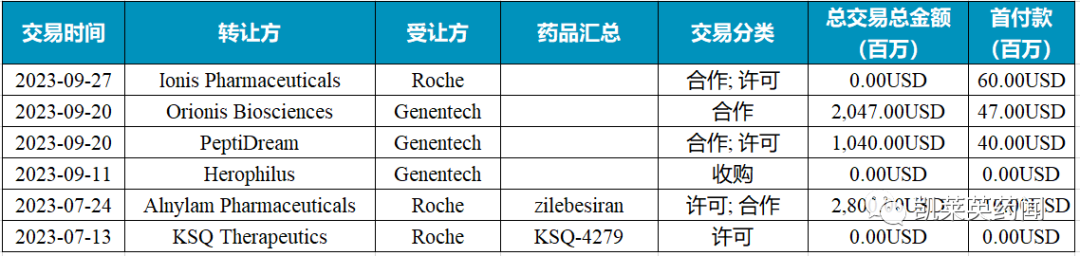
In July 2023, Roche and KSQ Therapeutics reached a global licensing agreement for KSQ-4279.
。 、 , 。 , In the same month, Roche and Alnylam announced a strategic collaboration to jointly develop and commercialize zilebesiran, an RNAi therapeutic for the treatment of hypertension. Alnylam will receive an upfront payment of $310 million, as well as development, regulatory, and sales milestone payments, with a total potential value of up to $2.8 billion. Zilebesiran consists of a small interfering RNA (siRNA) covalently linked to an N-acetylgalactosamine (GalNAc) ligand. GalNAc can bind to protein receptors specifically expressed on the surface of hepatocytes, enabling precise delivery. Its mechanism of action involves hepatocytes internalizing the GalNAc-siRNA bound to the asialoglycoprotein receptor (ASGPR) through endocytosis.
According to the results published in the NEJM, the 24-hour ambulatory blood pressure monitoring of patients using zilebesiran showed a decrease of more than 10 mmHg at weeks 12 and 24; data at week 24 indicated that the high-dose group had a better antihypertensive effect than irbesartan. In terms of safety, no serious treatment-related adverse events occurred, with all reported adverse events being mild to moderate, and no patients required additional treatment due to excessively low blood pressure.
In September 2023, Genentech, a subsidiary of Roche, acquired Herophilus' proprietary high-throughput drug discovery platform based on human organoids, which includes the Orchard™, Orchestra™, and OrCA™ technologies. Herophilus is a neurotherapeutics company located in San Francisco dedicated to treating complex brain disorders. The company combines brain organoid science, systems neuroscience, robotic automation, and advanced machine learning techniques to enhance the ability to discover new drugs for complex neurological and psychiatric conditions. It pioneered the use of multimodal phenotypic screening in sophisticated in vitro models, uncovering unprecedented disease characteristics. The company leverages these deep phenotypes to identify new therapeutic targets and drug treatments for diseases that are poorly addressed by traditional discovery methods, including neurodevelopmental disorders, psychiatric illnesses, and neurodegenerative diseases.
In the same month, Roche's Genentech announced two major collaborations:
First, a new multi-target collaboration and licensing agreement has been reached with PeptiDream, aimed at discovering and developing novel macrocyclic peptide-radiosotope (peptide-RI) conjugate drugs. According to the terms of the agreement, PeptiDream will utilize its proprietary Peptide Discovery Platform System (PDPS) technology to discover, optimize, and develop macrocyclic peptide candidates for use in peptide-RI conjugate drugs targeting points of interest to Genentech; PeptiDream will lead early preclinical development, then transition the resulting peptide-RI conjugate products to Genentech for further development and commercialization, while retaining the rights to develop and commercialize such peptide-RI conjugate products in Japan.
In this collaboration, PeptiDream will receive an upfront payment of 5.9 billion yen (approximately 40 million USD) from Genentech and is eligible to receive additional payments of up to 147.7 billion yen (approximately 1 billion USD) upon the achievement of specific development, regulatory, and commercial milestones, as well as tiered royalties on net sales of products resulting from the partnership.
Secondly, a cooperation agreement was reached with Orionis Biosciences ("Orionis") to jointly develop molecular glue drugs. According to the terms of the agreement, Orionis will be responsible for discovering and optimizing molecular glues for targets designated by Roche, while Roche will be responsible for subsequent preclinical, clinical development, regulatory filings, and commercialization of the drugs resulting from the collaboration.
In this collaboration, Orionis will receive a $47 million upfront payment and is eligible for development milestone payments, as well as commercial and net sales milestone payments exceeding $2 billion, along with tiered royalties generated from the sale of collaboration products.
At the end of September, Ionis reached an agreement with Roche on two undisclosed early-stage RNA-targeted therapy projects for the treatment of Alzheimer's disease (AD) and Huntington's disease (HD). Roche will be responsible for the clinical development, manufacturing, and commercialization of the therapies, obtaining exclusive global rights. According to the terms of the agreement, Ionis will advance the jointly developed projects through preclinical studies; Roche will take full responsibility for clinical development and, if approved, will commercialize the drugs worldwide. Ionis will receive a $60 million upfront payment from Roche and is eligible for development, regulatory, and commercial milestone payments.



"Viewing"Click once