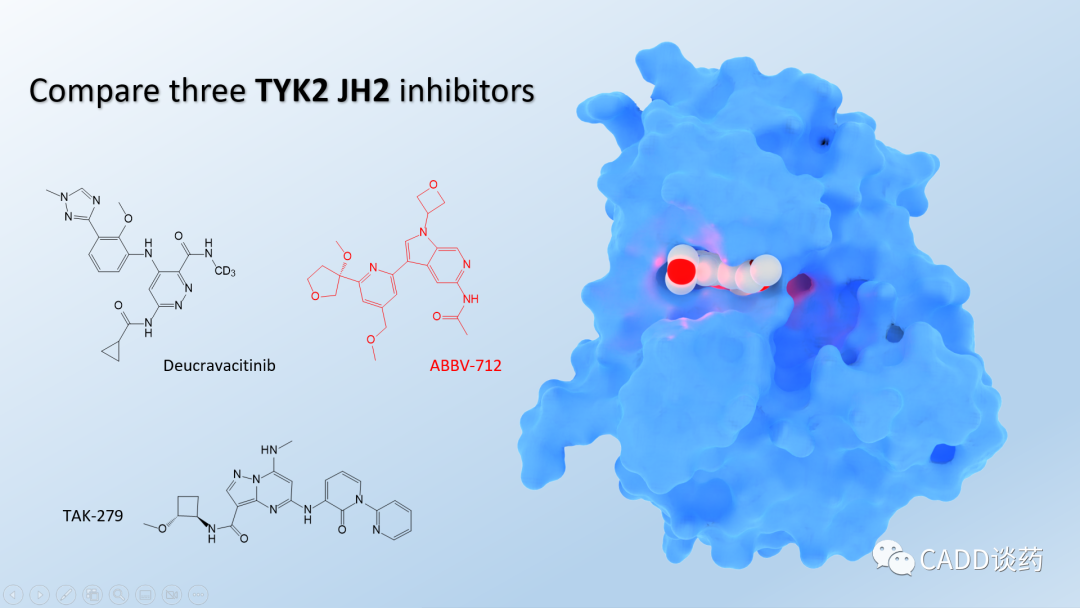
AbbVie Submits Prospectus Highlighting the Discovery and Structural Comparison of Selective TYK2 Inhibitor ABBV-712 with Deucravacitinib and TAK-279

AbbVie
Innovative Drug Developer
Recently, researchers from AbbVie published an article in JMC, describing the discovery process of their TYK2 clinical candidate ABBV-712.
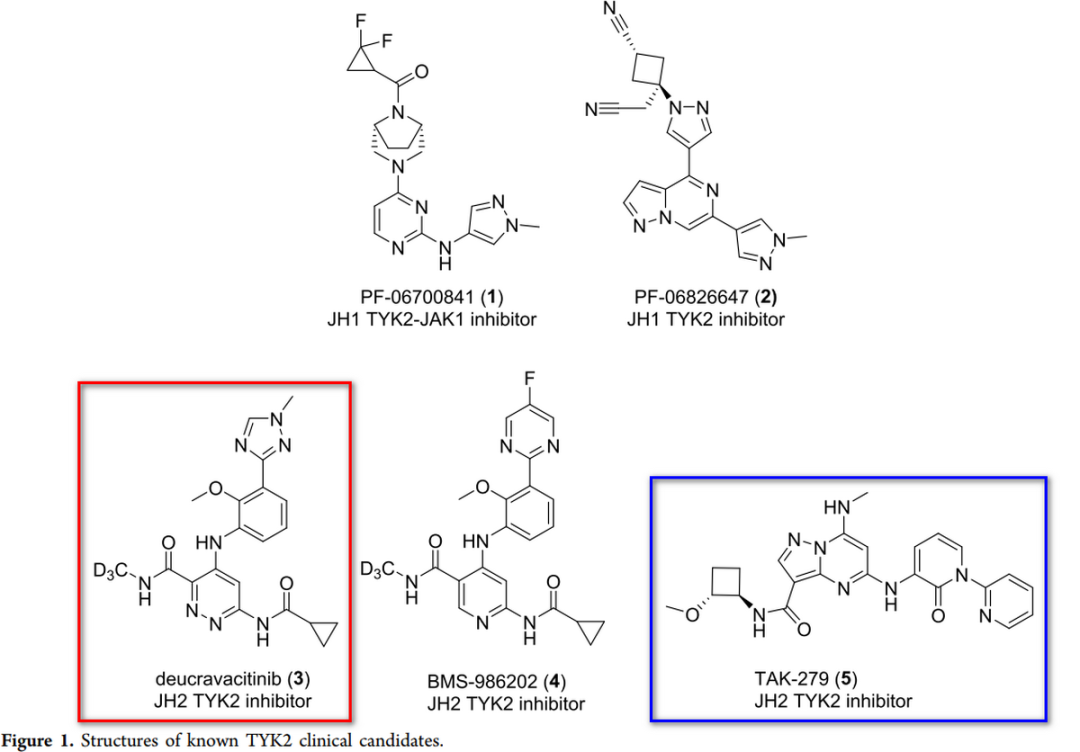
The following are TYK2 clinical molecules from several other companies. The molecule in the red box has been approved, namely BMS's deucravacitinib, and the molecule in the blue box is TAK-279, which Takeda acquired from Nimbus. It is currently in Phase III clinical trials with positive results.
Deucravacitinib was approved by the FDA in September last year and has recently been approved in China, with a time interval of approximately 1 year and 1 month.
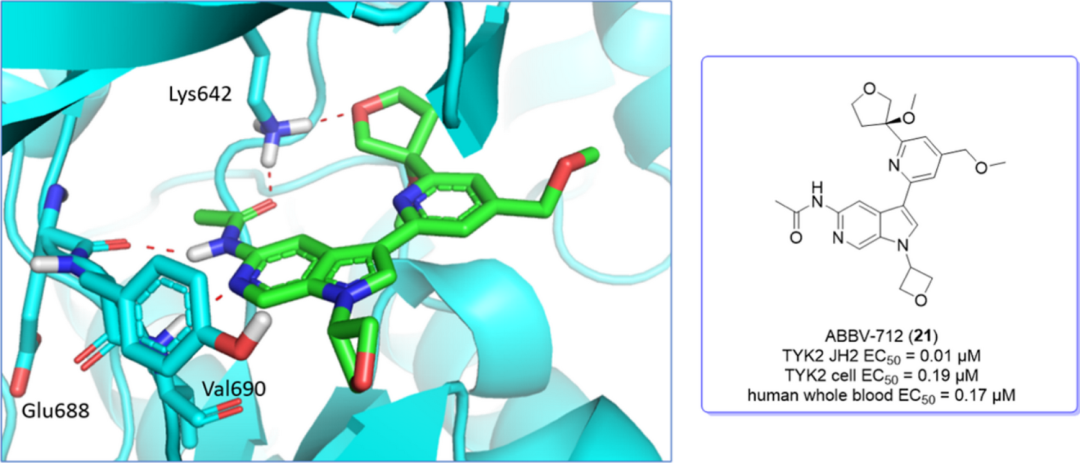
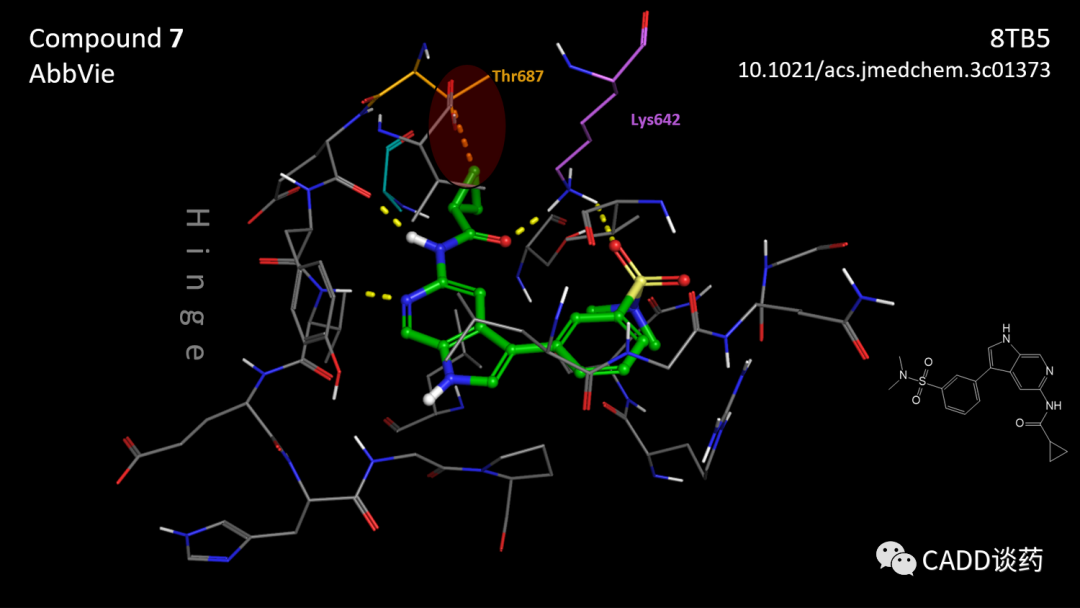
Back to AbbVie's molecular discovery. Compound 6 is the result of their HTS hit after preliminary optimization. Compound 6 is already a good starting point for further optimization, but it has poor thermodynamic solubility. Possibly for this reason, the co-crystal structure they resolved is of Compound 7, even though Compound 7 has lower activity.
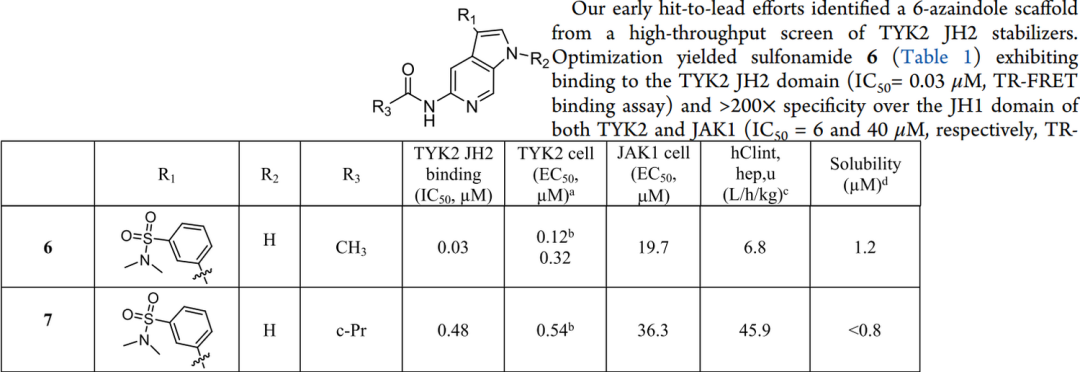
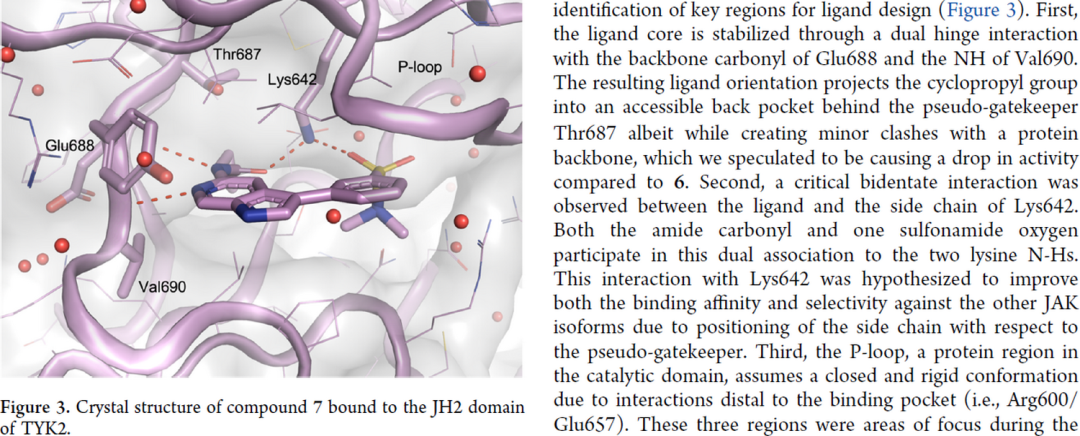
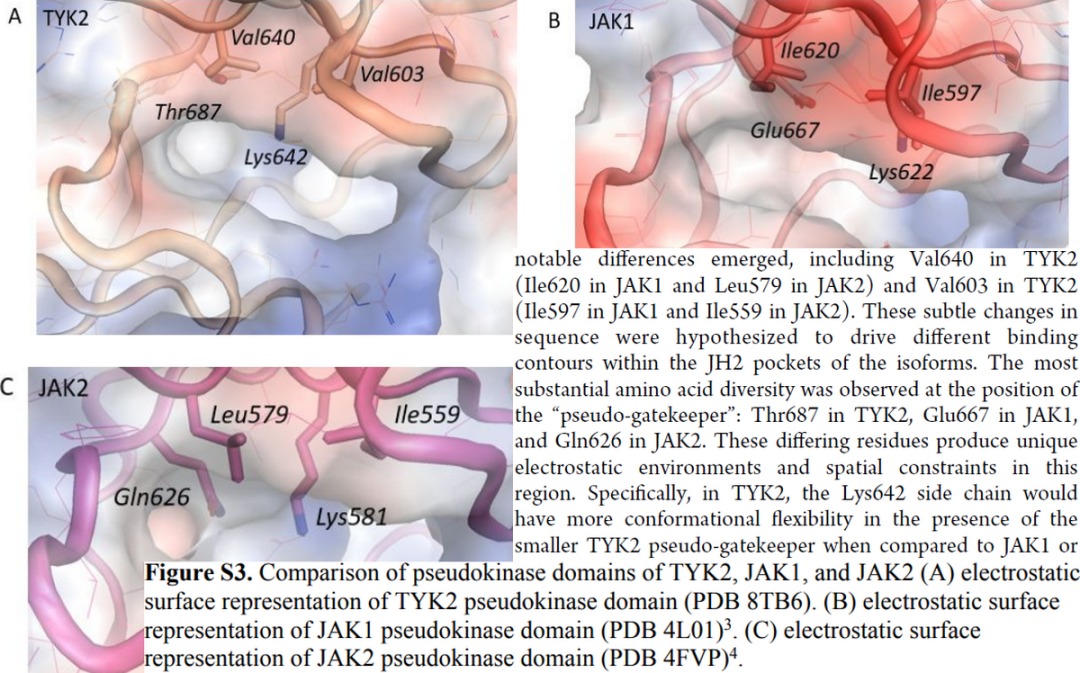
With the binding mode of molecule 7 in hand, as well as insights into TYK2 and JAK1/2Structural Comparison from the Perspective of Pocket Shape, Size, and Electrostatic PotentialThey believe that the pseudo-gatekeeper Thr687 in the TYK2 JH2 domain is a key residue, which, on the one hand, makes the back pocket more accessible and, on the other hand, causes the swing range of Lys642 to be different, offering an opportunity for selectivity compared with other JAK kinases.
Specifically, the cyclopropyl group of molecule 7 occupies the back pocket, and the double hydrogen bond formed between the molecule and Lys642 are both important factors for enhancing selectivity (although they also impact activity). At the same time, it can be observed that the cyclopropyl group has some clashes with the protein, which also explains this.WhyMolecule 7 is less active than molecule 6 (the corresponding position is methyl).
Discussion on Deucravacitinib and Deuteration
A Brief Discussion on Two TYK2 Inhibitors with Better Selectivity
Further MolecularDesignUsing some modeling and computational analysis, below are two examples, one is dihedral, and the other isDuring the MD processInteraction maintenance status, not detailed.
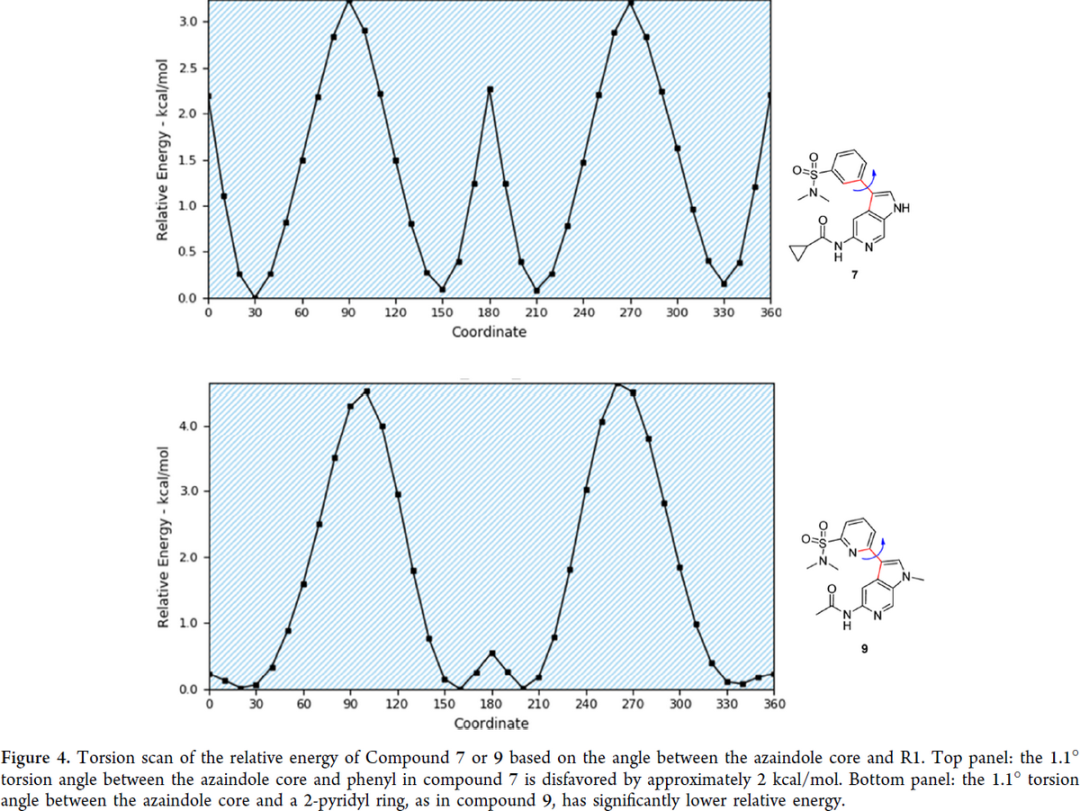
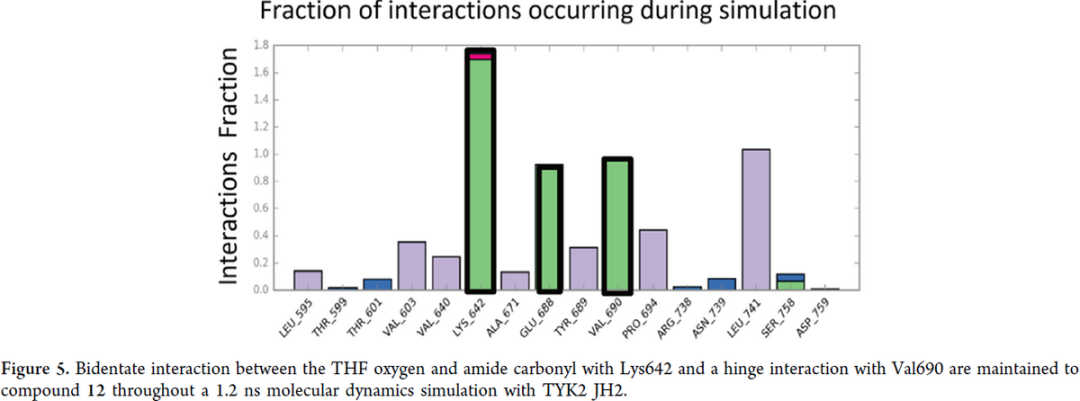
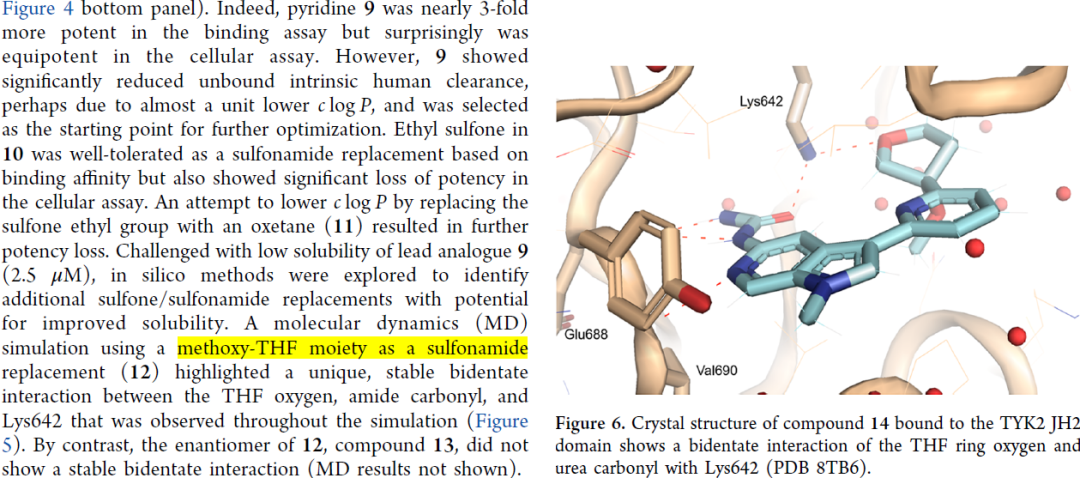
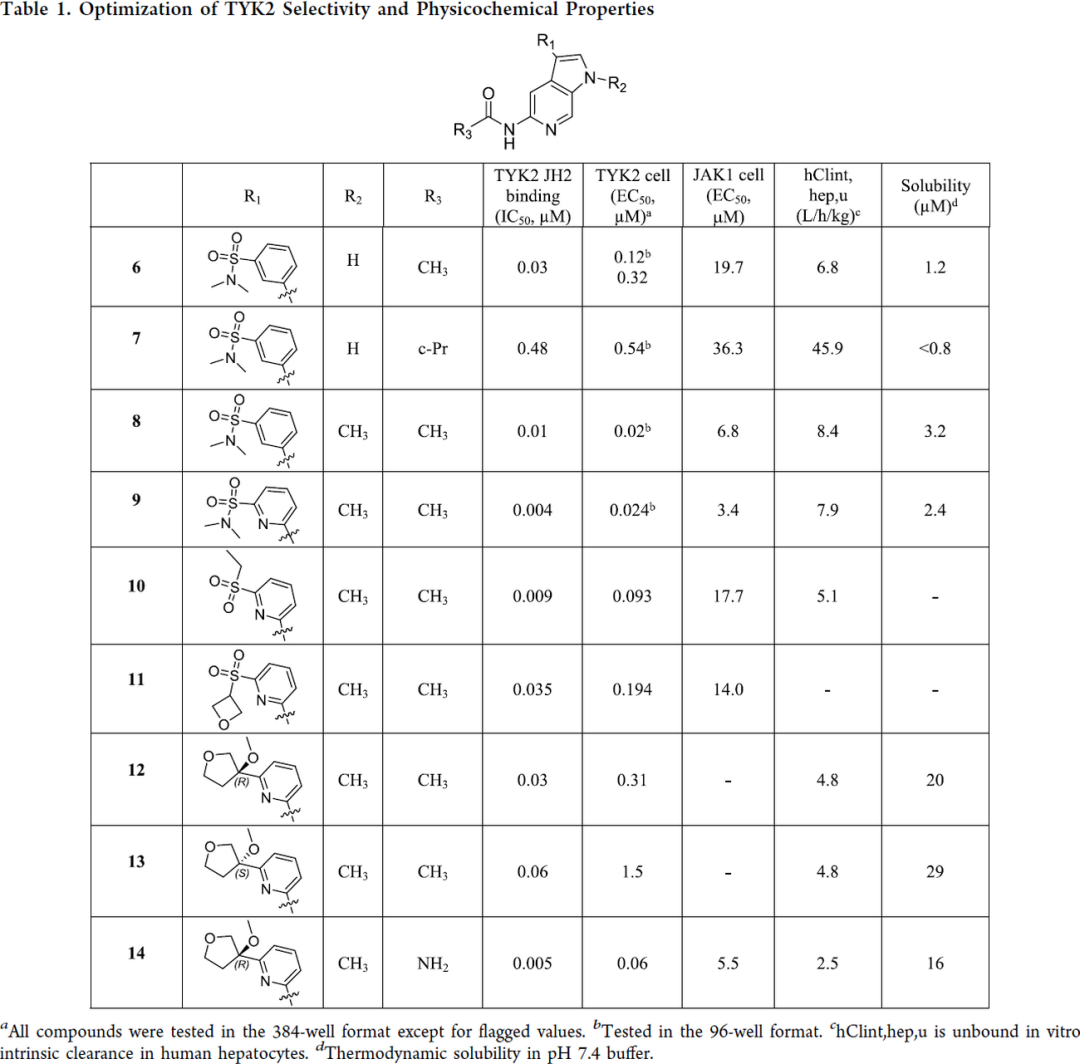
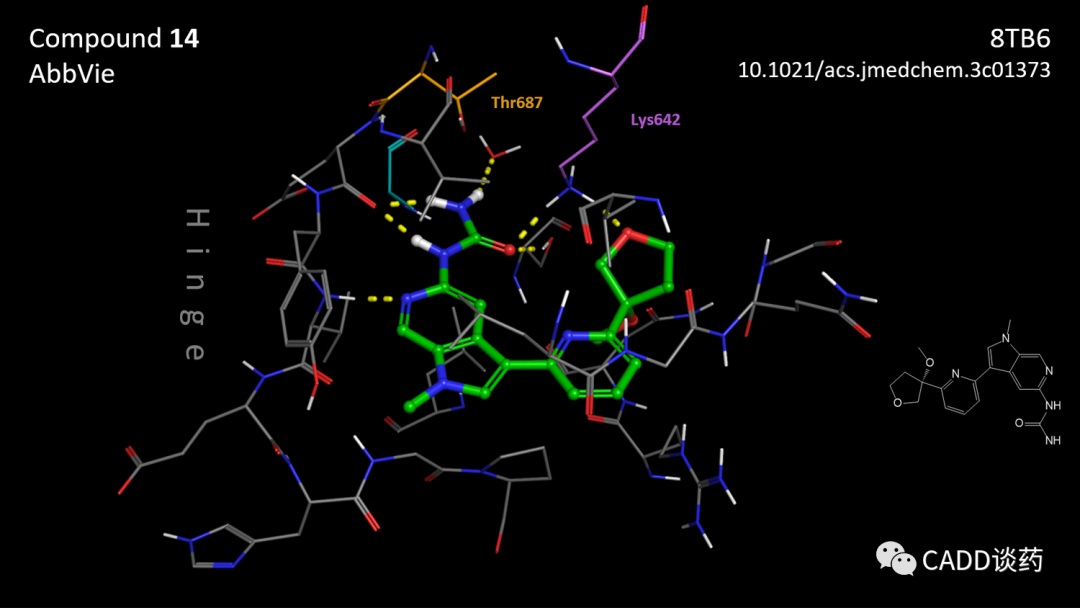
The SAR is also not described in detail. One interesting point is thatMethoxytetrahydrofuran Replacement Sulfonamide, which is also an in silico idea,Improved solubilityAndMaintained activity.
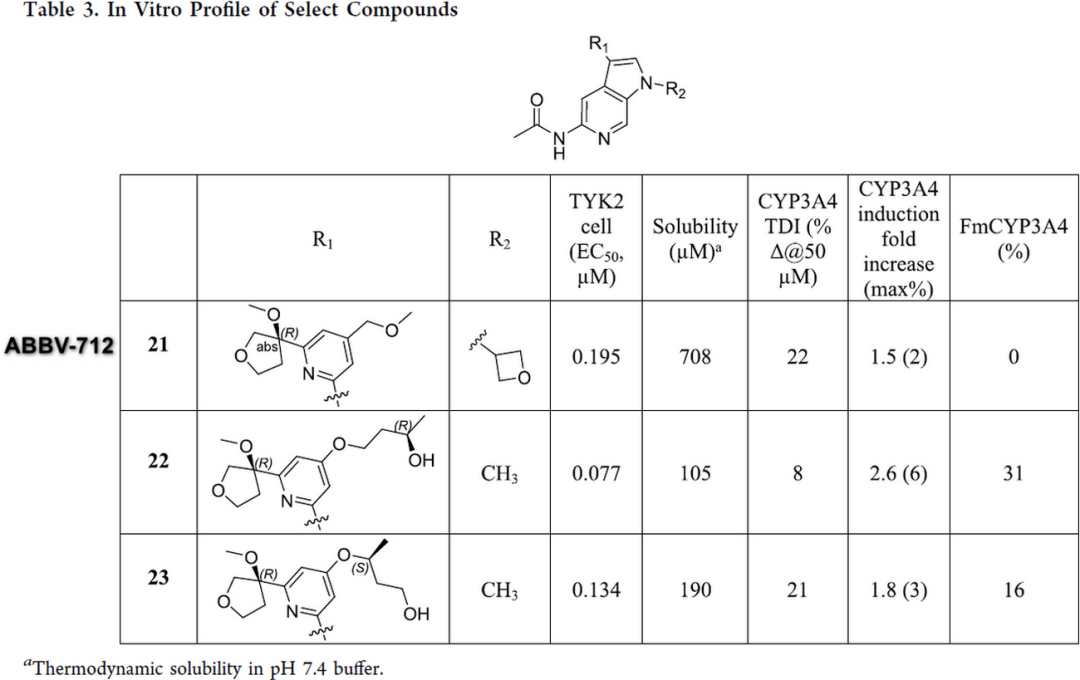
In summary, by optimizing activity, selectivity, PK, CYP, etc., the final candidate molecule 21 (i.e., ABBV-712) was obtained.
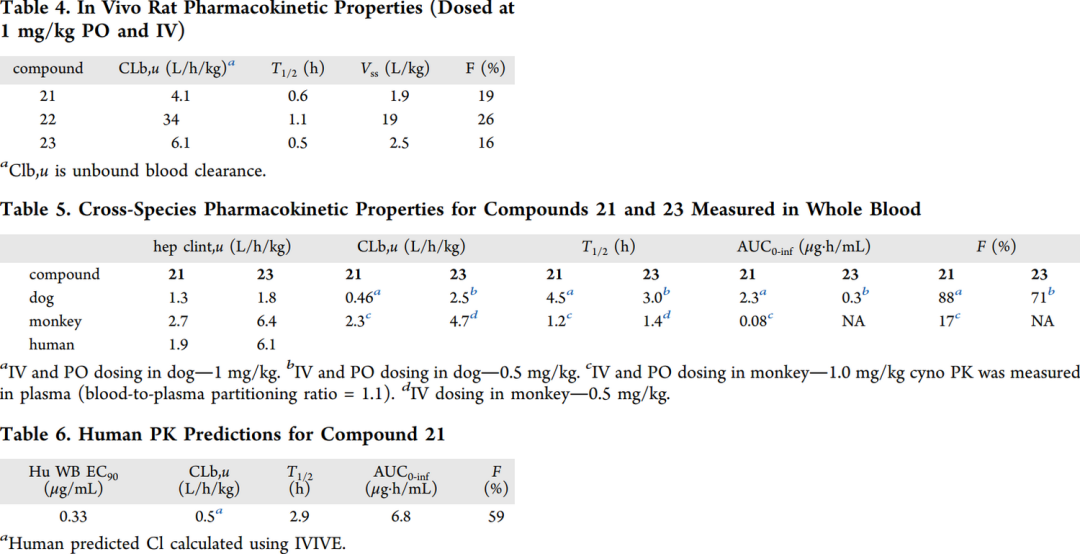
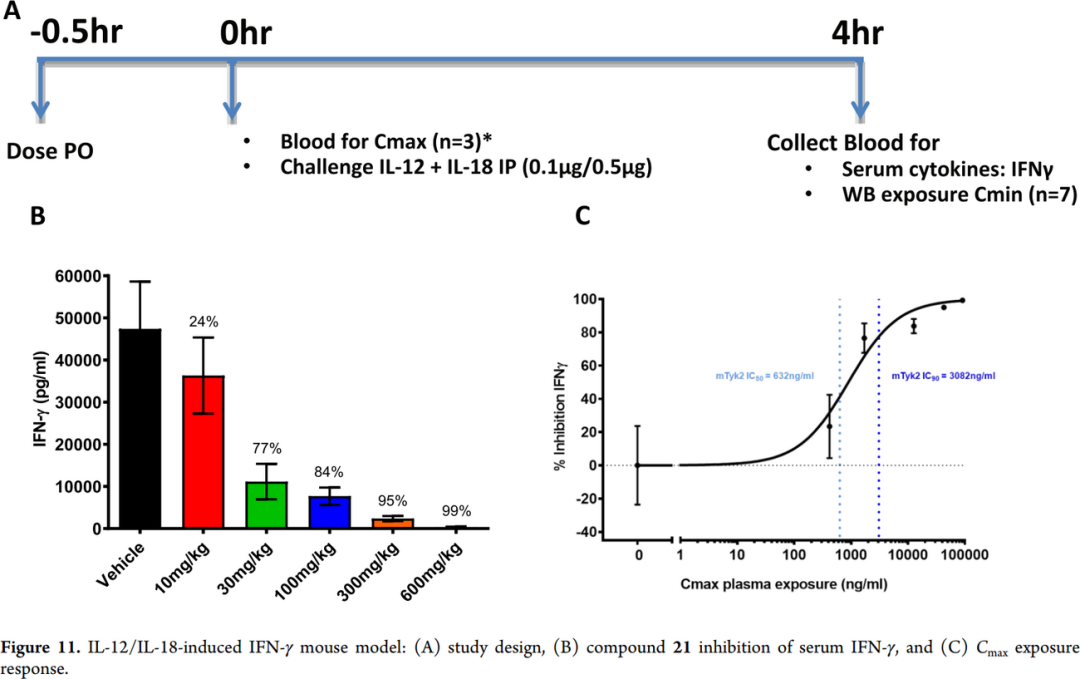
The PK and some efficacy results are shown in the figure below.
Fast forward to the second part, which is a structural comparison with BMS molecules and Takeda/Nimbus molecules.
The following figures are all from the same perspective. First, there are AbbVie's molecules, two of which have reported crystal structures, molecule 7 and molecule 14.
The following two are the previously reported BMS and Takeda/Nimbus molecules.
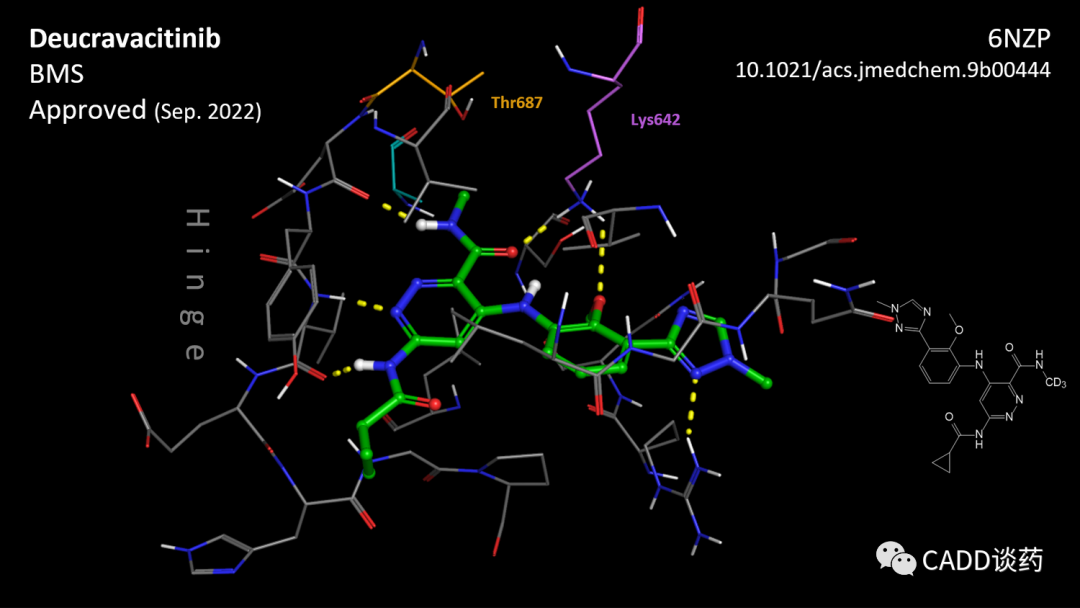
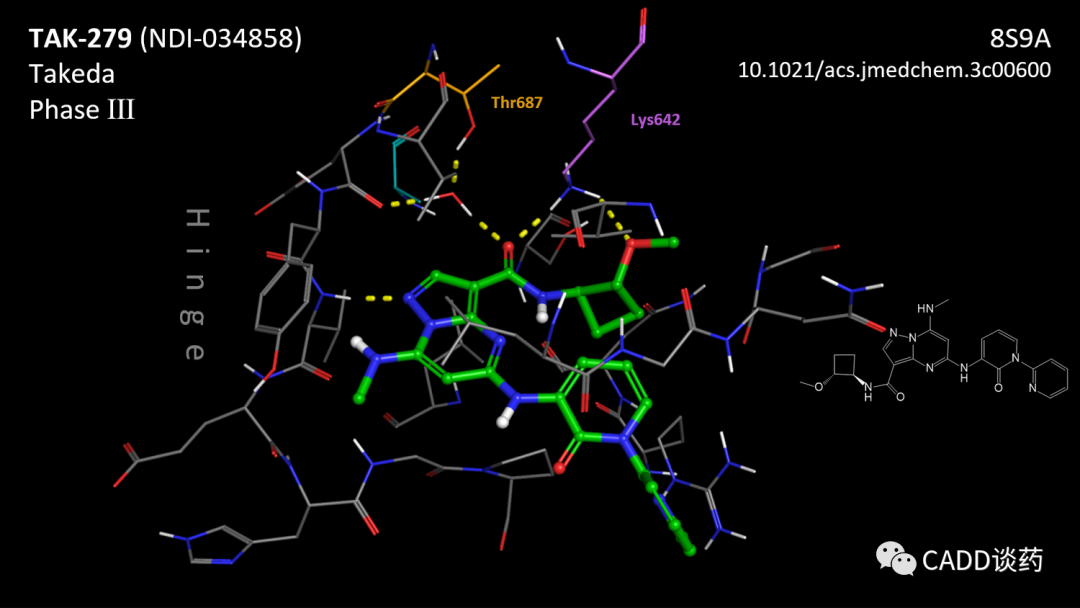
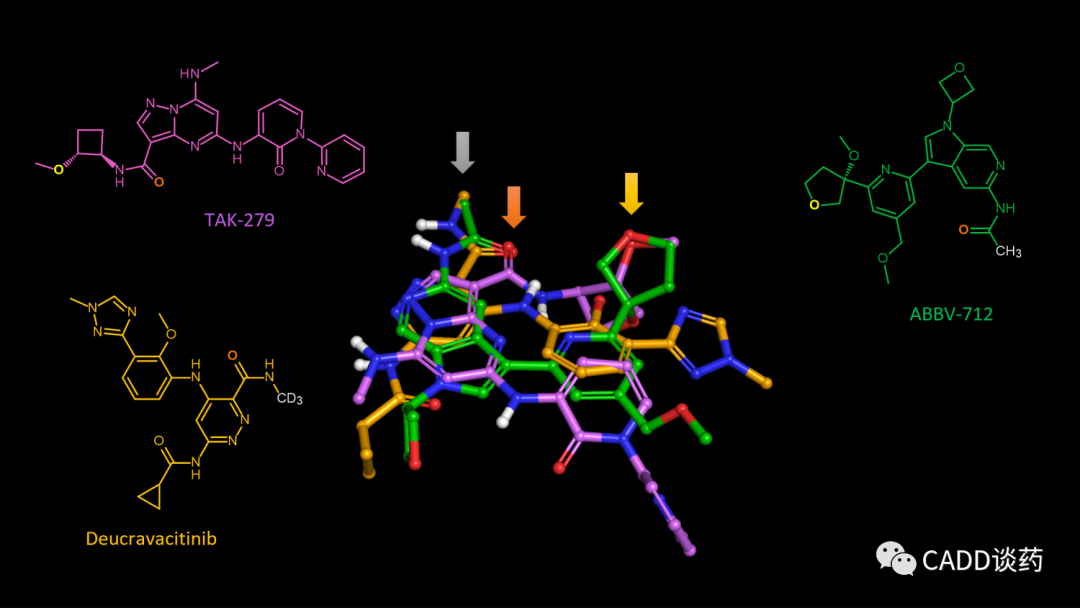
Finally, the protein is hidden, and the superposition of small molecule binding poses is performed.
Although the chemical structures are different, there are some commonalities in the binding patterns, especially at key binding features. The hinge region is not discussed here; the figure below highlights three other areas.
One is the carbonyl group (orange) that forms one of the double hydrogen bonds with Lys642, which perfectly aligns in the binding pose; another is the methyl group (gray-white) occupying the back pocket (also known as the alanine pocket in TYK2); the last one involves the methoxy O in the Nimbus molecule and the tetrahydrofuran O in the AbbVie molecule.In the binding poseAlso in the same location.