

Pfizer's $43B Seagen Acquisition Clears Antitrust Hurdles: New Strategic Implications for Chinese Biotech
Pfizer
Pharmaceutical R&D Developer

Seagen
Monoclonal Antibody Developer

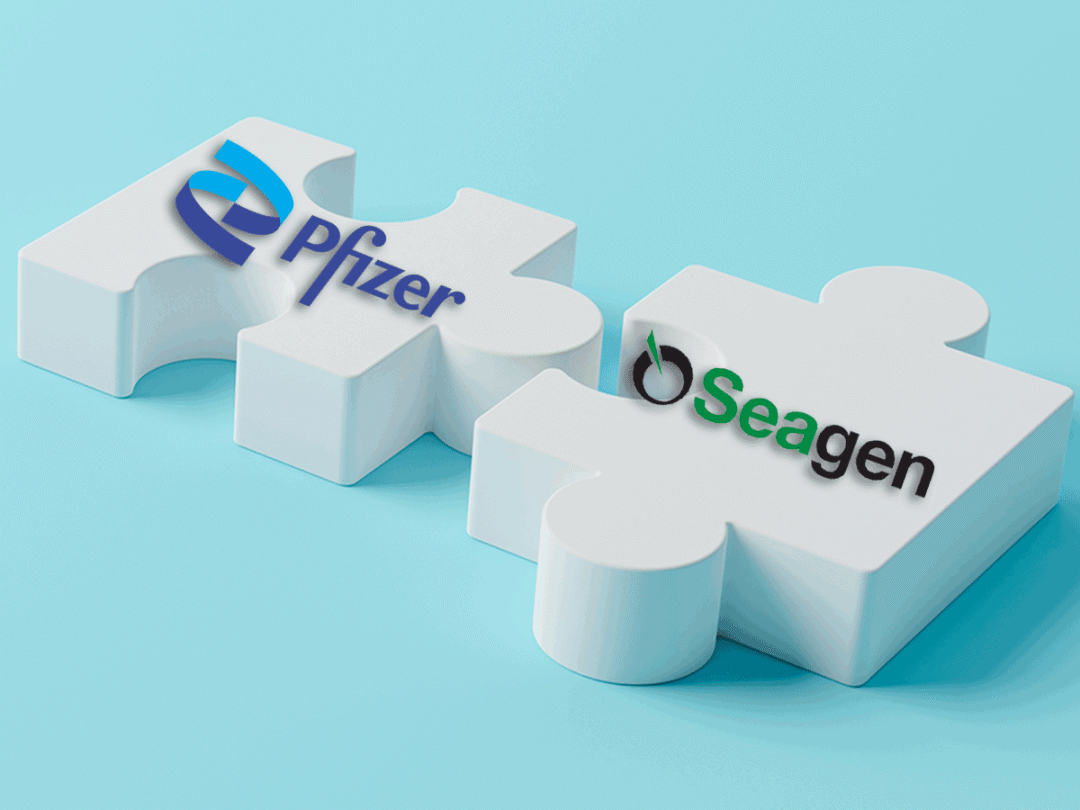
In this statement, the European Commission pointed out that although the two companies have overlapping pipelines and sales products in the fields of breast cancer, bladder cancer, colorectal cancer, cervical cancer, and lung cancer, their merger is "unlikely to have a negative impact on prices" because Seagen and Pfizer's respective products are "differentiated and complementary." Moreover, the markets for these cancer types are also "highly competitive."
The European Commission also found after investigation that it is unlikely Pfizer and Seagen would interrupt, delay, or reposition their overlapping pipeline projects solely due to this acquisition, as the research projects of the two companies "target different patient populations" and the research products "do not have the same mechanism of action and involve different treatment methods." Considering the large number of participants in the oncology field and the ADC market, this transaction will not lead to a loss of innovation.
eMedClub
On March 13 this year, Pfizer announced that it would acquire Seagen for $229 per share, or approximately $43 billion in cash, to strengthen its cancer treatment programs, setting the record for the largest M&A deal in the ADC field in history.The acquired products include Seagen's promising ADC therapies for various cancer treatments, as well as four FDA-approved drugs — Adcetris for the treatment of certain lymphomas, Padcev for urothelial cancer, Tivdak for cervical cancer, and Tukysa for HER2-positive breast cancer and colorectal cancer.
However, the deal has attracted antitrust scrutiny. In July 2023, the U.S. Federal Trade Commission (FTC) suddenly requested more information about the acquisition as part of its review of the deal.
eMedClub
However, Pfizer's acquisition of Seagen has not sparked controversy like other recent large-scale mergers and acquisitions.
On December 12 last year, Amgen announced that it would acquire Horizon Therapeutics for $27.8 billion, the highest acquisition amount in 2022. On May 16 this year, the FTC announced a lawsuit to block Amgen's acquisition of Horizon, as the merger could allow Amgen to leverage its existing product portfolio to consolidate the monopoly position of Horizon’s two best-selling star drugs, Tepezza and Krystexxa—Tepezza treats thyroid eye disease, while Krystexxa treats gout. Both drugs have been granted "Orphan Drug Designation" by the FDA and currently face little competition in the market. The FTC argued that Amgen might exploit its strong assets to secure favorable prescription positions for Horizon’s therapies, which constitutes an anti-competitive practice of cross-market bundling and monopolization. On August 21, three months after the lawsuit was filed, Amgen pledged not to bundle its products with Tepezza or Krystexxa. Amgen agreed to some terms proposed by the FTC, which completely eliminated the possibility of Amgen monopolizing the thyroid eye disease and gout drug markets. A few days later, the FTC withdrew its lawsuit against Amgen, ultimately approving the deal. On October 6, Amgen announced the completion of its acquisition of Horizon, successfully concluding the transaction that lasted nearly 10 months.
The European Commission has also been strictly enforcing its antitrust regulations, ordering sequencing giant Illumina on October 12 to divest cancer detection company Grail or potentially face a fine of 3.3 billion RMB. The two companies signed an acquisition agreement in September 2020 for 8 billion USD in cash and stock and completed the transaction in August 2021 while the EU was still conducting its review. The European Commission later found this to be a "serious violation" of its merger regulations.
As early as February 2022, Cooper Companies signed a binding letter of intent with Cook Medical, under which the former planned to acquire the latter's reproductive health business for $875 million. After an antitrust investigation by the FTC, Cooper Companies announced in August this year that it had abandoned the acquisition.
Why Antitrust is Needed: Preventing Monopolies, Protecting Patients, and Safeguarding Innovation
eMedClub
In the United States, transactions valued at over $111.4 million must be reported to the Federal Trade Commission (FTC) and the Department of Justice (DOJ) for a 30-day antitrust review. The vast majority of mergers and acquisitions pass without issue, but in some cases, the FTC and DOJ may request additional information from the companies involved, leading to an in-depth investigation. To combat illegal mergers, in June this year, the DOJ and FTC reformed the Hart-Scott-Rodino (HSR Act) filing process for the first time in 45 years. Under the new rules, companies are required to submit more detailed information about their transactions than before, which could not only potentially extend the timeline for completing mergers but also directly terminate deals.
Previously, antitrust reviews focused on the product pipelines of both the acquiring and target companies. If there was no competition between their products, the deal could be completed. Now, a key principle in the new regulations is that "mergers should not significantly increase market concentration in an already highly saturated market." To protect patients' rights, preserve industry innovation, and prevent "tying arrangements," the FTC has become increasingly stringent in its review of pharmaceutical mergers and acquisitions.
FTC's Alicia Dubuc commented on Pfizer's acquisition, stating: "We recognize the need for special scrutiny of proposed mergers that could reduce competition and lead to higher prices for consumers. We will continue to work to protect the American public from these potential harms."
In the cross-market competition within the pharmaceuticals industry, American PBM (Pharmacy Benefit Management) plays a significant role. Pharmaceutical companies bundle less popular drugs with blockbuster drugs to gain bargaining power that exceeds market prices, block new competitors, and pressure insurance companies and PBMs, creating the potential for bundled sales to monopolize the market. Bundled sales have thus become a key focus in current antitrust reviews.
Monopolies can also stifle innovation. Large companies engage in "killer acquisitions," buying startups only to shut them down before their pipeline projects become competitive threats, which discourages promising but competitive innovations.
Regarding Amgen's acquisition of Horizon, Holly Vedova, Director of the FTC’s Bureau of Competition, stated in a declaration: "Rampant consolidation in the pharmaceutical industry allows powerful companies to significantly raise prescription drug prices, prevents patients from accessing more affordable generic drugs, and stifles innovation in the pharmaceutical market. Today’s action is a challenge by the FTC to mergers and acquisitions in the pharmaceutical sector, sending a clear signal to the market: The FTC will not hesitate to challenge mergers that enable pharmaceutical conglomerates to solidify monopolistic positions at the expense of consumers and fair competition."
Back to Pfizer's acquisition of Seagen, Pfizer itself already owns 16 targeted drugs and 2 ADC drugs on the market (Mylotarg for leukemia treatment and Besponsa). Through the acquisition of Seagen, Pfizer will gain 4 more marketed anti-cancer drugs and an additional 12 experimental drugs currently undergoing clinical trials. This acquisition will place Pfizer in a leading position in the ADC field, as Seagen is a leader in ADC. Pfizer’s Bavencio is used for first-line maintenance treatment in adult patients with locally advanced or metastatic urothelial carcinoma (UC), while Seagen’s Padcev is approved for patients who have experienced disease progression after using Bavencio and similar drugs, creating overlap between the two. Therefore, there are concerns that the merged company may possess strong bargaining power when negotiating with insurance companies and might also impact the continued innovation of Seagen’s R&D pipeline.
But Pfizer's General Counsel, Doug Lankler, holds a different view. He believes that the technologies and approaches used by the two companies to combat cancer are complementary. Regulatory authorities will see that combining Seagen's ADC technology and expertise with Pfizer's broader experience in other oncology fields will bring more benefits to patients and market competition.
Beneficial to patients, with overlap but not leading to monopoly — this is the reason for the European Commission's approval: "Based on market research, the European Commission found that the merger would not significantly reduce competition in markets where the two companies’ operations overlap within the European Economic Area (EEA)."
Exciting Live Broadcast Preview
Press and hold to scan the QR code and participate immediately ↓
Recommendation
1
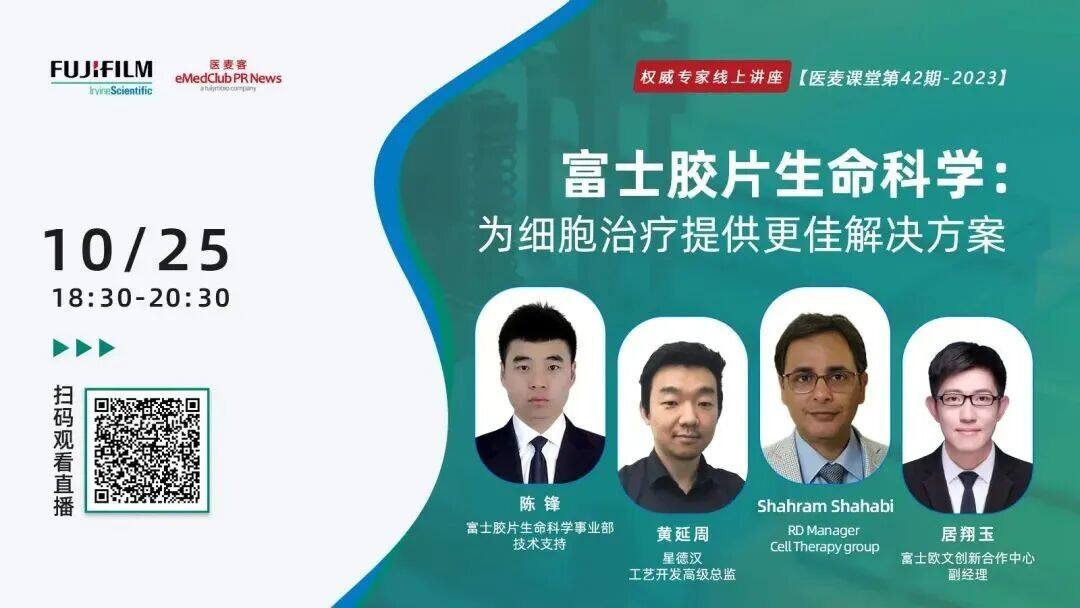
October 25th (Wednesday) 18:30-20:30
Fujifilm Life Sciences: Providing Better Solutions for Cell Therapy
Recommendation
2
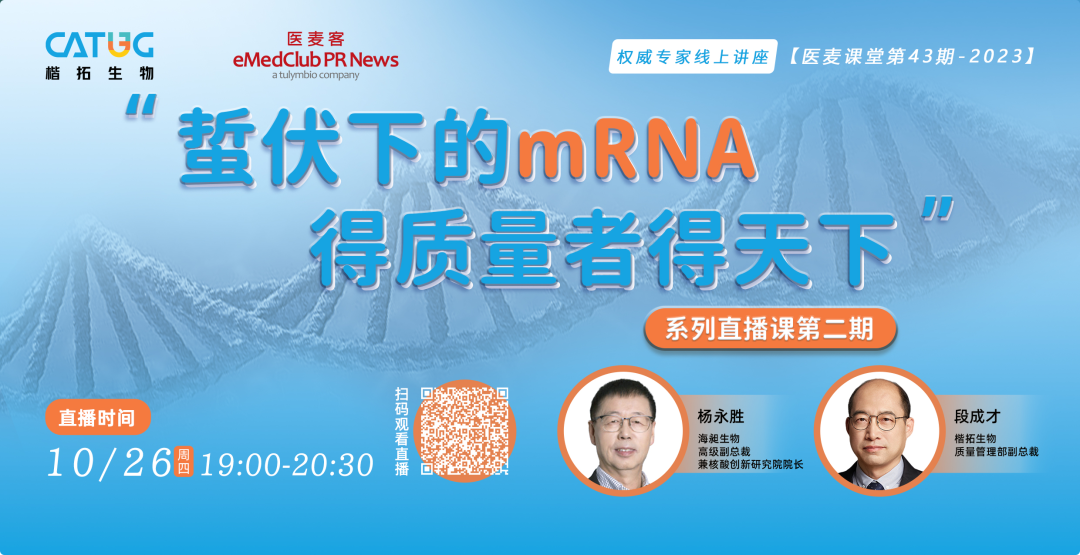
October 26 (Thursday) 19:00-20:30
The Dormant mRNA: Quality is the Key to the Kingdom

Dian Dian "Share”、“Like" and "In view", charge me up a bit~"