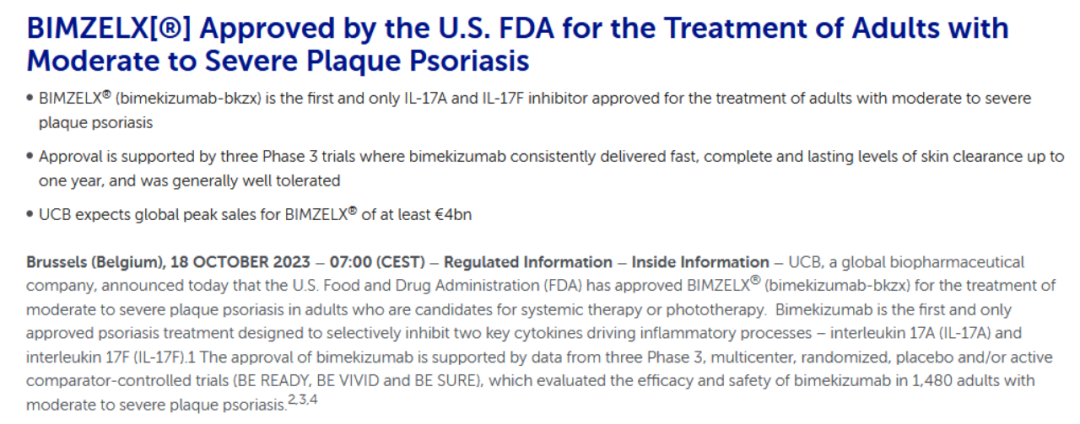
On October 17, Johnson & Johnson announced its Q3 financial report for 2023, with third-quarter sales reaching $21.4 billion, representing a year-on-year increase.6.8%, Full-Year Revenue Forecast Raised to $83.6-84.0 Billion.Among them, ustekinumab, a psoriasis treatment drug, remains Johnson & Johnson's best-selling product, with revenue in the first three quarters reaching $8.105 billion. However, its patent expired in September 2023, and competition from biosimilars will be an inevitable challenge for Johnson & Johnson.On October 18, 2023, UCB announced that the U.S. FDA had approved Bimzelx (bimekizumab) for the treatment of adult patients with moderate to severe plaque psoriasis who are candidates for systemic therapy or phototherapy. Bimekizumab is the world's first approved IL-17A/F dual-target inhibitor for the treatment of moderate to severe plaque psoriasis.Figure 1. Bimekizumab Approved by the FDAPsoriasisBiological ProductsMedicineCurrent Market Layout
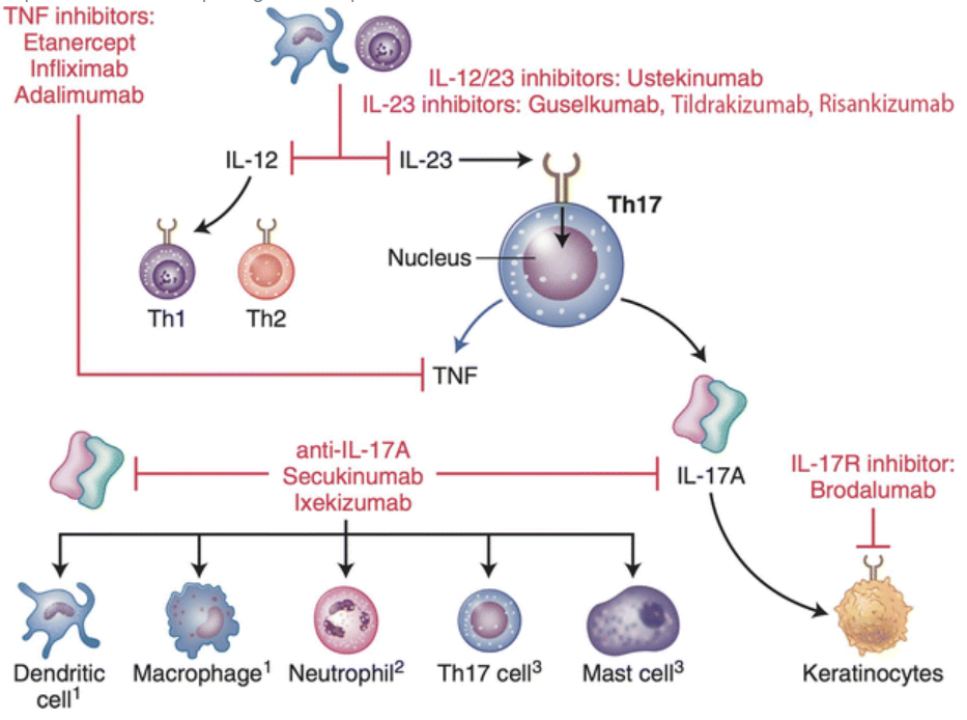
Biological agents refer to preparations made using bioengineering and genetic engineering technologies, usually large protein molecules, which require injection administration and have the advantages of precision and targeting.Targets Involved in PsoriasisYes:Upstream TNF-a, midstream IL-12, IL-23, and downstream IL-17, etc.(Figure 1) [1].Figure 2. Biologic targets involved in psoriasis [1]
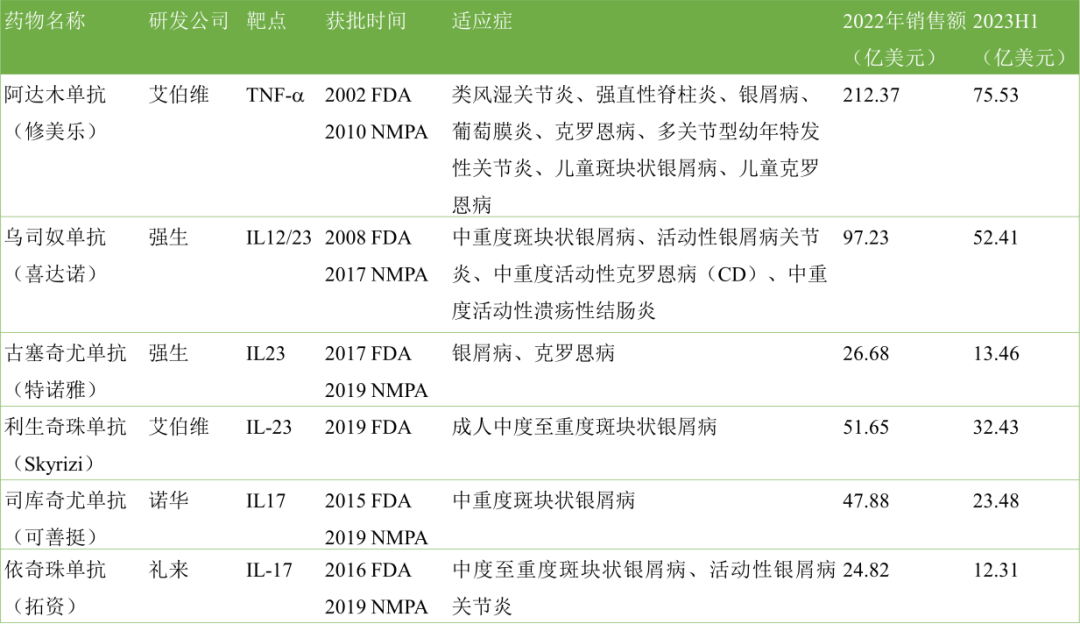
The corresponding inhibitors areAdalimumab (Humira), Ustekinumab (Stelara)、Guselkumab (Tremfya)/Risankizumab (Skyrizi), Secukinumab (Cosentyx), and Ixekizumab (Taltz)etc., they are all blockbuster drugs, with sales exceeding 2 billion US dollars last year. Adalimumab, in particular, has long occupied the "king of drugs" throne and is approved for various indications, including not only psoriasis but also autoimmune diseases such as rheumatoid arthritis and Crohn's disease (Figures 1 and 2).Both Adalimumab and Ustekinumab are facing patent expiration issues.The launch of biosimilars is bound to affect the competitiveness of originator drugs, and sales will start to decline.The market share of IL-17 class biologics has increased.。Recently, the FDA approvedUCB's IL-17A and IL-17F dual-target inhibitor Bimekizumab launched for the treatment of moderate to severe plaque psoriasis in adults. China-produced IL-17 monoclonal antibody drugs Secukinumab and Ixekizumab also successively filed for marketing this year.`, it is expected to become one of the first domestically produced IL-17A monoclonal antibody products to be launched, bringing more treatment options to psoriasis patients in China.`InCommonly Used Psoriasis Drugs Approved in ChinaIncluding: TNF-a inhibitors adalimumab, infliximab, and etanercept, IL-12/IL-23 antagonists ustekinumab and guselkumab, IL-17 antagonists secukinumab, ixekizumab, and brodalumab, etc.Figure 3. Commonly Used Biologics for Psoriasis (Data from public sources and company financial reports)
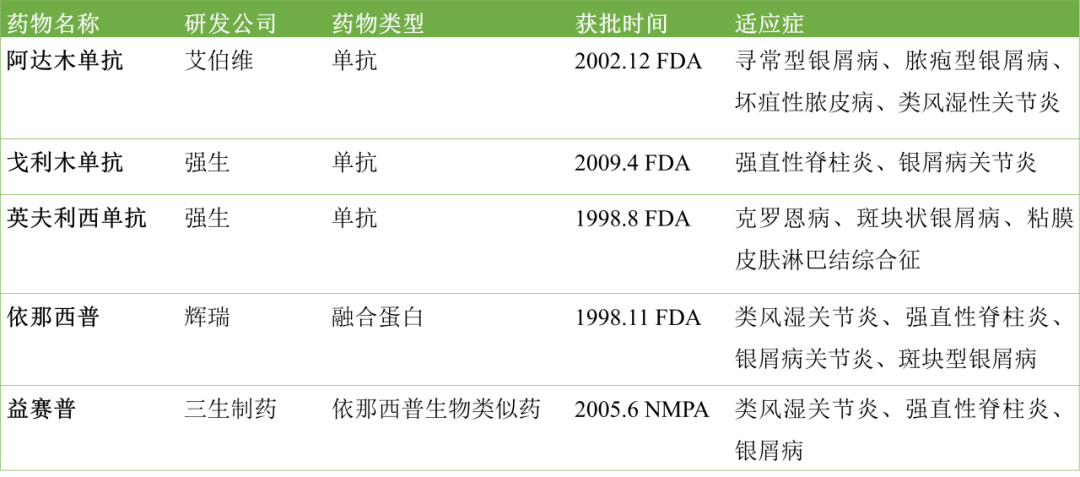
Upstream Target:TNF-α InhibitorTNF-α is primarily produced by macrophages and monocytes.Pro-inflammatory cytokines, participating in normal inflammatory and immune responses, and once dysregulated, can easily lead to various immune system diseases, including psoriasis and colitis, etc.Adalimumab, also known as the famous "Humira," works by specifically binding to TNF-α, which blocks its interaction with the TNF-α receptor on the cell surface, thereby preventing the pro-inflammatory effects of TNF-α.。Adalimumab was first launched in the United States in 2002, and later in China in 2010, for the treatment of autoimmune diseases such as rheumatoid arthritis, ankylosing spondylitis, and psoriasis.It is the most significant product in the field of autoimmune diseases, with sales reaching $280 million in its first year on the market. In 2012, adalimumab officially claimed the top spot as the "king of drugs" and set a sales record of $21.237 billion last year.However, with the expiration of patents and competition from other products, sales in the first half of this year fell by 25.2% year-on-year to USD 7.553 billion, putting the throne of the "king of drugs" at risk.In addition to adalimumab, golimumab and infliximab from Johnson & Johnson, as well as etanercept from Pfizer, are also commonly used TNF-α inhibitors for the treatment of psoriasis (Figure 3).。In China, the etanercept biosimilar Yisaipu occupies a large market share., is the first fully human antibody drug to be launched in China, and also the first TNF-α inhibitor in the field of rheumatology in China. It was approved in 2005 for the treatment of rheumatoid arthritis, and in 2007 it was approved for ankylosing spondylitis and psoriasis (Figure 3).Figure 4. Some approved TNF-α inhibitors (Data from public sources)
Midstream Target:IL-12/23Inhibitor
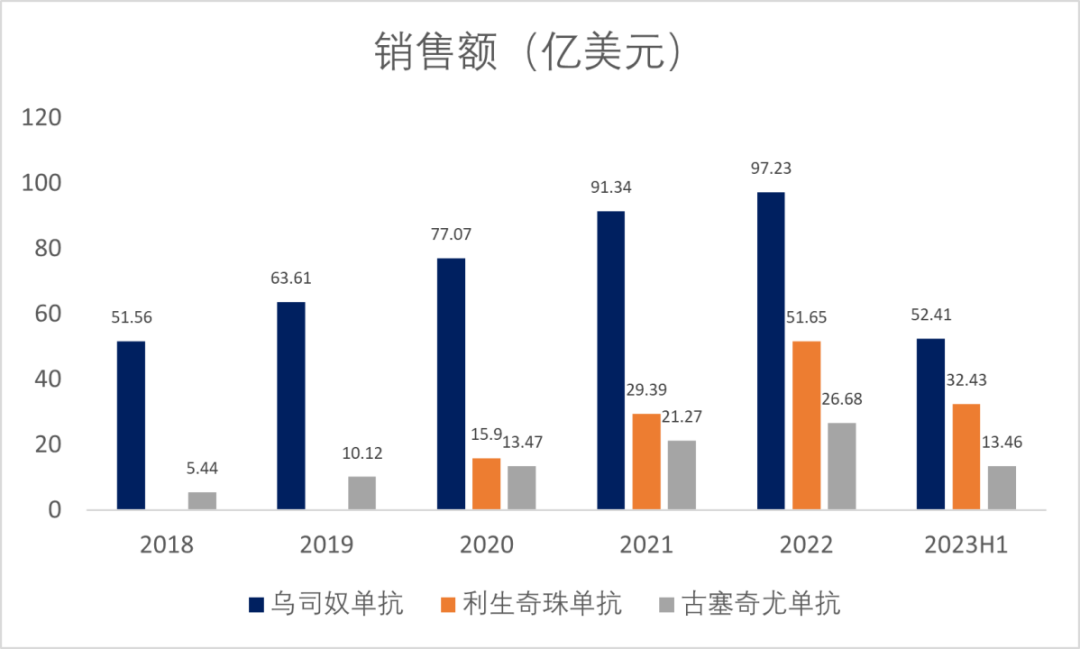
IL-12 and IL-23 both belong to the interleukin-12 family, which also includes IL-27 and IL-35. Their uniqueness lies in having a unique heterodimeric cytokine [1].IL-12/IL-23 activate the JAK-STAT signaling pathway by binding to IL-12 receptor (IL-12R) and IL-23R, respectively, leading to the phosphorylation of Signal Transducer and Activator of Transcription (STAT) family members and downstream signaling.IL-12 and IL-23 are primarily pro-inflammatory and stimulatory cytokines, and their dysregulation can also lead to the occurrence of many autoimmune diseases.UstekinumabIt is the best-selling drug targeting IL-12/IL-23, with sales reaching last year.$9.723 billion. According to Johnson & Johnson's recent financial report, it has sold $8.1 billion in the first three quarters of this year, and is expected to break through the $10 billion mark.。Ustekinumab was first approved by the FDA for the treatment of psoriasis in 2008, and later received approvals for the treatment of Crohn's disease (CD) and ulcerative colitis. However, like many blockbuster products, it has encountered similar issues.The U.S. patent protection period for ustekinumab expired in September 2023, and it will inevitably face competition from generic drugs, leading to a decline in sales.。Besides ustekinumab,AbbVie'sLisheng Qizhu Monoclonal Antibody and Johnson & Johnson's GuselkumabThey are also best-selling drugs targeting IL23 for the treatment of psoriasis, with sales exceeding $2 billion in 2021 (Figure 4).Risankizumab was successively approved in Japan, the United States, and the European Union in 2019 for the treatment of psoriasis. Guselkumab was approved by the FDA in 2017 for the treatment of adult patients with moderate to severe plaque psoriasis.Figure 5. Sales of Ustekinumab, Risankizumab, and Guselkumab
Downstream Targets:IL-17 Inhibitor
IL-17 is primarily produced by TH17 helper T cells.Pro-inflammatory factors that can induce epithelial cells, endothelial cells, and fibroblasts to synthesize and secrete IL-6, IL-8, G-CSF, and PGE2, promoting ICAM-1 expression.So far, the IL-17 family has identified six members: IL-17A-F.IL-17 receptors (IL-17R) family subunits are all type I transmembrane proteins, including five family members: IL-17RA, IL-17RB, IL-17RC, IL-17RD, and IL-17RE. Their extracellular regions contain two fibronectin III-type domains and a cytoplasmic SEF/IL-17R/TIR (SEFIR) domain [2,3].IL-17A binds to its keratinocyte-expressed receptor (IL-17R), promoting abnormal differentiation and proliferation of keratinocytes, as well as chemokines (CXCL1,CXCL2AndCCL20) expression, recruitment of Th17 and dendritic cells to the skin, enhanced expression of antimicrobial peptides, and reduced expression of cell adhesion molecules lead to disruption of the skin barrier function, causing autoimmune diseases.Secukinumab、Ixekizumab(IL-17A)
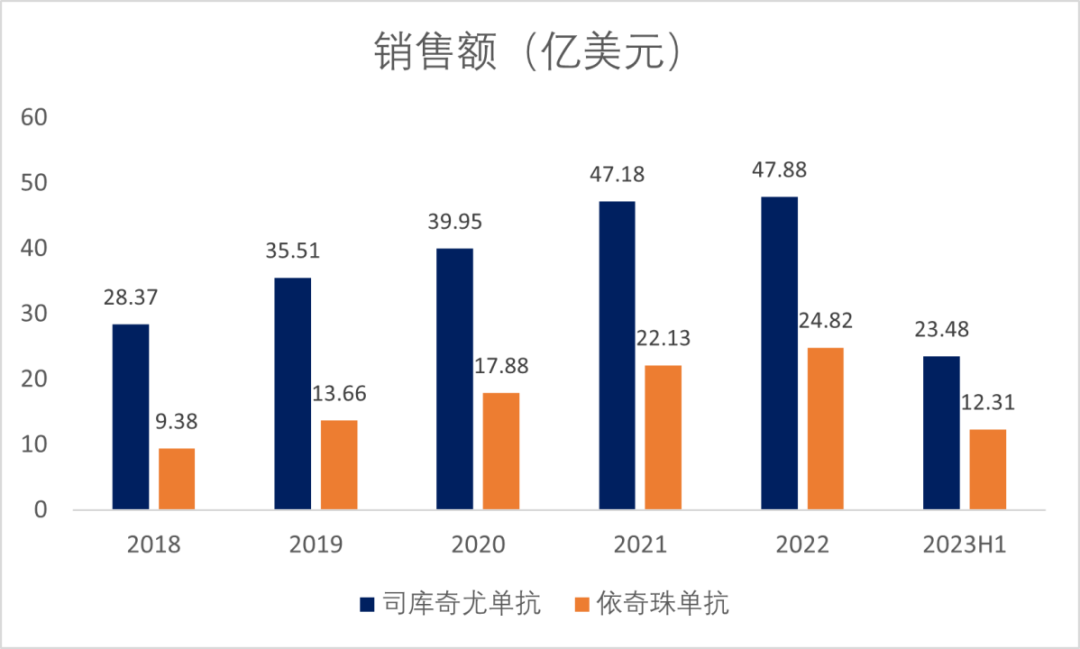
IL-17 biologics used for the treatment of psoriasis include those targeting IL-17 and IL-17R, with the most commonly used being those targeting IL-17A.DepartmentCusilumab and Ixekizumab.Novartis' Secukinumab is the world's first marketed IL-17A-targeted monoclonal antibody, with the most approved indications. It has now become Novartis' blockbuster product, generating sales of $4.788 billion in 2022 and $2.348 billion in the first half of this year (Figure 5).Lilly's ixekizumab is the first IL-17A antagonist to demonstrate superior efficacy to adalimumab in a head-to-head study in psoriatic arthritis (PsA), with sales reaching $2.482 billion last year and $1.231 billion in the first half of this year (Figure 5).Figure 6. Sales of Secukinumab and Ixekizumab
Secukinumab (Cosentyx) and Ixekizumab (Taltz) have both been included in the medical insurance, and are first-line treatment drugs recommended by international guidelines for treating moderate to severe psoriasis.Compared with other biologics, the advantage is that it clears skin lesions very quickly. In the early stage, the medication is administered very frequently: Secukinumab is given weekly for the first five weeks, and Ixekizumab is administered every two weeks for the first three months. For subsequent maintenance therapy, once-weekly dosing can achieve better lesion clearance, with the skin almost completely returning to normal. Patients can self-inject, making it convenient and portable to use.Bimekizumab (IL-17A+IL-17FDual-target)
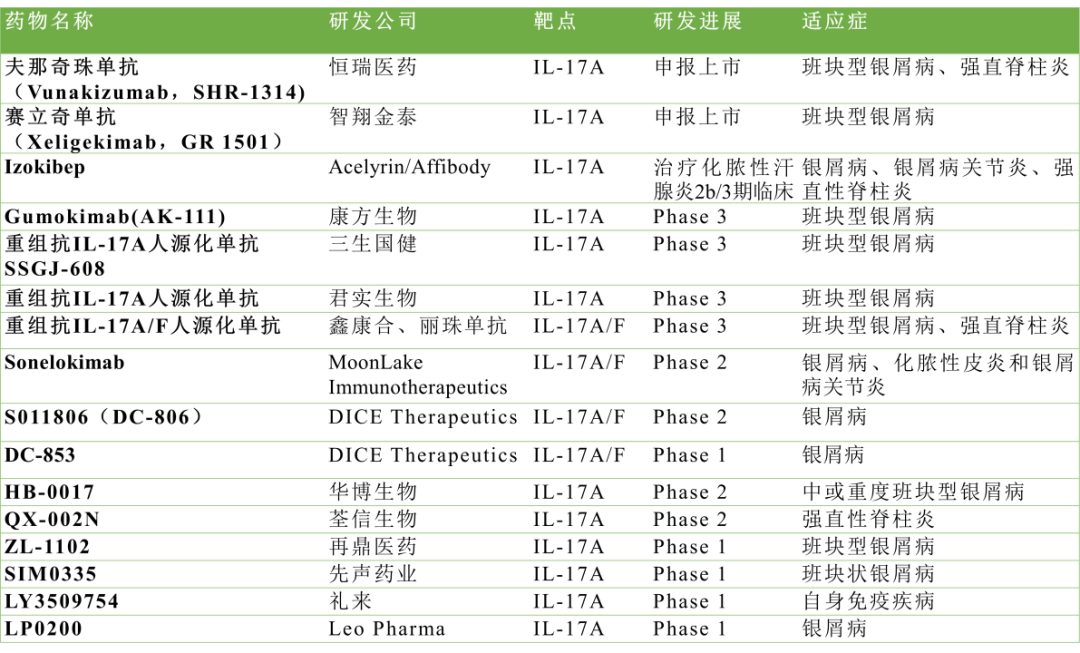
Recently,UCB'sBimekizumabApproved for marketing in the United States, it is the first and only dual-target inhibitor of IL-17A and IL-17F approved for the treatment of moderate to severe plaque psoriasis in adults.[4]。The approval of Bimekizumab was supported by data from three Phase 3, multicenter, randomized, placebo- and/or active-controlled trials (READY, VIVID, and CONFIRM) that evaluated the efficacy and safety of Bimekizumab in 1,480 adults with moderate to severe plaque psoriasis [4].Compared with patients treated with ustekinumab, placebo, and adalimumab,Patients treated with Bimekizumab showed higher skin clearance at week 16, with at least 90% improvement in the Psoriasis Area and Severity Index (PASI 90).。The main findings of all studies include:a. Transparent or nearly transparent skin: More than 8 out of 10 patients receiving bimekizumab 320mg every four weeks achieved PASI 90 and IGA 0/1 at week 16.b. Complete skin clearance: Approximately 6 out of 10 patients treated with bimekizumab 320mg every four weeks achieved PASI 100 at week 16.c. Response Speed: A rapid clinical response was achieved with 320mg every four weeks; more than 7 out of 10 patients reached PASI 75 at week 4 after a single dose (320mg).d. Maintenance Response: The clinical response achieved at Week 16 (PASI 90 and PASI 100) with 320mg every four weeks was maintained for up to one year. Long-term data shows that the majority of patients maintained a good clinical response for three years.Bimegizumab was submitted for marketing approval in China on April 26, 2023.Brodalumab is an IL-17RA inhibitor initially developed by Amgen, subsequently licensed to AstraZeneca and Kyowa Hakko Kirin Co., Ltd., and later sublicensed by AstraZeneca to Valeant Pharmaceuticals and Leo Pharma.In February 2017, Brodalumab was approved by the FDA for the treatment of adult patients with moderate to severe plaque psoriasis who are unresponsive to other systemic treatments.And was approved for marketing in China in June 2020, for the treatment of adult patients with moderate to severe plaque psoriasis who are candidates for systemic therapy or phototherapy.。Currently, all IL-17 class biologics for psoriasis used in China are imported.No domestically produced IL-17 antagonists have been approved for marketing in China yet. Among the domestically produced IL-17 drugs, Zerumab from Zhixiang Jintai and Funaqizumab from Hengrui Medicine have successively applied for marketing this year, and are expected to become the first batch of domestically produced IL-17A monoclonal antibody products to be marketed.Bring more treatment options to psoriasis patients in China (Figure 6).Figure 7. Some IL-17 Class Psoriasis Drugs Under Research
With the development of medical technology and drugs, "the immortal cancer" psoriasisThe treatment has improved significantly.PsoriasisBiologics are commonly used for patients with moderate to severe psoriasis and must be used according to the doctor's instructions.PsoriasisBiologics involve targets such as TNF-α, IL-12/23, and IL-17. Adalimumab and ustekinumab are blockbuster drugs in the autoimmune field, but both face competition from biosimilars due to patent expiration.IL-17A inhibitors, as an emerging biologic agent, demonstrate good efficacy and safety. They are suitable for self-injection by patients, portable to use, and are also a commonly used psoriasis treatment drug in China.Knowledge Extension: Understanding Psoriasis and Its Classification
Psoriasis VulgarisPsoriasis, is aGenetics and EnvironmentCo-action induced, immune-mediated chronic, recurrent, inflammatory, systemicDermatosis, with a long course of disease, prone toRecurrenceTendency, some cases almost never heal throughout life, includingPsoriasis Vulgaris, Pustular Psoriasis,ErythrodermaType psoriasis andPsoriatic Arthritis。Clinical manifestations includeErythema,ScalesIt mainly affects the whole body, commonly occurring on the scalp and extensor surfaces of the limbs, often worsening in winter. It impacts the patient's appearance and self-esteem, significantly affecting both physical health and mental well-being.In clinical practice and clinical trials, doctors usually base their decisions onBody Surface Area (BSA), Physician Global Assessment (PGA), Psoriasis Area and Severity Index (PASI), and Dermatology Life Quality Index (DLQI)To assess the severity of psoriasis, it is divided into mild, moderate, and severe categories, with heterogeneous and relatively complex scoring criteria.Manifestations of Severe Psoriasis: BSA≥10% (the area of 10 palms), or PASI≥10, or DLQI≥10.According to the severity of psoriasis, a graded treatment strategy is implemented. The treatment goal is to achieve complete or almost complete clearance of symptoms and skin lesions (PASI100 or PASI90).For mild psoriasis with a small affected skin area, topical medications can be used alone, such as calcipotriol, urea ointment, halometasone, and tacrolimus, etc.;For patients with moderate to severe conditions, systemic treatment methods are required, such as phototherapy, oral medications, and biologic treatments.。References
1.https://plasticsurgerykey.com/biologic-therapies-for-psoriasis/
2.Dario A A Vignali, Vijay K Kuchroo, IL-12 family cytokines: immunological playmakers, Nat Immunol. 2012 Jul 19;13(8):722-8.
3.Mandy J. McGeachy, Daniel J. Cua, and Sarah L. Gaffen, The IL-17 Family of Cytokines in Health and Disease, Immunity 50, April 16, 2019
4.Approved-by-the-US-FDA-for-the-Treatment-of-Adults-with-Moderate-to-Severe-Plaque-Psoriasis
Co-Build Biomedical Innovation Ecosystem!How to Join BiG Membership?