

Domestic Pharma Goes Global, MNCs Localize: A Convergence in China's Biopharma New Infrastructure Era

Danaher
Product Design and Manufacturer

T&L Biotechnology
GMP-Grade Raw Material and Reagent R&D Manufacturer

Repligen
Pharmaceutical Manufacturer
International Situation and Economic Cycle: Rules for Innovation and Venture Capital in Pharmaceuticals Face Oscillatory Adjustments, Profound and Far-Reaching Changes Underway in China’s Innovative Drug Ecosystem. On one hand, the decentralization trend is breaking the self-rotating systems of Biotech and Pharma, with the new main field for innovation requiring concerted cooperation among Biotech, Pharma, capital, and new infrastructure.
On the other hand, overseas companies highly value the Chinese market and have initiated localization strategies. Domestic companies, on the other hand, are promoting "China-produced alternatives" and "local innovation," while embarking on the journey to "go global." In this healthy competition, globalization and localization are colliding and merging.
On the theme of "New Infrastructure Rationality — The Future Path of Cooperation Between Local and Overseas Enterprises," a dynamic roundtable discussion was held on October 21 at the 2023 Pharmaceutical Innovation Trend Conference · Investment and BD Partnership meeting.
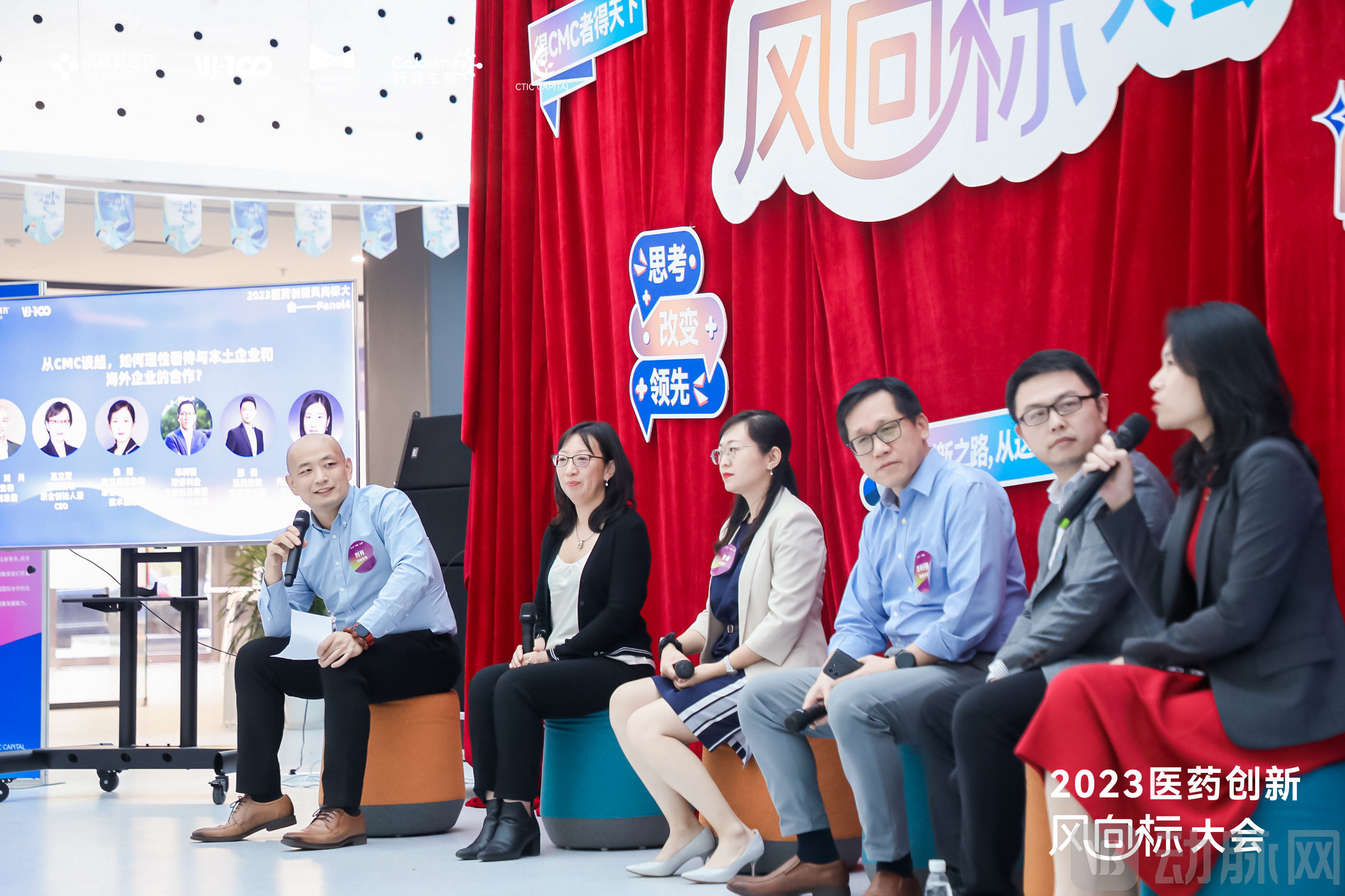
Under the moderation of Liu Xiao, Business Vice President of Hangzhou Xingcheng Biotechnology Co., Ltd., Wang Lijun, Co-founder and CEO of Hangzhou Xingcheng Biotechnology Co., Ltd., Xu Rong, Co-founder and Technical Vice President of Beijing T&L Biotechnology Co., Ltd., Hua Liqiang, Global Vice President and General Manager of China Region at Repligen Corporation, Zou Yang, R&D Vice President of LePure Introduction, and Xu Chong, Key Account Sales Director of Danaher Life Science Platform, discussed the rational understanding of "China-produced alternatives" starting from the topic of CMC.
VCBeat has compiled the content of the roundtable discussion as follows:
1What is CMC? How will CMC impact the innovative drug industry development?
Wang Lijun:Behind CMC lies a crucial issue that all pharmaceutical companies pay close attention to — ensuring drug safety through manufacture and control. Good processes, good production, and good quality control will provide pharmaceutical companies with effective and consistently comparable products across batches. This is essential for all drugs.
Xu Rong:During the transition from Party A to Party B, I found that the uncertainty of upstream materials greatly affects the process. When upstream material consumables, equipment, and processes are not well controlled, the process cannot be guaranteed at all. In terms of material supply objectives, the CMC process involves working to meet customer needs and product usage, moving forward together with customers by feeling the stones as we go. Technological advancements have significantly accelerated the supply chain development process.Once innovation is brought to the forefront, "Made in China" can be elevated from the concept of "domestic production" to a higher dimension.
Hua Liqiang:The growth and innovative breakthrough of a track rely heavily on the crucial role played by supply chain enterprises, which serve as safeguards. As suppliers, we also need toTechnological innovation and product breakthroughs drive our customers to explore new possibilities in production processes, thereby further improving product quality., achieving genuine cost reduction and efficiency enhancement, which is more meaningful for the industry. In recent years, as the global supply chain has undergone significant changes and customers have experienced major adjustments, global suppliers like us are also facing some big challenges, such as consistency in quality, stability of supply, accessibility of costs, human resources, and so on. Repligen may still have insufficient brand recognition in the Chinese market, but we have made many efforts in innovation.
Zou Yang:Innovation is very important. But as a supplier,It is more important to have further application discussions and modifications based on customer needs, and to adapt the product to the customer's processes and applications.
Xu Chong:For CMC, both production and quality control are very important, and they actually complement each other. I think it may be because manufacture always requires the improvement of production efficiency, and at the same time, it definitely needs comprehensive and precise understanding to assist in production control, support customer application coordination, and so on.
2What constitutes a rational substitution with domestically produced alternatives? Where are the opportunities for such substitutions?
Hua Liqiang:Regardless of the production efficiency model, supply chain, or safety perspective, the substitution with domestically produced alternatives is imperative and highly meaningful for the entire industry. More than two decades ago, many imported reagents were priced significantly higher in the Chinese market compared to overseas. At that time, some domestically produced reagents and culture medium brands began to emerge. However, these domestic brands lacked consistent policy support and long-term capital investment, making their development extremely challenging. But it was precisely because of these...The emergence of domestic brands has put significant pressure on imported manufacturers. Imported manufacturers will also pay more attention to the Chinese market as a result, continuously adjusting their strategies for the Chinese market, revising prices in China, and accelerating localization in China.From this perspective, domestically produced manufacturers have played a very significant role in promoting the industry.
But I believe that, whether domestic brands or imported manufacturers, they should not become mere "inward-focused" businessmen. Especially in the biopharmaceutical field, they should invest in the industry with a long-term and developmental perspective.From this perspective, I hope that the industry chain can develop in a more humanized, benign, and healthy manner. Chinese enterprises must continuously improve themselves, upgrading from "basically usable" to "user-friendly," and further to "long-term stable usability." In the future, I hope to see more differentiated and innovative competition between domestic and international manufacturers.
Zou Yang:Looking back over the past two decades, China-produced alternatives have shown a positive trend in market performance, and the market has continued to expand. During the pandemic, our China-based supplier companies actually remained very stable. Developing to today, we have entered a new phase where we are reaching more clients who are more rational and have higher demands, and the rational judgment of products is also continuously improving. This not only requires us to have strong capabilities, stable quality, and stable supply, etc., but also forces us to enhance our abilities and management standards.
Xu Chong:No alternative should come at the expense of product quality. So I think the future direction, the first is the consideration of the overall supply chain relationship, and the second is iterative innovation. Ultimately, the measure should still be our ability to deliver high-quality products.We refer to domestic substitution as industry internationalization. Whether it is domestic companies or foreign enterprises developing within China, they are jointly working towards decentralization and promoting Made-in-China. These two paths are not absolutely distinct, and there can be collaboration, such as jointly building factories or co-investing in domestic production and manufacturing bases. This way, the goal of domestic substitution can also be achieved, addressing supply chain issues.
Wang Lijun:Whether it is a production-oriented enterprise on the甲方side or a supply chain enterprise on the乙方side, the ultimate goal for both parties is to produce drugs and serve patients. ThereforeThe selection criteria must align with the pharmaceutical manufacturing process and design. This logic applies to both domestic and international brands.Assuming an international brand that continuously innovates and launches new products can provide a new type of instrument to meet my process development needs, I would naturally choose the big brand. However, when no product can satisfy the requirements, it becomes necessary to collaborate with suppliers to design and develop new instruments. Some international suppliers may not want to invest time in such collaborations, which is when domestically produced alternatives gain an advantage and become imperative.
Xu Chong:What clients of Party A care most about are data consistency, compliance, ease of use, etc., which are also the most critical factors in our product design. As a global enterprise, we benchmark against the gold standard, and it is true that our product prices are relatively high. However, we focus on providing better service to the industry in terms of accuracy and data consistency.
Hua Liqiang:I am reminded of a statement by Ren Zhengfei of Huawei —— "Do not use Huawei as a symbol of patriotism, but rather emphasize the quality and cost-effectiveness of your products."Perhaps in five or ten years, we will no longer emphasize that a product is domestically produced, but simply a good product.China-produced products also involve the import of many raw materials, and imports have started to accelerate localization. Therefore, what is more important is to make good products that meet the process needs of customers.
Wang Lijun:Sometimes traditional suppliers or experts offer standardized solutions, and as long as we follow them, we can go from start to finish. But if we follow this approach, in reality, we are being held hostage.If we can innovate from the source, develop a new process, create a fundamental transformation in logic, and at the same time ensure the safety, efficacy, and accessibility of drugs, this would be a game-changing blow to other suppliers and also represents an opportunity for domestically produced alternatives.
Liu Xiao:One of the most important decision-making criteria in this industry is that whoever is closest to the patients understands their needs the best — undoubtedly, that is the customer. Therefore, the logic of collaboration should not be "What capabilities I have, the customer must need," but rather"What the customer needs, I provide.". So when we talk about the substitution of domestically produced products, I think there are four dimensions. The first is political correctness, the second is supply chain tension, the third is price positioning, and the fourth is capital empowerment. Under the influence of various factors, I thinkDomestic substitution must not rely on domestic assembly or ultra-low prices to capture the market, but rather achieve genuine innovation to help Chinese customers solve real problems.
3Do Chinese Companies Going Global and Foreign Companies Localizing Lead to the Same Destination?
Xu Chong:Why do domestic companies strive to compete in foreign markets, and why do globalized companies introduce overseas technologies and enter the Chinese market? It is because, on one hand, the Chinese market needs locally produced products and suppliers who better understand the needs of domestic customers. On the other hand, it is due to supply chain security issues, which are also influenced by major economic trends. Both of these points represent future directions. I hope that in the future, more barriers will be broken down, and higher quality, cutting-edge international competition will help drive industry development.
Zou Yang:Whether domestic or foreign enterprises, from a business logic perspective, China has better manufacturing capabilities and cost advantages, while overseas markets offer more talent and research and development capabilities. In terms of corporate development logic, the overseas expansion of Chinese companies and the localization of foreign companies in China ultimately lead to the same goal. At the same time, changes in the international landscape are profoundly impacting the industry. From globalization to today's strong trend of deglobalization, I believe that national consciousness and ethnic awareness must be integrated into corporate strategies.
Hua Liqiang:So far, more domestic substitutions are essentially price-based substitutions, driven by the stability and security logic of the supply chain, with few achieving value-based substitution. With policy support and volume-based procurement, significant pressure for cost reduction and efficiency improvement has been brought, which is beneficial for industry iteration. And after surviving,Chinese suppliers need to prove the quality of their products in the international market and align with global industry standards, which will better help our entire industry chain go global.
For import manufacturers like us, the more important issue is how to break the protection mechanism brought by traditional, world-class suppliers and truly solve the obstacles that supply chain security poses to the expansion of the Chinese market. From a price perspective,Localization does not mean a reduction in product prices, but rather reflects the positioning of products for the Chinese market by import manufacturers—whether they are low-priced standard products, customized according to the needs of the Chinese market, or represent breakthrough innovations and technological iterations.
Xu Rong:When we discuss the issue of "walking in" and "going out," there are many advanced cases among China's innovative pharmaceutical companies, such as good target selection, strong early R&D data, excellent efficacy, and after going overseas, these products can also achieve great sales. Therefore, China's original innovative research can definitely go global. Regarding "going out" and "walking in," I will view it as...Healthy competition to promote better industry development is the core that should be achieved.
Wang Lijun:From the customer's perspective, what I want is simply high-quality products with a stable supply chain. Therefore, I believe that "winning the market means winning everything." Whether local companies go global or foreign enterprises enter the Chinese market,良性 competition is what we customers like to see the most. As long as the products you provide fit my processes and meet my needs, customers will feel assured. In this regard, staying at the forefront and adopting localized pricing strategies to meet the demands of domestic users represent opportunities for supply chain enterprises.
Liu Xiao:In fact, today's forum is giving the industry a sense of "advocacy" – including advocating for Party B, Party C, and Party D to understand the needs of Party A, as well as advocating for Party A to better understand the supply chain. Although the industry is currently facing temporary difficulties, we believe that in the long term, there will certainly be excellent development. At this moment, we hope to deepen understanding across the entire industry – to understand what Party A really needs, what patients need, and at the same time strengthen communication to ensure the healthy development of the industry.