

Qilu Pharma Announces Updated Phase II Results of Iparomlimab and Tuvonralimab (QL1706) Combined with Chemotherapy for First-Line Treatment of Recurrent or Metastatic Cervical Cancer

Qilu Pharmaceutical
Specialty Formulations and Active Pharmaceutical Ingredients (API) Developer
JinanOctober 26, 2023PR Newswire -- On October 22, at the 2023 European Society for Medical Oncology (ESMO) Annual Meeting, Qilu Pharmaceutical announced the latest results of a multicenter, single-arm Phase II clinical study on Ipaflorlib-Tovorolimab (QL1706) combined with chemotherapy with or without Bevacizumab as first-line treatment for recurrent or metastatic cervical cancer (r/mCC). The presenter was Professor Danbo Wang from Liaoning Cancer Hospital.
Aipalolitovorelimab combined with chemotherapy, with or without bevacizumab, demonstrated a favorable objective response rate and survival benefit as first-line treatment for recurrent/metastatic cervical cancer. The safety profile was manageable, and no new safety signals were observed, making it a promising new option for first-line treatment of recurrent/metastatic cervical cancer.
I.Research Background
The preferred standard first-line treatment for r/mCC is currently cisplatin or carboplatin combined with paclitaxel and bevacizumab, with consideration given to both efficacy and safety; for PD-L1 positive r/mCC patients, it is recommended to use the PD-1 inhibitor pembrolizumab combined with chemotherapy, with or without bevacizumab, as the standard first-line treatment. [1-2] Immunotherapy combined with chemotherapy has become the standard treatment for recurrent/metastatic cervical cancer. According to the latest results of the KEYNOTE-826 study, after combining with pembrolizumab, the median progression-free survival (PFS) of immunotherapy combined with chemotherapy, with or without bevacizumab, as a first-line treatment for PD-L1 positive (CPS≥1) r/mCC increased from 8.2 months to 10.4 months, and the median overall survival (OS) extended from 16.5 months to 28.6 months. [3-4] Although the combination of PD-1 inhibitors and chemotherapy significantly improved patient survival compared to chemotherapy alone, the survival benefits for patients remain relatively limited, indicating unmet clinical needs.
2.Study Design
This study enrolled patients with recurrent or metastatic cervical cancer who had not received systemic treatment, and they were treated with either apalutamide combined with toripalimab and chemotherapy (Cohort 1) or further combined with bevacizumab (Cohort 2) until disease progression, intolerable toxicity, or withdrawal of informed consent by the patient. The primary endpoint of the study was safety, and secondary endpoints included ORR, DOR, DCR, and PFS as assessed by investigators according to RECIST v1.1, as well as OS. The study design is shown in Figure 1.
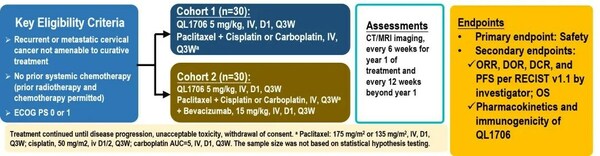
Figure 1: Study Design of Aipalolitouvorilimab Combined with Chemotherapy, with or without Bevacizumab, as First-Line Treatment for Recurrent or Metastatic Cervical Cancer
3. Research Results
The study enrolled a total of 60 patients, with 30 in Cohort 1 and 30 in Cohort 2, who received either Aipalolitovirali monotherapy combined with cisplatin/carboplatin plus paclitaxel or the same regimen plus bevacizumab. The average age of all patients was 52.0 years; 58.3% had an ECOG performance status score of 1; 78.3% had squamous cell carcinoma, and 86.7% had recurrent cervical cancer.
As of April 24, 2023, the median follow-up time was 14.0 months, with a total of 58 patients having received at least one post-baseline efficacy evaluation. The objective response rate (ORR) was 81.0% (95% CI, 68.6–90.1), including 8 patients who achieved complete response (CR) and 39 patients who achieved partial response (PR). The disease control rate (DCR) was 98.3% (95% CI, 90.8–100.0). The median progression-free survival (PFS) reached 14.3 months (95% CI, 9.2 months–not evaluable), and the median overall survival (OS) was not reached. The median PFS for Cohort 2, which was treated in combination with bevacizumab, reached 16.4 months. (Figure 2)
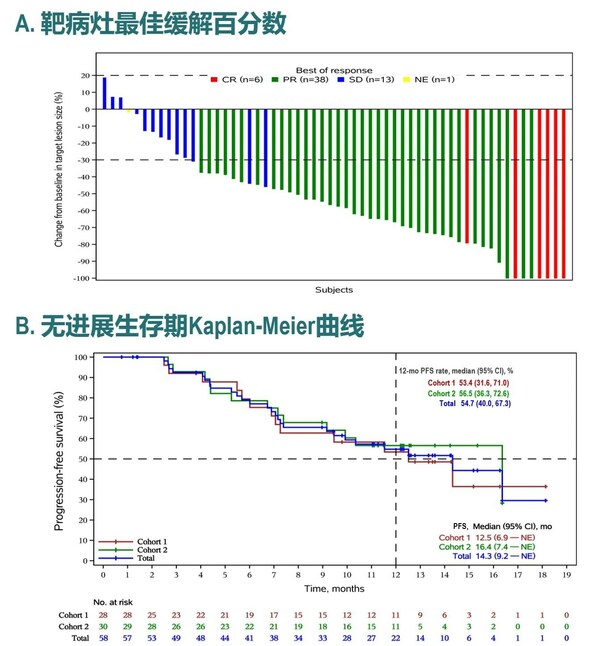
Figure 2: Best percentage change in target lesions (A) and Kaplan-Meier curve of progression-free survival (B) with first-line treatment of recurrent or metastatic cervical cancer using Aipalolitovorelimab combined with chemotherapy, with or without Bevacizumab.
In terms of safety, all patients experienced treatment-related adverse events (TRAEs), with the incidence of grade 3 or higher adverse events being 71.7%; the most common TRAEs were decreased white blood cell count (71.3%), decreased neutrophil count (68.3%), and anemia (43.3%). The incidence of treatment-related serious adverse events was 30%; the incidence of immune-related adverse events (irAEs) was 13.3%; the incidence of TRAEs leading to treatment discontinuation was 26.7%; and the incidence of treatment-related deaths was 1.7% (possibly related to bevacizumab). (Figure 3)
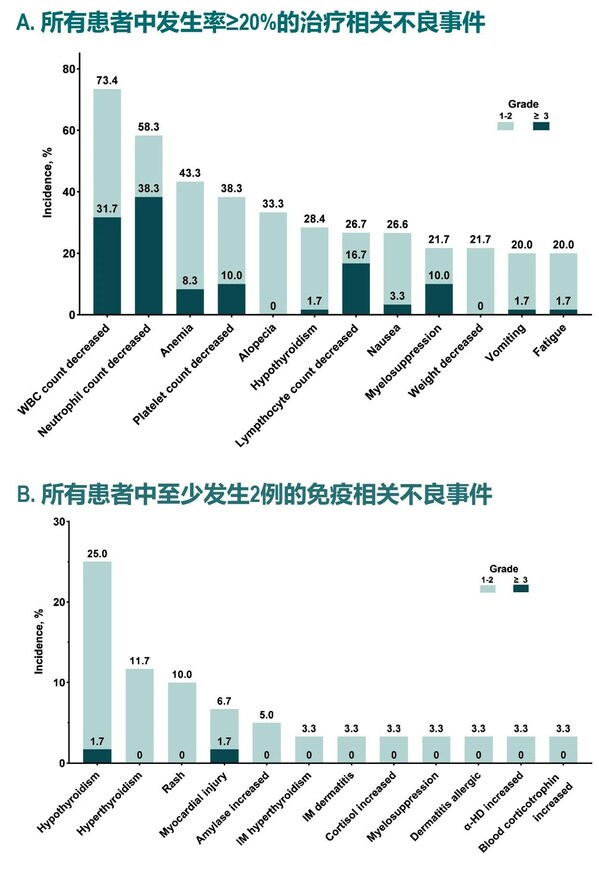
Figure 3: Incidence of treatment-related adverse events (A) and immune-related adverse events (B) in all patients
3. Conclusion
This study showed that iparomlimab combined with chemotherapy, with or without bevacizumab, as first-line treatment for r/mCC demonstrated favorable efficacy and safety, regardless of PD-L1 expression levels, with all patients showing benefit.
Based on the results of this study, a Phase III clinical trial of Aipalolitovorelimab in combination with chemotherapy, with or without Bevacizumab, for the treatment of persistent, recurrent, or metastatic cervical cancer is currently underway. The new drug application for Aipalolitovorelimab for the treatment of patients with recurrent or metastatic cervical cancer who have failed at least one line of platinum-based standard therapy was accepted by the CDE in August this year.
References:
1.Chinese Society of Clinical Oncology (CSCO) Guidelines Working Committee. Guidelines for the Diagnosis and Treatment of Cervical Cancer [M]. 2023. Beijing: People's Medical Publishing House, 2023:70.
2.Tewari KS, et al. Improved survival with bevacizumab in advanced cervical cancer. N Engl J Med. 2014 Feb 20;370(8):734-43. doi: 10.1056/NEJMoa1309748. Erratum in: N Engl J Med. 2017 17;377(7):702.
3.Colombo N, et al. Pembrolizumab for Persistent, Recurrent, or Metastatic Cervical Cancer. N Engl J Med. 2021 11;385(20):1856-1867.
4.J Clin Oncol 41, 2023 (suppl 16; abstr 5500) .