

OxTium Technology secures Sequoia Angel+ funding to build intelligent research infrastructure for AI in bioScience

OXTIUM
AI+Life Science Technology Developer

HongShan
Business Consulting, Enterprise Management Consulting Investment Institutions
Recently, OxTium Technology, a large-scale AI model startup for biosciences in China, announced the completion of a tens of millions of yuan angel+ funding round, led by Sequoia China Seed Fund.
"Just as highways are vital to the modern economy, intelligent research infrastructure serves as the foundation for AI for Science development," once remarked Academician Weinan E of the Chinese Academy of Sciences.
The four founders of OxTium Technology, all alumni of Oxford University, combine expertise in AI and biosciences. With outstanding research and industrial capabilities, they have published over 60 papers in top-tier journals such as Nature and Nature Communications. Such a strong team made their exploration in "AI + Big Science" a natural progression from the outset.
Yongcheng Jin, Founder and CEO of OxTium Technology, stated unequivocally that the company's goal is to build world-leading LLMs for biosciences.
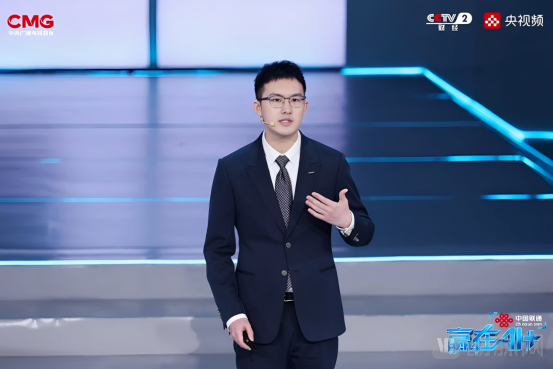
Founder and CEO of OxTium Technology, Yongcheng Jin, Participates in CCTV's "Win with AI+" Program
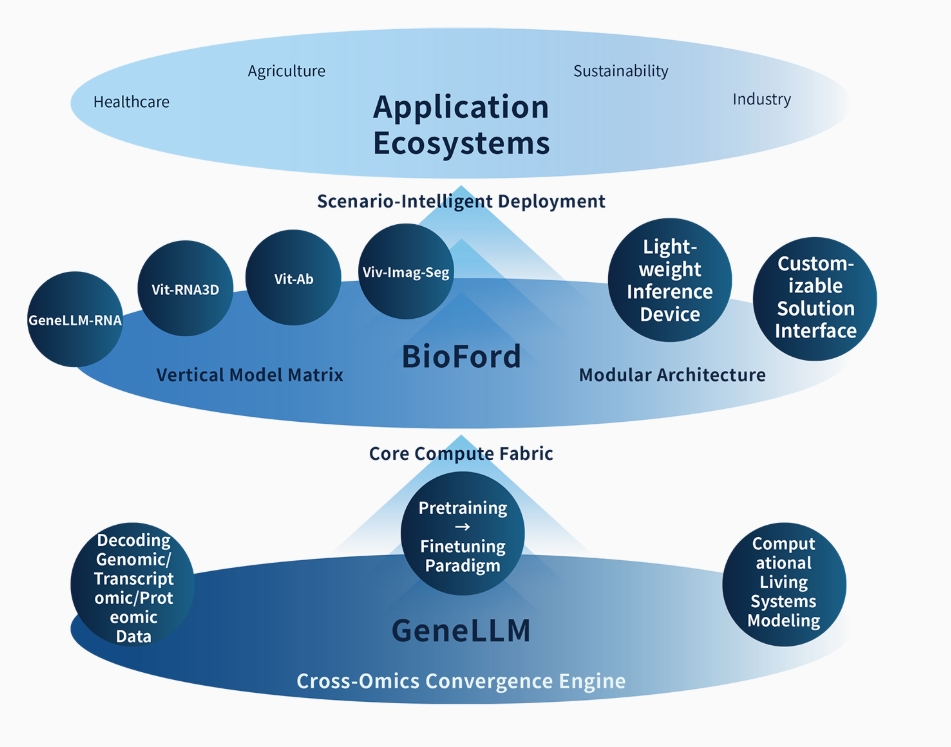
OxTium's self-developed GeneLLM has completed training on 23 billion sequencing sequences and 3.45 trillion base pairs. By directly parsing raw sequencing data and delivering end-to-end output of disease characterization correlation analysis, it circumvents error accumulation inherent in hierarchical modeling, offering a novel and feasible technological pathway for bioscience research.
In February this year, the Evo2 foundational biology model from the US Arc Institute gained global recognition, marking the official commencement of human capacity to program genomes from scratch. The core design principle of Evo2 lies in its recognition that all biological coding sequences follow a unified structure—initiated by start codons and terminated by stop codons. Based on this principle, Evo2 can learn sequence features to achieve generative prediction of the next base pair, while also enabling prediction and annotation of the structure and function of unknown genes.
Building upon the same central dogma and theory of evolution, GeneLLM adopts a breakthrough technical approach by directly inputting raw sequencing data into the model. Through deep learning algorithms, GeneLLM captures subtle variations in multi-omics data to establish direct correlation mapping between disease phenotypes and raw data.
Jin Yongcheng explained that unlike Evo2 which utilizes genomic data, OxTium's GeneLLM employs direct training and analysis based on individual raw data, granting it distinctive advantages in fields such as disease risk assessment and plant/animal trait analysis.
GeneLLM represents a significant advancement in AI for biology, poised to unlock substantial potential across numerous domains including precision medicine, drug development, and synthetic biology.
Investment in the AI era can be broadly categorized into a "framework investment" structure comprising the "model layer", "software layer", "application layer", and "infrastructure". Within these four tiers, OxTium Technology not only maintains a strong foothold in the "model layer" but also demonstrates considerable strength in the increasingly emphasized "software layer".
During the current AI wave, major players tend to focus on general-purpose models and office assistants, with insufficient investment directed toward scientific research—particularly in the biosciences. Although AI has begun benefiting the public in areas like drug development and gene therapy, persistent challenges faced by researchers—including high computational resource demands, poor model generalizability, and high data complexity—have long remained inadequately addressed.
From tool innovation to ecosystem transformation, OxTium is breaking down the barrier of "no programming, no research."
OxTium's one-stop bioscience research platform, BioFord™, supports intelligent analysis of multimodal data including genomics, transcriptomics, proteomics, and RNA 3D structures, spanning multiple fields such as medical diagnostics, drug development, and biomanufacturing. During use, researchers can discover bioscientific patterns through AI large models via simple drag-and-drop uploads, without the need for coding.
The Super Scientific Agent will integrate the entire scientific research chain.
Yongcheng Jin explained that OxTium's next-generation AI agent will incorporate core modules including intelligent modeling, experimental design, resource allocation, and results analysis, covering end-to-end experimental workflow management. Users can directly create experimental orders and generate automated experimental designs through dialog-based instructions, enabling dry lab model invocation, automated wet lab data statistics, along with intelligent consumables recommendations and replenishment operations. The system also provides real-time monitoring throughout experimental processes with transparent instrument operation visibility.
With AI-driven solution generation, rapid experimental validation, and iterative data optimization, OxTium's Scientific Super Agent functions like a super AI scientist, significantly streamlining laboratory workflows and advancing science from "experience-driven" to "intelligence-driven."
"Inspired by Academician Weinan E, we believe AI for Science represents an opportunity for our era, a strategic national priority, and a catalyst for evolving research paradigms," stated Tianyao Zhou, Co-founder and COO of OxTium. He elaborated that AI for Science presents two key opportunities: leveraging AI to drive scientific mechanism innovation, and applying AI to enable systematic engineering of research. The latter holds particular potential to liberate researchers from routine tasks, unite scientific communities, and transform "cottage-industry-style" research into organized, large-scale scientific endeavors.
He revealed that OxTium has begun providing corresponding AI services to leading AI companies, pharmaceutical enterprises, and universities.
In 2024, three AlphaFold developers were awarded the Nobel Prize, providing a significant boost to the global AI biotechnology sector. Since then, capital activities in this field have intensified considerably.
The Arc Institute, backed by investors including Elon Musk, partnered with NVIDIA to launch Evo2. With substantial financial resources, the model was trained on over 128,000 genomic datasets and 9.3 trillion nucleotide sequences, making it the largest biological AI model to date.
Other US companies have also made notable strides: Future House announced a $250 million fundraising round in May, while Lila Sciences secured $235 million at a valuation of approximately $1.23 billion in September. French startup Bioptimus, aiming to simulate entire biological systems by integrating multimodal data, followed its $35 million seed round in 2024 with an additional $41 million Series A funding in 2025.
Notably, all these new-generation AI for BioScience companies have been established within the past three years. "AI + Biology" has been repeatedly endorsed by NVIDIA founder Jensen Huang as the "next golden track." According to projections by US research firm Axis Intelligence, global AI investment is expected to reach $280 billion in 2025, with the AI + Healthcare sector maintaining leadership at $31 billion.
Simultaneously, the AI bioeconomy is triggering strategic deployments worldwide. In April this year, the US National Security Commission on Emerging Biotechnology recommended to Congress that at least $15 billion be invested over the next five years to address competition from Chinese biotechnology.
OxTium Technology has secured multiple rounds of financing and received tens of millions of yuan in special support funds for high-level talents from Shenzhen. The company's R&D center is currently expanding its team, recruiting additional talent in fields such as artificial intelligence and bioinformatics.
In the global competition within the trillion-dollar AI and bioeconomy sector, OxTium is accelerating its progress in core areas including fundamental research, precision medicine, and biomanufacturing.