Medtronic Announces FDA Approval of Aurora EV-ICD™, the World’s First and Only Extravascular Implantable Cardioverter Defibrillator

Medtronic
Chronic Disease Medical Device and Therapy Developer
On October 23, 2023, Medtronic announced that the Aurora EV-ICD™ (extravascular implantable cardioverter defibrillator) and its dedicated Epsila EV™ implant lead had received FDA approval.
Aurora EV-ICD SystemIt is the world's only extravascular implantable defibrillator that can simultaneously provide cardioversion defibrillation, anti-tachycardia pacing (ATP), and pause prevention pacing (PPP) functions, and it is also the first ICD to place the defibrillation electrode lead posterior to the left sternal border and on the pericardial surface.Being closer to the heart while ensuring safety, the electrode requires lower defibrillation energy and offers a longer device lifespan.
Compared with the first two generations of products — transvenous implantable cardioverter defibrillators (TV-ICD) and subcutaneous implantable cardioverter defibrillators (S-ICD) — this product has multiple advantages, and its creation and approval have epoch-making significance.
Sudden Cardiac Death (SCD) is one of the major public health issues today. It is defined as a natural death that occurs suddenly and progresses rapidly due to various cardiac causes, with death occurring within 1 hour after the onset of symptoms. Electrocardiographic monitoring technology shows that most cases of SCD are caused by ventricular fibrillation (VF). The majority of patients first experience ventricular tachycardia (VT), which then deteriorates into VF, leading to death due to the lack of timely and effective defibrillation treatment.
The advent of the Implantable Cardioverter Defibrillator (ICD) is undoubtedly of epoch-making significance for the prevention of Sudden Cardiac Death (SCD). Extensive evidence from large-scale clinical trials has fully demonstrated that ICD is currently the most effective treatment measure for preventing SCD.
Currently, there are two main types of ICDs used in clinical practice: transvenous implantable cardioverter-defibrillators (transvenous ICD, TV-ICD) and subcutaneous implantable cardioverter-defibrillators (subcutaneous ICD, S-ICD).
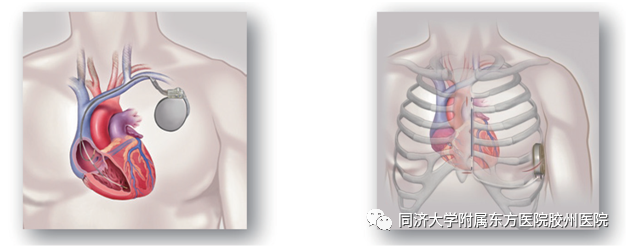
Among them, the defibrillation lead of TV-ICD needs to be implanted in the right ventricle through the venous system (left image), which was first applied clinically in 1988. Long-term clinical observations have found that TV-ICD can present various issues and complications such as lead-related infections, lead dislocation, tricuspid valve injury, venous access occlusion, thrombosis, and difficulty in lead extraction.A meta-analysis reported that after 14 years of follow-up, the annual failure rate of different models of TV-ICD leads ranged from a low of 0.25%~0.34% to a high of 2.08%~2.39%.
The S-ICD (right image) does not need to come into contact with the patient's heart or blood vessels and was clinically applied in 2009. Since the entire system is subcutaneous, it significantly reduces lead-related complications and largely overcomes the drawbacks of TV-ICD.
But the functionality of the S-ICD has limitations, the biggest problem isIt abandons the pacing and anti-tachycardia pacing (ATP) functions of traditional ICDs and therefore cannot be used for patients who require pacing or ATP.
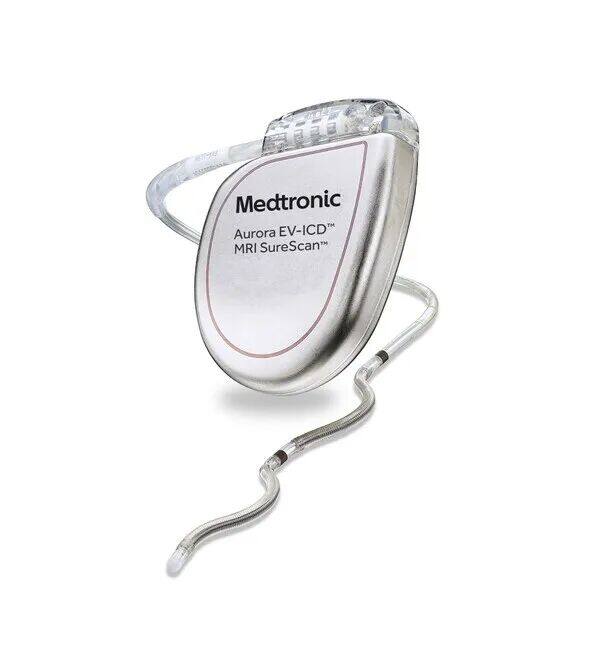
Medtronic in July 2018SuccessThe developed extravascular implantable cardioverter defibrillator (EVICD) has broken through this application bottleneck.
EVICDThe biggest difference from the S-ICD is that its defibrillation lead is placed along the left sternal border and on the surface of the pericardium (a tunnel is established via subxiphoid puncture).In addition to defibrillation capabilities, the EVICD can also perform epicardial pacing and ATP therapy, marking a significant step forward in implantable defibrillator technology.
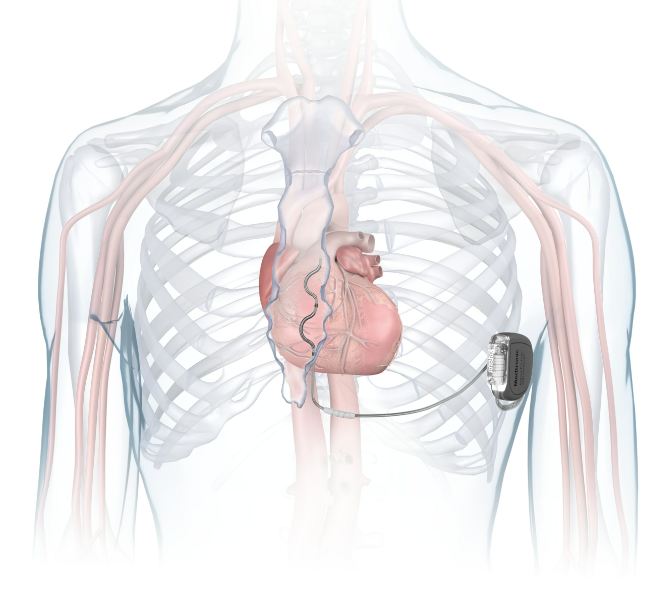
According to Dr. Alan Cheng, Chief Medical Officer of Medtronic's Cardiac Rhythm Management business, ICDs remain the gold standard for preventing sudden cardiac death. While S-ICDs avoid certain complications associated with TV-ICDs, they still have limitations that may affect patient comfort and quality of life. With the Aurora EV-ICD system, patients can benefit from the only ICD placed outside the vascular space, which provides ATP and epicardial pacing.Compared with S-ICD from competitors on the market, the device is nearly half the size, while its battery life is expected to be extended by 60%.
The Aurora EV-ICD system is similar to traditional TV-ICDs in size, shape, and longevity, includes the functionalities of Medtronic’s TV-ICD, and offers additional advantages not available in S-ICDs. Medtronic has provided a detailed summary on their official website as follows:
Antitachycardia Pacing (ATP)Using low-energy pacing pulses to terminate ventricular arrhythmias (tachycardia and/or chaotic cardiac activity that can lead to cardiac arrest) may help avoid defibrillation shocks.
Pause preventive pacing,Provide backup pacing for transient, intermittent detection signal pauses.
40-Joule Defibrillation Energy Delivers Life-Saving Therapy in a Device Comparable in Size to TV-ICD (33 cc)Electric shock.
Medtronic's exclusive PhysioCurve™ design,Improve patient comfort and implant acceptance.
An estimated lifespan of 11.7 years,Reduce device replacement for patients.
At the same time, patients receiving the Aurora implant will also benefit from Medtronic's proprietary Smart Sense algorithm, which is designed to reduce the likelihood of inappropriate shocks.
The official website states that the Aurora EV-ICD System is suitable for patients at risk of life-threatening arrhythmias, who have not previously undergone a sternotomy and do not require pacing for chronic bradycardia (abnormally slow heartbeat).
——
According to the EV-ICD pivotal study presented as a breakthrough clinical trial at the 2022 European Society of Cardiology (ESC) Congress, with results published in The New England Journal of Medicine:The effectiveness of defibrillation therapy was 98.7%, and the proportion of patients without major device- and/or surgery-related complications at six months was 92.6%, both exceeding the pre-specified effectiveness and safety goals of the study.
The study reported no serious perioperative complications or unique complications related to the EV-ICD system, and no deaths associated with the procedure or the implantable device system. This prospective global study confirms that the EV-ICD can be safely implanted and is effective in detecting and terminating ventricular arrhythmia events.
In addition to obtaining FDA approval in the United States,In February this year, Aurora EV-ICD has obtained CE certification and completed its "Asia-Pacific debut" at the CIIE in 2022.We also look forward to this groundbreaking product being applied in China as soon as possible, benefiting a large number of patients.
More exciting content
Welcome to follow WeChat Video Channel


Just Now! Johnson & Johnson Medical Technologies, Leadership Change
New Pattern in the Endoscope Market: Chinese-produced Dark Horse Breaks Through Industry Development
Founder of China's Leading Imaging Company Transfers All Shares
Ophthalmic Device Unicorn to Be Sold Off
The only one in China with both proton and heavy ion systems
NO.1: Spinal Fusion Giant Completes Acquisition
Top Three Globally, Ventilator Giant Issues Class I Recall
Minimally Invasive Brain Science Makes a Big Move
Endoscopic Giant Releases New Product, Makes Big Move to Bet on 4K
GE Healthcare Announces Major Collaboration with Diabetes Giant


BusinessBusiness cooperation email: qxzj@landianyiliao.com