

Novo Nordisk Channels Semaglutide Profits into Strategic Expansions Across Cardiovascular, Metabolic, and AI-Driven Drug Discovery
Novo Nordisk
Insulin Developer and Manufacturer
The pharmaceutical market, which has been sluggish for most of the year, has been completely ignited by weight-loss drugs.
Recently, JPMorgan Chase raised its sales forecast for weight-loss drugs: By 2030, the annual sales of GLP-1 receptor agonist-related drugs are expected to exceed $100 billion, driven by the "duopoly" of Novo Nordisk and Eli Lilly. GLP-1 receptor agonists were initially designed as a hypoglycemic drug for patients with type 2 diabetes, but what truly made them "go viral" was their excellent performance in weight loss.
Especially after 2021, the weight loss indication of Novo Nordisk's semaglutide was successively approved in the United States, the European Union, and other countries and regions, causing semaglutide’s sales to take off rapidly. Financial reports show that in the first half of 2023, Novo Nordisk's total revenue was close to 16 billion U.S. dollars, a year-on-year increase of 29%; net profit was nearly 7 billion U.S. dollars, a year-on-year increase of 30%. Semaglutide (including the injectable diabetes drug Ozempic, the oral diabetes drug Rybelsus, and the injectable weight loss drug Wegovy) was the absolute main contributor.
Before the weight-loss indication was approved, Novo Nordisk was not known among multinational corporations (MNCs) for being active in mergers and acquisitions. However, with the global popularity of weight-loss drugs and the significant off-label potential, Novo Nordisk has started to accelerate the layout of its external investment and cooperation in related product lines. Especially in the past two months, Novo Nordisk's activities have been very frequent.
In order to push semaglutide to the top of the "blockbuster drug" throne, Novo Nordisk has launched a multi-pronged attack.
In the field of blood sugar reduction, semaglutide has strong competitiveness. In addition to surpassing the previous generation of GLP-1 drugs in terms of blood sugar reduction effects and dosing frequency, semaglutide has successfully overcome the oral challenge, making it the only GLP-1 drug on the market that combines "once a week" with "oral" administration.
Weight loss is the first successful crossover field for semaglutide, and it is also the main contributor to semaglutide's rise to global prominence.
Research has found that, in addition to regulating the secretion of insulin and glucagon, GLP-1 can also participate in delaying gastric emptying and increasing satiety. This physiological mechanism lays the foundation for GLP-1 in the field of weight loss. As a weight-loss drug with a clear target, a well-defined mechanism of action, and better safety, the emergence of GLP-1 has ignited the long-dormant weight-loss market.
In June 2021, semaglutide received FDA approval for the weight loss indication (Wegovy). With the influence of celebrity endorsements and its effective weight loss results, Wegovy has been highly sought after by customers, leading to a surge in demand. In 2022, Wegovy's sales quadrupled year-over-year, reaching approximately $876 million. In the first half of this year, Wegovy’s sales grew by +367% year-over-year, reaching $1.8 billion.
Compared to blood sugar reduction, weight loss has significantly expanded the market potential for semaglutide. With such a successful case, Novo Nordisk is now targeting semaglutide for indications including chronic kidney disease, non-alcoholic steatohepatitis (NASH), cardiovascular diseases, heart failure with preserved ejection fraction (HFpEF), Alzheimer's disease (AD), and addiction, making semaglutide the new "king of versatility."
Taking NASH as an example, it is the most common indication for GLP-1 class drugs beyond diabetes and weight loss. Semaglutide has currently entered phase 3 clinical trials. The phase 2 clinical data disclosed by Novo Nordisk shows that, compared to 17% for the placebo, the proportion of patients who received daily subcutaneous injections of 0.1mg, 0.2mg, and 0.4mg of semaglutide and showed NASH resolution without fibrosis worsening after 72 weeks of treatment reached 40%, 36%, and 59%, respectively, demonstrating promising prospects.
In the field of nephrology, in October, Novo Nordisk announced the early termination of the clinical trial FLOW for semaglutide in delaying kidney damage in patients with type 2 diabetes and chronic kidney disease, as the independent Data Monitoring Committee (DMC) determined that the interim analysis results met specific pre-set criteria, thus halting the trial. The unblinded clinical data from FLOW is expected to be released in the first half of 2024, approximately one year ahead of the original schedule.
In the cardiovascular field, semaglutide also stands out. In August this year, Novo Nordisk announced that in the SELECT phase 3 clinical trial, a once-weekly injection of 2.4mg semaglutide for five consecutive years significantly reduced the risk of major adverse cardiovascular events (MACE, including cardiovascular death, non-fatal myocardial infarction, or non-fatal stroke) by 20% in adult patients with overweight or obesity, demonstrating statistical significance and superior efficacy.
In another 52-week Phase 3 clinical trial, STEP-HFpEF, researchers investigated the effects of once-weekly 2.4mg semaglutide on physical function, symptoms, and weight in patients with HFpEF (heart failure with preserved ejection fraction). At this year's European Society of Cardiology (ESC) Congress, Novo Nordisk announced that for the endpoint of KCCQ-CSS (Kansas City Cardiomyopathy Questionnaire Clinical Summary Score), the average change in KCCQ-CSS was 16.6 points in the semaglutide group compared to 8.7 points in the placebo group. Semaglutide may provide a new treatment option for patients with cardiovascular diseases.
Even in the field of Alzheimer's disease (AD), which has seen minimal progress over the years, Novo Nordisk has launched two large Phase III clinical trials named EVOKE and EVOKE Plus, recruiting a total of 3,680 patients to evaluate the efficacy of 14mg oral semaglutide in slowing cognitive decline in AD. The trials are expected to be completed by 2025.
Centering on semaglutide, building a deeper moat and expanding more indications has become Novo Nordisk's primary strategic direction at present. In line with this strategy and relying on the high profit margin of semaglutide, Novo Nordisk has carried out a series of "buy-buy-buy" activities.
Despite the promising prospects of semaglutide in the weight loss market, Novo Nordisk continues to actively develop metabolic weight loss products, aiming to create synergy with semaglutide.
In August 2023, Novo Nordisk acquired the Canadian company Inversago Pharma, gaining its core pipeline—the CB1r inverse agonist INV-202, currently in Phase 2 clinical trials. If later milestones are achieved, the total transaction amount that Novo Nordisk will pay could reach $1.075 billion.
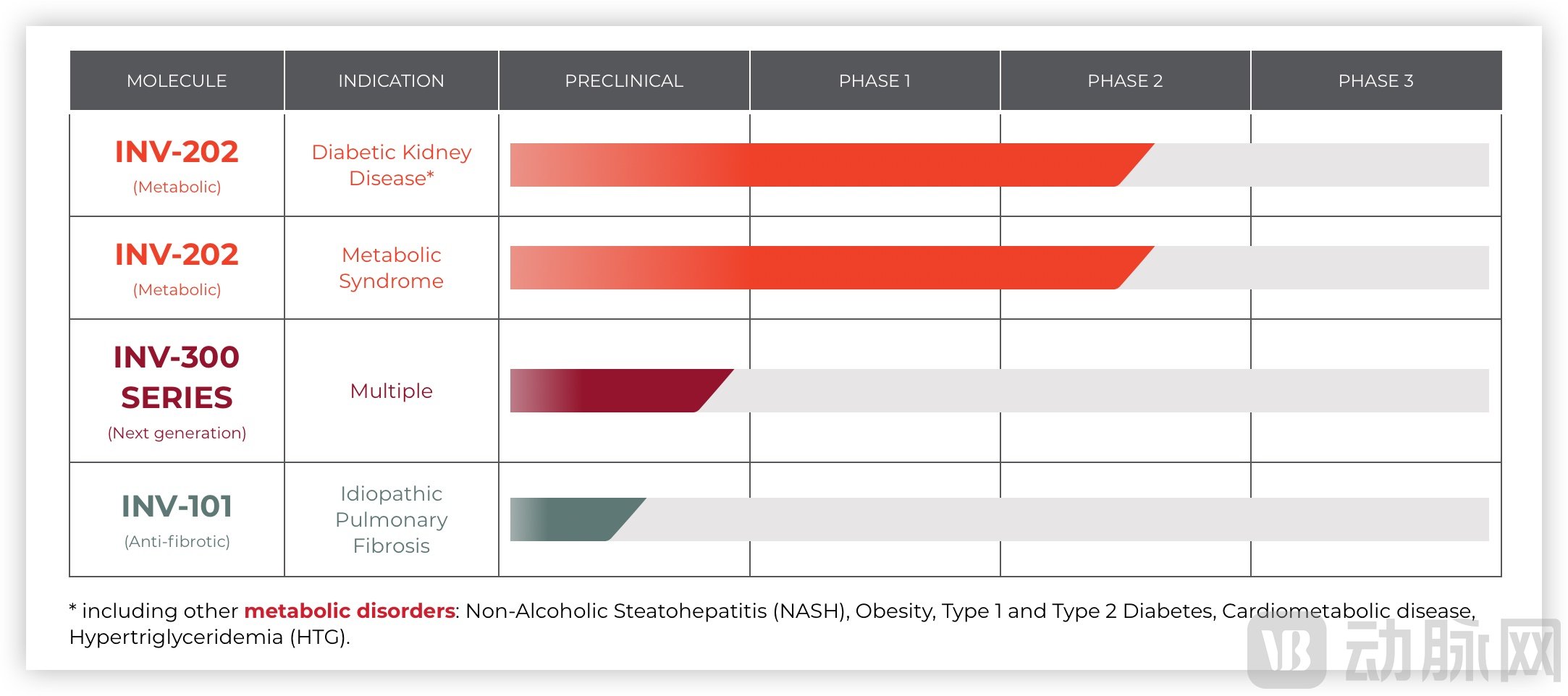
Inversago's Main Product Pipeline, Image Source: Official Website
Inversago, founded in 2015, has its main asset INV-202, which can preferentially block the CB1r receptor protein in peripheral tissues such as adipose tissue, gastrointestinal tract, kidneys, liver, pancreas, muscles, and lungs, because the CB1r protein plays a crucial role in metabolism and appetite regulation, making it a popular research and development target for a period of time.
Including the National Institutes of Health (NIH), as well as major pharmaceutical companies like Pfizer and Merck, all participated. Sanofi's rimonabant was the first CB1r inverse agonist approved for marketing by the EU. However, it was withdrawn from the market due to significant side effects, after which Pfizer and Merck also successively halted their programs.
However, research on CB1r has not stopped. In 2016, Inversago obtained the authorization for MRI-1867 (INV-101), MRI-1776 (INV-201), and MRI-1891 (INV-202) from the NIH. Currently, Inversago’s development of INV-202 is the most advanced. For the diabetic nephropathy indication, it has entered Phase 2 clinical trials; for metabolic syndrome, Phase 2 clinical trials are also about to commence.
Not only does INV-202 represent the second-generation CB1r, but according to Inversago, it has independently developed the third-generation CB1r inverse agonist INV-300 series based on its acquired products, which is still in the preclinical stage.
In the field of CB1r inverse agonists, Inversago is currently in a leading position. Based on the premise that safety and efficacy have been validated, and according to the currently published efficacy data, coupled with its advantage as an oral medication, INV-202 and its subsequent products have the potential to become the next rising star in the weight loss field.
Just 20 Days After Inversago Deal, Novo Nordisk Strikes Again, Acquiring Danish Startup Embark Biotech to Gain New Weight-Loss Drug Pipeline
By transferring two preclinical products targeting the neurokinin receptor 2 (NK2R) — a peptide and a small molecule — Embark received 15 million euros in upfront cash and up to 456 million euros in subsequent rights. Embark will continue to collaborate with Novo Nordisk to explore other drugs related to energy metabolism.
The research and development history of the tachykinin family dates back a long way. For instance, the small-molecule NK2R inhibitor Saridegib, developed by Sanofi, was tested in multiple indications such as pain, asthma, irritable bowel syndrome, and anxiety, even reaching phase 3 clinical trials, but failed to succeed. Later, major pharmaceutical companies including Sanofi, Daiichi Sankyo, Novartis, and AstraZeneca all abandoned the NK2R target. However, Embark continued multiple studies on NK2R and obtained several patents.
Novo Nordisk’s Style: Acquiring Weight Loss Product Pipelines Twice in a Short Period, Both Targeting a Less Explored Pathway
Back in 1994, a chemistry undergraduate named Knudsen returned to Novo Nordisk after her maternity leave, only to be greeted by massive layoffs across the company. By chance, this drug researcher without a Ph.D. became the head of the GLP-1 project.
During this period, the development of GLP-1 class drugs was fraught with challenges. After more than a decade of solitary progress, it wasn’t until 2010 that the FDA finally approved the market application for liraglutide, the biologic drug developed by Knudsen. However, Knudsen did not stop there. Based on new findings during the research process, he suggested that the GLP-1 project could also expand into the weight-loss field. After much persuasion, the senior management of Novo Nordisk finally agreed to initiate a new project, which has led to today’s success.
Perhaps it is precisely because of the experience of "waiting for the clouds to part and seeing the moon," whether it is Embark's development of niche-targeted energy metabolism drugs or Inversago's solitary journey in the CB1r reverse agonist field, that has made Novo Nordisk firmly believe in their potential. Novo Nordisk also believes that they can create a synergistic effect with semaglutide.
When GLP-1 shows potential in the cardiovascular field, Novo Nordisk quickly expands its pipeline through acquisitions and mergers, hoping to create synergies with its existing pipeline.
In late October, Novo Nordisk announced the acquisition of Ocedurenone, a hypertension treatment drug from Singapore-based biotechnology company KBP Biosciences, for up to $1.3 billion. Ocedurenone is an oral medication currently in Phase 3 clinical trials, targeting cardiovascular and renal diseases.
Notably, in addition to the acquisition in October, Novo Nordisk had already made multiple moves to strengthen its presence in the cardiovascular disease field during September.
In September 2023, Novo Nordisk collaborated with German company Evotec to launch LAB eN², targeting the cardiometabolic disease field.
LAB eN² aims to combine Evotec's multimodal drug discovery capabilities with Novo Nordisk's therapeutic, clinical, and commercial expertise, serving as an accelerator platform to expedite the translation of academic research. The focus is on unmet needs in cardiometabolic diseases, rare blood disorders, and rare endocrine conditions.
Currently, LAB eN² has signed agreements with four academic institutions: Harvard University, Massachusetts General Hospital, Yale University, and Beth Israel Deaconess Medical Center. LAB eN² will provide them with funding, disease expertise, technology, Evotec's drug discovery and development resources, and Novo Nordisk’s clinical, regulatory, and commercialization guidance. Additionally, Novo Nordisk has the right to select certain products for further investment and development.
Not only Evotec, but also in September, Novo Nordisk collaborated with AI drug development company Valo Health to jointly discover and develop innovative therapies for cardiometabolic diseases.
This collaboration mainly focuses on utilizing Valo's Opal platform and real-world patient datasets to discover and develop novel cardiometabolic programs. Novo Nordisk has in-licensed three preclinical cardiometabolic disease programs developed by Valo, paying an upfront fee of $60 million. Additionally, there are milestone payments set across 11 objectives, with a total potential value of up to $2.7 billion.
Valo is most renowned for its Opal Computational Platform, a drug development platform that encompasses three major modules: target discovery, molecular design, and clinical development. It excels in target discovery based on real patient data, an AI-powered small molecule drug discovery platform, and preclinical safety and efficacy prediction before drugs enter clinical trials. This allows for the potential to discover new targets and molecules at a faster pace and may increase the success rate of clinical development.
Also in September, Novo Nordisk reached a cooperation agreement with the Broad Institute to discover new targets for type 2 diabetes and cardiometabolic diseases.
Both parties will use large-scale cell screening to study the relationships between genes and pathways that could become therapeutic targets. Over the next three years, they will advance at least three projects, two of which aim to identify drug targets for clinically significant subtypes of type 2 diabetes, and one project aims to unravel the genetic causes of cardiac fibrosis or heart scarring. In terms of cardiometabolic diseases, both parties aim to identify and validate therapeutic targets that can delay or even reverse fibrosis, thereby effectively treating such diseases.
The miracle created by Semaglutide continues, but Novo Nordisk has already set its sights further ahead, beginning to focus on the next potential growth opportunity. From its acquisition activities, Novo Nordisk's current development strategy revolves around finding the next generation of therapies for obesity, diabetes, and cardiovascular diseases.
Take diabetes as an example. Currently, breakthroughs have only been made in the field of blood glucose control, but the fundamental cause of diabetes has not been fully understood, and the key to halting disease progression has not been found for slowing, reversing, or even preventing the disease. Meanwhile, there are many early studies in the cardiometabolic field, but most have not yet embarked on the path of translation.
According to a recent report released by MassBio, approximately 2% of Biotech pipelines have entered the cardiovascular disease field, while about 35% have entered the oncology field. Novo Nordisk believes that the current basic science environment is sufficiently active, with various early-stage studies, but there aren't enough mechanisms to translate and validate these early studies.
Therefore, Novo Nordisk hopes to establish a third pillar—enhancing innovation capabilities—through investment and acquisitions, beyond the current two pillars of assets and technology. Whether investing in LAB eN² to participate in early-stage research transformation or investing in Valo to strengthen AI drug development capabilities, Novo Nordisk aims to promote innovation in the cardiometabolic field and achieve complementarity with its existing pipeline by enhancing its innovation capabilities.
The enormous wealth generated by semaglutide will also foster more investments in the medical field.
Novo Holdings A/S, the parent company of Novo Nordisk, usually referred to as "Novo Holdings," was established by the founding family of Novo Nordisk to manage the family's wealth and investments, particularly in the healthcare sector. How to utilize the wealth generated by semaglutide will be an important question for Novo Holdings to consider moving forward.
Novo Holdings' answer is that to expand its leading position, it should avoid participating in diabetes and weight-loss drug projects.
Unlike Novo Nordisk, which continues to deepen its moat in the weight-loss field, Novo Holdings believes that Novo Nordisk's current dominance in the obesity and diabetes sectors could negatively impact their investments. Whether as a venture capital firm’s exit or project selection, the presence of Novo Nordisk may lead to unnecessary market speculation. On the other hand, startups in related fields might also be hesitant to accept investment from Novo Holdings due to Novo Nordisk’s influence.
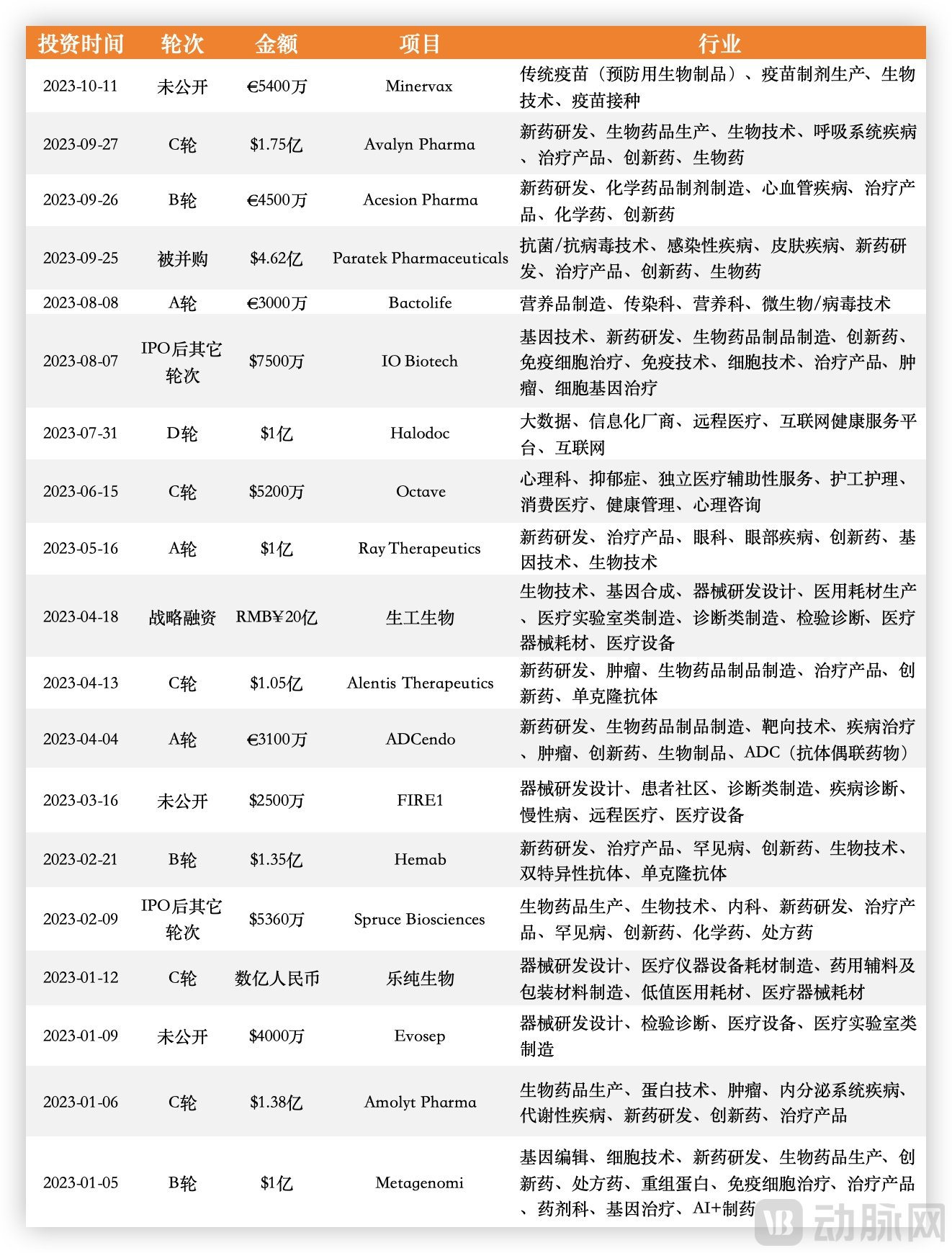
Part of Novo Holdings' investments this year, data sourced from VCBeat
From Novo Holdings' investments this year, it is evident that Novo Holdings maintains its own investment pace, with limited alignment to Novo Nordisk's business operations, instead focusing on its strategic layout. For instance, on September 4th, Novo Holdings acquired the biopharmaceutical company Paratek Pharmaceuticals for $462 million.
This is a commercial-stage biopharmaceutical company focused on antimicrobial resistance (AMR) research, and it is also one of the largest independent antibiotic companies in the world, with annual revenues exceeding 100 million US dollars. Currently, AMR has evolved into one of the biggest challenges facing global public health. An assessment report in The Lancet predicts that by 2050, the number of deaths caused by AMR infections will surpass those caused by cancer.
Novo Holdings has incorporated AMR research into its long-term strategy, including providing funding for the discovery of new therapies for human and animal infections, and establishing a new fund to further expand its presence in this field. Notably, aside from the healthcare sector, fueled by the ongoing success of semaglutide, Novo Holdings has embarked on more green investments, acquiring a significant portfolio of renewable energy assets.
Despite the tremendous success of semaglutide, its competitor Eli Lilly is also closing in. The direct competition between the two has made it necessary for both to rely on acquisitions to achieve rapid expansion. After deeply exploring the potential of semaglutide, Novo Nordisk has started extensive acquisitions to broaden its pipeline matrix, hoping to achieve resonance with its existing product pipelines through a refined and specialized layout and build an entirely new pipeline ecosystem. Perhaps one of these deals will help Novo Nordisk develop the next "semaglutide."
References
https://www.biopharmadive.com/news/novo-nordisk-uli-stilz-diabetes-biotech-innovation/696590/
https://www.fiercebiotech.com/biotech/flush-wegovy-cash-novo-nordisks-owner-widens-investment-strategy-beyond-biotech