

Medtronic's Evolut TAVR System Demonstrates Superiority Over SAVR in Low-Risk Patients: Four-Year Data from Evolut Low Risk Trial

Medtronic
Medical Device Manufacturer

On October 24, 2023, Medtronic at the 35th TCT Conference (Global Interventional Cardiology Forum)Announced Positive 4-Year Follow-Up Results from the Evolut Low Risk Study.
The Evolut Low Risk study is an international, multicenter, non-inferiority randomized controlled trial, representing a significant leap forward in the field of TAVR for surgical low-risk patients.
The 4-year follow-up results published this time suggest that,Medtronic Evolut Transcatheter Aortic Valve Replacement (TAVR) System Demonstrates Superior Outcomes and Sustained Valve Performance, with Hemodynamics Significantly Better than Surgical Aortic Valve Replacement (SAVR).Only the Evolut TAVR has consistently reported a lower and distinct mortality rate or disabling stroke rate compared to the most advanced surgeries over four years.
Previous studies have already shown that,The Evolut platform is the only TAVR platform that has demonstrated superior durability to SAVR in randomized trials over 5 and 10 years.This new evidence release marks another step forward for the application of TAVR in low-risk surgical patients.
01
Multiple data points superior to surgical implant
For patients with severe aortic stenosis, Transcatheter Aortic Valve Replacement (TAVR) has become an established treatment method, especially for those at high risk for surgical procedures. TAVR has demonstrated non-inferior efficacy compared to Surgical Aortic Valve Replacement (SAVR).
However, for patients at low surgical risk, there is still a lack of randomized controlled trials with longer follow-up periods comparing TAVR and SAVR treatments.
Evolut Low Risk Study: Assessing the Safety and Effectiveness of the Evolut TAVR System versus Surgical Aortic Valve Replacement (SAVR) in Low-Risk Surgical Patients. In the trial, low-risk patients, defined as those with a predicted 30-day mortality risk of <3% based on multidisciplinary local heart team assessment, were randomized to either the TAVR group or the SAVR group.
In the TAVR group, self-expanding supra-annular valves were used (CoreValve, Evolut R, or Evolut PRO, all from Medtronic), while in the SAVR group, the choice of valve was determined by the surgeon, but no mechanical valves were used.A total of 1,414 patients underwent implantation (730 TAVR; 684 SAVR).
The study results indicate that, compared with SAVR, Evolut TAVR continued to achieve positive outcomes in the primary endpoint of all-cause mortality or disabling stroke at four years.At four years, compared with SAVR (14.1%), the risk of death or disabling stroke was reduced by 26% in TAVR (10.7%) (p=0.05).Over time, the absolute difference in clinical benefits for patients between Evolut TAVR and surgical procedures continues to increase at the four-year mark.
The research results also showed that TThe all-cause mortality, disabling stroke, or aortic valve rehospitalization rate was 18.0% in the AVR group and 22.4% in the SAVR group (p=0.04).
Nina Goodheart, Senior Vice President of Medtronic's Cardiovascular Portfolio and President of the Structural Heart and Aortic business, stated: The low-risk patient study data from Medtronic presented today at TCT demonstrates our continued commitment to generating evidence on our Evolut TAVR platform to provide treatment options for the growing population of low-risk symptomatic severe aortic stenosis patients. By offering physicians the latest minimally invasive, clinically validated technologies, we aim to support advanced lifelong patient care to best treat patients.
02
Latest Generation Product Approved
On October 12, 2023, Medtronic announced,The latest generation product of its Evolut platform, the Evolut™ FX Transcatheter Aortic Valve Implantation System, has received the CE mark. Previously, the product was approved by the U.S. FDA in August 2021.
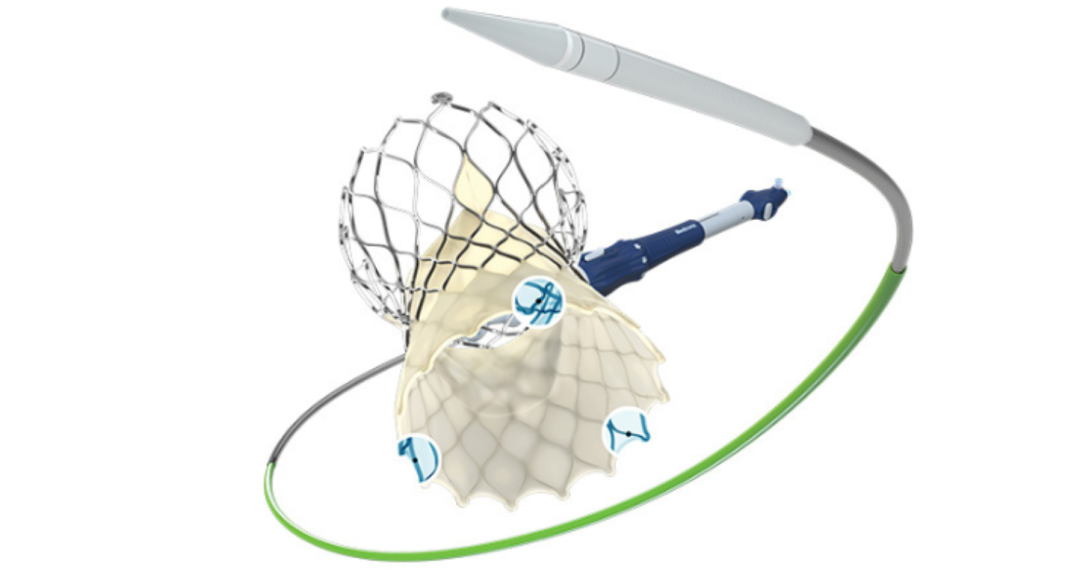
The Evolut FX system adopts the same supra-annular self-expanding valve design as the Evolut platform. According to an independent, large-scale, one-year randomized trial, the system demonstrated superior hemodynamic performance in valve replacement surgery compared to SAVR.
In TAVR procedures, the alignment of the commissures is a key factor for facilitating future coronary interventions, improving coronary blood flow, and enhancing valve hemodynamic performance, and may be beneficial for subsequent TAVR procedures. Its fourth-generation Evolut technology is equipped with gold marker dots on the stent frame, allowing operators to directly visualize the depth and leaflet position during implantation.
In addition, the Evolut FX system adopts a redesigned catheter tip, which makes the insertion profile smoother and more flexible, allowing for 360-degree freedom of movement. Like its predecessor, the Evolut PRO+, the Evolut FX offers four valve sizes suitable for the widest range of indicated patients.
——
Aortic StenosisAortic stenosis is a heart condition that occurs when the aortic valve narrows, preventing it from opening and closing properly, which causes the heart to work harder to pump blood to the rest of the body. The increased pressure inside the heart can lead to weakening and dysfunction of the heart. Severe aortic stenosis is a life-threatening condition affecting 3.4% of elderly individuals worldwide. Among patients with severe symptoms of aortic stenosis who do not receive appropriate treatment, as many as 50% may die within one year.
After 20 years of development, transcatheter aortic valve replacement (TAVR) has revolutionized the management of severe aortic stenosis, becoming the standard of care across the entire spectrum of surgical risk. With advancements in TAVR technology, it is anticipated that more patients will avoid open-heart surgery while achieving better outcomes.
END
Related Reading
 Tap for more.