Eli Lilly Submits NDA for Donanemab to China's CDE for Early Symptomatic Alzheimer’s Disease
Eli Lilly
Global Pharmaceutical R&D and Production Company

On October 31, the CDE website showed that Eli Lilly's new Alzheimer's drug donanemab has been accepted for marketing application. Previously, the NMPA granted donanemab a Breakthrough Therapy Designation for the treatment of Alzheimer's disease, used to treat early symptomatic Alzheimer’s disease, including mild cognitive impairment due to Alzheimer's disease and mild Alzheimer’s disease.

Donanemab is a monoclonal antibody that binds to the N3pG subtype of amyloid-beta protein. It can bind to amyloid-beta protein deposits in the brains of Alzheimer's disease patients, thereby promoting the clearance of amyloid plaques in the patient's brain.
In May this year, Eli Lilly announced that the Phase III TRAILBLAZER-ALZ 2 study of donanemab for the treatment of patients with early symptomatic Alzheimer's disease (AD) had met its primary endpoint. The results showed that donanemab significantly slowed cognitive decline in patients with early symptomatic AD, with nearly half of the participants (47%) showing no disease progression within one year (defined as no decline in clinical dementia rating), compared to 29% in the placebo group. Eli Lilly submitted a marketing application for donanemab to the FDA in the second quarter seeking accelerated approval.
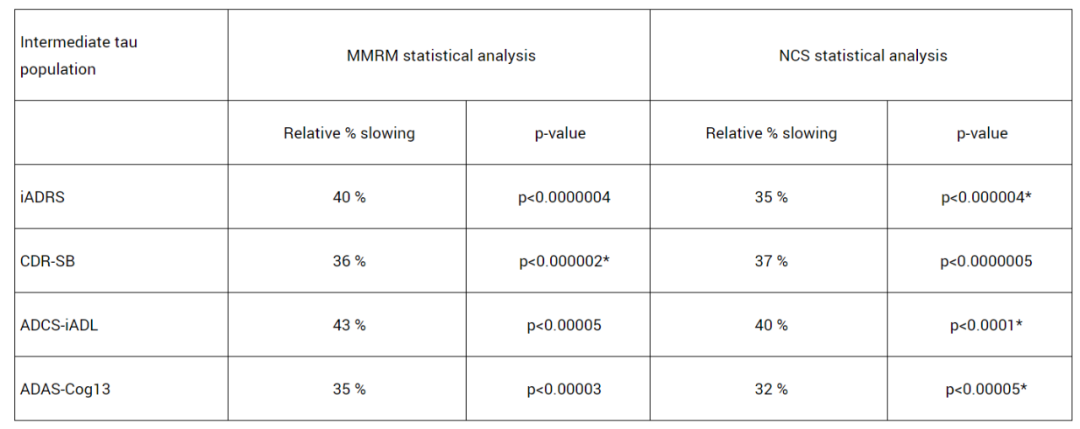
TRAILBLAZER-ALZ 2 is a randomized, double-blind, placebo-controlled Phase III clinical trial, with the primary analysis population (n=1182) consisting of patients with moderate tau levels and pronounced AD clinical symptoms. The primary endpoint is the change in scores on the Alzheimer's Disease Integrated Rating Scale (iADRS, assessing patients' cognitive abilities and activities of daily living) from baseline to 18 months. Key secondary endpoints include changes in scores on the Clinical Dementia Rating-Sum of Boxes (CDR-SB, assessing patients' cognitive abilities), the Alzheimer’s Disease Cooperative Study – Activities of Daily Living (ADCS-iADL), and the Alzheimer’s Disease Assessment Scale-Cognitive Subscale (ADAS-Cog13) from baseline to 18 months.
Results showed that, compared with the placebo group, the decline in iADRS scores was slowed by 35% (p<0.0001) in patients receiving donanemab; at 18 months, the decline in CDR-SB scores in the donanemab group was slowed by 36% (p<0.0001) compared to the placebo group; ADCS iADL scores indicated that disease progression in the donanemab group was delayed by 40% (p<0.0001) at 18 months. Additionally, donanemab reduced the risk of patients progressing to the next stage of the disease by 39% (HR=0.61; p<0.001).
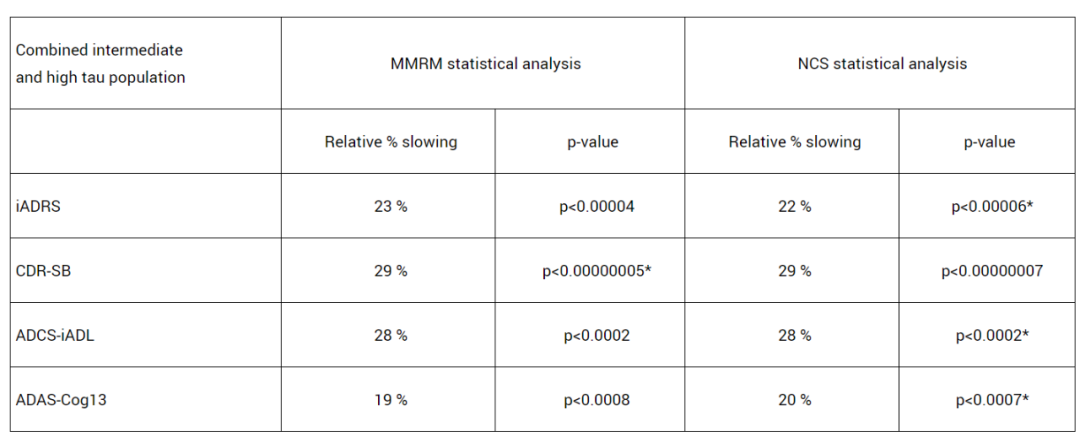
After combining the results of the moderate tau protein level population with the higher population (n=552) (n=1736), the donanemab treatment group still showed positive outcomes across all clinical endpoints (p<0.001), with the CDR-SB score and iADRS score reducing the rate of decline by 29% and 22%, respectively.
In terms of safety, 24% of participants in the donanemab group experienced amyloid-related imaging abnormalities-edema (ARIA-E), with a symptomatic ARIA-E rate of 6%; 31.4% of patients in the donanemab group showed cerebral microhemorrhages and superficial siderosis (ARIA-H), compared to 13.6% in the placebo group. The majority of ARIA cases were mild to moderate in severity, with a serious ARIA rate of 1.6%, including two participants who died from ARIA and one patient who died after experiencing severe ARIA; 8.7% of patients had infusion-related reactions, most of which were mild to moderate.
Copyright © 2023 PHARMCUBE. All Rights Reserved.
Welcome to forward, share, and reasonably cite. When citing, please clearly indicate the source of the article in a prominent position;For reprint, please leave a message or send a message to the WeChat Official Account backend, and indicate the name and ID of the official account.
Disclaimer: The information in this WeChat article is for general reference only and should not be directly used as decision-making content. PharmaCube assumes no responsibility for any loss incurred by any party due to the use of the content herein.

PharmaCube Reader Survey Questionnaire
Thank You for Your Support! We Look Forward to Your Feedback
Scan the QR code to provide valuable suggestions