Intensifying Competition in Rare-Mutation Lung Cancer: Johnson & Johnson Faces Challenge from Domestic Biopharma Companies

Johnson & Johnson
Medical Device R&D and Manufacturer

Click the blue words to follow us

The landscape of lung cancer treatment in China is about to witness new changes.
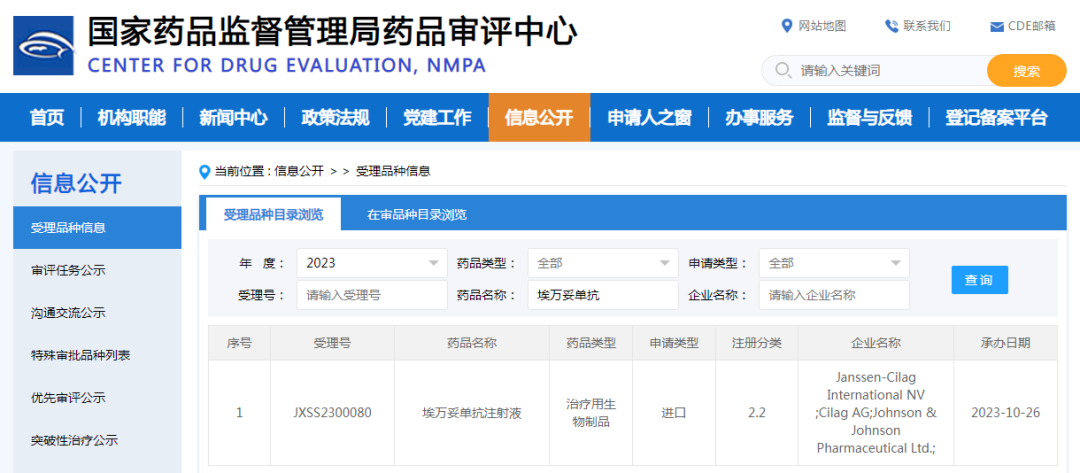
Recently, the official website of the Center for Drug Evaluation (CDE) under the National Medical Products Administration (NMPA) showed that the marketing application for Amivantamab Injection, an anti-lung cancer drug targeting EGFR/cMET submitted by Johnson & Johnson, has been accepted. It is reported that Amivantamab is the world’s first approved EGFR/cMET bispecific antibody drug for adult patients with locally advanced or metastatic non-small cell lung cancer (NSCLC) harboring epidermal growth factor receptor exon 20 insertion mutations (EGFR exon 20ins).
Since the discovery of the EGFR gene mutation by researchers, the application of tyrosine kinase inhibitors (TKI) has ushered in the era of precise targeted therapy for EGFR-positive NSCLC. However, EGFR exon 20 insertions stand out as unique. As the most common type among rare EGFR mutations, the vast majority of patients with this mutation are resistant to current first- to third-generation TKIs and have poor clinical outcomes.
However, as the bypass activation of the cMET (cellular-mesenchymal epithelial transition factor) pathway has been identified by researchers as a newly discovered drug resistance mechanism, blocking this pathway is expected to address the issue of targeted drug resistance in lung cancer caused by cMET amplification. This has led to a surge in the development of targeted therapies for lung cancer focusing on c-MET. Among them, EGFR/cMET bispecific antibodies, led by Johnson & Johnson's Amivantamab, have become one of the most fiercely contested areas in the NSCLC field.
Accelerating Advanced First-Line Therapy for Lung Cancer
Lung cancer is the malignant tumor with the highest mortality and incidence rate in China, and is one of the major public health issues faced by the country. Among the many targets for lung cancer, EGFR mutations account for the highest proportion, reaching 40%-50% in Asian NSCLC patients. The emergence of EGFR-TKIs has significantly prolonged the progression-free survival and overall survival of lung cancer patients with EGFR mutations, but the challenge of acquired resistance remains unavoidable.
Since cMet amplification was discovered by researchers as an important mechanism of EGFR-TKI resistance, they have successively embarked on the development journey of c-MET targeted drugs. Amivantamab, a bispecific antibody targeting EGFR and MET developed by Johnson & Johnson, has the advantage of not only simultaneously blocking EGFR and MET-mediated signal transduction but also guiding immune cells to target tumors carrying activating and resistant EGFR/MET mutations and amplifications.
As early as May 2021, Amivantamab received accelerated approval from the U.S. FDA based on the results of the CHRYSALIS trial for the treatment of adult patients with locally advanced or metastatic NSCLC harboring EGFR exon 20 insertions, becoming the world's first approved EGFR/cMET bispecific antibody. In the CHRYSALIS trial, 81 patients with EGFR exon 20 insertion NSCLC who had previously received platinum-based chemotherapy were treated with Amivantamab. The data showed that these patients had a response rate of 40%, a median duration of response of 11 months, and a median progression-free survival (PFS) of 8.3 months.
Johnson & Johnson has not limited the patient population covered by amivantamab to later-line treatment for NSCLC with EGFR exon 20 insertions. Instead, it is accelerating the expansion of the therapeutic boundaries of this promising drug through combination therapy regimens. In August this year, Johnson & Johnson submitted a supplemental Biologics License Application (sBLA) to the U.S. FDA, seeking expanded approval for amivantamab in combination with chemotherapy (carboplatin-pemetrexed) as a first-line treatment for patients with EGFR exon 20 insertion-positive, locally advanced or metastatic NSCLC.
This sBLA is supported by data from the PAPILLON study, a randomized, open-label Phase III clinical trial designed to evaluate the efficacy and safety of amivantamab in combination with chemotherapy compared to chemotherapy alone in newly diagnosed EGFR exon 20 insertion mutation-positive advanced or metastatic NSCLC patients. The primary endpoint is PFS assessed by BIRC according to RECIST v1.1, with secondary endpoints including overall response rate (ORR), PFS after first subsequent treatment, time to symptom progression, and overall survival (OS).
At the recently concluded 2023 ESMO Congress, Johnson & Johnson announced the detailed data from the PAPILLON study. The results showed that the median PFS in the amivantamab + chemotherapy group was 11.4 months, significantly higher than 6.7 months in the chemotherapy-only group. Additionally, the response rate of the combination therapy reached 73%, compared to 47% in the chemotherapy-alone group.
Notably, Johnson & Johnson's greater ambition lies in combining Amivantamab with Lazertinib, the third-generation brain-penetrant EGFR TKI co-developed as part of their collaboration. At the 2023 ESMO Congress, Johnson & Johnson also presented updates on two studies related to this combination therapy: the MARIPOSA-2 study and the MARIPOSA study.
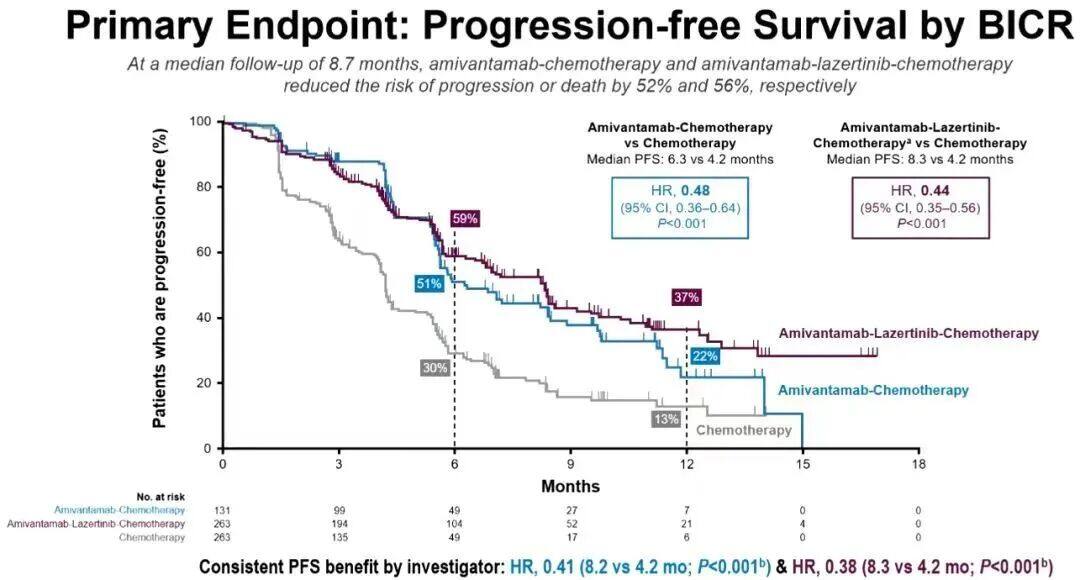
MARIPOSA-2 is a Phase III trial of amivantamab in combination with lazertinib and chemotherapy for NSCLC patients who have developed resistance to osimertinib. The study met its dual primary endpoints, marking the first Phase III study to demonstrate clinically meaningful PFS improvement in post-osimertinib treatment. Results showed that, with a median follow-up of 8.7 months, compared to the chemotherapy group, the amivantamab + chemotherapy group and the amivantamab + lazertinib + chemotherapy group significantly reduced the risk of disease progression or death by 52% and 56%, respectively, with median PFS of 6.3 months and 8.3 months (vs. 4.2 months in the chemotherapy group). The 1-year PFS rates were 22%, 37% (vs. 13% in the chemotherapy group).
Moreover, the combination groups also significantly improved intracranial PFS and ORR simultaneously. In terms of intracranial PFS, the Amivantamab + chemotherapy group and the Amivantamab + Lazertinib + chemotherapy group significantly reduced the risk of intracranial disease progression or death by 45% and 42%, respectively. Regarding intracranial ORR, the Amivantamab + chemotherapy and Amivantamab + Lazertinib + chemotherapy groups achieved 64% and 63%, respectively, compared to 36% in the chemotherapy alone group. Although the median OS data is not yet mature, both combination therapies have shown a trend of benefit compared to the chemotherapy alone group.
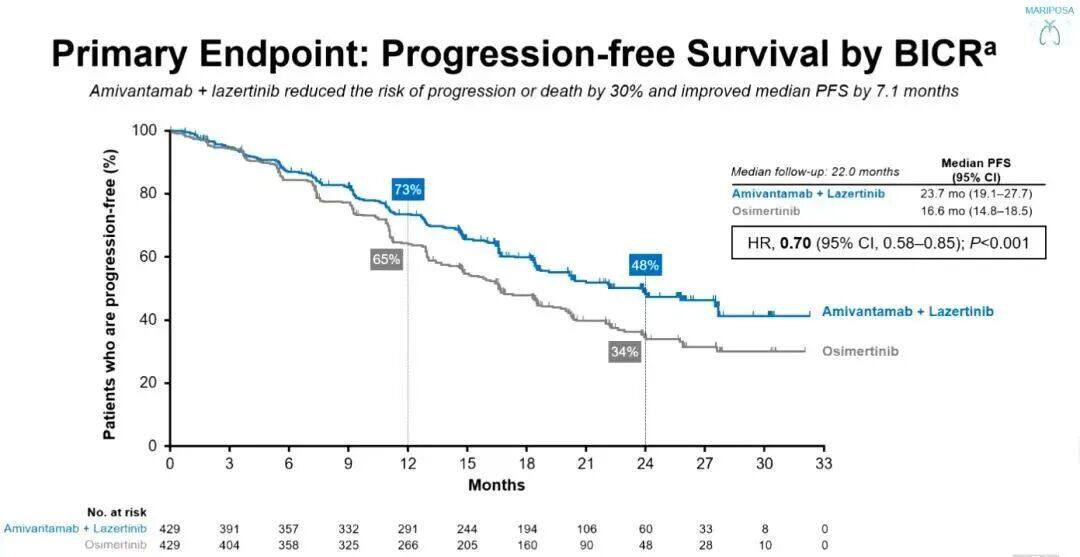
The MARIPOSA study is a Phase III clinical trial comparing amivantamab plus lazertinib head-to-head with osimertinib monotherapy as first-line treatment for patients with EGFR-mutated locally advanced or metastatic NSCLC harboring EGFR exon 19 deletion or L858R mutations. The results showed that, after a median follow-up of 22.0 months, the median PFS was 23.7 months in the amivantamab plus lazertinib group and 16.6 months in the osimertinib group, with 2-year PFS rates of 48% and 34%, respectively. Regardless of whether patients had brain metastases, the PFS benefit was consistent in the amivantamab plus lazertinib group. In terms of ORR, the amivantamab plus lazertinib group achieved 86%, compared to 85% in the osimertinib group, with median DORs of 25.8 months and 16.8 months, respectively.
Whether Johnson & Johnson's amivantamab + lazertinib combination will ultimately become a first-line therapy for EGFR exon 19 deletion or L858R mutation-positive NSCLC still awaits formal approval from regulatory authorities, but the consecutive positive topline data have already provided significant room for imagination within the industry.
Combination with EGFR-TKI Becomes the Mainstream of Development
Amivantamab has clearly sparked a高潮 in the clinical development of EGFR/cMET bispecific antibody drugs. Following Johnson & Johnson, Chinese pharmaceutical companies such as Betta Pharmaceuticals, Hansoh Pharma, and EpimAb Biotherapeutics have joined the research and development efforts.
In January 2019, Betta Pharmaceuticals announced a strategic collaboration with Merus, obtaining the exclusive license for the clinical development and commercialization of MCLA-129 in China. MCLA-129 is a bispecific antibody targeting EGFR & c-Met, developed based on Merus' Biclonics® platform, intended for the treatment of solid tumors. MCLA-129 operates through two distinct mechanisms: first, by blocking the signaling pathways of EGFR and c-Met to inhibit tumor growth and survival; second, by enhancing antibody-dependent cell-mediated cytotoxicity (ADCC) to improve cell-killing potential.
By choosing to acquire MCLA-129, Betta Pharmaceuticals is focused on the therapeutic potential of combining this drug with its own Befotertinib Mesylate Capsules. Befotertinib Mesylate Capsules, a third-generation EGFR-TKI developed by Betta Pharmaceuticals, have already received approval for marketing in May this year for the treatment of NSCLC patients who have experienced disease progression after prior EGFR-TKI therapy and are positive for the T790M mutation (second-line indication). The first-line indication is currently under review for marketing authorization, and clinical research for its use in post-surgical adjuvant therapy is ongoing.
In September this year, Betta Pharmaceuticals announced the completion of the first patient enrollment in a Phase I clinical study evaluating the safety, pharmacokinetic characteristics, and anti-tumor activity of MCLA-129 in combination with Befutinib in patients with EGFR-sensitive mutation advanced NSCLC. The aim is to evaluate the safety, pharmacokinetic characteristics, and anti-tumor activity of MCLA-129 in combination with Befutinib.
Another local innovative pharmaceutical company worth watching on this track is EpimAb Biotherapeutics. In June 2022, EpimAb Biotherapeutics announced that the U.S. FDA had approved the Investigational New Drug (IND) application for a Phase Ib/II clinical trial of EMB-01, a bispecific antibody targeting EGFR and cMET on the surface of tumor cells, in combination with AstraZeneca's third-generation EGFR-TKI, osimertinib, for the treatment of non-small cell lung cancer. According to the non-exclusive clinical research collaboration agreement already signed by both parties, AstraZeneca will provide osimertinib for this clinical study.
It is reported that EMB-01 is a novel bispecific antibody developed based on Epimab Biotherapeutics' proprietary FIT-Ig platform, which can simultaneously target EGFR and cMET on the surface of tumor cells. It is currently undergoing Phase I/II clinical trials in the United States and China for NSCLC and multiple gastrointestinal tumors.
Hansoh Pharma entered the field relatively later. In November 2022, Hansoh Pharma and Promab Biotechnologies jointly announced an exclusive collaboration and licensing agreement for the development and commercialization of Promab’s leading investigational drug PM1080 in Greater China (including mainland China, Hong Kong, Macao, and Taiwan). According to the terms of the agreement, Hansoh Pharma will obtain exclusive rights to develop and commercialize PM1080 in Greater China and will pay Promab an upfront payment of RMB 50 million, potential development, regulatory, and sales-based commercial milestone payments of up to RMB 1.418 billion, as well as tiered royalties based on net sales.
Public information shows that PM1080 is an EGFR/cMet bispecific antibody drug. Based on the favorable biological characteristics, excellent efficacy, and PK properties observed in preclinical studies, PM1080 has significant therapeutic potential to simultaneously block EGFR and c-Met signaling pathways, inhibiting tumor growth and survival. It is clear that Hansoh Pharma's introduction of PM1080 aims to further explore its clinical value as a monotherapy or in combination with the company’s self-developed first China-originated third-generation EGFR-TKI, Aumolertinib.
In June this year, Hansoh Pharma announced that the PM1080 project had received the clinical trial notification issued by the NMPA approval, intended for the treatment of advanced solid tumors.
Unlike the three innovative pharmaceutical companies mentioned above, Genor Biopharma has developed a novel EGFR/cMET/cMET trispecific therapeutic antibody, GB263T. As the world's first EGFR/cMET/cMET trispecific antibody, GB263T can target EGFR and two different cMET epitopes, a design that significantly enhances its safety and efficacy. Based on a highly differentiated design, GB263T exhibits multiple mechanisms of action, simultaneously inhibiting primary and secondary EGFR mutations as well as the cMET signaling pathway. Additionally, the binding of cMET VHH2 is dependent on the binding of cMET VHH1, and this unique sequential binding characteristic broadens the safety and efficacy window of GB263T.
Preclinical studies have shown that, compared to Amivantamab analogs, GB263T effectively blocks ligand-induced phosphorylation of EGFR and c-MET, demonstrating superior dual inhibition of the EGFR and cMET signaling pathways. In October 2022, Genor Biopharma announced the first patient dosing in China for the Phase I/II clinical trial of GB263T, intended for the treatment of advanced NSCLC and other solid tumors. Previously, this clinical trial had already been initiated in Australia with the completion of the first human dosing.
NSCLC is one of the most common tumor indications globally, but NSCLC patients with EGFR mutations gradually develop resistance to third-generation EGFR-TKIs as the disease progresses, representing a significant unmet clinical need. The combination of EGFR/cMET bispecific antibodies and EGFR-TKIs has demonstrated great potential for synergistic inhibition of tumor growth and will become the focus of pharmaceutical companies' upcoming clinical exploration.