

Beyond CAR-T: mRNA-Based In Vivo CAR-M Therapies Emerge as Next-Generation Cancer Immunotherapy

Carisma Therapeutics
Developer of Cell Immunotherapy

Moderna
mRNA Therapeutics Developer



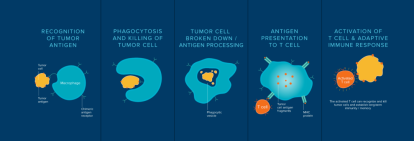
CAR-M Mechanism of Action C4
From 1989 when the CAR-T concept was proposed until now,CAR-T TherapyAlreadyFor Hematological TumorsThe treatment brought about a "revolutionary" change.Treatment Methods, howeverCAR-T Still "Helpless" in Solid Tumor Treatment。Solid TumorTypically isolated within dense fibrotic masses and hypoxic immunosuppressive environments, thisBlocked the infiltration of T cells, becoming a major challenge in CAR-T cell therapy. Therefore, researchers are also actively exploring other immune cells as weapons for treating solid tumors, including macrophages, which account for about 50% of the total tumor mass and are often one of the first cells absorbed by solid tumors. They can also selectively kill cancer cells through phagocytosis. Studies have shown that installing CARs on macrophages while inducing their differentiation towards the M1 phenotype (M1-type macrophages can induce inflammatory responses within tumor tissues, thus being "good" macrophages).Expression of Chimeric Antigen Receptor Macrophages (CAR-M)Has been proven to reduce tumor burden,Remodeling the Tumor Microenvironment (TME),And coordinate systemic immune responses。
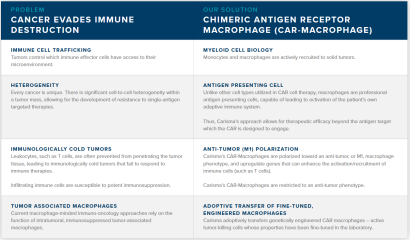
▲Image Source: Carisma Official Website
mRNA/LNP In Vivo CAR-M Therapy
Carisma Therapeutics is the pioneer of CAR-MThe product pipeline includes CAR-M and in vivo mRNA CAR-M therapies, among others. As early as the beginning of 2022, Moderna and Carisma announced a partnership to combine Carisma's engineered macrophage technology with Moderna's mRNA-LNP technology to develop in vivo, in situ-generated chimeric antigen receptor macrophage (CAR-M) therapies.
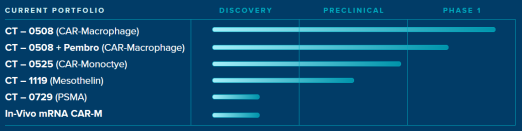
▲Carisma Product Pipeline (Source: Carisma Official Website)
At this conference, Carisma Therapeutics will showcaseCAR-M TherapyCanProduced directly in vivoData shows that using mRNA/LNP successfully redirected endogenous myeloid cells to tumor-associated antigens.Preclinical data demonstrate feasibility, tolerability, and efficacy in metastatic solid tumors. This new cancer immunotherapy provides an off-the-shelf solution that has the potential to increase the accessibility of CAR-based therapies.

In addition,Myeloid TherapeuticsAlso announced recently (September 2023)Completed the first patient dosing in the Phase 1 clinical trial of MT-302, a CAR-M cell therapy targeting TROP2, prepared in vivo via LNP-mRNA., for the treatment of advanced or metastatic epithelial tumors. Chief Executive Officer of MyeloidDr. Daniel Getts"MT-302 begins dosing is an important milestone in Myeloid's effort to provide better treatment options for patients with solid tumors. By advancing MT-302 into the clinic, weHarnessing the power of the innate immune system to overcome many limitations of CAR-T in solid tumorsWe look forward to advancing MT-302 in our Phase 1 study and demonstrating the potential of our innate immune platform to directly program cells in vivo and drive better outcomes."

▲Myeloid
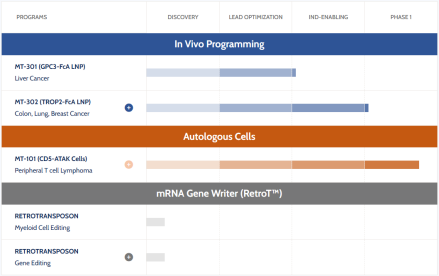
▲Myeloid Product Pipeline (Source:Myeloid Official Website)
Basic research on the in vivo preparation of CAR-M cell therapy using LNP-mRNA has never stopped. As early as 2022, Professor James Dahlman from the Georgia Institute of Technology published a research article in Nature Communications (Reference 5), in which PPZ-A10 (LNP constructed with piperazine-derived ionizable liposomes) was used at a dose as low as 0.3 mg/kg.Preferential delivery of mRNA to liver and spleen immune cells,Particularly in macrophagesIn July 2023, to enhance the targeting of LNP-mRNA to liver macrophages, Professor Jiang Xinyi's team adopted PPZ-A10 and used it as...Construction of Optimized LNP Targeting Liver Macrophages, and published the study in J Control Release (Reference 6), demonstrating that PPZ-A10 LNPsPreferentially deliver mRNA to macrophages,Provides Evidence for Further Research on In Situ CAR-M Therapy in the Treatment of Hepatocellular Carcinoma。
Carisma Other CAR-M Therapies
At this conference, Carisma will also showcase some of the company's other CAR-M therapy concepts.
shRNA-based CAR-M Therapy
eMedClub
a. CAR-M therapy with customized intron shRNA shows enhanced efficacy against solid tumors:
Solid tumors overexpress immune inhibitory molecules, such as CD47, which can reduce the phagocytic activity of macrophages against tumors. Researchers have demonstrated that CD47 is a checkpoint that diminishes CAR-M functionality and have shown that CRISPR-mediated SIRPα gene knockout in CAR-M renders them resistant to the phagocytic checkpoint protein CD47.
Therefore, the researchers throughIntegration of CAR Delivery with Customized Intron shRNA, therebySimultaneous CAR expression and SIRPα knockout, demonstrating the feasibility of generating gene-silenced primary CAR-M in a single transduction step, and proving that targeted knockout of SIRPα can enhance the anti-tumor activity of CAR-M in vivo. The intronic shRNA design is a generalizable platform, valuable for future CAR designs, target tumor antigens, and gene knockout targets.

EM-C
eMedClub
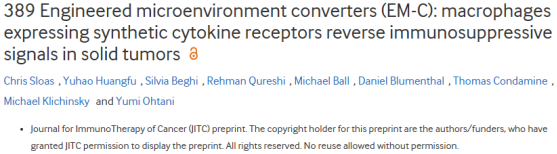
b.Engineering Microenvironment Converter (EM-C): Macrophages Expressing Synthetic Cytokine Receptors Reverse Immunosuppressive Signals in Solid Tumors
Immune homeostasis is regulated by the balance of pro-inflammatory and anti-inflammatory cytokine signals.Cytokine expression dysregulation can lead to harmful immunosuppression or inflammation, resulting in disease pathology. In solid tumors, cytokines such as IL10 and TGFβ induce an immunosuppressive tumor microenvironment (TME), weakening endogenous and therapeutic anti-tumor immunity.Monoclonal antibody therapy cannot provide the inflammatory signals necessary to initiate anti-tumor immunity., therefore, the researchers usedSynthetic Cytokine Switch Receptor (SR) Engineered Macrophages, inDevelopment of a Cell Therapy Platform for Modulating Pro-Inflammatory/Anti-Inflammatory Signals, using SR to convert tumor-associated immunosuppressive (M2) signals into pro-inflammatory (M1) responses to modulate the tumor microenvironment (TME), leveraging this natural capability and naming this engineered myeloid cell platform "Engineering Microenvironment Converter (EM-C)。
The new immunotherapy platform proposed by the researchers,UtilizeMacrophages as "Living Converters" to Locally Modulate Inflammation in Solid Tumors. Established EM-C that converts IL10 or TGFβ into pro-inflammatory signals, demonstrating modular capability to control the inflammatory state of the microenvironment without systemic cytokine antagonism.
 ▲Image source: BMJ (Reference 3)
mRNA/LNP In Vivo CAR-T Therapy
It is worth mentioning that, also in the researchIn Vivo Generated Transiently Engineered CAR-T Cell TherapyThe founding team members of Capstan include Carl June, known as the "Father of CAR-T," Drew Weissman, a "pioneer of mRNA technology," and Jonathan Epstein, the "inventor of in vivo CAR-T technology." Additionally, five major pharmaceutical giants—Pfizer, Novartis, Eli Lilly, Bristol-Myers Squibb, and Bayer—all participated in the company's investment round in September 2022.

▲Capstan
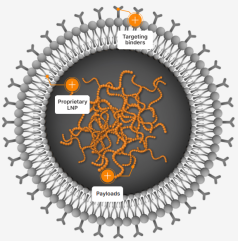
The company's proprietary targeted lipid nanoparticles (tLNP) platform consists of three parts:
a.LNP Delivery System
Capstan's proprietary lipid nanoparticles are a non-viral system designed for safe, repeated in vivo administration.
b. Cell-specific targeting molecules
Functionalizing antibodies or antibody fragments onto the surface of nanoparticles to generate targeted lipid nanoparticles (tLNPs) for the effective and specific delivery of payloads.
c. Disease-Specific Payload
mRNA encoding chimeric antigen receptors (CARs), gene editing mechanisms, and other therapeutic proteins.
▲Image Source: Capstan Official Website

▲Image Source: Capstan Official Website
In China, companies such as Yuantai Biotech, Ucard Therapeutics, Jiyin Biotech, and SinoBio have already made progress in the field of producing CAR-T/NK cells in vivo using mRNA-LNP technology.
Conclusion
Leading companies and cutting-edge researchers in the industry focusing on mRNA/LNP-basedIn vivoThe research on CAR-T and CAR-M therapies may address the challenges of long production cycles and high costs associated with traditional CAR-T and CAR-M therapies in the future, while benefiting more patients with hematologic malignancies and solid tumors.
2.https://jitc.bmj.com/content/11/Suppl_1/350
3.https://jitc.bmj.com/content/11/Suppl_1/437
4.https://jitc.bmj.com/content/11/Suppl_1/726
5.Ni H, Hatit MZC, Zhao K, Loughrey D, Lokugamage MP, Peck HE, Cid AD, Muralidharan A, Kim Y, Santangelo PJ, Dahlman JE. Piperazine-derived lipid nanoparticles deliver mRNA to immune cells in vivo. Nat Commun. 2022 Aug 15;13(1):4766.
6. Yang Z, Liu Y, Zhao K, Jing W, Gao L, Dong X, Wang Y, Han M, Shi C, Tang C, Sun P, Zhang R, Fu Z, Zhang J, Zhu D, Chen C, Jiang X. Dual mRNA co-delivery for in situ generation of phagocytosis-enhanced CAR macrophages augments hepatocellular carcinoma immunotherapy. J Control Release. 2023 Aug; 360:718-733.


Dian Dian "Share”、“Like" and "In View", give me a little recharge~"