

Chimeric Therapeutics Receives FDA IND Approval for World’s First CDH17-Targeted CAR-T Therapy CHM 2101

Chimeric Therapeutics
Cell Therapy Developer

November 2, 2023 / eMedClub News /--On October 31, 2023, Chimeric Therapeutics announced that the U.S. FDA had approved itsCDH17-Targeted CAR-T Cell Therapy Investigational New Drug (IND) Application, and plans to launch a new initiative in 2024.For patients with advanced colorectal cancer, gastric cancer, and neuroendocrine tumorsA multicenter, open-label Phase 1A/B clinical trial to study CHM 2101.

The clinical program for CHM 2101 can be traced back to last year. On March 21, 2022,Dr. Xianxin Hua's team from the University of Pennsylvania School of Medicine published a significant paper in *Nature Cancer*., researchersDeveloped a VHH1-CAR T cell targeting CDH17,In tumor xenograft or primary mouse models, the therapyCompletely eliminated neuroendocrine tumors (NET) and gastrointestinal cancer cells (GIC) expressing CDH17, without damaging normal cells that do not express CDH17.
CDH17 is aCancer targets associated with poor prognosis and metastasis in the most common gastrointestinal tumors, including colorectal cancer, gastric cancer, and neuroendocrine tumors.It is worth noting that CDH17 CAR-T, compared with other targeted therapies of the same type,Demonstrated Superior Safety, and has no toxicity to normal intestinal epithelial cells that also express CDH17,Only damages cancer cells, without harming normal tissues.。The small intestine and colon of the treated mice remained intact, and no obvious structural damage was observed in their stomach, pancreas, heart, liver, or kidneys. This may be becauseCDH17 is isolated and concealed within the tight junctions between healthy intestinal epithelial cells.,Whereas CAR-T cells cannot reach or bind to this location`, indicating`CDH17 is a potentially safer solid tumor target。
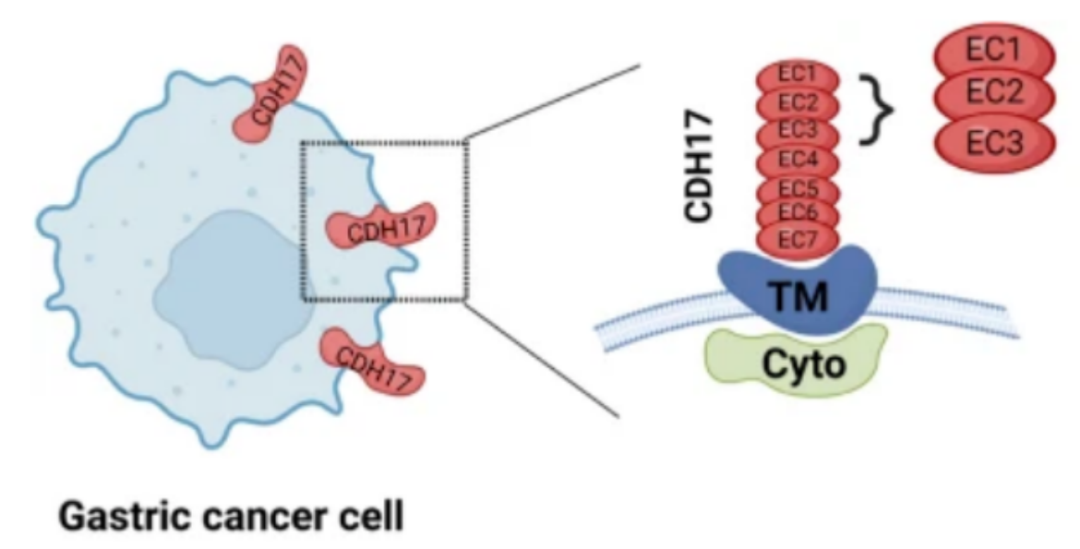
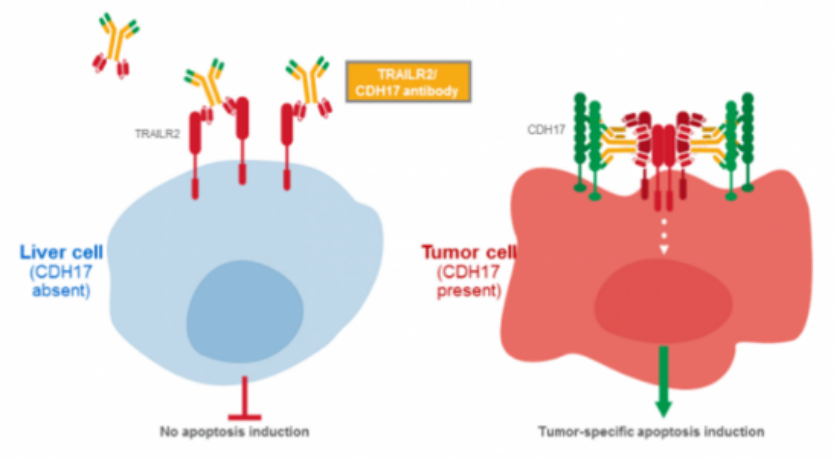
▲CDH17 Model on Gastrointestinal Cancer CellsFormula DiagramImage Source: Chimeric Official Website
Subsequently, Chimeric Therapeutics deepened its cooperative relationship with the University of Pennsylvania.Chimeric Therapeutics has obtained a non-exclusive license from the University of Pennsylvania for the use of a third-generation lentiviral vector system to develop and commercialize the company’s CDH17-targeting CAR-T cell therapy, CHM 2101.
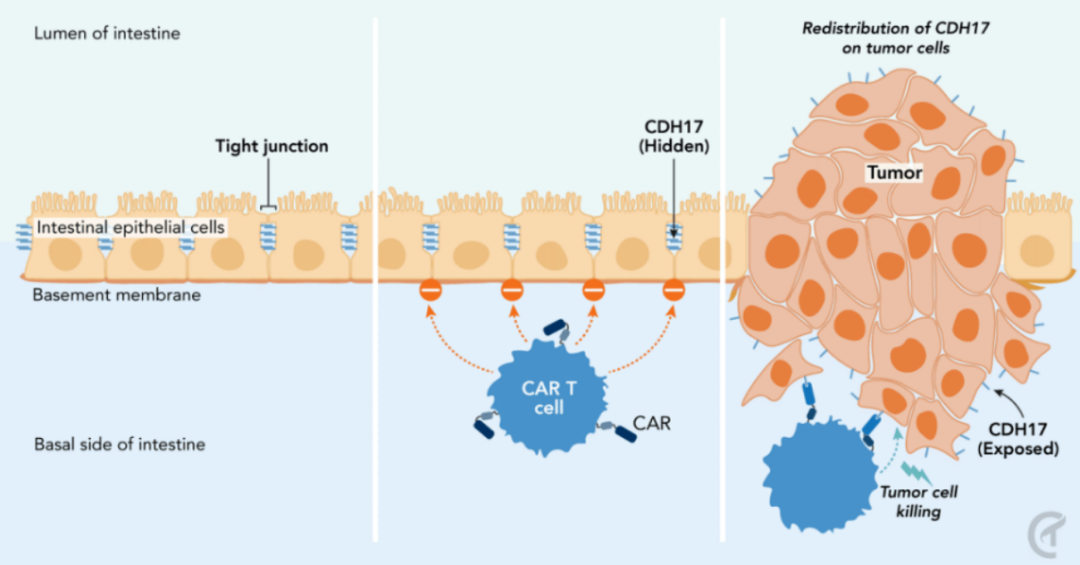
▲CHM 2101 Function Image Source: Chimeric Official Website
Gastrointestinal cancers (GIC, including gastric cancer, pancreatic cancer, and colorectal cancer) and neuroendocrine tumors (NET) are usually fatal once metastasized. There are approximately 5 million new cases of GIC worldwide each year, and GIC-related deaths account for 35% of all cancer-related deaths.Traditional treatments for GIC include surgery, chemotherapy, and molecular targeted therapy, but the overall survival rate for patients with metastatic gastrointestinal cancer remains very low.。
From the discovery of the CDH17 target in preclinical research at the beginning of 2022 and the development of CAR-T therapy for this target, to now using it for patients with gastrointestinal cancer and neuroendocrine tumors and initiating clinical trials, this is a critical step in the development of an entirely new CAR-T therapy., bringing new hope to cancer patients who are difficult to cure with existing therapies. Based on this feature, Chimeric Therapeutics has also developedThe CAR-NK cell therapy CHM2301 targeting this site。

Two Bispecific Antibodies, Paving the Way for CDH17 Development
On August 2 this year, Arbele announced at the ASCO Breakthrough ConferenceFirst CDH17xCD3 Bispecific T-Cell Engager Antibody ARBEarly Safety Data of 202, the drug completed the first patient dosing in a Phase I clinical trial in Australia in August 2022.
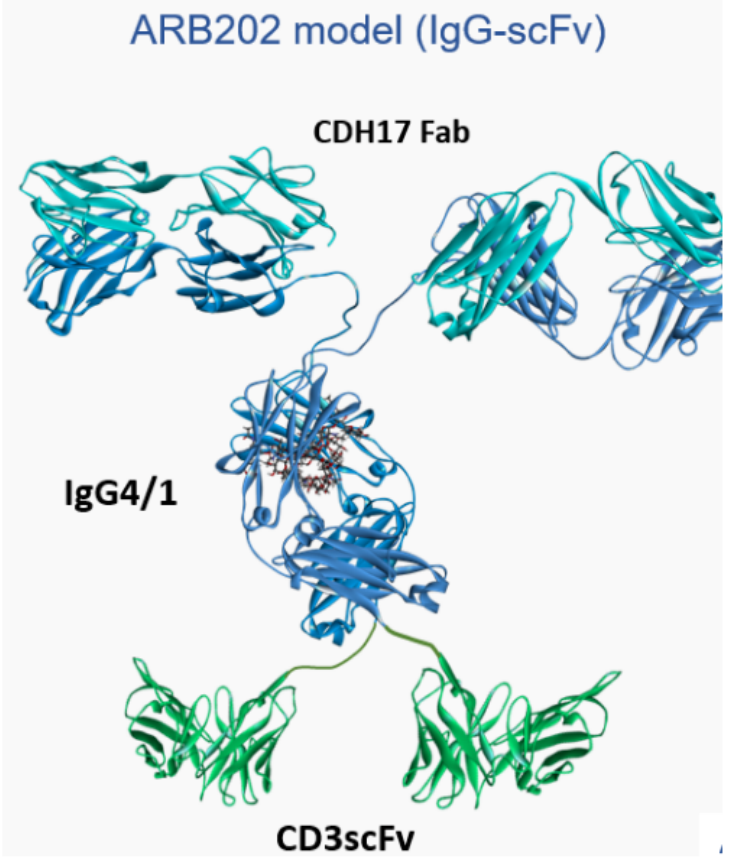
ARB 202 is a novel immunotherapy for advanced gastrointestinal cancers that targets both CD17 on gastrointestinal tumors and CD3 on T cells.ARB 202's unique differential binding affinity for CDH17 and CD3 provides high specificity and cytotoxicity while avoiding "off-target" overactivation of T cells.Preliminary data from the Phase 1a study suggest that — ARB 202 is well-tolerated in the bloodstream with a Cmax of up to 150 ng/ml, indicating no clinically significant off-target T-cell activation at these concentrations.
Boehringer Ingelheim's BI-905711, isTetravalent bispecific antibody targeting TRAILR2 and CDH17,TRAILR2 and CDH17 Crosslinking Induces CDH17-Dependent TRAILR2 Clustering, Triggering Selective Apoptosis in Tumor Cells Co-Expressing TRAILR2 and CDH17. Phase I Clinical Trials Commenced in September 2020. At the ESMO Conference, Boehringer Ingelheim Presented Results of BI 905711 in Phase I Clinical Treatment for Gastrointestinal Tumors: Among 45 Enrolled Patients, 12 Achieved SD with Good Safety Profile.
Chimeric Focuses on Breakthrough Innovations in Solid Tumor Targets
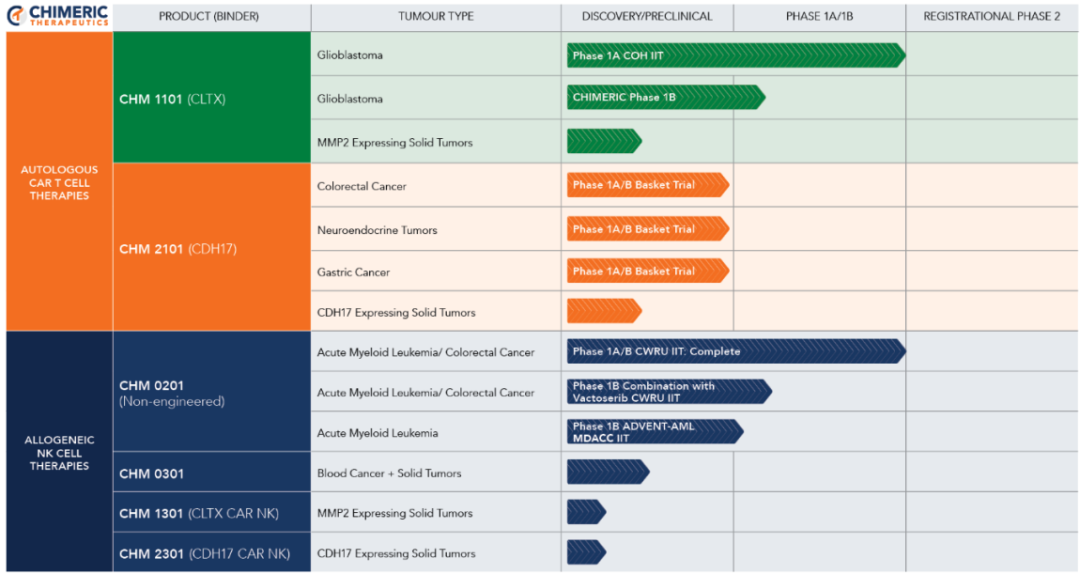
▲ Chimeric Therapeutics' R&D Pipeline Source:Chimeric Official Website
Chimeric Therapeutics, in addition to the CDH17-targeting CAR-T CHM 2101, also has anotherA novel and proprietary CAR-T cell therapy, namely CLTX-based CAR-T, CHM 1101Chimeric utilizes the peptide component chlorotoxin (CLTX) from scorpion venom as the tumor-targeting element of chimeric antigen receptors (CARs) to direct T cells to target brain tumor cells, which has potential.Address the highly unmet medical needs of patients with recurrent or progressive glioblastoma.
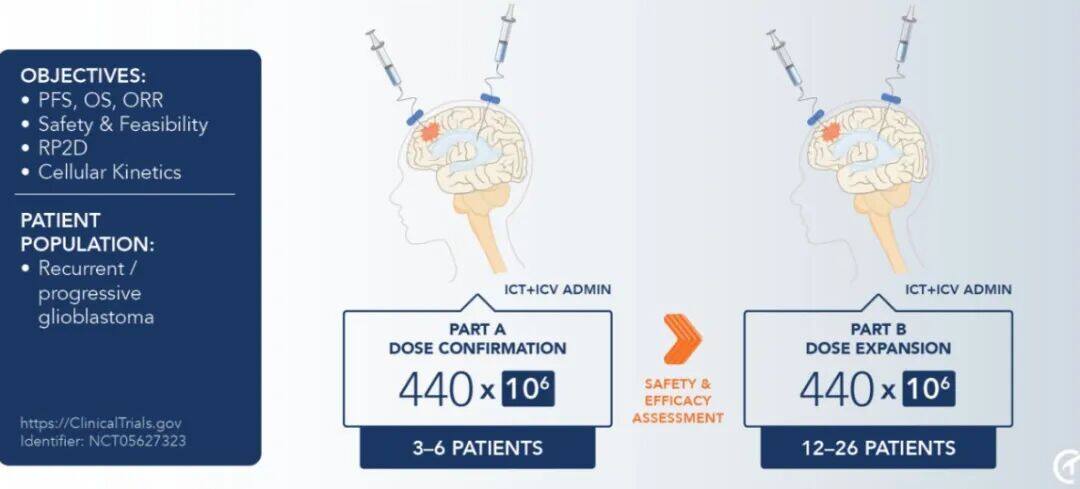
On June 4, 2023, Chimeric Therapeutics announced the initiation of a Phase 1B clinical trial for patients with recurrent and/or progressive glioblastoma multiforme (GBM) to evaluate the safety and efficacy of the company’s first CLTX CAR-T cell therapy, CHM 1101. This multicenter trial will enable Chimeric Therapeutics to accelerate the development of CHM 1101 and prepare for the next phase of development supported by clinical outcomes.CHM 1101, derived from scorpion venom chlorotoxin (CLTX), has previously been shown to bind to glioblastoma cells., has been used as an imaging agent to guide glioblastoma resection surgery,Expected to overcome the limitations of traditional CAR-T targeting solid tumors, which cannot solve tumor heterogeneity and antigen escape.
Conclusion


DianDian "Share”、“Like" and "In Progress", charge me up a bit~"