

AbbVie Secures Rights to First-in-Class Dry Eye Drug Reproxalap with Potential $400M+ Deal as FDA Approval Expected This Month
Aldeyra Therapeutics
Drug Developer

AbbVie
Innovative Drug Developer

Welcome to follow Asymchem Pharma News

On November 1, 2023, Aldeyra Therapeutics ("Aldeyra") announced that it had entered into an exclusive agreement with AbbVie ("AbbVie").According to the terms of the agreement:
AbbVie has the exclusive license to develop, manufacture, and commercialize reproxalap in the United States, as well as the exclusive license to develop, manufacture, and commercialize reproxalap outside the United States.Aldeyra Therapeutics will receive a non-refundable option fee of $1 million, and if AbbVie chooses to exercise its rights, Aldeyra will receive an upfront payment of $100 million.
AldeyraWill be eligible to receive up to $300 million in regulatory and commercial milestone payments, including a $100 million milestone payment following FDA approval of rexlapy for dry eye disease.
Aldeyra will share profits and losses with AbbVie after commercialization in the United States; for markets outside the United States, Aldeyra will be eligible to receive tiered royalties on net product sales.
About Reproxalap
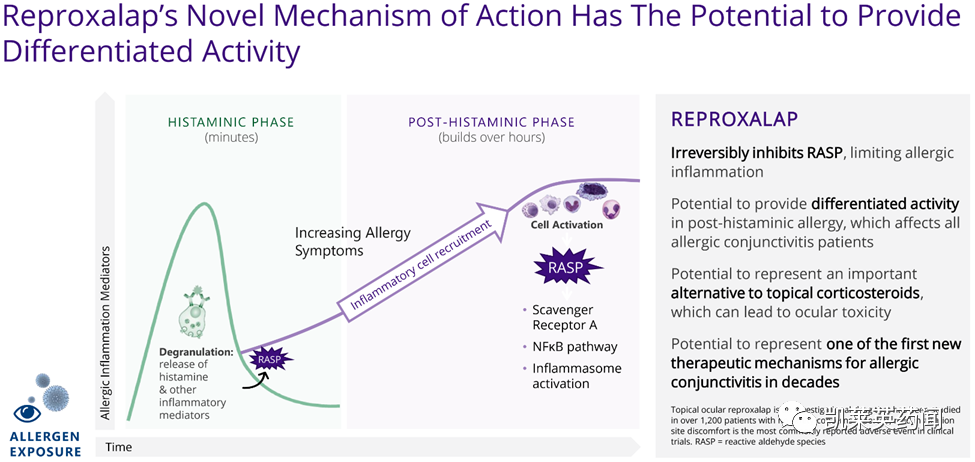
Reproxalap is a topical ophthalmic formulation with the potential to become a "first-in-class" small-molecule reactive aldehyde species (RASP) inhibitor; RASP levels increase during ocular or systemic inflammation, leading to eye inflammation, reduced tear secretion, eye redness, and changes in the lipid composition of tears. Many patients with dry eye disease have elevated RASP levels.
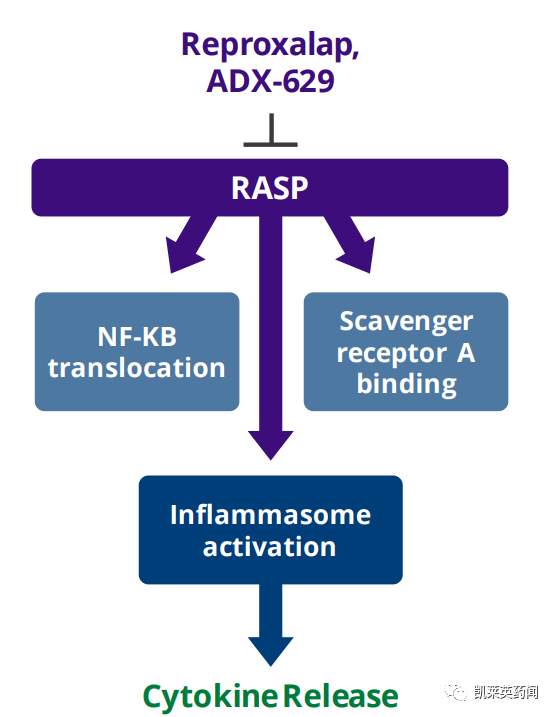
The mechanism of action of Reproxalap has been demonstrated with statistically significant and clinically relevant activity in multiple late-stage clinical trials for different indications.
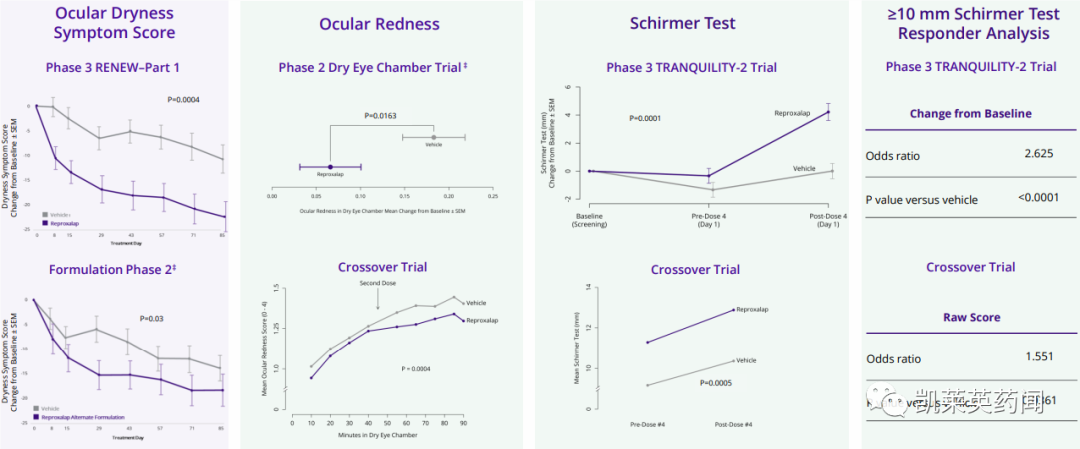
In February 2023, the company announced that the FDA had accepted the new drug application (NDA) for reproxalap for the treatment of symptoms and signs associated with dry eye disease, with a PDUFA date of November 23, 2023.This NDA submission is based on sufficient and well-controlled trials, including data on dry eye symptom scores, redness, and Schirmer tests. The submitted materials contain efficacy data from patients using the drug within minutes to up to 12 weeks. The Schirmer test is a method used to measure tear production.
After one day of treatment with reproxalap (0.25%), patients showed statistically significant improvements in both primary endpoints of the trial: ocular redness in the dry eye chamber (P=0.0004) and the Schirmer test (P=0.0005), compared to the vehicle control group.
Notably, just 10 minutes after patients receiving reproxalap entered the dry eye chamber, they exhibited a statistically significant reduction in eye redness compared to the vehicle group, a trend that persisted until the final measurement at 90 minutes. Schirmer tests were conducted 10 minutes before and after the administration of the fourth dose, with the reproxalap group demonstrating significantly better outcomes than the control group at both time points.
Reproxalap has been tested in more than 2,000 patients and has demonstrated good tolerability and safety, with no clinically significant safety issues observed. Mild, transient instillation site irritation was the most common adverse reaction in clinical trials.
According toEvaluate Pharma predicts that the sales of reproxalap are expected to reach $391 million by 2026.
About RASP Drugs
RASP refers to a class of electrophilic organic aldehyde molecules that are toxic or promote inflammation. RASP undergoes covalent reactions with amino and thiol groups. After reaching a threshold level of binding to the electrophile-responsive proteome, RASP can affect protein function, such as MAP kinase, protein kinase C, and other proteins that enhance cytokine release and inflammation, and activate intracellular inflammatory factors, such as NF-kB. In addition, RASP protein adducts bind to scavenger receptor A, which initiates pro-inflammatory signaling and generates antibodies against the adducted proteins, thereby amplifying the inflammatory response.
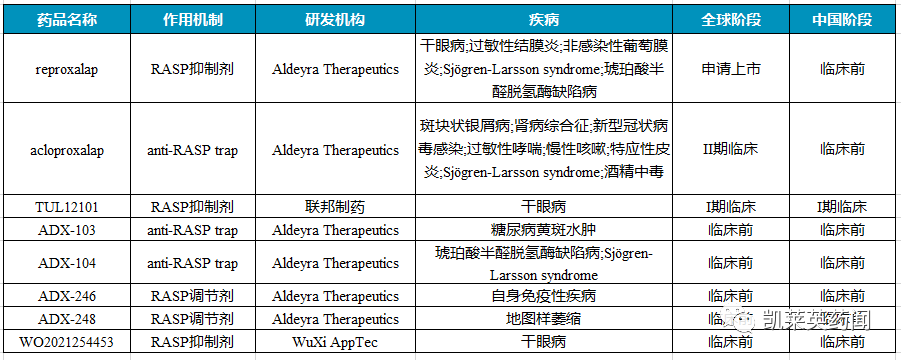
Under normal conditions, RASP is metabolized by aldehyde dehydrogenase or aldehyde reductase, preventing it from reacting with other molecules or proteins. According to incomplete statistics,Currently, there are 8 typesRASPRelevant drugs are under development.
About Dry Eye Syndrome
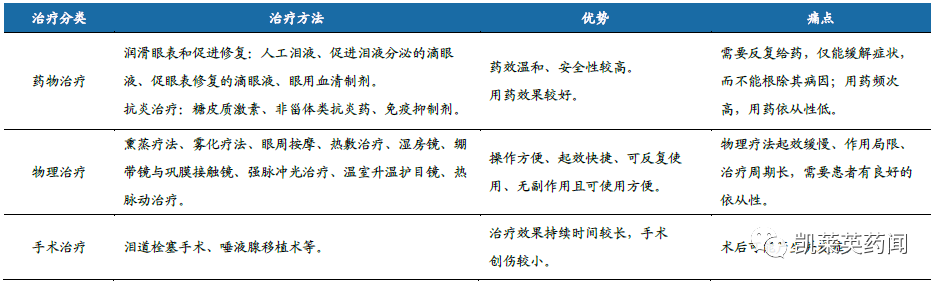
Dry Eye Syndrome: A Type of Ocular Surface Disease with High Treatment Complexity, Gradually Becoming One of the Most Important Markets in Ophthalmic Diagnosis and TreatmentThe main symptoms of dry eye syndrome include dryness, foreign body sensation, and burning sensation in the eyes. It is a chronic ocular surface disease caused by various factors. The medical community generally believes that its primary pathological mechanism involves tear film instability or an imbalance in the ocular surface microenvironment due to abnormalities in the quality or quantity of tears, accompanied by ocular surface inflammation, tissue damage, and abnormal nerve sensations. Long-term and personalized treatments are required based on the type and severity of dry eye, with current therapies mainly divided into three categories: medication, physical treatment, and surgical intervention.
Overview of Current Treatment Methods and Pain Points for Dry Eye Syndrome
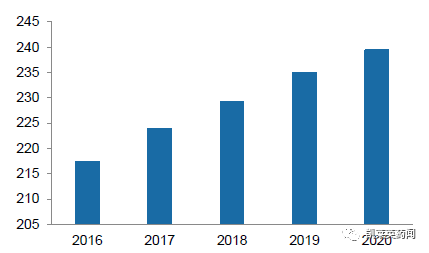
"The Chinese Expert Consensus on Dry Eye (2020)" points out that the incidence rate in China has reached 21%-30%, making it the second most prevalent ophthalmic disease in China, only after allergic conjunctivitis. It has a large patient population and is gradually becoming one of the most common eye diseases in modern society. According to Sullivan analysis data, the number of patients with dry eye syndrome globally and in China was approximately 1.32 billion and 240 million, respectively, in 2020.
The Number of Dry Eye Patients in China is Increasing Year by Year (Millions)
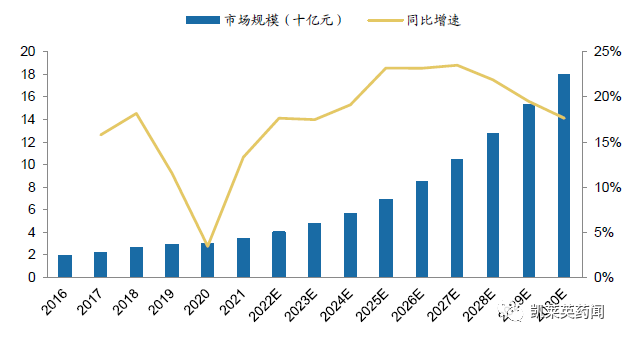
In recent years, research on the pathogenesis of dry eye syndrome has expanded beyond insufficient tear secretion and increased tear evaporation to encompass multiple aspects such as tear film stability, tear osmolarity, abnormal neural sensation, and ocular surface inflammation. Various pharmaceutical companies have made corresponding developments in these areas, leading to intense market competition. Several new drugs and therapies are still in the exploratory stage. The Chinese dry eye drug market has experienced rapid growth in recent years. According to Frost & Sullivan analysis, the scale of China's dry eye drug market grew from 1.9 billion yuan in 2016 to 3 billion yuan in 2020, with a compound annual growth rate of 11.3%. It is expected that the market size will reach 18 billion yuan by 2030.
China's Dry Eye Drug Market Size is Growing Rapidly
About Aldeyra
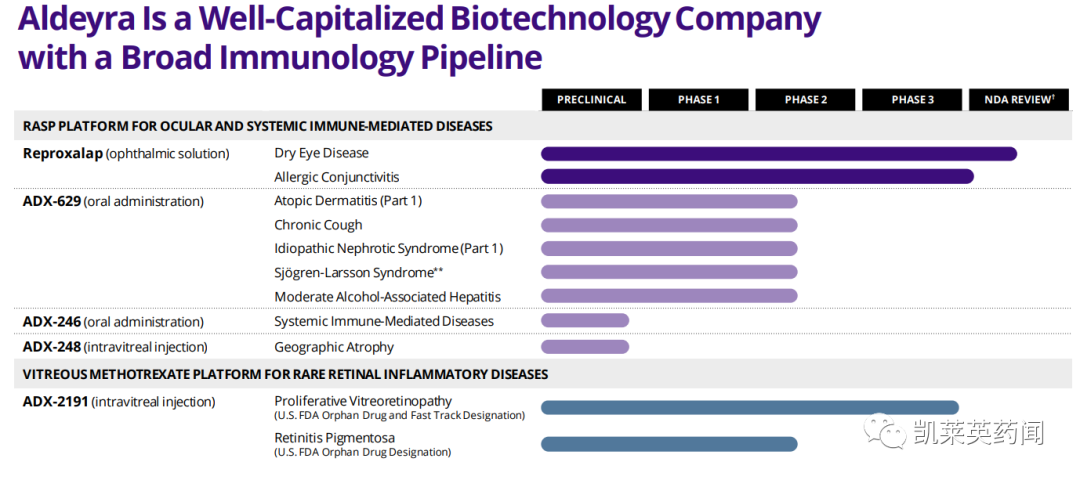
Aldeyra Therapeutics, Inc. is a clinical-stage biotechnology company focused on developing innovative therapies for immune-mediated diseases. Aldeyra's approach is to discover drugs that modulate the immune system rather than directly inhibiting or activating individual protein targets, with the ultimate goal of optimizing multiple pathways simultaneously while minimizing toxicity.
Aldeyra's upcoming commercial product candidates include reproxalap (a potential drug for treating dry eye disease and allergic conjunctivitis) and ADX-2191 (a potential drug for treating primary vitreoretinal lymphoma, proliferative vitreoretinopathy, and retinitis pigmentosa). Additionally, Aldeyra is developing other product candidates, including ADX-629 and chemically related molecules, for the potential treatment of systemic and retinal immune-mediated diseases.
References
1. Company Official Website
2. Liu Wei, Wan Li, Wang Tang-Le, et al. A Novel Small-Molecule RASP Inhibitor——Reproxalap[J]. Journal of Clinical Medication, 2023, 21(02): 22-26.
3. Huachuang Securities, Ping An Securities



"Views"Click once