AstraZeneca Bets Over $500 Million on Cellectis, Sending Shares Soaring 172%

AstraZeneca
Biopharmaceutical Manufacturer

Cellectis
Cell and Gene Therapy Developer
Statement:Due to limited proficiency, errors are inevitable, and some information may not be the most up-to-date. Please feel free to leave comments to point them out.This article only provides an introduction to drugs related to medical health, not a recommendation for treatment plans (if involved); this article does not constitute any investment advice.


November 1,AstraZeneca announced a collaboration with French biotechnology company Cellectis to develop up to 10 cell and gene therapy candidates in the fields of oncology, immunology, and rare diseases.。
According to the agreement, AstraZeneca has obtained exclusive rights to 25 gene targets and will leverage Cellectis' cutting-edge gene editing technology and production capabilities to enhance its development of innovative cell and gene therapies, strengthening its position in this field. Meanwhile, Cellectis will receive an upfront payment of $105 million in the fourth quarter of 2023 and a $140 million equity investment.Funding as well as development, regulatory, and sales milestone payments (US$70–220 million per product), totaling over US$500 million.
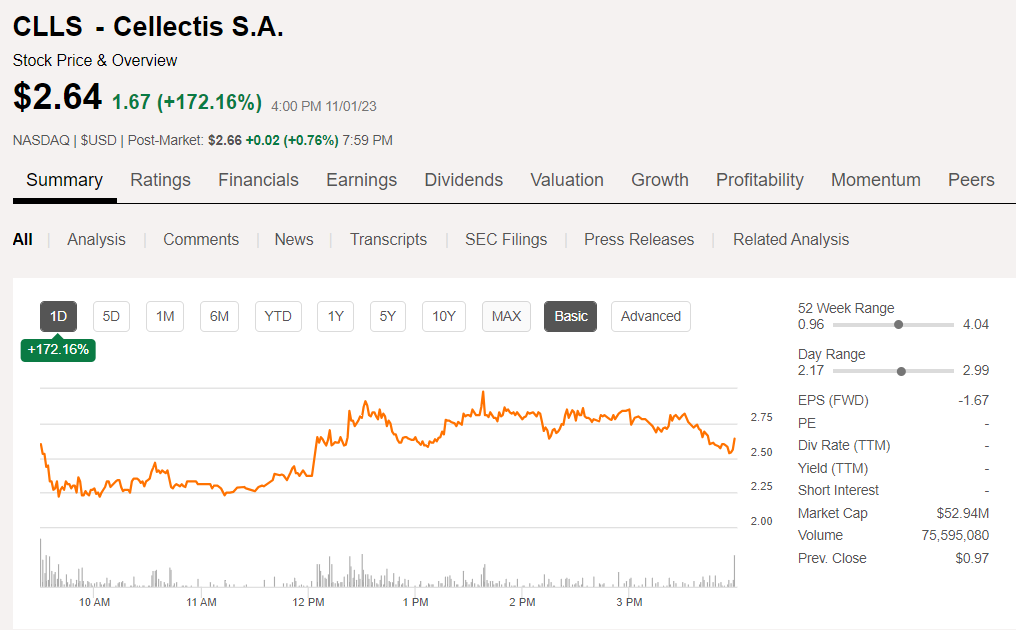
Affected by this news,Cellectis Soars 172%, with a current market value of 52.94 million US dollars.