

Daiichi Sankyo's Trastuzumab Deruxtecan Sales Surge 93.9% Year-over-Year, Propelling Global ADC Leadership and Ambition to Become a Top 10 Oncology Company by 2030
Daiichi-Sankyo
Pharmaceutical R&D Developer

Daiichi Sankyo has single-handedly pushed the global ADC track to a new climax, continuously showcasing the strong market potential of ADC products to the industry.

Recently, following global collaborations with AstraZeneca in 2019 and 2020, Daiichi Sankyo has reached a cooperation agreement with another global pharmaceutical giant, Merck, for three ADC products (HER3 ADC, B7-H3 ADC, CDH6 ADC), with a total amount up to 22 billion US dollars.
In the current global ADC track BD transactions are extremely hot,Daiichi Sankyo's Three Potential Global FIC Candidates Partner with MNC,Once again demonstrated to the world the strength of Daiichi-Sankyo's ADC product pipeline.Following the announcement, the share price of Daiichi Sankyo surged by up to 18%, hitting a record high.According to the latest financial data for the first half of the 2023 fiscal year (April-September) released by Daiichi Sankyo, revenue reached 726.344 billion yen (Approximately 5 billion US dollars,At an exchange rate of 145:1 (the same below), representing a year-on-year increase of 19.5%.
Following the HER2 ADC product T-DXd (brand name/registered trademark: Enhertu, generic name: Trastuzumab Deruxtecan for Injection, clinical code: DS-8201), Daiichi Sankyo has once again single-handedly pushed the global ADC track to a new climax, refreshed the market cooperation space for global ADCs, and further solidified its position as the global ADC leader.
At the upcoming ESMO conference,Daiichi Sankyo showcased over 20 abstracts, disclosing R&D data of its DXd ADC portfolio.While demonstrating its treatment capabilities in various cancer fields, it once again showcased the strong market potential of its ADC products to the industry.
This also makes Daiichi-Sankyo more confident in its transformation into the oncology field, with the goal of "becoming one of the top ten pharmaceutical companies in the global oncology sector by 2030." According to the latest forecast data from Daiichi-Sankyo, its oncology business revenue will exceed 900 billion yen by 2025, expanding from three core ADC new drugs to five ADC new drugs.
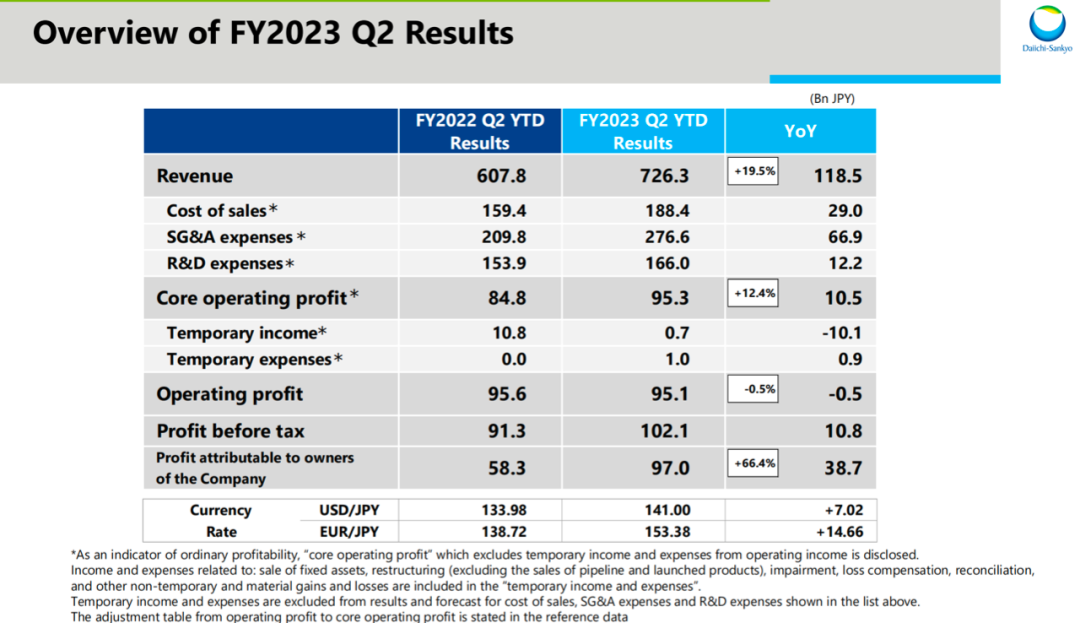
Image source: Daiichi Sankyo official website

Targeting the Lung Cancer Market, ADC FIC Contingent Arrives
With Daiichi-Sankyo's first ADC product T-DXd targeting the HER2 pathway, while making a strong push into the breast cancer market, the world’s first HER2-mutated non-small cell lung cancer indication has also been successively approved overseas.At the same time, T-DXd is also making strides in research for first-line breast cancer therapy, as well as for biliary tract cancer, bladder cancer, cervical cancer, endometrial cancer, ovarian cancer, and pancreatic cancer.
As the indications for T-DXd continue to expand, the product is expected to become the top-selling ADC drug globally. According to data predictions from Evaluate Pharma, T-DXd is projected to lead the ADC drug sales rankings with $6.2 billion in revenue, capturing approximately 40% of the market share.
Not only that, but Daiichi-Sankyo is also expanding its advantageous battleground from breast cancer to the lung cancer field by applying DXd-ADC technology across different targets and various tumors. Due to the large number of patients and the vast market scale, the oncology field has always been..."Getting Lung Cancer, Ruling the World"The statement.
Currently, in addition to T-DXd having been approved for lung cancer indications, multiple global FIC products from Daiichi Sankyo are progressing simultaneously, building competitive barriers in the lung cancer market.
Notably, in the series of studies on NSCLC, Dato-DXd has also initiated combination therapy clinical trials with Merck's Keytruda (TROPION-Lung 07, TROPION-Lung 08). The results of the relevant trials are expected to be available by the end of 2023 or in 2024. The development of ADC combined with PD-1 drugs is considered one of the important directions in the field of cancer treatment.Clinical exploration of Dato-DXd and K drug may provide a new first-line treatment option for advanced/metastatic NSCLC, with the potential to change the current treatment landscape.
The HER3-DXd, which is being co-developed with Merck, also has non-small cell lung cancer as one of its key target markets. HER3-DXd is a potential first-in-class HER3-targeted ADC independently developed by Daiichi Sankyo using the DXd-ADC technology platform.Currently, there are five ADC drugs targeting HER3 that have entered the clinical stage globally. However, Daiichi Sankyo's HER3-DXd is already in Phase II clinical trials, taking the lead, while most of the others are still in the Phase I clinical development stage.
According to the data disclosed at the 2023 World Conference on Lung Cancer (WCLC23) (OA05.03), regarding HER3-DXdIIThe results of the Phase I clinical study HERTHENA-Lung01 indicate that HER3-DXd demonstrates clinically meaningful and durable efficacy in treating patients with metastatic or locally advanced non-small cell lung cancer (NSCLC) harboring EGFR mutations, whose disease has progressed after prior treatment with an EGFR TKI and platinum-based chemotherapy.As assessed by the Blinded Independent Central Review (BICR), in 225 patients with EGFR-mutated NSCLC, the confirmed Objective Response Rate (ORR) was 29.8% (95% CI: 23.9–36.2), the median Duration of Response (DOR) was 6.4 months (95% CI: 4.9–7.8), and the Disease Control Rate (DCR) was 73.8% (95% CI: 67.5–79.4) in the HER3-DXd (5.6 mg/kg) group.
Currently, this product received Breakthrough Therapy Designation from the FDA in December 2021 for the treatment of patients with metastatic or locally advanced NSCLC who have disease progression and carry resistance EGFR mutations during or after treatment with third-generation TKIs and platinum-based therapies.
Another product from the Daiichi Sankyo and Merck collaboration, I-DXd (DS-7300), is also beginning to make its mark in the small cell lung cancer (SCLC) field.I-DXd (DS-7300) is a novel ADC drug targeting B7-H3, known in the industry as the "rising star of lung cancer drug treatments." It is reported that B7-H3 is overexpressed in tumor cells across various cancer types, including lung cancer, prostate cancer, and esophageal cancer. Notably, 65% of SCLC patients exhibit B7-H3 overexpression, which is associated with poor disease prognosis, making it a highly regarded target within the field.
At the 2023 WCLC conference, researchers presented the Phase I/II trial results of DS-7300 in patients with advanced solid tumors who had previously received multiple treatments. The data showed an ORR of 52.4%, mPFS of 5.6 months, and mOS of 12.2 months with I-DXd treatment, demonstrating the clinical potential of I-DXd for the treatment of SCLC.
From breast cancer to lung cancer, and then to a broader range of cancer types, it is clear that Daiichi Sankyo is steadily advancing according to this strategy, leading the development of the global ADC sector.

Powerful Combination, Accelerating Benefits for Patients in China
Daiichi Sankyo is committed to leveraging its world-class scientific and technological capabilities to create new modalities and innovative drugs, with the vision of "contributing to the improvement of people's quality of life around the world." Daiichi Sankyo’s ADC products are accelerating their entry into the Chinese market, benefiting patients in China.
In February this year, T-DXd was approved for its first indication in China, for the treatment of adult patients with unresectable or metastatic HER2-positive breast cancer who have previously received one or more anti-HER2 therapies. This approval has changed the landscape of breast cancer treatment in China over the past decade, offering a new therapeutic option for Chinese patients with HER2-positive advanced breast cancer.
Five months later, another indication of T-DXd has been approved in China. It is used as a single agent for the treatment of adult patients with unresectable or metastatic HER2-low (IHC 1+ or IHC 2+/ISH-) breast cancer who have received at least one systemic therapy in the metastatic setting, or who relapsed during or within 6 months after adjuvant chemotherapy.
T-DXd Two Indications Approved in Approximately 11 Months from Submission to Approval; HER2-Low Breast Cancer Indication Nearly Achieved Global Simultaneous Approval, Lagging Only 5.5 Months Behind the EU and 3.5 Months Behind Japan.
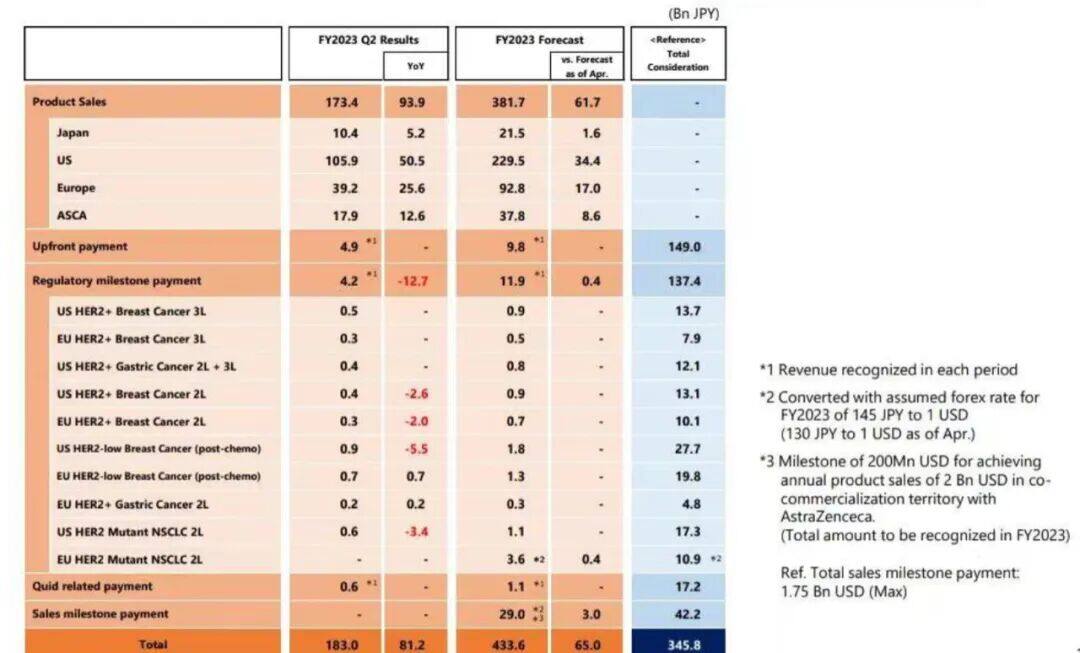
Image source: Daiichi Sankyo official website
Beyond T-DXd, Daiichi Sankyo is accelerating the introduction of multiple ADC products into the Chinese market in collaboration with its partners. According to the CDE Drug Clinical Trial Registry and Information Disclosure Platform, Daiichi Sankyo has over 30 ongoing global multicenter clinical trials, involving drugs such as DS-1062a, DS-7300a, U3-1402, and DS-8201a, covering various cancers including non-small cell lung cancer, breast cancer, and gastric cancer.
According to the information disclosed during the 2023 ESMO, based on the positive results of two Phase III studies, TROPION-Breas01 and TROPION-Lung01,Daiichi Sankyo and its partners are actively initiating the regulatory submission process for Dato-DXd worldwide. Similarly, for HER3-DXd, based on information disclosed during the 2023 WCLC, Daiichi Sankyo plans to submit a marketing application to the FDA in the second half of fiscal year 2023 for HER3-DXd as a third-line treatment for locally advanced or metastatic NSCLC with EGFR mutations, aiming to become the world's first approved HER3-targeted drug.Believe that with the cooperation of Daiichi Sankyo with two major pharmaceutical giants, AstraZeneca and MSD, as well as the acceleration of its research and development in China, these two new products will also benefit Chinese patients more quickly.
As a hot track in the capital winter, the transaction amount in the ADC field has exceeded 100 billion US dollars in recent years. When global pharmaceutical giants such as AstraZeneca, Merck, Pfizer, GSK, and BMS have successively invested heavily in the ADC track, it marks that the global ADC competition has just begun.
Daiichi Sankyo, as the leading pioneer in the global ADC field, has formed an ADC portfolio based on its DXd-ADC technology platform. Through strong collaborations with AstraZeneca and Merck, it is set to unlock unlimited possibilities for the global ADC landscape.