
Home GSK Returns to CIIE with Innovative Pipeline, Accelerating Access to Multiple Health Solutions in China

GSK Returns to CIIE with Innovative Pipeline, Accelerating Access to Multiple Health Solutions in China

Nov 06, 2023 11:29 CST Updated 11:29
GSK

Pharmaceutical R&D Manufacturer

On November 6, the booth of GlaxoSmithKline PLC. (hereinafter referred to as "GSK") at the 6th China International Import Expo (hereinafter referred to as "CIIE") officially opened. As a world-leading biopharmaceutical company, GSK has once again attended the CIIE.
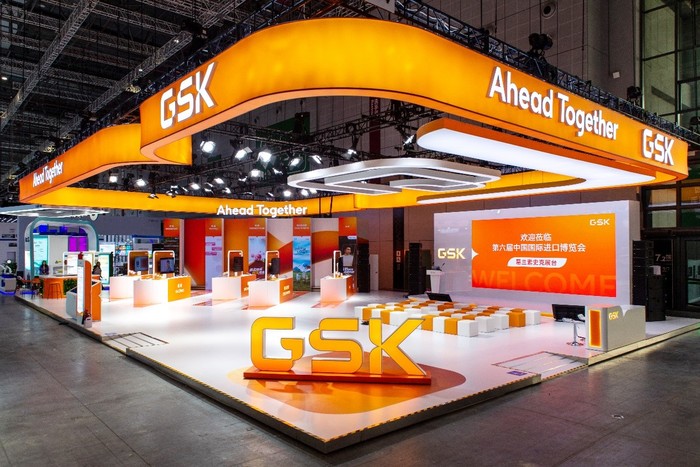
GSK Booth at the 6th China International Import Expo

At this year's CIIE, GSK showcased its significant progress and innovative R&D capabilities across four core therapeutic areas: infectious diseases, immunology/respiratory diseases, oncology, and HIV. Meanwhile, during the CIIE, GSK also collaborated with external stakeholders to discuss plans for a healthcare "community" and explore best practices to deliver transformative health impacts for patients and the public in China.

Qi Xin, Vice President of GSK and General Manager of China

GSK Vice President and General Manager of China, Qi Xin, stated that China is one of the most important strategic markets for GSK globally. In recent years, GSK has continued to increase its investment in China. In 2022, GSK China's brand-new headquarters office was put into use in Qiantan, Shanghai; GlaxoSmithKline Enterprise Management Co., Ltd. was approved by the Shanghai Municipal Commission of Commerce and recognized as a "Regional Headquarters of a Multinational Corporation." Since then, GSK’s two major functional centers in Pudong – the GSK China R&D Center and the national commercial operations center – have formed a synergy to comprehensively enhance the capacity of GSK’s China headquarters.

In terms of products, in recent years, GSK has accelerated the introduction of innovations in multiple key areas, launching nearly 20 innovative vaccines and drugs in China, including several blockbuster products with breakthrough therapies, while continuously expanding new indications. Qi Xin introduced that GSK is also actively exploring new cooperation models in medical pilot zones such as Boao Lecheng in Hainan, the Guangdong-Hong Kong-Macao Greater Bay Area, and the Tianjin Airport Free Trade Zone, while continuing to expedite the entry of more innovative achievements into China. It is expected that within the next three years, GSK China will launch over five new products or new indications.

According to reports, at this year’s CIIE, GSK will showcase several innovative products across four core therapeutic areas. In the HIV field, the first complete HIV-1 long-acting injectable treatment regimen recently approved in China — Cabotegravir Injection (Vocabria) combined with Rilpivirine Injection (Rekambys) — will make its debut in China. This is also the first long-acting injectable HIV treatment regimen in China, which can replace daily oral medications and allow for once-monthly or once-every-two-months dosing, greatly improving patient compliance and convenience. Meanwhile, the future potential approval of China's first long-acting HIV pre-exposure prophylaxis (PrEP) drug will also mark its "first appearance" on the CIIE exhibition stage.

In the field of vaccines, Shingrix, the world's first recombinant zoster vaccine that has won the "Prix Galien Award" three times, will continue to appear at the CIIE. Different from previous years, the latest research data of Shingrix this year shows that it has 100% protective efficacy for adults aged 50 and above in mainland China, further proving that it can provide highly effective protection. In addition, in terms of HPV vaccines, in April this year, GSK's Cervarix (bivalent human papillomavirus vaccine) was fully implemented in China for the two-dose vaccination schedule applicable to girls aged 9-14, becoming the first imported HPV vaccine approved for this vaccination schedule in China. The two-dose vaccination can greatly enhance the convenience and coverage of vaccination.

In the respiratory field, biologics are a key focus for GSK. Nucala (mepolizumab), the world’s first targeted biologic approved for the treatment of adult eosinophilic granulomatosis with polyangiitis (EGPA) and a human anti-interleukin-5 (IL-5) monoclonal antibody, has been included in China's medical insurance catalog. In March this year, Nucala submitted a registration application for the indication of severe eosinophilic asthma and is expected to be approved in China in the coming months.

In the field of immunology, at this year's CIIE, GSK will continue to showcase Benlysta, the world's first biologic approved for both adult and pediatric systemic lupus erythematosus as well as adult lupus nephritis. Benlysta has been recommended by the 2023 authoritative international guidelines KDIGO and EULAR as the new standard for treating systemic lupus erythematosus and lupus nephritis.

Ji Naxin, Vice President of GSK and Head of Clinical R&D in China

Behind the continuous introduction of significant innovative products at the CIIE for many years lies GSK's unique "three-horse carriage" strategy in innovation and R&D. According to Ji Naxin, Vice President of GSK and Head of Clinical R&D in China, the so-called "three-horse carriage" of GSK’s R&D refers to science, technology, and talent.

Scientifically, GSK focuses on the development of innovative products with the potential to be first-in-class or best-in-class in their therapeutic fields; technologically, it makes full use of the latest technologies such as virtual digital technology and biostatistics to minimize the number of participants, deliver the most favorable research outcomes, and accelerate the transition of an innovative product from research and development to clinical application at the fastest possible pace, benefiting patients and the public.

In addition, GSK places high importance on the localization of international talent and the internationalization of local talent. On one hand, it introduces the advanced advantages of international talent in global management concepts and technology into China, while on the other hand, it fully leverages the understanding and practical experience of local talent in the Chinese market and operations. By integrating the two, it helps GSK rapidly enhance its local research capabilities and management abilities.

Ji Naixin also stated that, building on the foundation of these "three pillars," GSK’s innovative R&D strategy primarily focuses on genomics technology. This allows for a better understanding of the factors causing diseases, thereby forming more effective approaches to disease prevention and treatment. At the same time, based on clinical immunology, the treatment goal for patients is elevated from "improvement" to "cure," striving to achieve both symptomatic and fundamental treatment. Even for some diseases that cannot be permanently cured, at least long-term remission can be reached, thereby positively impacting the health systems of individuals, society, and the country.

Specifically, in China, Ji Naxin introduced that GSK's R&D center located in Shanghai is the first R&D center established by GSK outside Europe and America. GSK has also collaborated with Tsinghua University to establish the "Beijing Institute of Infectious Diseases and Public Health," focusing on research and drug development in the field of infectious diseases.

In fact, local cooperation has always been an important strategy for GSK in China. For instance, in addressing one of the key issues under "Healthy China 2030" — tuberculosis (TB), GSK leverages its existing products for TB treatment and its pipeline of TB vaccines under development to implement an integrated "medical prevention and treatment" approach in TB control and prevention. At the same time, GSK actively explores a research and development model tailored to China’s product pipeline, which includes both introducing global innovations into China and helping local Chinese enterprises expand internationally.

In October this year, GSK entered into an exclusive vaccine strategic partnership with ZF Bio, to jointly promote GSK's recombinant shingles vaccine, Shingrix, in China in the future. By combining the scale and professional advantages of the two companies, this strategic partnership will significantly improve the accessibility of Shingrix in China, supporting the rapidly growing population in need of vaccines and potential new indications in the future. The strategic cooperation also includes matters related to the potential joint development and commercialization in China of GSK’s respiratory syncytial virus (RSV) vaccine for adults aged 60 years and above. In addition, GSK has recently reached a cooperation with Hansoh Pharma to help its innovative products achieve "going global."

In addition to product-related collaborations with local enterprises in China, GSK has also established a series of cooperation projects with multiple institutions and organizations, such as the China Medical Health Development Foundation, the China Association for Geriatric Health Care, the Jiangsu Preventive Medicine Association/Jiangsu Maternal and Child Health Research Society, and the China STD & AIDS Prevention and Control Association. These efforts continuously support healthy aging, promote high-quality development of the health industry, and contribute to building a global community of health for humanity.

At this year's CIIE, GSK will also sign a memorandum of cooperation with the Chinese Health Promotion and Education Association to jointly enhance women's awareness of cervical cancer prevention and control, explore a联动cooperation model for primary and secondary prevention of cervical cancer in urban communities, and create an innovative model of medical and preventive integration.

On November 6, the exhibition booth of GlaxoSmithKline PLC. (hereinafter referred to as "GSK") officially opened at the 6th China International Import Expo (hereinafter referred to as "CIIE"). As a global leading biopharmaceutical company, GSK has once again fulfilled its commitment to participate in the CIIE.

GSK Booth at the 6th China International Import Expo

At this year's CIIE, GSK comprehensively showcased its significant progress and innovative R&D capabilities in four core therapeutic areas: infectious diseases, immunology/respiratory diseases, oncology, and HIV. Meanwhile, during the CIIE, GSK also collaborated with external stakeholders to discuss plans for a health "community" and explore best practices to deliver transformative health impacts for patients and the public in China.

Qi Xin, Vice President of GSK and General Manager of China

GSK Vice President and General Manager of China, Qi Xin, stated that China is one of the most important strategic markets for GSK globally. In recent years, GSK has continued to increase its investment in China. In 2022, GSK China's new headquarters office was put into use in Qiantan, Shanghai; GlaxoSmithKline Enterprise Management Co., Ltd. was approved by the Shanghai Municipal Commission of Commerce and recognized as a "Regional Headquarters of a Multinational Corporation." Since then, GSK’s two major functional centers in Pudong—the GSK China R&D Center and the national commercial operations center—have formed a synergy, comprehensively enhancing the capacity of GSK’s China headquarters.

On the product front, in recent years, GSK has accelerated the introduction of innovations in multiple key areas, launching nearly 20 innovative vaccines and drugs in China, including several blockbuster products with breakthrough therapies, while continuously expanding new indications. Qi Xin introduced that GSK is also actively exploring new cooperation models in medical pilot zones such as Boao Lecheng in Hainan, the Guangdong-Hong Kong-Macao Greater Bay Area, and the Tianjin Airport Free Trade Zone, and continuing to expedite the entry of more innovative achievements into China. It is expected that within the next three years, GSK China will launch more than five new products or new indications.

According to reports, at this year's CIIE, GSK will showcase several innovative products across four core therapeutic areas. In the HIV field, the first complete long-acting injectable treatment regimen for HIV-1 recently approved in China — Cabotegravir Injection (Vocabria) combined with Rilpivirine Injection (Rekambys) — will make its debut in China. This is also the first long-acting injectable HIV treatment regimen in China, which can replace daily oral medications, allowing for once-monthly or once every two months administration, greatly improving patient compliance and convenience. Additionally, the future potential approval of China’s first long-acting HIV pre-exposure prophylaxis (PrEP) drug will also have its "first appearance" on the CIIE exhibition stand.

In the field of vaccines, Shingrix, the world's first recombinant zoster vaccine which has won the "Prix Galien Award" three times, will continue to appear at the CIIE. Different from previous years, the latest research data of Shingrix this year shows that it has 100% protective efficacy for adults aged 50 and above in mainland China, further proving that it can provide highly effective protection. In addition, regarding HPV vaccines, in April this year, GSK’s Cervarix (bivalent human papillomavirus vaccine) was fully implemented in China for a two-dose vaccination schedule applicable to girls aged 9-14, becoming the first imported HPV vaccine approved for this vaccination schedule in China. The two-dose schedule can greatly improve the convenience and coverage of vaccination.

In the respiratory field, biologics are a key focus for GSK. Nucala (mepolizumab), the world’s first targeted human anti-interleukin-5 (IL-5) monoclonal antibody biologic approved for the treatment of adult eosinophilic granulomatosis with polyangiitis (EGPA), has been included in the National Reimbursement Drug List (NRDL). In March this year, Nucala submitted a registration application for the indication of severe eosinophilic asthma and is expected to be approved in China in the coming months.

In the field of immunology, at this year's CIIE, GSK will continue to showcase Benlysta, the world's first biologic approved for both adult and pediatric systemic lupus erythematosus as well as adult lupus nephritis. Benlysta has been recommended by the 2023 authoritative international guidelines KDIGO and EULAR as the new standard for treating systemic lupus erythematosus and lupus nephritis.

Ji Naxin, Vice President of GSK and Head of Clinical R&D in China

Behind the continuous introduction of significant innovative products at the CIIE for many years lies GSK's unique "three-horse carriage" strategy in innovation and R&D. According to Ji Naxin, Vice President of GSK and Head of Clinical R&D in China, the so-called "three-horse carriage" of GSK's R&D refers to science, technology, and talent.

Scientifically, GSK focuses on developing innovative products with the potential to be first-in-class or best-in-class in their therapeutic areas; technologically, it fully utilizes the latest technologies such as virtual digital technology and biostatistics to minimize the number of participants, deliver the most favorable study outcomes, and accelerate the transition of an innovative product from research and development to clinical application, benefiting patients and the public.

In addition, GSK places high importance on the localization of international talent and the internationalization of local talent. On one hand, it introduces the advanced advantages of international talent in global management concepts and technology into China, while on the other hand, it fully leverages the understanding and practical experience of local talent in the Chinese market and operations. By blending the two, GSK can rapidly enhance its local research capabilities and management abilities.

Ji Naixin also stated that, building on the foundation of these "three pillars," GSK's innovative R&D strategy focuses heavily on genomics technology to better understand the factors causing diseases, thereby forming more effective approaches to disease prevention and treatment. At the same time, based on clinical immunology, the treatment goal for patients is elevated from "improvement" to "cure," striving to achieve both symptomatic and fundamental treatment. Even for some diseases that cannot be permanently cured, long-term remission can at least be achieved, thereby positively impacting the health systems of individuals, society, and the country.

Specifically, in China, Ji Naxin introduced that the GSK R&D center located in Shanghai is the first R&D center outside Europe and America. GSK also collaborated with Tsinghua University to establish the "Beijing Institute of Infectious Diseases and Public Health," focusing on research and drug development in the field of infectious diseases.

In fact, local cooperation has always been an important strategy for GSK in China. For instance, in addressing one of the key issues under "Healthy China 2030" — tuberculosis (TB), GSK leverages its existing TB treatment products and its pipeline of TB vaccines under development to implement an integrated "medical prevention and treatment" approach in TB control and prevention. At the same time, GSK actively explores a research and development model for its product pipeline in China, which includes both bringing global innovations into China and helping local Chinese companies expand internationally.

In October this year, GSK entered into an exclusive vaccine strategic partnership with ZF Bio, to jointly promote GSK's recombinant shingles vaccine, Shingrix, in China in the future. By combining the scale and professional strengths of both companies, this strategic partnership will significantly improve the accessibility of Shingrix in China, supporting a large and rapidly growing population in need of vaccines and potential new indications in the future. The strategic cooperation also includes matters related to the potential joint development and commercialization in China of GSK’s respiratory syncytial virus (RSV) vaccine for adults aged 60 years and above. In addition, GSK has recently partnered with Hansoh Pharma to help its innovative products achieve "going global."

In addition to product collaborations with local companies in China, GSK has also established a series of cooperation projects with multiple institutions and organizations such as the China Medical and Health Development Foundation, the Chinese Association of Geriatric Health Care, the Jiangsu Preventive Medicine Association/Jiangsu Maternal and Child Health Research Society, and the Chinese Association of STD/AIDS Prevention and Control. These initiatives continuously support healthy aging, promote high-quality development of the health industry, and contribute to building a global health community.

At this year's CIIE, GSK will also sign a Memorandum of Cooperation with the Chinese Health Promotion and Education Association to jointly enhance women's awareness of cervical cancer prevention and control, explore a collaborative model for primary and secondary prevention of cervical cancer in urban communities, and create an innovative model of medical and preventive integration.