

Pfizer Advances Oral Small Molecule GLP-1R Agonist PF-06954522 into Phase 1 Clinical Trial

Pfizer
Pharmaceutical R&D Developer

Nxera
Biopharmaceutical Manufacturer
Welcome to follow CDMO News

On November 6, 2023, Sosei Heptares (referred to as "Sosei") announced that its partnerPfizer has advanced the oral small molecule GLP-1 receptor agonist PF-06954522 to Phase 1 clinical trials.PF-06954522 was discovered through a multi-target research collaboration between Pfizer scientists and Sosei, utilizing Sosei's proprietary StaR® (Stabilized Receptor) technology.It is one of the key pipeline drugs in Pfizer's recently disclosed Q3 2023 performance.
About the Collaboration between Sosei and Pfizer
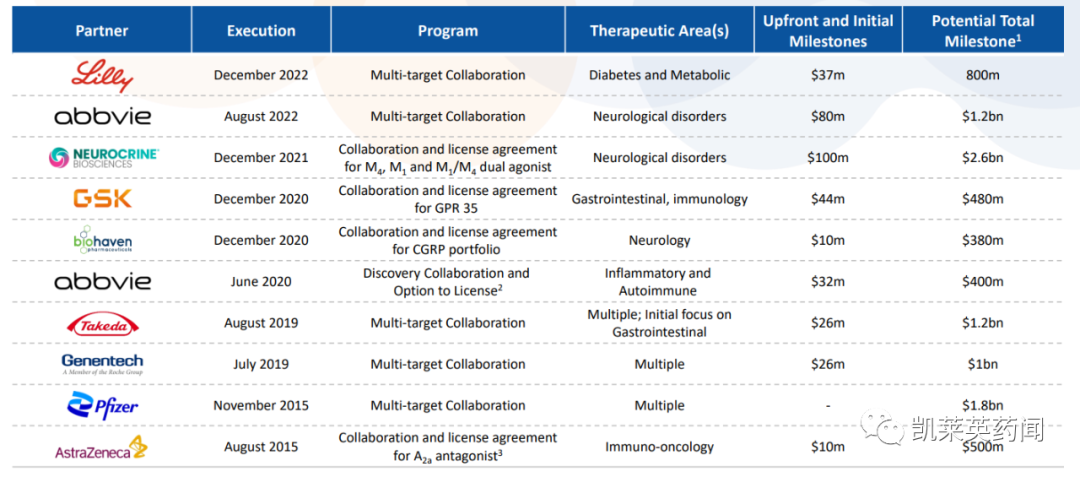
In November 2015, Sosei reached a potential collaboration with Pfizer across multiple therapeutic areas and multi-targets, and Heptares is eligible to receivePotential research, development, regulatory, and commercial milestone payments of up to $189 million per collaborative drug,And potential tiered royalties on net sales of any commercialized product.
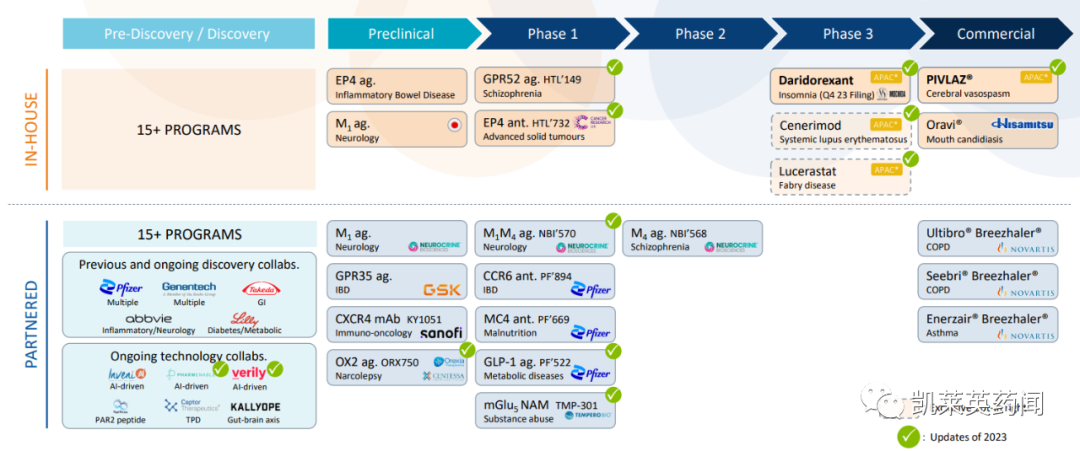
In addition to PF-06954522, the disclosed collaborative drugs also include lotiglipron, PF-07054894, PF-07258669, etc.
Lotiglipron(PF-07081532):It is the second-generation oral GLP-1R. In June 2023, Pfizer announced the discontinuation of the clinical development of lotiglipron due to pharmacokinetic data from drug interaction studies in Phase I clinical trials, as well as elevated patient transaminase levels (a key indicator for evaluating liver function) observed in ongoing Phase I and Phase II studies.
PF-07054894:It is a novel small-molecule antagonist of chemokine receptor 6 (CCR6), used for treating various autoimmune and inflammatory diseases. Studies show that the drug can block CCR6-mediated chemotaxis both in vitro and in vivo.
PF-07258669:PF-07258669 is a melanocortin-4 receptor (MC4R) antagonist used for the treatment of anorexia; the compound optimizes MC4R activity and ADME properties while avoiding hERG-active metabolites observed in previous development series through conformational restriction with a spiro ring. Studies have shown that PF-07258669 exhibits significant efficacy in a rat model of cachexia in elderly animals, and Phase I clinical trials are currently being conducted by the company in the United States and Belgium.
About Sosei
Sosei, focusing on discovering and early development opportunities with its proprietary GPCR-targeted StaR technology and structure-based drug design platform, is advancing a broad and deep pipeline of new drugs across multiple therapeutic areas, including neurology, immunology, gastroenterology, and inflammatory diseases.
Its proprietary StaR technology and structure-based drug design platform are currently the only ones capable of removing GPCRs from the cell membrane while preserving their original three-dimensional structure. This provides significant opportunities for the generation of small molecules, peptides, and therapeutic antibodies, enabling the discovery and design of highly specific, high-affinity GPCR-targeted drug candidates.
In addition to Pfizer, Sosei has reached multiple collaborations with several MNCs including Eli Lilly, AbbVie, GSK, and AstraZeneca.
About Small Molecule GLP-1R
Peptides are prone to degradation in the intestinal environment, and large molecules encounter permeability issues on the gastrointestinal epithelium. Therefore, compared to injectable formulations, oral peptide formulations require specific adjustments in design, including structural modifications for enhanced absorption, addition of protective agents to inhibit degrading enzyme activity, and coordination with drug delivery devices, making their design and manufacturing process more complex. In contrast, small-molecule chemical drugs have certain advantages in terms of stability and pharmacokinetics.
Specific advantages include:
High oral bioavailability, for patients with chronic diseases such as diabetes and obesity, oral administration can significantly improve compliance.
The production cost of small-molecule drugs is much lower than that of biotechnological products, and the production process is relatively mature.
Small-molecule GLP-1 needs to improve in terms of safety. Peptides are usually derived from endogenous substances, which are molecules naturally produced by the body, such as glucagon, so their safety is relatively controllable.
From a global R&D perspective, it is extremely rare for peptide pipeline products to fail to pass Phase I clinical trials; whereas small molecule drugs are typically designed from scratch, and their potential reactions within the human body remain unknown.
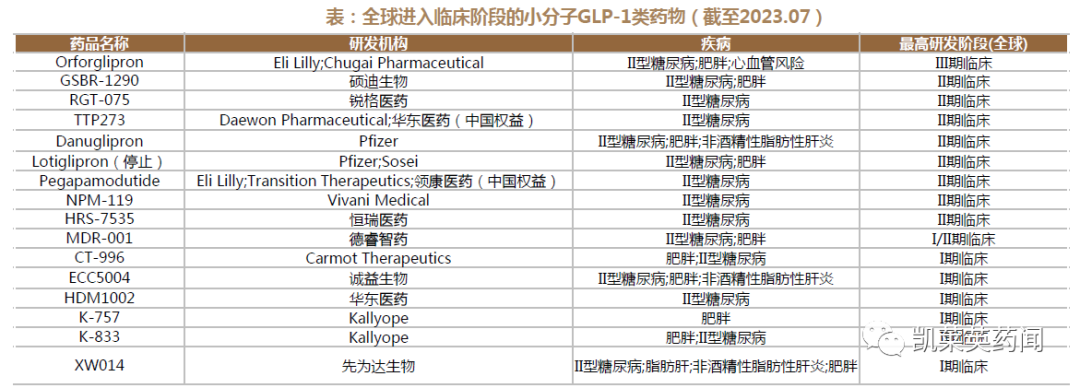
Currently, small-molecule GLP-1 drugs in the R&D pipelines of leading global pharmaceutical companies includePfizer's Danuglipron and Eli Lilly's Orphorglipron.
Danuglipron is in Phase I clinical trials for the indication of obesity and in Phase II for diabetes. In May 2023, the Phase 2b clinical data of danuglipron for treating diabetes was published in the JAMA journal. The study included 411 patients with type 2 diabetes, divided into five dose groups: 2.5mg, 10mg, 40mg, 80mg, 120mg, all administered twice daily, along with a placebo group. After 16 weeks of treatment, the 120mg dose group showed a reduction of 1.16% in HbA1c and a weight loss of 4.17kg compared to the placebo group. The drug was generally well-tolerated.
Orforglipron Clinical Trials for Obesity Currently in Phase IIIIn June 2023, Eli Lilly and Company announced the Phase II data for Orforglipron, showing that adults who were obese or overweight experienced an average weight loss of 14.7% at 36 weeks. At the primary endpoint of 26 weeks, participants using Orforglipron (12 mg/24 mg/36 mg/45 mg) demonstrated statistically significant dose-related weight reductions across all doses, ranging from 8.6% (19.8 pounds) to 12.6% (29.3 pounds), compared to a weight reduction of 2.0% (4.6 pounds or 2.1 kg) in the placebo group. Additionally, participants using Orforglipron continued to lose weight up to 36 weeks.
In addition,Multiple pharmaceutical companies in China have also made arrangements in the GLP-1 target.: GSBR-1290 from Shuo Di Bio, RGT-075 from Rui Ge Pharma, TTP273 from Hua Dong Medicine, and HRS-7535 from Heng Rui Medicine have all entered Phase II clinical trials. Companies that have also stepped into the clinical stage include De Rui Zhi Yao, Cheng Yi Bio, and Xian Wei Da Bio.
As of June 27, 2023, there are already 16 small-molecule oral formulations globally that have entered the clinical stage.
References
1. Company Official Website
2. BOC Securities, Deutsche Bank Securities


"Views"Click once