

Bristol Myers Squibb Acquires First-in-Class Antibody-Conjugated Protein Degrader ORM-6151 for $180M
Bristol-Myers Squibb
Biopharmaceutical and Nutritional Product R&D and Sales
Orum Therapeutics
Cancer Treatment Drug Developer
▎WuXi
Edited by Kant Content Team
Orum Therapeutics today announced that it has reached a definitive agreement with Bristol Myers Squibb. Under the agreement, Bristol Myers Squibb will acquire Orum's investigational potential "first-in-class" antibody conjugated protein degrader project ORM-6151.
According to the agreement, Bristol-Myers Squibb has acquired the ORM-6151 project and paid Orum Therapeutics a $100 million upfront payment. Additionally,Orum Therapeutics is also expected to receive additional payments based on the achievement of project milestones, with the total transaction value potentially reaching $180 million.
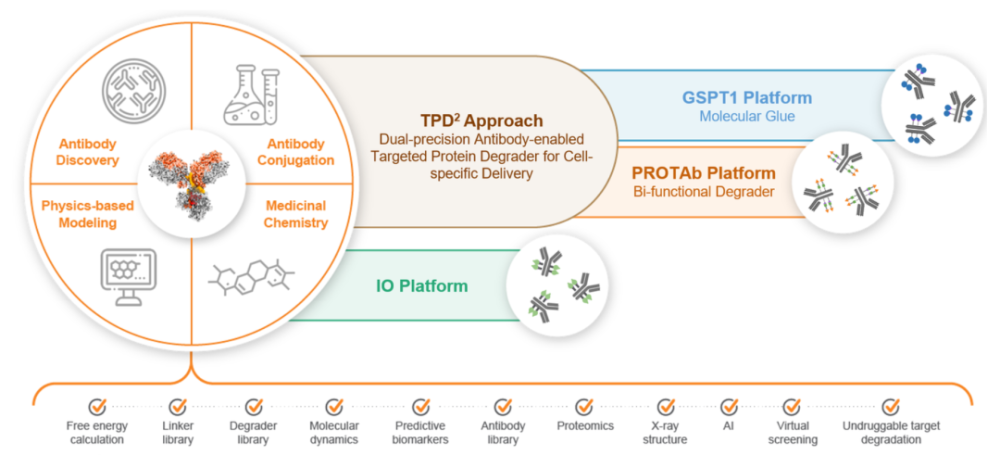
▲Orum's Drug Discovery Platform (Source: Orum Therapeutics Official Website)
ORM-6151 is a groundbreaking CD33-targeting antibody conjugated GSPT1 degrader, which has been authorized by the U.S. FDA for Phase 1 clinical trials to treat acute myeloid leukemia and high-risk myelodysplastic syndrome.ORM-6151, developed through Orum's GSPT1 platform, utilizes an innovative dual-precision targeted protein degradation (TPD²) approach. This method combines novel protein degraders with antibody-mediated precise delivery to target and treat cancer. The molecular glue degraders designed by Orum selectively degrade target proteins within cancer cells via the E3 ubiquitin ligase pathway. When combined with antibodies, these degraders can precisely target cancer cells, disrupt the GSPT1 protein, and induce cell death.
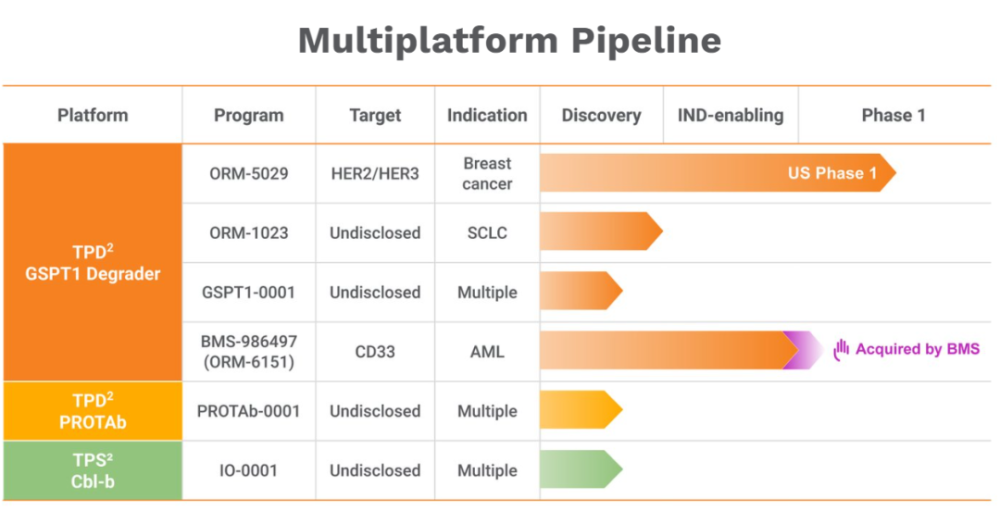
▲Orum Development Pipeline Diagram (Image Source: Orum Therapeutics Official Website)
In an exclusive interview with WuXi AppTec earlier this year, Dr. SJ Lee, President and CEO of Orum Therapeutics, mentioned that one of the current challenges for the entire industry is developing drugs targeting “undruggable” targets. Orum is leveraging its TPD² platform to develop candidate drugs that specifically target these “undruggable” targets in diseased cells, aiming to enhance efficacy and safety while overcoming the inherent challenges faced by small-molecule degraders. For more details from the interview, please refer to WuXi AppTec’s third post today.

Bristol-Myers Squibb has been actively expanding its Antibody-Drug Conjugate (ADC) pipeline recently.For example, in April this year, the company invested approximately US$23 million in Tubulis, headquartered in Munich, to develop ADCs targeting solid tumors. Last year, the company expanded its ADC portfolio through the acquisition of TurningPoint Therapeutics. In 2021, Eisai and Bristol-Myers Squibb jointly announced a global collaboration agreement worth up to US$2.45 billion to co-develop and promote the investigational antibody-drug conjugate MORAb-202 targeting folate receptor alpha (FRα).