

AstraZeneca, a CIIE 'Ever-Present' Participant, Doubles Down on China Investment to Build Global Supply Chain and Drive Pharmaceutical Innovation

AstraZeneca
Biopharmaceutical Manufacturer

The "Oriental Promise" cherished by global merchants has once again brilliantly commenced. From November 5th to 10th, the 6th China International Import Expo (CIIE) was successfully held in Shanghai as scheduled. As a global biopharmaceutical enterprise that has continuously participated in the CIIE for six years, AstraZeneca made a dazzling appearance with a 1,000-square-meter booth themed "Thirty Years of Excellence – Advancing in China, for China, benefiting the world."
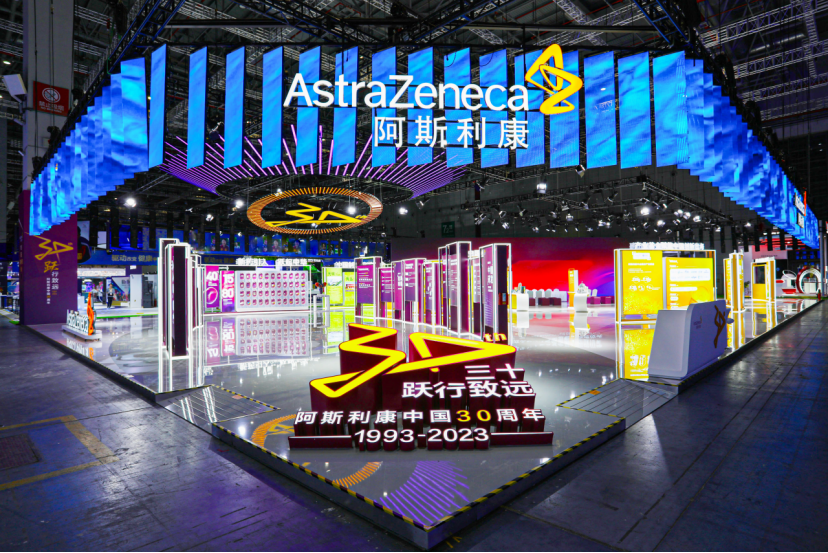
Leon Wang, Executive Vice President of AstraZeneca Global and President of International Business & China, stated that there are several unchanging main threads for AstraZeneca's participation in the CIIE. "First, the products exhibited each year will continuously improve and get better. Second, cooperation with major economic zones across China will continue, including the Beijing-Tianjin-Hebei region, the Yangtze River Delta, the Greater Bay Area, and the Chengdu-Chongqing dual-city economic circle; this year, we have also expanded to Shandong's Qingdao and the Yellow River basin, closely following the country’s steps to promote regional cooperation. Third, we co-exhibit with partners in the ecosystem, advancing full disease management by therapeutic areas, and are currently extending into early-stage R&D, strengthening collaboration with innovative pharmaceutical companies in China."
Bring Chinese Innovation to the World
AstraZeneca announced new progress in its investment and layout in China at this year's CIIE. On the basis of the 700 million yuan Qingdao aerosol production base, it will further invest more than 400 million US dollars in Wuxi and Taizhou to build a world-class production base in China.
So far this year, AstraZeneca has announced the expansion of its investment in China twice, with a total investment of 700 million US dollars. This includes the 450-million-US-dollar AstraZeneca inhaler production base project officially settled in Qingdao High-tech Zone in March, followed by an additional investment of 250 million US dollars in August to increase filling capacity and add a new inhaler packaging production line, promoting the Chinese factory to become an important part of AstraZeneca's global pharmaceutical supply chain.
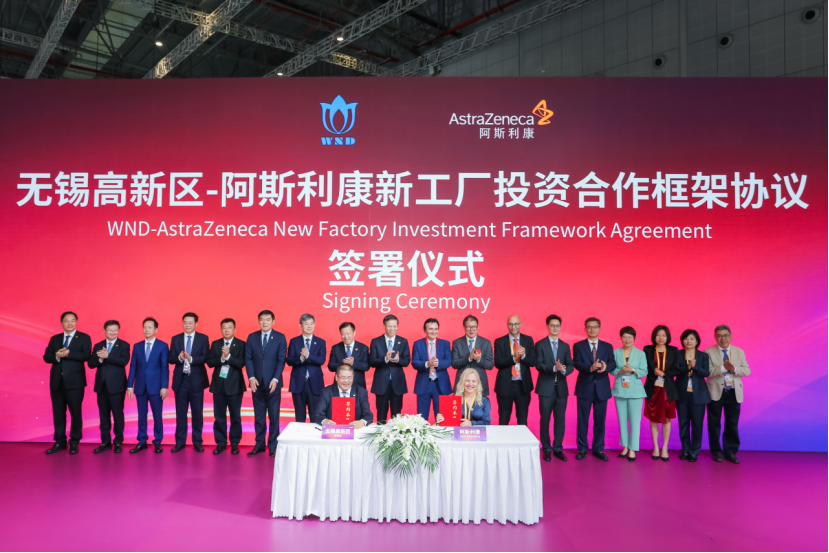
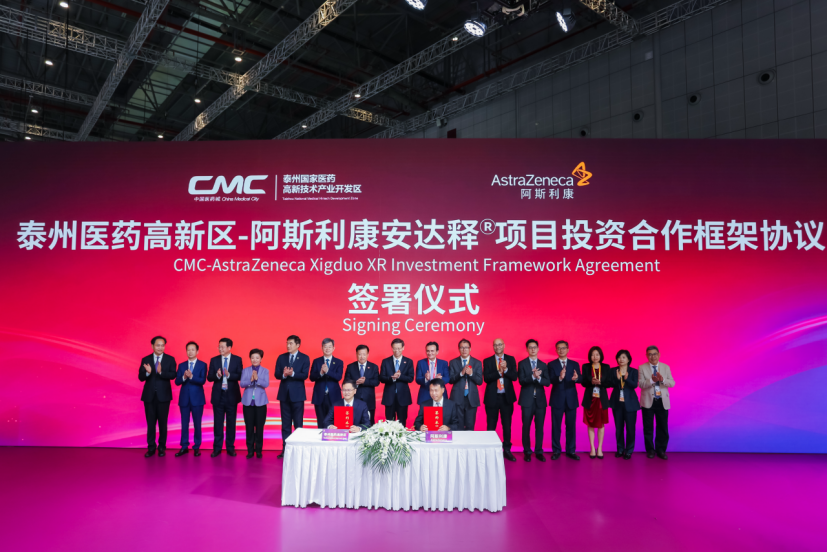
At this year's CIIE, AstraZeneca also signed a series of agreements with Jiangsu Province, including plans to invest nearly US$400 million in building a new small molecule drug factory in Wuxi. It is expected that small molecule drugs to be launched in China will be manufactured and packaged at the new Wuxi factory, supplying both the Chinese and overseas markets. AstraZeneca is also increasing its investment to build a new production line for Forxiga, and on the basis of last year’s construction of the Farxiga production line, it continues to develop Taizhou into a global production base for AstraZeneca's diabetes products. After production begins, the Taizhou manufacturing and supply base is expected to reach an annual output value of 10 billion yuan. In the industry's view, AstraZeneca's further investment and expansion will significantly enhance the global supply capabilities of its production bases in China.
In addition, AstraZeneca has also increased its investment in local R&D layout, accelerated the promotion of China's innovation to go global, and further achieved two-way empowerment between China and the world.
In Wang Lei's view, the next decade for AstraZeneca will see a "fusion of Eastern and Western innovation" with China. "This is our idea: to closely embrace Chinese innovation, combining international and Chinese innovation to complement each other’s strengths and achieve a win-win outcome."
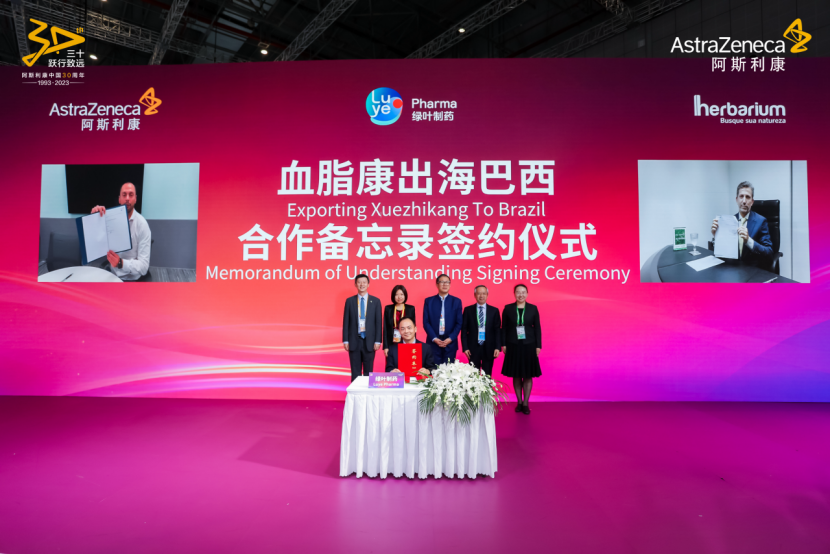
As Chinese innovative pharmaceutical companies continue to rise, the cooperative relationships between multinational pharmaceutical enterprises and them have become increasingly close. The collaboration between AstraZeneca and its local partners on innovative research and development is a case in point. At this year's CIIE, AstraZeneca partnered with Ascentage Pharma to jointly develop a registration clinical study for first-line treatment of chronic lymphocytic leukemia. It also signed a cooperation project with CSPC Pharmaceutical Group for confirmatory research on lung cancer targeted combination therapy. Additionally, AstraZeneca, together with BeiDa WeiXin Biotechnology Co., Ltd. under Luye Pharma Group and Brazil’s Herbarium company, signed a memorandum of strategic cooperation to jointly promote the registration and commercialization of Lipidcare in Brazil, achieving the "going global" development of local innovations.
In strengthening its own R&D capabilities, AstraZeneca has officially announced several plans. Among them, the AstraZeneca Global R&D China Center has reached another milestone, with plans to establish the "AstraZeneca Global R&D Hong Kong Sub-Center" in Hong Kong. The Chinese branch of AstraZeneca’s Global Evidence Center, in collaboration with Peking University Health Science Center, launched a Real-World Evidence (RWE) Joint Laboratory. Over the next three years, this initiative will promote the application of standardized real-world data models across healthcare and various disease fields, organize and carry out a series of research projects supporting clinical decision-making, digitalization of public health, chronic disease and cancer screening, as well as patient management, facilitating the rapid development of evidence-based medicine and clinical practice transformation in China.
Wang Lei admitted, "Generally, multinational companies only have their China headquarters, but AstraZeneca China is also the headquarters for AstraZeneca's developing markets. Some multinational enterprises in China only focus on commercialization, rarely setting up manufacturing and R&D. However, we have laid out our R&D, production, and commercialization, which is the biggest difference. We have even placed our global strategic R&D cooperation in China. AstraZeneca is a company that operates globally from top to bottom and is deeply rooted in the local Chinese market."
Two More Global Innovative Drugs Make Their Debut
This year marks the 30th anniversary of AstraZeneca's entry into the Chinese market. At this year's CIIE, AstraZeneca specially set up an "Innovative Drug Wall" to showcase over 40 innovative drugs introduced to China since 1993. This includes two globally innovative drugs that made their CIIE debut: Andas (Dapagliflozin Metformin Sustained-Release Tablets) and Koselugo (Selumetinib Sulfate Capsules), as well as several other innovative drugs like Orpathia (Savolitinib Tablets) that have been successfully launched through collaborations at previous CIIE events.
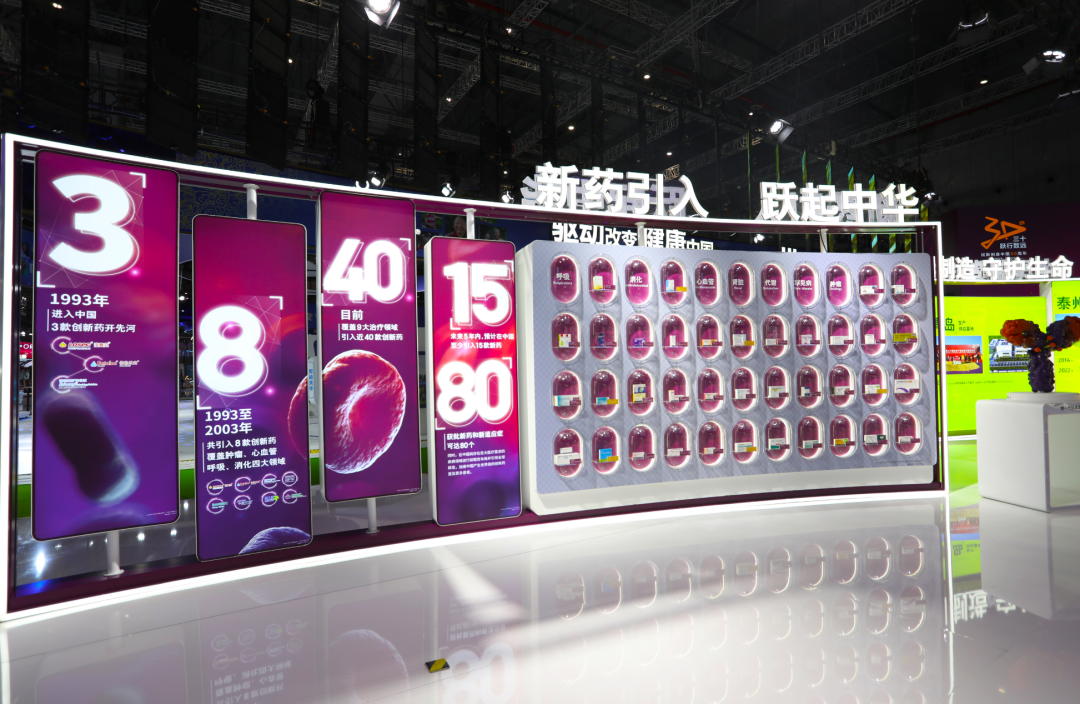
The CIIE has become an important window for China to build a new development pattern and an important platform for promoting high-level opening-up. With the powerful "spillover effect" of the CIIE, AstraZeneca has continuously accelerated the benefits of innovative achievements for Chinese patients in recent years, and several innovative drugs previously exhibited at the CIIE have made positive progress in China.
At the same time, AstraZeneca is also cooperating with the Guangdong government to accelerate the access of the oncology drug Imjudo and the rare disease drug Strensiq in the Greater Bay Area.Thanks to the "Guangdong-Hong Kong Medicine and Device Pilot Policy," the rapid access of these two drugs will greatly enhance the early availability of clinically urgent medicines, diversify medical institutions' approaches to disease treatment, and bring hope to patients in need.

Looking back at the development over the past three decades, Wang Lei stated: "In the first decade, multinational companies mainly focused on establishing representative offices and bringing drugs into China through trade imports, capitalizing on the Chinese market. The first decade of the 2000s was about setting up factories, as China positioned itself as a manufacturing hub during that time—AstraZeneca established two factories in Wuxi and Taizhou. In the most recent decade, with the improvement in people's living standards, the country has hoped to align with global new drug developments for major diseases. As such, we have increasingly emphasized research and innovation. Currently, there are over 180 projects in China’s R&D pipeline, with key projects achieving a 100% synchronization rate in global R&D. Moving forward, we will continue to accelerate innovation, actively promote the implementation of locally developed innovations in China, and help them go global."
Help Achieve the "Dual Carbon" Goals
In response to the "Dual Carbon" goals proposed by the Chinese government, AstraZeneca is driving the implementation of multiple initiatives through this CIIE in areas such as "green" research and development, "green" production and supply, and "green" operations, outlining a sustainable future for the healthcare industry.
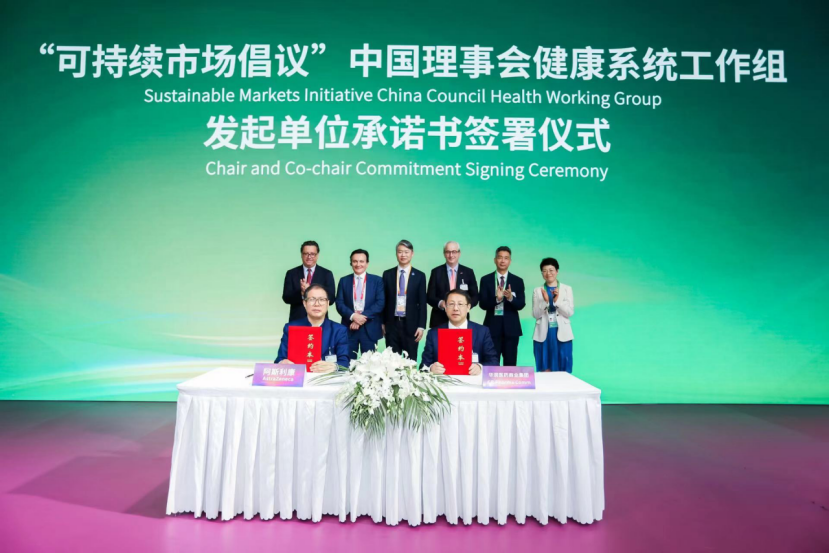
AstraZeneca and Sinopharm Group Jointly Chair the Newly Announced Health Systems Taskforce of the Sustainable Markets Initiative (SMI) China Council. The task force’s first group of member units covers 16 leading domestic and international pharmaceutical, healthcare, energy, and supply chain enterprises, with AstraZeneca and Sinopharm Group Co., Ltd. serving as co-chairs. This new coalition, composed of leading Chinese companies and the China branches of multinational corporations, is committed to jointly developing an action roadmap to accelerate the net-zero transition and sustainable development of China's healthcare system.
AstraZeneca will also sign a Memorandum of Understanding with CETC Intelligent, announcing the establishment of an end-user energy management system and a carbon footprint management platform to continuously improve the energy efficiency of parks and buildings.
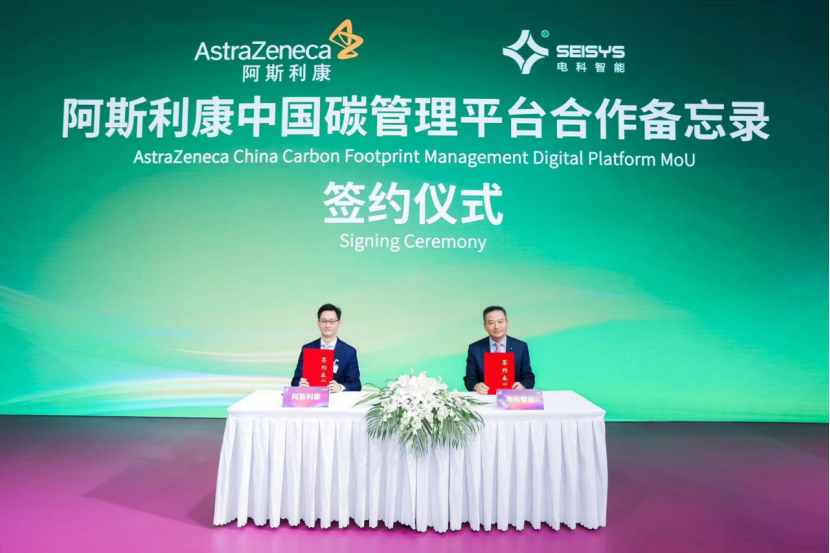
Wang Lei stated: "In response to the national green development strategy, AstraZeneca China will continue to take measures to reduce its own emissions, integrating the concept of sustainable development throughout our entire value chain from laboratory to patients. As the co-chair unit of the Health System Working Group of the 'Sustainable Market Initiative' China Council, AstraZeneca looks forward to collaborating with other leading companies to jointly accelerate China's green transformation. Through cooperation, we will contribute to the sustainable and healthy development of China's healthcare system and bring positive impacts globally."”
The CIIE this year is already the sixth session, and the industry has repeatedly witnessed the breakthroughs and transformations of multinational pharmaceutical companies in China. It can be seen that, as a leading multinational pharmaceutical company, AstraZeneca is calmly planning its certain future amid market uncertainties. As Wang Lei said: "The key to success or failure for becoming the largest multinational pharmaceutical enterprise in China lies in innovation. Every company has its strengths; our expertise lies in the fields of oncology and chronic diseases."Next, we are entering fields such as rare diseases and cell therapy. We will focus on our strengths, continue to enhance them, and work hand in hand with our partners to make substantial contributions to the sustainable development of healthcare."


www.yyjjb.com.cn
Insight into Industry Trends

"Pharmaceutical Economy Newspaper"
Academic Official Account
Focusing on the Frontiers of Oncology Academia

Terminal Official Account