

Global Gene Therapy Market Enters High-Growth Phase with 51 Approved Therapies Worldwide

Juventas
Innovative Cell Therapy Drug Developer
On November 8, the official website of China's National Medical Products Administration (NMPA) announced that Juventas’ CAR-T cell gene therapy drug, Nasekolumab Injection (formerly known as Hekolumab Injection), targeting CD19 has been approved for marketing in China. It is indicated for the treatment of adult relapsed or refractory B-cell acute lymphoblastic leukemia (r/r B-ALL). This is the first CAR-T therapy in China for this indication and also the first fully self-innovated CD19-targeted CAR-T product approved for marketing in China. (Full text link:Juventas' CAR-T Product "Nagiolone Injection" Approved for Marketing)。
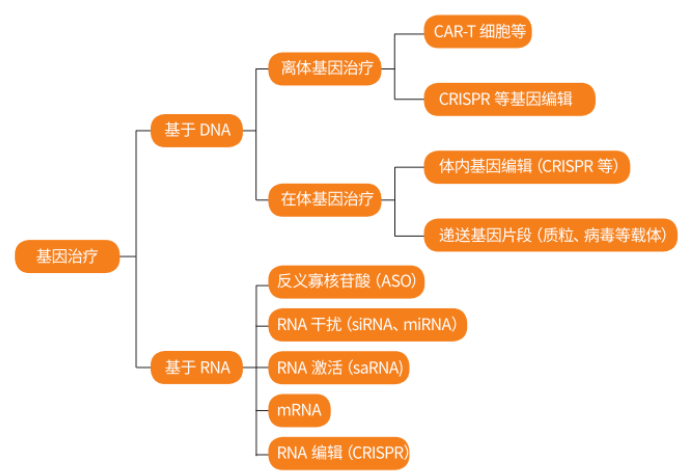
Genes are the basic hereditary units that control traits. Except for certain viruses whose genes are composed of RNA, the genes of most organisms are composed of DNA.Most diseases in organisms are triggered by the interaction of genes and the environment. Gene therapy can essentially cure or alleviate a variety of diseases, and it is considered a revolution in the fields of medicine and pharmacy.Broad SenseGene TherapyDrugs include DNA-based drugs (such as in vivo gene therapy drugs based on viral vectors, ex vivo gene therapy drugs, naked plasmid drugs, etc.) and RNA drugs (such as antisense oligonucleotide drugs, siRNA drugs, and mRNA gene therapy, etc.);Narrow SenseGene therapy drugs mainlyIncluding plasmid DNA drugs, viral vector-based gene therapy drugs, bacterial vector-based gene therapy drugs, gene editing systems, and ex vivo gene-modified cell therapy drugs, etc.
1. In Vitro Gene Therapy
(1)Strimvelis
Company: Developed by GlaxoSmithKline (GSK).
Time to market: Approved for marketing in the EU in May 2016.
Indications: For the treatment of severe combined immunodeficiency (SCID).
Note: The general process of this therapy is to first obtain the patient's own hematopoietic stem cells, expand and culture them in vitro, then use retroviruses to introduce functional ADA (adenosine deaminase) gene copies into the hematopoietic stem cells, and finally reinfuse the modified hematopoietic stem cells back into the patient’s body. Clinical results show that the 3-year survival rate of ADA-SCID patients treated with Strimvelis is 100%.
(2)Zalmoxis
Company: Produced by Italian MolMed company.
Time to Market: Received conditional marketing authorization from the EU in 2016.
Indications: For adjuvant treatment of the immune system in patients after hematopoietic stem cell transplantation.
Note: Zalmoxis is a retroviral vector-modified allogeneic T-cell suicide gene immunotherapy. This method uses a retroviral vector to genetically modify allogeneic T-cells, enabling the genetically modified T-cells to express the 1NGFR and HSV-TK Mut2 suicide genes. This allows for the use of ganciclovir to eliminate T-cells causing adverse immune reactions at any time, preventing the potential worsening of GVHD and providing protection for postoperative immune function reconstruction in haploidentical HSCT patients.
(3)Invossa-K
Company: Developed by TissueGene.
Time to Market: Approved for marketing in Korea in July 2017.
Indications: For the treatment of degenerative knee arthritis.
Note: Invossa-K is an allogeneic cell gene therapy involving human chondrocytes, where the allogeneic cells are genetically modified in vitro. After intra-articular injection, the modified cells can express and secrete transforming growth factor β1 (TGF-β1), thereby alleviating osteoarthritis symptoms. Clinical results show that Invossa-K significantly improves knee osteoarthritis. In 2019, its license was revoked by South Korean regulatory authorities because the manufacturer incorrectly labeled the ingredients used.
(4)Zynteglo
Company: Developed by the American company bluebird bio.
Time to Market: Approved for marketing in the EU in 2019, and approved by the FDA for marketing in the United States in August 2022.
Indications: For the treatment of transfusion-dependent β-thalassemia.
Note: Zynteglo is an ex vivo lentiviral gene therapy. This therapy uses a lentiviral vector to introduce functional copies of the normal β-globin gene (βA-T87Q-globin gene) into hematopoietic stem cells extracted from the patient. These genetically modified autologous hematopoietic stem cells are then reinfused into the patient. Once the patient has the normal βA-T87Q-globin gene, they may be able to produce normal HbAT87Q protein, which can effectively reduce or eliminate the need for blood transfusions. This is a one-time treatment designed to replace lifelong transfusions and medications, suitable for patients aged 12 years and older.
(5)Skysona
Company: Developed by the American company bluebird bio.
Time to Market: Approved for marketing in the EU in July 2021, and approved by the FDA for marketing in the U.S. in September 2022.
Indications: For the treatment of early cerebral adrenoleukodystrophy (CALD).
Note: Skysona gene therapy is the only approved one-time gene therapy for the treatment of early cerebral adrenoleukodystrophy (CALD). Skysona (elivaldogene autotemcel, Lenti-D) is a hematopoietic stem cell lentiviral ex vivo gene therapy. The general process of the therapy is as follows: autologous hematopoietic stem cells are extracted from the patient, genetically modified ex vivo via a lentiviral vector carrying the human ABCD1 gene, and then reinfused into the patient. It is used to treat patients under the age of 18 who carry an ABCD1 gene mutation and have CALD.
(6)Kymriah
Company: Developed by Novartis.
Time to market: Approved by the FDA in August 2017.
Indications: Treatment of precursor B-cell acute lymphoblastic leukemia (ALL) and relapsed or refractory DLBCL.
Note: Kymriah is a lentivirus-based ex vivo gene therapy drug. It is the world's first approved CAR-T therapy, targeting CD19 and utilizing the 4-1BB co-stimulatory factor. It is priced at $475,000 in the United States and $313,000 in Japan.
(7)Yescarta
Company: Developed by Kite Pharma, a subsidiary of Gilead (GILD).
Time to Market: Approved by FDA in October 2017;Fosun Kite fromKite PharmaIntroducing Yescarta technology, andAfter obtaining authorizationInProduced in China, its product Yikaida (Axicabtagene Ciloleucel Injection), onJune 2021In ChinaApproved for marketing.
Indications: For the treatment of relapsed or refractory large B-cell lymphoma.
Note: Yescarta is a retroviral ex vivo gene therapy, the second CAR-T therapy approved for marketing globally. It targets CD19 and uses the CD28 co-stimulatory factor. It is priced at $373,000 in the United States.
(8)Tecartus
Company: Developed by Gilead (GILD).
Time to market: Approved by the FDA in July 2020.
Indications: For the treatment of relapsed or refractory mantle cell lymphoma.
Note: Tecartus is an autologous CAR-T cell therapy targeting CD19, and it is the third CAR-T therapy to be approved for marketing globally.
(9)Breyanzi
Company: Developed by Bristol-Myers Squibb (BMS).
Time to Market: Approved by the FDA in February 2021.
Indications: Relapsed or Refractory (R/R) Large B-Cell Lymphoma (LBCL).
Note: Breyanzi is a lentivirus-based ex vivo gene therapy and the fourth CAR-T therapy approved for marketing globally, targeting CD19. The approval of Breyanzi marks a milestone for Bristol-Myers Squibb in the field of cellular immunotherapy. The drug was acquired through Bristol-Myers Squibb's $74 billion acquisition of Celgene in 2019.
(10)Abecma
Company: By Bristol-Myers Squibb (BMS) and Bluebird Bio(bluebird bio)Co-development.
Time to market: Approved for marketing by the FDA in March 2021.
Indications: Relapsed or refractory multiple myeloma.
Note: Abecma is a lentivirus-based ex vivo gene therapy, the world's first CAR-T cell therapy targeting BCMA, and the fifth CAR-T therapy approved by the FDA. The drug works by using lentivirus-mediated genetic modification to express chimeric BCMA receptors on the patient’s autologous T cells ex vivo. Before infusion of this cellular gene therapy, patients are pretreated with two compounds, cyclophosphamide and fludarabine, to eliminate unmodified T cells in the body, followed by reinfusion of the genetically modified T cells.Modified T CellsSeek and kill cancer cells expressing BCMA within the patient's body.
(11)Libmeldy
Company: Developed by Orchard Therapeutics.
Time to Market: Approved for marketing in the EU in December 2020.
Indications: For the treatment of metachromatic leukodystrophy (MLD).
Note: Libmeldy is a gene therapy based on lentiviral ex vivo gene-modified autologous CD34+ cells. Clinical data show that a single intravenous infusion of Libmeldy can effectively alter the course of early-onset MLD, while untreated patients of the same age develop severe motor and cognitive impairments.
(12) BeiNuoDa
Company: Developed by JW Therapeutics.
Time to Market: Officially approved by NMPA in September 2021.
Indication: Treatment of relapsed or refractory large B-cell lymphoma (r/r LBCL) in adult patients after two or more lines of systemic therapy.
Note: Relmacabtagene autoleucel is an anti-CD19 CAR-T gene therapy and also the core product of JW Therapeutics. It is the second CAR-T product approved in China. Besides relapsed/refractory large B-cell lymphoma, JW Therapeutics also plans to develop relmacabtagene autoleucel injection for treating various other indications, including follicular lymphoma (FL), mantle cell lymphoma (MCL), chronic lymphocytic leukemia (CLL), second-line diffuse large B-cell lymphoma (DLBCL), and acute lymphoblastic leukemia (ALL).
(13)CARVYKTI
Company: The first approved product from Legend Biotech.
Time to Market: Approved by the FDA for marketing in February 2022.
Indication: Treatment of relapsed or refractory multiple myeloma (R/R MM).
Note: CARVYKTI (Ciltacabtagene Autoleucel, abbreviated as Cilta-cel), is a CAR-T cell immunogene therapy with two B-cell maturation antigen (BCMA)-targeting single-domain antibodies. Data shows that CARVYKTI achieved an overall response rate as high as 98% in patients with relapsed or refractory multiple myeloma who had previously received four or more lines of therapy, including proteasome inhibitors, immunomodulatory agents, and anti-CD38 monoclonal antibodies.
(14)Ebvallo
Company: Developed by Atara Biotherapeutics.
Time to Market: December 2022European Commission (EC)Approved for marketing, as the world's first approved universal T-cell therapy.
Indications: As a single-agent treatment for Epstein-Barr virus (EBV)-associated post-transplant lymphoproliferative disease (EBV+ PTLD) in adult and pediatric patients over 2 years of age who have previously received at least one other drug therapy.
Remarks:Ebvallo is an allogeneic EBV-specificUniversal T-cell Gene TherapyIt targets and eliminates EBV-infected cells in an HLA-restricted manner. The therapy has been approved for marketing.Based on the results of the pivotal Phase 3 clinical trial, the results showed that:The ORR of the HCT group and SOT group was 50%. The complete response (CR) rate was 26.3%, and the partial response (PR) rate was 23.7%, with a median duration of response.The Time to Response (TTR) was 1.1 months. Among the 19 patients who achieved remission, 11 had a Duration of Response (DOR) exceeding six months. Additionally, in terms of safety, no adverse reactions such as Graft-versus-Host Disease (GvHD) or Ebvallo-related cytokine release syndrome occurred.
(15)Fokasun(Idecabtagene Vicleucel Injection)
Company: Jointly developed by Juventas and Innovent Biologics.
Time to Market: Approved for marketing by NMPA on June 30, 2023, as the third CAR-T therapy to be launched in China.
Indications: For the treatment of adult patients with relapsed or refractory multiple myeloma.
Note: Fokasun is a BCMA-targeted ex vivo gene therapy drug that modifies patients' autologous T cells using an engineered lentiviral vector. The drug's market approval was primarily based on the results of a Phase 1/2 registrational clinical study. According to the disclosed data, after receiving this therapy, patients with multiple myeloma who had undergone at least three prior lines of treatment demonstrated an overall response rate of 94.9% and a complete response/stringent complete response rate of 58.2%, showcasing strong efficacy.
(16)Naciorl Injection
Company: Developed by Juventas.
Time to Market: Approved for marketing by NMPA on November 8, 2023.
Indications: For the treatment of adult patients with relapsed or refractory B-cell acute lymphoblastic leukemia (r/r B-ALL).
Note: Naciaurol Cell Injection is an autologous CAR-T product based on a lentiviral vector. It features a globally unique CD19 scFv (HI19a) structure. As the first CAR-T product in China and the second globally for the treatment of adult acute lymphoblastic leukemia, it fills a gap in the field of cellular therapy for this disease in China.Demonstrated sustained high remission rates and good safety in pivotal clinical studies.
2. In Vivo Gene Therapy Based on Viral Vectors
(1) Gendicine/GenDex
Company: Developed by Shenzhen SiBono Company.
Time to Market: Approved for marketing in China in 2003.
Indications: Used for the treatment of squamous cell carcinoma of the head and neck.
Note: Gendicine/GenDost is a gene therapy drug with independent intellectual property rights owned by Shenzhen SiBiono GeneTech Co., Ltd. The drug consists of the normal human tumor suppressor gene p53 and a genetically engineered replication-deficient recombinant human adenovirus type 5. The former serves as the main structure responsible for the anti-tumor effect, while the latter mainly functions as a vector. The adenovirus vector carries the therapeutic gene p53 into the target cells, where it expresses the tumor suppressor gene p53. The expressed gene product can upregulate various anti-cancer genes and downregulate the activity of multiple oncogenes, thereby enhancing the body's tumor suppression function to achieve the goal of killing tumors.
(2)Rigvir
Company: Developed by Latima Company in Latvia.
Time to Market: Approved for marketing in Latvia in 2004.
Indications: For the treatment of melanoma.
Note: Rigvir is a gene therapy based on a genetically modified ECHO-7 enterovirus vector. It has been adopted in Latvia, Estonia, Poland, Armenia, Belarus and other countries, and is currently undergoing registration with the EMA in EU countries. Clinical cases over the past decade have proven that the Rigvir oncolytic virus is safe and effective, increasing the survival rate of melanoma patients by 4-6 times. In addition, this therapy is also suitable for various other cancers, including colorectal cancer, pancreatic cancer, bladder cancer, kidney cancer, prostate cancer, lung cancer, uterine cancer, lymphosarcoma, etc.
(3) Oncorine/Ankory
Company: Developed by Shanghai Sanwei Biotechnology Company.
Time to Market: Approved for marketing in China in 2005.
Indications: Treatment of various cancers, including head and neck tumors, liver cancer, pancreatic cancer, and cervical cancer.
Note: Oncorine (安科瑞) is an oncolytic virus gene therapy product based on an adenovirus vector. This drug is a type of oncolytic adenovirus obtained by using genetic engineering technology to delete the E1B-55kD and E3-19KD gene fragments of the human type 5 adenovirus. It can specifically replicate in tumors with a lack or abnormality of the p53 gene, causing lysis of tumor cells and thereby killing them without harming normal cells. Clinical studies have shown that 安柯瑞 has good safety and efficacy for various malignant tumors.
(4)Glybera
Company: Developed by uniQure.
Time to Market: Approved for marketing in Europe in 2012.
Indications: Treatment of lipoprotein lipase deficiency (LPLD) with severe or recurrent pancreatitis episodes despite strict fat-restricted diet.
Note: Glybera (alipogene tiparvovec) is a gene therapy drug based on AAV as a vector. This therapy uses AAV as a carrier to transfer the therapeutic gene LPL into muscle cells, enabling the corresponding cells to produce a certain amount of lipoprotein lipase, which helps alleviate the disease. The therapy is effective for a long duration (effects can last for several years) with a single administration. The drug was withdrawn from the market in 2017, possibly due to two major factors: excessively high pricing and limited market demand. The average cost of one treatment with this drug was as high as 1 million US dollars, and since its launch, only one patient has purchased and used it. Although the medical insurance company reimbursed 900,000 US dollars, it was still a significant burden for the insurer. Additionally, the indication targeted by this drug is extremely rare, with an incidence rate of approximately 1 in 1 million, and the misdiagnosis rate is relatively high.
(5)Imlygic
Company: Developed by Amgen.
Time to Market: Approved for marketing in the United States and the European Union in 2015.
Indications: Treatment of melanoma lesions that cannot be completely removed by surgery.
Note: Imlygic is an attenuated oncolytic Herpes Simplex Virus Type 1 (HSV-1) genetically modified (with deletions of its ICP34.5 and ICP47 gene segments and insertion of the human Granulocyte-Macrophage Colony-Stimulating Factor (GM-CSF) gene), and it is the first FDA-approved oncolytic virus gene therapy. The administration method is intralesional injection, where it is directly injected into melanoma lesions, causing tumor cell lysis and releasing tumor-derived antigens and GM-CSF to promote an anti-tumor immune response.
(6)Luxturna
Company: Developed by Spark Therapeutics, a subsidiary of Roche.
Time to Market: Approved by the FDA for marketing in 2017, and subsequently approved for marketing in Europe in 2018.
Indications: For the treatment of children and adult patients with vision loss caused by biallelic RPE65 gene mutations who have sufficient viable retinal cells remaining.
Note: Luxturna is an AAV-based gene therapy administered via subretinal injection. This gene therapy uses AAV2 as a vector to deliver a functional copy of the normal RPE65 gene into patients' retinal cells, enabling the corresponding cells to express normal RPE65 protein, compensating for the patient’s RPE65 protein deficiency, thereby improving the patient’s vision.
(7)Zolgensma
Company: Developed by AveXis, a subsidiary of Novartis.
Time to Market: Approved by the FDA in May 2019.
Indications: For the treatment of spinal muscular atrophy (Spinal Muscular Atrophy, SMA) patients under 2 years of age.
Note: Zolgensma is a gene therapy based on the AAV vector. It is the world's only approved one-time treatment for spinal muscular atrophy (SMA). The drug’s market launch has opened a new chapter in SMA treatment and represents a milestone advancement. This gene therapy uses the scAAV9 vector to deliver the normal SMN1 gene into patients' bodies via intravenous infusion, producing normal SMN1 protein to improve the function of affected cells such as motor neurons. In contrast, Spinraza and Evrysdi, other drugs for treating SMA, require repeated long-term administration. Spinraza is administered via spinal injection every four months, while Evrysdi is an oral medication taken daily.
(8)Delytact
Company: Developed by Daiichi Sankyo Company, Limited (TYO: 4568).
Time to Market: Received conditional approval from Japan's Ministry of Health, Labour and Welfare (MHLW) in June 2021.
Indications: For the treatment of malignant glioma.
Note: Delytact is the fourth oncolytic virus gene therapy product to be approved globally and the first oncolytic virus product approved for the treatment of malignant glioma. Delytact is a genetically engineered herpes simplex virus type 1 (HSV-1) oncolytic virus, developed by Dr. Todo and his colleagues. Delytact introduces an additional deletion mutation into the genome of the second-generation HSV-1 G207, enhancing its selective replication in cancer cells and its induction of anti-tumor immune responses while maintaining high safety. Delytact is the first third-generation oncolytic HSV-1 to undergo clinical evaluation. The approval of Delytact in Japan was primarily based on a single-arm phase 2 clinical trial in patients with recurrent glioblastoma, where Delytact achieved the primary endpoint of one-year survival rate. The results showed that, compared to G207, Delytact demonstrated stronger replication ability and higher anti-tumor activity. It has shown efficacy in solid tumor models such as breast cancer, prostate cancer, schwannoma, nasopharyngeal carcinoma, hepatocellular carcinoma, colorectal cancer, malignant peripheral nerve sheath tumors, and thyroid cancer.
(9)Upstaza
Company: Developed by PTC Therapeutics, Inc. (NASDAQ: PTCT).
Time to Market: Approved for marketing in the EU in July 2022.
Indications: For the treatment of Aromatic L-Amino Acid Decarboxylase (AADC) deficiency, approved for patients aged 18 months and older.
Note: Upstaza™ (eladocagene exuparvovec) is an in vivo gene therapy using adeno-associated virus type 2 (AAV2) as a vector. The disease is caused by mutations in the gene encoding the AADC enzyme. AAV2 carries the healthy gene encoding the AADC enzyme to achieve therapeutic effects through genetic compensation. Theoretically, a single administration provides long-term efficacy. It is the first approved gene therapy directly administered into the brain and is authorized for use in all 27 EU member states, as well as Iceland, Norway, and Liechtenstein.
(10)Roctavian
Company: Developed by BioMarin Pharmaceutical (BioMarin).
Time to Market: Approved for marketing in the EU in August 2022; In November 2022, it received marketing authorization from the UK Medicines and Healthcare products Regulatory Agency (MHRA).
Indications: For the treatment of adult patients with severe hemophilia A who have no history of FVIII inhibitor and are AAV5 antibody negative.
Note: Roctavian (valoctocogene roxaparvovec) uses AAV5 as a vector and employs the human liver-specific promoter HLP to drive the expression of human coagulation factor VIII (FVIII) with the B domain deleted. The European Commission's approval of valoctocogene roxaparvovec for marketing was based on the overall data from the drug's clinical development program. In the Phase III clinical trial GENEr8-1, results showed that, compared with the data from the year prior to enrollment, a single infusion of valoctocogene roxaparvovec significantly reduced the annual bleed rate (ABR) in subjects, decreased the frequency of use of recombinant coagulation factor VIII (F8) protein formulations, or significantly increased F8 activity in the blood. Four weeks after receiving treatment, the annual usage rate of F8 and the ABR requiring treatment were reduced by 99% and 84%, respectively, with statistically significant differences (p<0.001). The safety profile was favorable, with no subjects showing F8 inhibitor development, malignancy, or thrombotic side effects, and no serious adverse events (SAE) related to the treatment were reported.
(11)Hemgenix
Company: Developed by UniQure.
Time to Market: Approved by the FDA in November 2022.
Indications: For the treatment of adult patients with Hemophilia B.
Note: Hemgenix is a gene therapy based on the AAV5 vector. This drug carries the FIX-Padua variant of the coagulation factor IX (FIX) gene and is administered intravenously. After administration, the gene expresses the FIX coagulation factor in the liver, which is then secreted into the bloodstream to perform its coagulation function, thereby achieving the therapeutic purpose. Theoretically, a single dose can be effective for a long period.
(12)Adstiladrin
Company: JuventasFerring PharmaceuticalsDevelopment.
Time to Market: Approved by the FDA in December 2022.
Indications:For the treatment of high-risk non-muscle-invasive bladder cancer (NMIBC) unresponsive to Bacillus Calmette-Guérin (BCG)。
Note:Adstiladrin isA gene therapy based on non-replicating adenovirus vectors,Interferon alfa-2b protein can be overexpressed in target cells, administered via a catheter into the bladder (once every three months). The viral vector effectively infects the bladder wall cells, after which the interferon alfa-2b protein is overexpressed to exert its therapeutic effects. This novel gene therapy approach transforms the patient's own bladder wall cells into miniature "factories" producing interferon, thereby enhancing the patient’s anti-cancer capability.
The safety and efficacy of Adstiladrin were evaluated in a multicenter clinical study involving 157 high-risk BCG-unresponsive NMIBC patients. Patients received Adstiladrin every three months for up to 12 months or until the development of unacceptable toxicity or recurrence of high-grade NMIBC. Overall, 51% of enrolled patients treated with Adstiladrin achieved a complete response (all signs of cancer disappeared as seen in cystoscopy, biopsy tissue, and urine).
(13)Vyjuvek
Company: Developed by Krystal Biotech.
Time to Market: Approved by the FDA on May 19, 2023.
Indications: For the treatment of patients 6 months and older with dystrophic epidermolysis bullosa (DEB).
(14)Elevidys
Company: Jointly developed by Sarepta Therapeutics and Roche.
Note: Elevidys (delandistrogene moxeparvovec, SRP-9001) is an AAV vector-based gene therapy that carries a truncated dystrophin gene. This gene is controlled by the MHCK7 promoter/enhancer, enabling preferential expression in cardiac and skeletal muscles. The viral serotype is rhesus monkey type 74 (rAAVrh74), which is derived from non-human primates and is expected to reduce the likelihood of patients having pre-existing antibodies against the vector (approximately 13.9‑15% of the target population has antibodies against AAVrh74).
3. Small Nucleic Acid Drugs
(1)Vitravene
Company: Jointly developed by Ionis Pharma (formerly Isis Pharma) and Novartis.
Time to Market: Approved for marketing by the FDA in 1998 and subsequently by the European EMA in 1999.
Indications: For the treatment of cytomegalovirus retinitis in HIV-positive patients.
Note: Vitravene is an antisense oligonucleotide drug and was the first oligonucleotide drug to be approved globally. Initially, there was a significant demand for anti-cytomegalovirus drugs. However, with the development of highly active antiretroviral therapy, the number of cytomegalovirus cases dropped sharply. Due to low market demand, the drug was withdrawn from the market in EU countries in 2002 and in the United States in 2006.
(2)Macugen
Company: Jointly developed by Pfizer and Eyetech.
Time to Market: Approved for marketing in the United States in 2004.
Indications: For the treatment of neovascular age-related macular degeneration.
Note: Macugen is a pegylated modified oligonucleotide drug that targets and binds to vascular endothelial growth factor (VEGF165 subtype) and is administered via intravitreal injection.
(3)Defitelio
Company: Developed by Jazz Pharmaceuticals.
Time to Market: Approved for marketing in the EU in 2013, and received FDA approval in March 2016.
Indications: For the treatment of hepatic sinusoidal obstruction syndrome accompanied by renal or pulmonary dysfunction after hematopoietic stem cell transplantation.
Note: Defitelio is an oligonucleotide drug, a mixture of oligonucleotides with plasmin characteristics. It was withdrawn from the market in 2009 for commercial reasons.
(4)Kynamro
Company: Co-developed by Ionis Pharma and Kastle.
Time to market: Approved for orphan drug use in the United States in 2013.
Indications: For the adjunctive treatment of homozygous familial hypercholesterolemia.
Note: Kynamro is an antisense oligonucleotide drug that targets human apo B-100 mRNA. The administration method for Kynamro is a 200mg subcutaneous injection once a week.
(5)Spinraza
Company: Developed by Ionis Pharmaceuticals.
Time to Market: Approved by the FDA in December 2016.
Indications: For the treatment of Spinal Muscular Atrophy (SMA).
Note: Spinraza (nusinersen) is an antisense oligonucleotide drug. By binding to the splice site of exon 7 of the SMN2 gene, Spinraza can alter the RNA splicing of the SMN2 gene, thereby increasing the production of fully functional SMN protein. In August 2016, BIOGEN exercised its option to obtain global rights to Spinraza. Spinraza began its first clinical trial in humans only in 2011, and within a short span of five years, it received FDA approval for marketing in 2016, reflecting the FDA's full recognition of its efficacy. The drug was approved for marketing in China in April 2019. The entire approval cycle for Spinraza in China was less than six months, just two years and two months after its initial approval in the United States. The speed at which such a significant new drug for rare diseases from abroad was launched in China is considered quite fast. This was also facilitated by the notice issued on November 1, 2018, by the Center for Drug Evaluation titled "Announcement of the First List of Overseas New Drugs Urgently Needed Clinically," which included 40 key overseas new drugs for expedited review, with Spinraza among them.
(6)Exondys 51
Company: Developed by AVI BioPharma (later renamed Sarepta Therapeutics).
Time to Market: Approved by the FDA and launched in September 2016.
Indications: For the treatment of Duchenne Muscular Dystrophy (DMD) caused by exon 51 skipping mutations in the DMD gene.
Note: Exondys 51 is an antisense oligonucleotide drug. This antisense oligonucleotide can bind to the pre-mRNA exon 51 position of the DMD gene, leading to the excision of exon 51 in the mature mRNA, thereby partially restoring the mRNA reading frame and helping patients synthesize a relatively normal, albeit shorter, functional form of dystrophin protein, which alleviates symptoms in patients.
(7)Tegsedi
Company: Developed by Ionis Pharmaceuticals.
Time to Market: Approved for marketing in the EU in July 2018.
Indications: For the treatment of hereditary transthyretin amyloidosis (hATTR).
Note: Tegsedi is an antisense oligonucleotide drug targeting transthyretin (ATTR) mRNA, and it is the world's first approved treatment for hATTR, administered via subcutaneous injection. The drug reduces the production of ATTR protein by targeting ATTR mRNA, demonstrating a favorable benefit-risk profile in treating ATTR. Patients experience substantial improvements in neuropathy and quality of life, regardless of TTR mutation type, disease stage, or the presence of cardiomyopathy.
(8)Onpattro
Company: Jointly developed by Alnylam and Sanofi.
Time to Market: Approved for marketing in the United States in 2018.
Indications: For the treatment of hereditary transthyretin amyloidosis (hATTR).
Note: Onpattro is an siRNA drug targeting transthyretin (ATTR) mRNA. The drug reduces the production of ATTR protein in the liver by targeting ATTR mRNA, decreases the accumulation of amyloid deposits in peripheral nerves, and thereby improves and alleviates disease symptoms.
(9)Givlaari
Company: Developed by Alnylam.
Time to Market: Approved by the FDA in November 2019.
Indications: For the treatment of acute hepatic porphyria (AHP) in adults.
Note: Givlaari is an siRNA drug, and it is the second siRNA drug approved for marketing after Onpattro. It is administered via subcutaneous injection. The drug targets and degrades the mRNA of the ALAS1 protein. Monthly treatment with Givlaari can significantly and persistently reduce the level of ALAS1 in the liver, thereby decreasing the levels of neurotoxic ALA and PBG to within the normal range, alleviating the patient's disease symptoms. Data shows that, compared with the placebo group, the number of disease attacks in patients receiving Givlaari was reduced by 74%.
(10)Vyondys53
Company: Developed by Sarepta Therapeutics.
Time to Market: Approved by FDA in December 2019.
Indications: For the treatment of DMD patients with exon 53 splicing mutations in the dystrophin gene.
Note: Vyondys 53 is an antisense oligonucleotide drug. This oligonucleotide drug targets the splicing process of the pre-mRNA of dystrophin. During the indirect process of dystrophin pre-mRNA, exon 53 is excised and does not appear in the mature mRNA, aiming to produce a truncated but still functional dystrophin protein, thereby improving patients' motor abilities.
(11)Waylivra
Company: Developed by Ionis Pharmaceuticals and its subsidiary Akcea Therapeutics.
Time to market: Approved for marketing by the European Medicines Agency (EMA) in May 2019.
Indications: As an adjunctive therapy to dietary control in adult patients with familial chylomicronemia syndrome (FCS).
Note: Waylivra is an antisense oligonucleotide drug and the world's first approved drug for the treatment of FCS.
(12)Leqvio
Company: Developed by Novartis.
Time to Market: Approved for marketing in the EU in December 2020.
Indications: For the treatment of adult patients with primary hypercholesterolemia (heterozygous familial and non-familial) or mixed dyslipidemia.
Note: Leqvio is an siRNA drug targeting PCSK9 mRNA, and it is the world's first siRNA therapy for lowering cholesterol (LDL-C), administered via subcutaneous injection. The drug reduces PCSK9 protein levels through RNA interference, thereby lowering LDL-C levels. Clinical data show that for patients who are still unable to lower their LDL-C to target levels after being treated with the maximum tolerated dose of statins, Leqvio can reduce LDL-C by approximately 50%.
(13)Oxlumo
Company: Developed by Alnylam Pharmaceuticals.
Time to Market: Approved for marketing in the EU in November 2020.
Indications: For the treatment of Primary Hyperoxaluria Type 1 (PH1).
Note: Oxlumo is an siRNA drug targeting hydroxyacid oxidase 1 (HAO1) mRNA, administered via subcutaneous injection. The drug was developed using Alnylam's latest Enhanced Stabilization Chemistry ESC-GalNAc conjugation technology, which enhances the durability and efficacy of subcutaneously administered siRNA. By degrading or inhibiting hydroxyacid oxidase 1 (HAO1) mRNA, the drug reduces the level of glycolate oxidase in the liver, thereby depleting the substrate required for oxalate production and reducing oxalate generation to control disease progression and improve symptoms in patients.
(14)Viltepso
Company: Developed by NS Pharma, a subsidiary of Nippon Shinyaku.
Time to Market: Approved by the FDA in August 2020.
Indications: For the treatment of Duchenne Muscular Dystrophy (DMD) caused by exon 53 skipping mutations in the DMD gene.
Note: Viltepso is aAntisense Oligonucleotide Drugs, it can bind to the pre-mRNA exon 53 site of the DMD gene, leading to the excision of a portion of exon 53 after the formation of mature mRNA. This partially corrects the mRNA reading frame, helping patients synthesize a relatively normal, albeit shorter, functional form of dystrophin protein, thereby alleviating patient symptoms.
(15)Amondys 45
Company: Developed by Sarepta Therapeutics.
Time to Market: Approved by the FDA in February 2021.
Indications:For the treatment of Duchenne Muscular Dystrophy (DMD) caused by exon 45 skipping mutations in the DMD gene.
Note: Amondys 45It is an antisense oligonucleotide drug. This antisense oligonucleotide can bind to the pre-mRNA exon 45 position of the DMD gene, leading to the partial excision of exon 45 after the formation of mature mRNA, thereby partially correcting the mRNA reading frame. This helps patients synthesize a relatively normal, albeit shorter, functional form of dystrophin protein, thus alleviating symptoms in patients.。
(16)Amvuttra(vutrisiran)
Company: JuventasAlnylam PharmaceuticalsDevelopment.
Time to Market: Approved by the FDA in June 2022.
Indications: For the treatment of adults with hereditary transthyretin-mediated amyloidosis with polyneuropathy (hATTR-PN).
Note: Amvuttra (Vutrisiran) is a targetedSmall interfering RNA (siRNA) drug targeting transthyretin (ATTR) mRNA, administered via subcutaneous injection. Vutrisiran is designed based on Alnylam's Enhanced Stabilization Chemistry (ESC)-GalNAc conjugated delivery platform, which enhances potency and metabolic stability. The therapy's approval was based on 9-month data from its Phase III clinical study (HELIOS-A). Overall results indicated that the therapy improved symptoms of hATTR-PN, with over 50% of patients experiencing either reversal or stabilization of their condition.
(17)Qalsody(tofersen)
Company: Jointly developed by Biogen and its partner Ionis Pharmaceuticals.
Time to Market: Approved by FDA in April 2023.
Indications: For the treatment of amyotrophic lateral sclerosis (ALS, also known as Lou Gehrig's disease) caused by superoxide dismutase 1 (SOD1) mutations.
Note: Qalsody (tofersen) is an antisense oligonucleotide drug. This antisense oligonucleotide can bind to the mRNA encoding SOD1, causing it to be degraded by ribonuclease RNase-H, thereby reducing the production of mutant SOD1 protein.
(18)Rivfloza(nedosiran)
Company: The drug was initially developed by Dicerna Pharmaceuticals and further developed by Novo Nordisk after the company was acquired in 2021.
Time to Market: Approved by the FDA in October 2023.
Indications: For reducing urine oxalate levels in pediatric patients 9 years and older and adult patients with primary hyperoxaluria type 1 (PH1).
Note: This drug is an siRNA drug targeting liver lactate dehydrogenase (LDH) mRNA, administered via subcutaneous injection with a dosing frequency of once per month.
4. Other Gene Therapy Drugs
(1)Rexin-G
Company: Developed by Epeius Biotechnologies.
Time to Market: Approved for marketing by the Philippines Bureau of Food and Drugs (BFAD) in 2005.
Indications: Used for the treatment of advanced cancer resistant to chemotherapy.
Note: Rexin-G is a gene-loaded nanoparticle injectable that introduces a mutant cyclin G1 gene into target cells via a retroviral vector, specifically killing solid tumors. It is administered through intravenous infusion. As a tumor-targeted drug that actively seeks and destroys metastatic cancer cells, it has shown efficacy in patients who are unresponsive to other cancer medications, including targeted biologics.
(2)Neovasculgen
Company: Developed by Human Stem Cells Institute.
Time to Market: Approved for marketing in Russia on December 7, 2011, and subsequently launched in Ukraine in 2013.
Indications: For the treatment of peripheral vascular arterial diseases, including severe limb ischemia.
Note: Neovasculgen is a DNA plasmid-based gene therapy that incorporates the vascular endothelial growth factor (VEGF) 165 gene into a plasmid backbone for patient infusion.
(3)Collategene
Company: Jointly developed by Osaka University and a venture capital firm.
Time to Market: Approved for marketing by Japan's Ministry of Health, Labour and Welfare in August 2019.
Indications: Treatment of severe lower limb ischemia.
Note: Collategene is a plasmid-based gene therapy and the first gene therapy drug produced by AnGes, a company in Japan. The main component of this drug is a naked plasmid containing the human hepatocyte growth factor (HGF) gene sequence. When injected into the lower limb muscles, the expressed HGF promotes the formation of new blood vessels around occluded vessels. Clinical trials have confirmed its effect in improving ulcers.
E.N.D
Previous article recommendations:
Juventas' CAR-T Product "Nagiolucel Injection" Approved for Marketing
2023 China Biopharmaceutical Industry Report
Current Status of Cellular Immunotherapy for Malignant Tumors and New Advances in iNKT Cell Therapy
Transitioning to CDMO, This Biotech's Revenue Increased 18 Times in 2 Years
Global First CRISPR Gene Therapy Drug Exa-cel Faces FDA Advisory Committee
Good News for Innovative Drugs: Medical Insurance to Relax Initial Pricing for Innovative Drugs
Exploring New Avenues: CD7-Targeted CAR-T Expands New Indications for Hematologic Tumors
Bowang Pharmaceutical Completes 300 Million Yuan A+ Round Financing
Legend Biotech's CAR-T Sales May Break $1 Billion Next Year!
In Vivo Single-Base Editing Therapy Receives FDA Approval for Clinical Trials for the First Time
Shanghai ENT Hospital Establishes "Gene and Cell Therapy Center"
Juventas Completes Tens of Millions of Yuan in Financing
Dinayuan Sheng Completes Pre-A+ Round Financing with Exclusive Investment from Panlin Capital
Reaching 100 Billion by 2025! China Accelerates Cell Therapy Development
Analysis of the Immunogenicity of mRNA Vaccines
FDA Approves Phase III Clinical Trial for In Vivo Gene Editing Therapeutic Product
NMPA: More Than 100 Cell and Gene Therapy Products Approved for Clinical Trials
Gene Editing Therapy Industry Research Report
1.5 Billion! Shenzhen Plans to Establish a Cell and Gene Industry Fund