

Novartis, Merck & Pfizer Race to Leverage Real-World Evidence: 13 Innovative Products Approved in China Within 3 Years

Novartis
Drug Development and Manufacturing

MSD
Pharmaceutical R&D and Manufacturer

Pfizer
Pharmaceutical R&D Developer
Allergan
Global Pharmaceutical Manufacturer

Ocumension
Ophthalmic Treatment Drug Developer

Sanofi
Pharmaceutical R&D Developer

CStone Pharmaceuticals
Innovative Oncology Immunotherapy and Precision Medicine Drug Developer
In recent years, real-world studies have repeatedly demonstrated their value.
Whether it is for post-marketing evaluations of drugs and medical devices or, under specific conditions, providing relevant evidence for the submission and approval of drugs and medical devices, real-world research has attracted numerous top-tier scientific research teams and development enterprises. Based on the achievements of recent years, the application of real-world research has optimized the approval processes for drugs and medical devices and provided answers to a wide range of clinical questions.
So, how far has the application of real-world research progressed in China? For companies, is investing in real-world research a sure way to make profits? Let’s try to discuss these questions.
From the perspective of concept alone, real-world studies are considered an ideal trial strategy. They avoid deliberate clinical trial designs and may provide more objective and abundant data than randomized controlled trials, directly tracking patients' treatment conditions, and seem more feasible on the ethical level. However, the true rise in the exploration of real-world study applications has occurred in recent years, especially after real-world evidence became usable for product registration.
In China, early real-world studies were mainly used to validate clinical issues related to traditional Chinese medicine.
According to Pubscholar, in 2010, two researchers from the Institute of Basic Clinical Medicine, China Academy of Chinese Medical Sciences, Tian Feng and Xie Yanming, published two articles discussing the value of real-world studies (RWS) in the post-marketing re-evaluation of traditional Chinese medicine. The research indicated that under the premise of ensuring the safety and efficacy of medications for the public, post-marketing clinical re-evaluation studies of traditional Chinese medicine based on RWS may extend the market life of the drug.
Although it was purely theoretical research, it laid a logical foundation for real-world studies in China. Subsequently, real-world studies on commonly used Traditional Chinese Medicine (TCM) methods in clinical practice, such as Dengzhan Xixin Injection, Songling Xuemaikang Capsules, abdominal acupuncture, and Shuxuetong Injection, were gradually initiated.
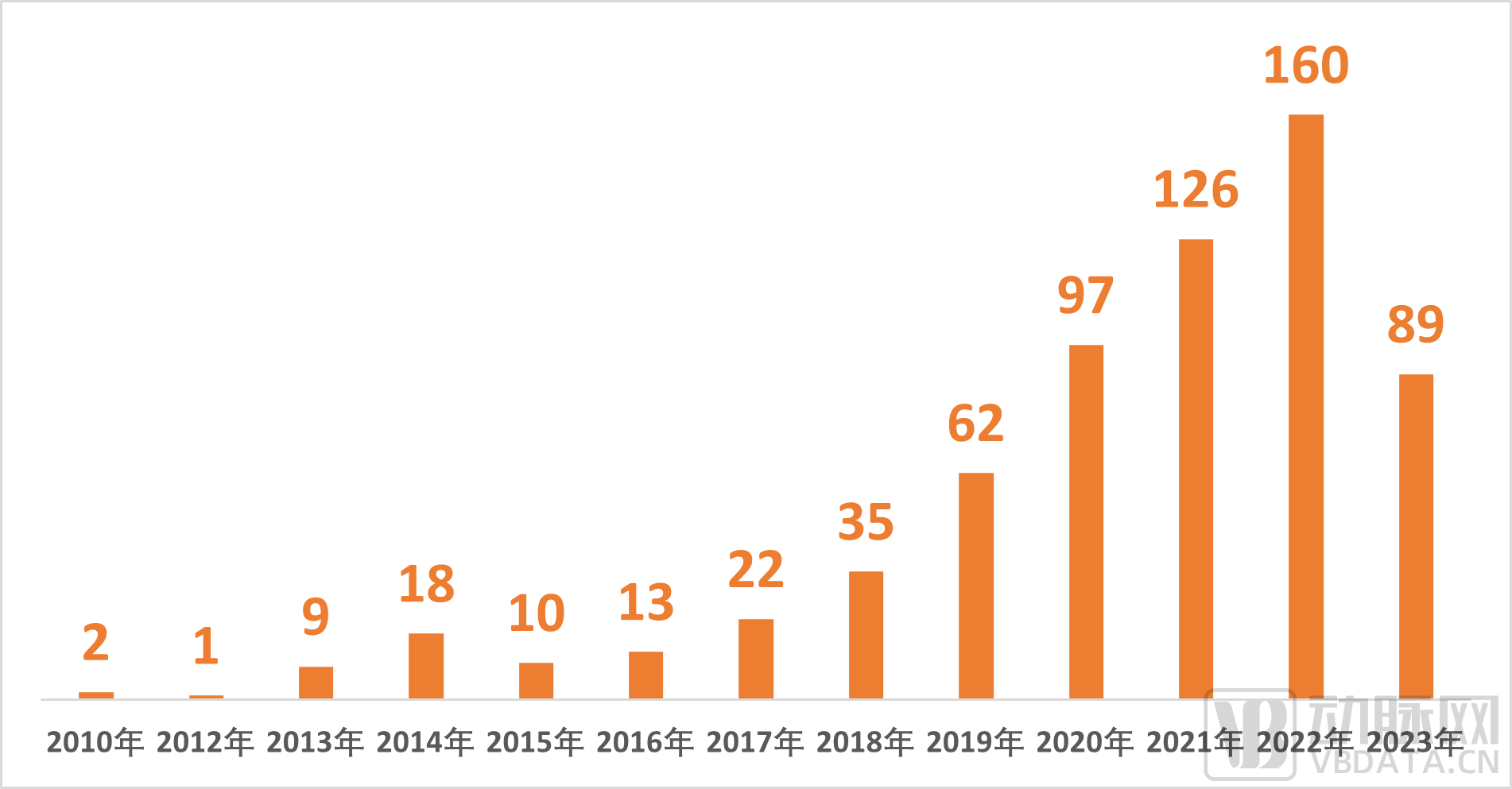
Number of Real-World Study Related Achievements in China Data Source: Pubscholar
For a long time, the热度 of real-world studies in China was not high. The turning point came after 2017, when an increasing number of innovative biologics began utilizing post-marketing real-world studies to enrich clinical evidence. According to Pubscholar data, leading universities and medical institutions in China have been actively engaging in real-world research. Among them, the Institute of Basic Clinical Medicine of the China Academy of Chinese Medical Sciences has produced the most abundant real-world research output, with up to 11 projects. However, providing evidence solely for post-marketing studies limits the attractiveness of real-world research to pharmaceutical companies, which are more focused on product registration and approval.
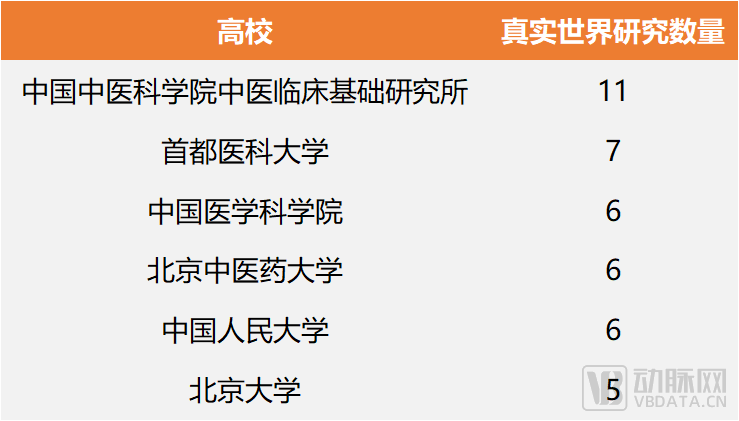
Some universities with more real-world research Data source: Pubscholar
In fact, internationally, the use of real-world studies to accelerate the approval of innovative products has a history of nearly half a century.
As early as the 1970s, overseas drug regulatory agencies attempted to use real-world evidence to approve new treatment options for rare diseases. In December 2016, the U.S. Food and Drug Administration (FDA) passed the 21st Century Cures Act, bringing real-world research to a larger stage. In the United States, real-world evidence can replace traditional clinical trials for the approval of expanded indications.
Since then, the application ecosystem of real-world evidence in global drug and medical device registration has become increasingly mature. Within three years starting from August 2017, the United States intensively issued a large number of regulatory rules on real-world evidence, including "Regulatory Decision-Making for Medical Devices Supported by Real-World Evidence," "Guidelines for Using Electronic Health Record Data in Clinical Research," "Real-World Evidence Program Framework," and "Submission of Drug and Biologic Information to the FDA Using Real-World Data and Real-World Evidence," among others, to further improve the regulatory framework related to real-world research. During this process, the European Medicines Agency (EMA) and Japan's Pharmaceuticals and Medical Devices Agency (PMDA) have also demonstrated attention and emphasis on the use of real-world research for drug development and regulatory decision-making at multiple levels.
The pilot program for the approval of innovative drugs and medical devices through real-world studies in China began in the medical pilot zone of Lecheng, Hainan.
In June 2019, the National Medical Products Administration and the Hainan Provincial Government jointly launched a pilot program for the application of real-world clinical data in Hainan, attempting to use real-world clinical data for the registration of medical device products. In September of the same year, four national ministries and commissions jointly issued a document supporting the development of the Boao Lecheng Pilot Zone, explicitly stating the need to "conduct research on the application of real-world clinical data." Subsequently, a regulatory framework for applying real-world research to the approval of drugs and medical devices was gradually established.
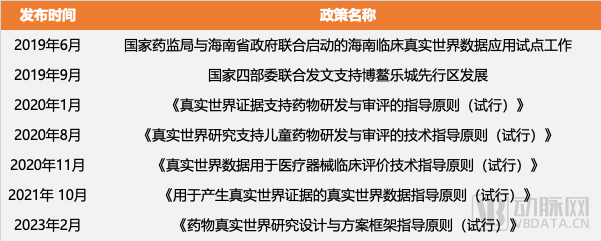
Some Real-World Study Related Policies in China Data Source: VCBeat整理 according to public information
In October 2019, the selection of the first batch of "real-world study" pilot products was launched. However, at that time, the participation enthusiasm of international pharmaceutical and device companies was not high, and only three products were finally selected, including Allergan's glaucoma drainage tube. After being selected, Allergan quickly started collecting real-world data through clinical practices in the Lecheng Medical Pilot Zone. It is reported that Allergan’s glaucoma drainage tube is used for minimally invasive aqueous humor internal drainage surgery and had already been marketed overseas at that time.
At that time, there were no similar products in China. Glaucoma is the world's second leading cause of blindness and is known as the "silent thief of sight." The visual function damage it causes is irreversible. The procedure for Allergan's glaucoma drainage tube implant is simple, safe, and controllable. It does not require damaging the conjunctiva or scleral tissue; it can be easily implanted through a transparent corneal incision. This effectively avoids intraoperative bleeding and other complications, significantly reducing surgical risks.
In March 2020, Allergan's glaucoma drainage tube was officially approved for marketing in China, becoming the first medical device approved for marketing in China using real-world data within the country. This was less than five months after the start of the corresponding real-world study. Previously, under traditional application methods, imported products needed to undergo strict clinical trials, often taking at least 3 to 5 years.
Two months after the launch of Allergan's glaucoma drainage tube, the second batch of "Real-World Research" pilot product applications for the Lecheng Medical Pilot Zone commenced. The rapid approval of the glaucoma drainage tube instantly ignited the enthusiasm of international pharmaceutical and medical device giants, with a total of 47 imported medical device varieties applying to enter the second batch of pilots.
In June 2022, OT-401 (Fluocinolone Acetonide Intravitreal Implant), a treatment for chronic non-infectious uveitis developed by Ocumension Therapeutics, was approved for marketing in China. It became the first new drug in the history of China’s pharmaceutical registration to be fully submitted and approved based on real-world study data. In October 2018, OT-401 was approved for marketing in the United States for the treatment of chronic non-infectious uveitis affecting the posterior segment of the eye. At that time, it was the only FDA-approved new drug capable of releasing fluocinolone for up to 36 months for the treatment of chronic non-infectious uveitis.
In China, uveitis is the second leading cause of blindness. Existing solutions struggle to help patients maintain long-term stability of uveitis inflammation, avoid recurrent episodes that cause damage to intraocular tissues, and address poor medication adherence. Ocumension Therapeutics has obtained exclusive development and commercialization rights for OT-401 in Greater China from its original developer, EyePoint Pharmaceuticals. The rapid market entry of OT-401 through real-world studies undoubtedly fills a gap in the treatment of chronic non-infectious uveitis in China.
At this point, real-world evidence has been applied in scenarios such as the registration and approval of pharmaceuticals and medical devices in China, as well as post-marketing evaluation, and a closed-loop ecosystem is taking shape.
According to data from the recently concluded 2nd Boao International Conference on Real-World Studies of Pharmaceuticals and Medical Devices, over the past three years, a total of 13 pilot products have been approved for marketing in the real-world data application pilot program in the Lecheng Pilot Healthcare Zone. The pilot scope covers multiple fields including oncology, immunology, and ophthalmology. Starting in April 2023, the real-world research of medical devices in the Lecheng Pilot Healthcare Zone has entered a state of normalization, with more innovative medical device varieties applying to be included in the pre-communication channel for real-world research.
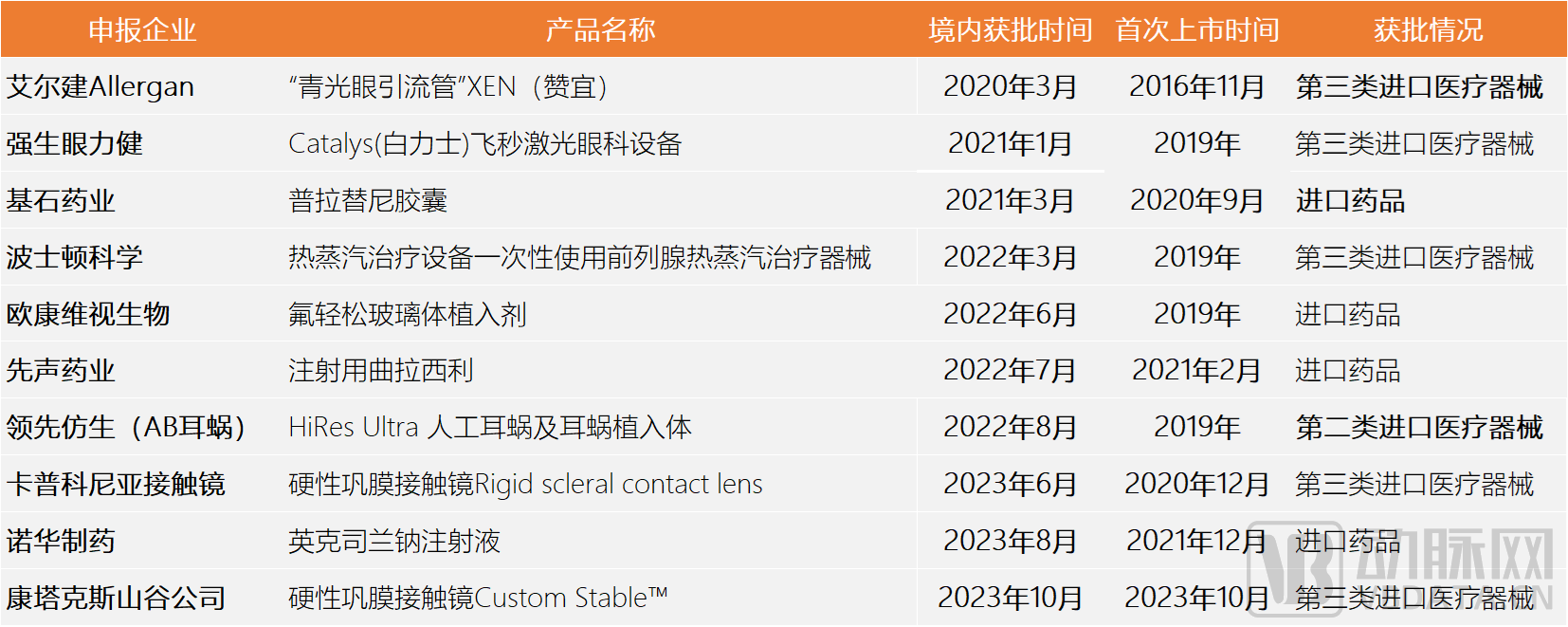
Some products approved in China based on real-world research. Data source: VCBeat, compiled from public information.
Notably, real-world studies have become an important approach for multinational pharmaceutical giants to enter the Chinese market. In addition to companies like Allergan, Johnson & Johnson, Boston Scientific, and Novartis, which have already delivered innovative global products to hospitals in China based on real-world evidence, other multinational pharmaceutical enterprises such as Pfizer, MSD, and Thermo Fisher Scientific have also begun investing in real-world research.
By adopting the real-world research pathway, multinational companies can often introduce new products to the domestic market around three years after the drug or device is launched. This is crucial for multinational pharmaceutical enterprises that invest heavily in research and development. For instance, the interval between the U.S. and China launch of Allergan's glaucoma drainage tube was less than four years, while Johnson & Johnson’s Catalys, and Boston Scientific’s Rezūm System took less than three years. Novartis’ Inclisiran injection had an even shorter interval of less than two years between launches in the two markets.
More importantly, innovative drugs and devices that enter the Chinese market ahead of competitors often penetrate the market at a rapid pace due to filling clinical gaps. For instance, Inclisiran sodium injection, the world’s first small interfering RNA (siRNA) drug in the cardiovascular field, was first applied nationwide in July 2021 at Lecheng, with over 7,000 cumulative uses in just over a year. Meanwhile, Boston Scientific's Rezūm System and its disposable prostate thermal vapor therapy device, which officially gained market approval in March 2022, have already been utilized in more than 100 medical institutions across China, treating approximately 1,000 patients with benign prostatic hyperplasia.
In August 2023, Novartis' new cholesterol-lowering drug, Inclisiran Sodium Injection, was approved for marketing by the National Medical Products Administration. This is the fourth drug approved for marketing under the clinical real-world data application pilot program in the Lecheng Medical Pilot Zone.
Inclisiran Sodium Injection is mainly used for the treatment of adult patients with primary hypercholesterolemia (heterozygous familial and non-familial) or mixed dyslipidemia, etc. In August 2021, this product entered the Boao Lecheng clinical real-world data application pilot program. From the submission of the registration application to approval for marketing, it took only more than 9 months, significantly shortening the time for this product to enter the Chinese market.
Since 2023, more multinational pharmaceutical companies have been expanding into real-world studies. On one hand, they are using the Boao Lecheng Pilot Zone as a base to extend the business boundaries of real-world research, while on the other hand, they are strengthening collaborations with medical institutions in China on real-world studies.
In May 2023, Sanofi signed a strategic cooperation agreement with Hainan Lecheng Real-World Research Institute. Both parties will promote the implementation of innovative products through initiatives such as pilot testing of innovative products, real-world research, and hosting academic exchanges. Additionally, during the 6th China International Import Expo (CIIE), Pfizer China also signed a strategic cooperation agreement with Hainan Lecheng Real-World Research Institute, Jinan University's Guangdong-Hong Kong-Macao Greater Bay Area Real-World Research Institute for Pharmaceuticals and Medical Devices, and CR Healthcare Guangdong Co., Ltd. The parties will jointly facilitate real-world research in Hainan Boao Lecheng Pilot Zone and the Greater Bay Area for innovative drugs that have been launched overseas and in Hong Kong, accelerating the review and approval of innovative drugs. Roche Diagnostics China and Roche Pharmaceuticals China collaborated with Ruijin Hospital, affiliated with Shanghai Jiao Tong University School of Medicine, to jointly release lymphoma diagnosis and treatment solutions and advance a large-scale real-world study on multicenter clinical trials for DLBCL treatment.
By contrast, MSD has a deeper layout. On November 6, MSD (Hainan) Innovative Healthcare Co., Ltd. was inaugurated at the CIIE, becoming the first subsidiary of a multinational pharmaceutical company to enter Hainan Province. Prior to this, MSD had been conducting real-world studies in the Lecheng Pilot Medical Zone. In July 2020, MSD China signed a memorandum with the Lecheng Administration, reaching a consensus to deepen cooperation in areas such as conducting real-world studies in Lecheng. In March 2023, MSD became a member of the board of the Hainan Lecheng Real-World Research Institute, actively contributing to the construction of the institute and promoting innovation incubation for real-world research.
VCBeat noticed that, apart from multinational pharmaceutical enterprises, domestic Biotech companies in China have also benefited from real-world studies.
In March 2021, the pralsetinib capsule developed by CStone Pharmaceuticals was approved for marketing in China based on real-world research evidence. It is indicated for adult patients with locally advanced or metastatic non-small cell lung cancer (NSCLC) who are positive for rearranged during transfection (RET) gene fusions and have previously received platinum-based chemotherapy. This is the first RET inhibitor approved in China and also the first commercialized product of CStone Pharmaceuticals two years after its IPO. According to the latest financial report of CStone Pharmaceuticals, the pralsetinib capsule, which was launched ahead of its competitors, has become the main source of income for this unprofitable biotech company.
During the first full year since the launch of Pralsetinib, CStone Pharmaceuticals reported a revenue of 481 million RMB in its 2022 annual report, nearly doubling from the previous year. Pralsetinib, as one of the three commercialized products, played a significant role. According to CStone Pharmaceuticals' 2023 half-year report, the company achieved a revenue of 261.5 million RMB in the first six months of 2023, representing a 53% increase compared to the same period in 2022.
OT-401, which was also marketed through real-world research, has become the main source of income for Ocumension Therapeutics, which is not yet profitable. According to Ocumension Therapeutics' 2022 financial report, in the year OT-401 was launched, the company's total revenue increased from 56.146 million yuan to 158 million yuan, nearly tripling. Ocumension Therapeutics also stated that OT-401 is expected to provide strong support for sales performance in 2023.
However, the threshold for pharmaceutical companies to promote rapid product launches through real-world studies is not low. From the perspective of the 13 products that have already been approved for marketing, technological leadership and clinical urgency are basic requirements. In specific approval practices, the threshold for participating in real-world research and registering products based on real-world evidence is also not low.
Specifically, on the one hand, products applying for registration based on real-world evidence typically possess substantial overseas clinical research data, with real-world data serving only as supplementary evidence. For instance, before conducting real-world studies in the Boao Lecheng Pilot Zone, Ocumension's OT-401 had already completed Phase III clinical trials overseas. Similarly, the primary data submitted by Pralsetinib for its market application also came from overseas, while the real-world data from the Boao Lecheng Pilot Zone provided auxiliary support for evaluating the efficacy and safety of Pralsetinib in the Chinese population with advanced non-small cell lung cancer.
On the other hand, at this stage, for most drugs, medical devices, and diseases, there are no standardized protocols for the trial design of real-world studies. This requires the sponsors of real-world studies to have rich experience in clinical trials and data analysis; otherwise, it will be difficult to succeed. After all, the prerequisite for using real-world data to apply for market approval from the National Medical Products Administration (NMPA) is that the data must meet the primary endpoint criteria and demonstrate statistical significance.
VCBeat's inquiry into publicly available information revealed that the OT-40 submission documents Ocumension Therapeutics submitted to the National Medical Products Administration contained data from 28 subjects in a real-world data study. Similarly, Pralsetinib, which CStone Pharmaceuticals licensed for introduction, also utilized real-world data from 9 subjects in Lercheng for its market application. Previous media analysis indicated that designing real-world research protocols must consider both the clinical value of the product itself and the characteristics of the population in China, making it extremely challenging.
It is undeniable that using real-world studies as an auxiliary tool for the market application of innovative pharmaceuticals and medical devices has alleviated the R&D pressure on pharmaceutical and medical device companies, and has also brought patients closer to the most advanced therapies. However, given the seriousness of healthcare work, if real-world data is to play a more significant role, it undoubtedly requires stricter regulation and more substantial clinical evidence.