
In November 2023, in the golden autumn of Shanghai, the sixth China International Import Expo (CIIE) arrived as scheduled. Since 2018, over the past five years, the CIIE has demonstrated a strong spillover effect, enabling foreign pharmaceutical companies to leverage this momentum to increase their investments in China, incubate innovative enterprises, and accelerate the introduction of innovative drugs.
Since the first foreign pharmaceutical company settled in Pudong in the 1990s, foreign pharmaceutical companies have jointly experienced 30 years of turbulence with China's pharmaceutical industry. This year is a year of change, with foreign pharmaceutical companies encountering both new opportunities and new challenges, and their enthusiasm for participating in the CIIE (China International Import Expo) is high. PharmaCube went straight to the CIIE scene and conducted exclusive interviews with several executives of foreign pharmaceutical companies, analyzing the future trends of foreign pharmaceutical companies' layouts in China from different dimensions such as R&D, factory establishment, investment, incubation, and products.
Since participating in the first China International Import Expo (CIIE) in 2018, Novartis has attended the event for six consecutive years without fail. This reflects Novartis' commitment to long-termism in the Chinese market. This year, however, holds even greater significance for Novartis. It marks the company's debut at the CIIE as a pharmaceutical enterprise fully dedicated to innovative medicines, following the spin-off of its generics business. With a more agile presence, Novartis is demonstrating even stronger innovative vitality."Focus and Innovation" constitute the two key themes for Novartis at this year's CIIE. These two simple words carry Novartis' long-term goals and mission – focusing on innovative drugs, focusing on patients, and focusing on China. This is not just a slogan; Novartis has already put its mission into action, bringing several "world-first" or "world-only" innovative therapies, including Leqvio (Inclisiran Sodium Injection), a small interfering RNA drug for cholesterol reduction. This "CIIE baby," which has been exhibited for three consecutive years, received approval from China’s National Medical Products Administration (NMPA) in August this year and has now ushered in a new era of lipid management.Cardiovascular disease is not only the "number one killer" causing death among residents in China, but also one of the four core therapeutic areas that Novartis has been deeply committed to. Novartis is not only dedicated to bringing cutting-edge new drugs like Inclisiran to Chinese patients, but also spares no effort in promoting the scientific awareness of cardiovascular disease prevention and treatment, aiming to provide a "better solution" for lipid management for a broad range of patients in China.At this year's CIIE, Novartis has consistently upheld the concept of "patient-centeredness" and extended invitations toProfessor Yi Zhang, Associate Chief Physician of the Department of Cardiology, Shanghai Tenth People's Hospital Affiliated to Tongji University, delivered an in-depth yet accessible science popularization sharing on cardiovascular disease-related research in China. After the speech, Professor Zhang Yi also accepted an interview with PharmaCube, further discussing new concepts, new trends, and new drugs in the treatment of cardiovascular diseases.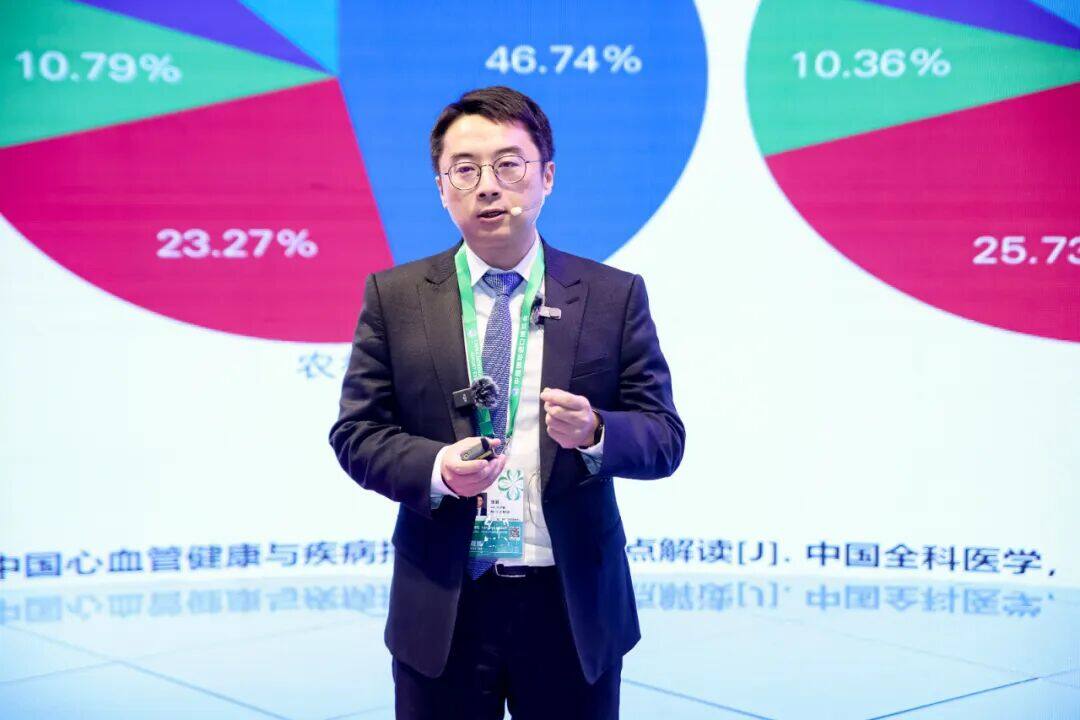 Professor Zhang Yi Delivered a Speech During the Sixth China International Import Expo (CIIE)
Lipid-lowering Treatment Enters the "Firearms Era"

"There are many risk factors in the cardiovascular field, among which blood lipids are a very special component. Nearly 50 years of research shows,Higher blood lipid levels, particularly the elevation of low-density lipoprotein cholesterol (LDL-C), can significantly exacerbate atherosclerosis."Professor Zhang Yi pointed out the dangers of hyperlipidemia, especially high LDL-C, at the very beginning of the interview.Correspondingly, controlling blood lipid levels, including LDL-C, has become a major new trend in lipid management. Moreover, Professor Zhang Yi's team found that the intervention of blood lipids does not seem to have a "floor" like lowering blood pressure or blood sugar does; there can be risks if blood pressure or blood sugar is reduced too much.“For blood lipids, we are continuously pushing the limits lower, and in fact, lower lipid levels bring better cardiovascular health."In other words, targeting blood lipids is both highly safe and remarkably effective. Therefore, among all risk factors, our intervention on blood lipids has been relentless," said Professor Zhang Yi.Following the concept of "reducing LDL-C levels," a series of lipid-lowering drugs have emerged. From traditional statins to ezetimibe, a cholesterol absorption inhibitor, PCSK9 monoclonal antibodies, and now small interfering RNA, treatment methods have continuously evolved with innovation mechanisms constantly transforming behind the scenes."All early lipid-lowering drugs were chemical drugs that intervened with certain enzymes in the human body. Such intervention is not one-to-one in reality, as it can only target a specific protein but not a certain type of cell, leading to many drug interactions and other side effects."After small-molecule drugs dominated the lipid-lowering market for half a century, "we now have PCSK9 monoclonal antibodies, which are a step forward from chemical drugs. By binding to the target protein, they cause its degradation. They only act on proteins, not cells." The specificity advantage of PCSK9 monoclonal antibodies over small-molecule drugs is clear, but they are still not perfect and have room for improvement.In fact, whether it's chemical drugs or monoclonal antibodies, the intervention occurs at the protein level. Tracing back to the source, proteins are translated through nucleic acids and genes. "Previously, there were no drugs that could intervene at the gene level (for blood lipids). Now, we have Leqvio." In August this year, Leqvio was approved for marketing in China as an adjunctive therapy to diet, for the treatment of adult patients with primary hypercholesterolemia (heterozygous familial and non-familial) or mixed dyslipidemia.Professor Zhang YiFurther clarified the different values of these drugs with a few vivid analogies: "Statins are like sappers, very straightforward, and can lower blood lipids without costing too much."Cholesterol Absorption InhibitorEzetimibe is like an archer, its effect is not very strong, achieving a 10-20% reduction, but combining the archer (ezetimibe) with the sapper (statin) can lower blood lipids more effectively. Monoclonal antibodies are equivalent to cavalry, wearing armor, similar to a new weapon for lowering blood lipids.""By the time of Lekewei, it has moved beyond the cold weapon era because it doesn't directly act on the protein level but at the more upstream genetic level. So we call it the musket soldier, marking the entry into the firearm era."Professor Zhang Yi saw the strong innovation of Lerqw (Lekewei) and considered it an "epoch-making drug" in the cardiovascular field."Make patients sometimes not feel like they are patients."

Compliance issues have always been a pain point in the treatment of hyperlipidemia patients. Even statins, which have been clinically verified for a long time and have become the cornerstone drug for lipid management, face problems of poor treatment compliance."As long as 2-3 patients experience muscle pain, or have liver damage, requiring liver function monitoring every 2-3 months, patients tend to become very worried. As a result, two situations often arise: First, they may refuse to take the medication; sometimes even after the prescription has been given, they stop taking it once they get home, or after taking it for a few days, they discuss with family and then discontinue use. Second, after taking the medication for some time and seeing their blood lipids drop, they immediately stop or reduce the dosage, which is very dangerous."The cautious use of medications and the proactive discontinuation in clinical practice have created a significant gap, leading to a major unmet need in lipid management. Ultimately, statins are long-term treatments that require daily oral administration, which无形中increases the burden on patients.The emergence of Rekovelle, to some extent, fills the unmet needs caused by poor medication adherence."The biggest advantage of this drug is that it's very convenient, making patients sometimes not feel like they are sick."Only two injections per year*, Lekewei offers extremely convenient administration, revolutionizing the treatment model in the cardiovascular field.It is worth mentioning that the twice-yearly dosing regimen* of Leqvio does not come at the expense of efficacy. Multiple Phase III studies (ORION-9/-10/-11) have shown that Leqvio can achieve a lasting and stable reduction of more than 50% in LDL-C levels.[1,2,3]. In addition,This YearPublishedORION-18 StudyShow that, compared with placebo, the LDL-C reduction from baseline at Day 330 in the inclisiran group was 61.16% in the Chinese mainland subgroup, and it was well tolerated. The evaluated efficacy and safety results were consistent with those of the overall population.Since Lekewei was approved in China, Novartis has been collaborating with various parties to continuously advance its clinical accessibility. In October, less than two months after the approval, Lekewei has been successively put into clinical use across the country. The hospital where Professor Zhang Yi works has also introduced Lekewei."Some patients previously on statins did not achieve good lipid control and experienced adverse reactions, such as elevated liver enzymes, necessitating a switch in medication. Many of our doctors are also using this drug, and the effects have been quite good." From the clinical cases shared by Professor Zhang Yi, it is evident that both doctors and patients have long anticipated this drug with its unique mechanism."We are entering a very great era, and we believe that in three to five years, people will no longer need to take medicine as they do now. One injection every two months or even every six months will be enough to control blood lipids."*Method of use: Administer a booster injection three months after the initial treatment, followed by twice-yearly injections of Inclisiran Sodium Injection thereafter. See the package insert for details.[1]Ray KK, et al. N Engl J Med. 2020; 382(16): 1507-1519.[2]Raal FJ, et al. N Engl J Med. 2020; 382(16): 1520-1530.[3]Wright RS, et al. J Am Coll Cardiol. 2021; 77(9): 1182-1193.Copyright © 2023 PHARMCUBE. All Rights Reserved.
Welcome to forward, share, and reasonably cite. When citing, please clearly indicate the source of the article.For reprint, please leave a message to the WeChat Official Account backend or send a message, and indicate the name and ID of the official account.
Disclaimer: The information in this WeChat article is for general reference only and should not be directly used as decision-making content. PharmaCube assumes no responsibility for any loss incurred by any party due to the use of the content herein.


