CARGO Therapeutics Launches One of the Largest CAR-T IPOs This Year, Raising $281 Million

Cargo Therapeutics
CAR-T Cell Therapy Developer
Disclaimer: Due to limited proficiency, errors are inevitable, and some information may not be the most up-to-date. Feel free to point out in the comments. This article is only an introduction to medical and health-related drugs, not a recommendation of treatment plans (if involved); this article does not constitute any investment advice.
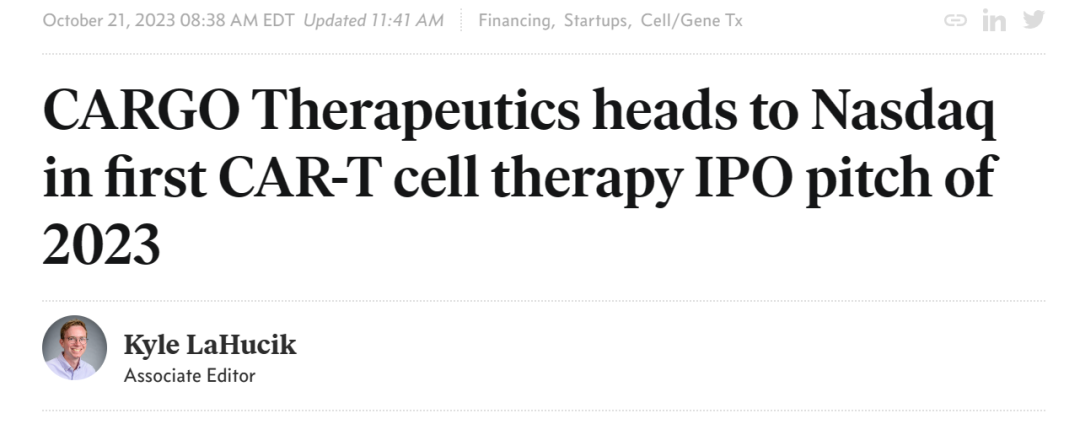
CARGO Therapeutics to Join Nasdaq Friday Morning; Some Insiders Say This Could Be the Last or Second-to-Last Biotech Initial Public Offering (IPO) of the Year.
This CAR-T cell therapy manufacturer willSelling 18.75 million shares at $15 per share to raise approximately $281 million (RMB 2.071 billion)。CARGO Therapeutics' debut on Wall Street marks one of the largest IPOs in the industry this year. Similar to 2022, the market has seen relatively lackluster performance following the downturn in 2021 and the boom in 2020.
CARGO Therapeutics is testing CD22-directed cell therapy with Stanford Medicine CAR-T leader Crystal Mackall. It has raised $11 million in seed funding and $32 million in bridge financing. In addition to Samsara, CARGO’s major shareholders include Red Tree Venture Capital, Perceptive Xontogeny, Third Rock Ventures, Nextech, and Janus Henderson.
Cargo Therapeutics currently has no revenue, with operating losses of $5.98 million and $34.77 million in 2021 and 2022, respectively; net losses were $5.85 million and $40.95 million, respectively.
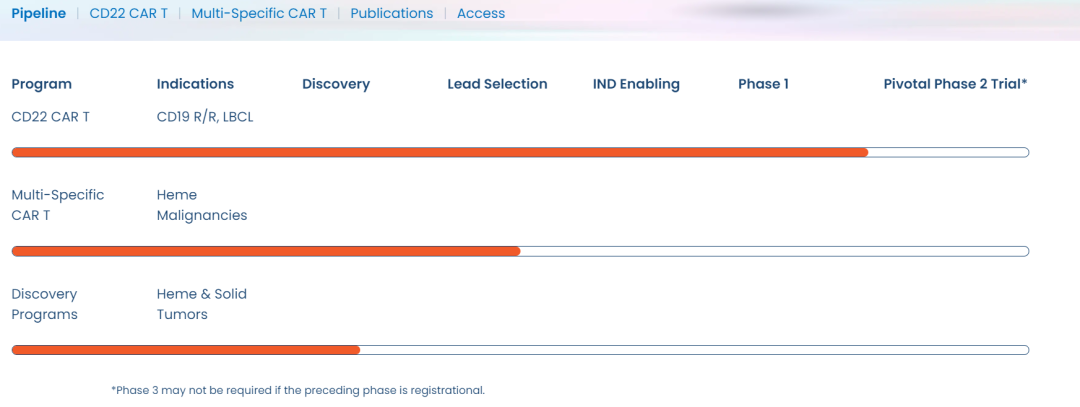
As early as March 1, CARGO Therapeutics announcedCompleted a $200 million Series A financing round.The funds will be used forAdvance its autologous CD22 CAR-T cell therapy candidate CRG-022,Through the pivotal multicenter Phase 2 trial treatment of patients with relapsed or CD19 CAR-T cell refractory LBCL, and advancing its proprietary platform technology and discovery-stage programs, providing better outcomes for cancer patients whose needs are unmet.
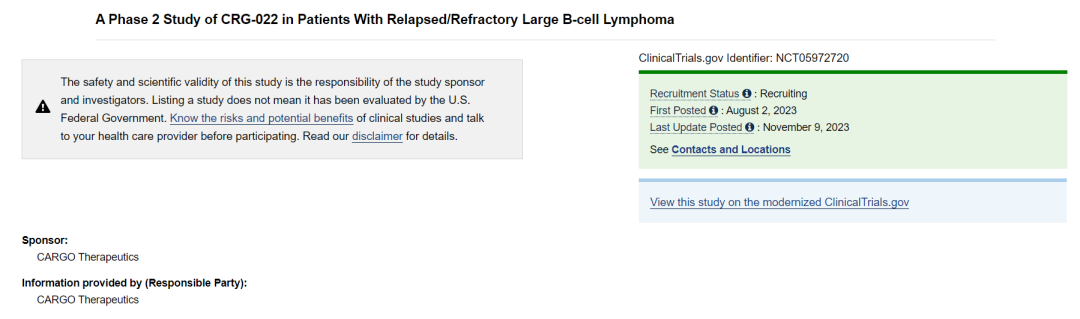
CRG-022 is the current leading candidate drug of CARGO Therapeutics. It is constructed by further transducing a lentiviral vector (m971-BBZ) expressing CD22-targeting CAR into autologous T cells. CRG-022 is currently in Phase I clinical trials, with interim results showing that, among 38 patients with relapsed/refractory large B-cell lymphoma (R/R LBCL) after CD19 CAR-T cell therapy, the CR and ORR reached 53% and 68%, respectively.
The company recently began the Phase II trial of its blood cancer cell therapy.
In addition to its lead program, CARGO Therapeutics is leveraging its proprietary cell engineering platform technology to develop a range of programs that include various transgenic therapeutic "vectors" designed to enhance the presence and trafficking of CAR T cells within tumor lesions while helping to prevent tumor resistance and T-cell exhaustion.