

Weekly Summary of China's Innovative Drug Approvals, NDAs, INDs, and Global Phase III Clinical Trials (Nov 6–10)

Juventas
Innovative Cell Therapy Drug Developer

Welcome to follow CaiLeiYing pharmaceutical news
Collection Period: 11.6-11.10, including innovative drugs in China that are newly approved for marketing, filed for marketing approval for the first time, or applied for clinical trials.
Innovative Drug Approved in China
1. Roche: Gefitumab Injection
Mechanism of Action: Targeting CD3/CD20 Bispecific Antibody
Indications: Diffuse Large B-Cell Lymphoma
On November 8, Roche's Glofitamab injection was approved by the NMPA for marketing in China to treat adult patients with relapsed or refractory diffuse large B-cell lymphoma (DLBCL) who have received at least two prior lines of systemic therapy. Glofitamab (brand name: Columvi) is currently the first and only bispecific antibody for fixed-duration treatment of patients with relapsed or refractory DLBCL, and it is also the second bispecific antibody specifically for DLBCL approved by the FDA. This T-cell-engaging bispecific antibody features an innovative 2:1 structural format, including one protein domain targeting CD3 on the surface of T cells and two protein domains binding to CD20 on the surface of B cells. This dual-targeting strategy brings T cells close to B cells and activates T cells to release cytotoxic proteins against cancer cells.
According to previously disclosed clinical studies: Patients receiving a fixed course of Columvi treatment achieved durable remission, with 56% of patients achieving overall response (OR; 74/132), and 43% achieving complete response (CR; 57/132). More than two-thirds of responders continued to respond for at least nine months (68.5%). The median duration of response was 1.5 years (18.4 months). The most common adverse events (AE) were cytokine release syndrome (CRS; 70%), which could be severe or life-threatening musculoskeletal pain (21%), fatigue (20%), and rash (20%). CRS was generally low-grade (52% experienced Grade 1, 14% experienced Grade 2).
2. Juventas: Naciorl Injection
Mechanism of Action: CD19-Targeted CAR-T
Indications: Acute Lymphoblastic Leukemia
On November 8, Juventas' Naciorlen Injection was approved by the NMPA for marketing in China to treat adult patients with relapsed or refractory B-cell acute lymphoblastic leukemia (r/r B-ALL). Naciorlen Injection (formerly known as Hecelon) is a CAR-T cell therapy product targeting CD19, featuring a globally unique CD19 scFv (HI19a) structure and internationally leading manufacturing processes. In the pivotal clinical study for adult r/r B-ALL, the success rate of cell drug production reached 100%. It is the first CAR-T product approved in China for the treatment of leukemia. In March 2023, the U.S. FDA approved the IND application for Naciorlen Injection, which is being developed for the treatment of adult patients with relapsed or refractory B-cell acute lymphoblastic leukemia (B-ALL).
Previously, this drug has been approved for multiple clinical trials in China, targeting indications including: the treatment of adult relapsed or refractory ALL, the treatment of relapsed or refractory aggressive B-cell non-Hodgkin lymphoma, and the treatment of pediatric and adolescent relapsed or refractory B-cell ALL. Among these, the application for relapsed or refractory ALL was also designated as a breakthrough therapy by the NMPA. This marketing approval is based on a single-arm, open-label, multi-center pivotal clinical study for the treatment of adult relapsed or refractory B-cell acute lymphoblastic leukemia (B-ALL). The results showed that: among 39 adult r/r B-ALL patients, the overall response rate (ORR) reached 82.1%; the median duration of response (DOR) had not been reached at a median follow-up of 9.3 months; among patients who were still responding at 3 months, it was estimated that 80% would remain in response at 1 year; regardless of whether subsequent hematopoietic stem cell transplantation was performed, sustained responses and long-term survival benefits were observed. In terms of safety, cytokine release syndrome (CRS) occurred in 33 subjects (84.6%), most of which were grade 1-2 CRS, with only 10.3% being grade 3 or higher CRS; immune effector cell-associated neurotoxicity syndrome (ICANS) occurred in only 10.3% of subjects, with only 7.7% experiencing grade 3 or higher ICANS; all grade ≥3 CRS and ICANS were resolved without any CRS/ICANS-related deaths; no unexpected adverse events caused by CD19 CAR-T therapy were reported.
Summary of NDA in China

1. Hengrui Medicine: HR20031 Tablet
Mechanism of Action: DPP-4 Inhibitor; SGLT2 Inhibitor; Biguanide Hypoglycemic Agent
Indications: Type II Diabetes
On November 10, the New Drug Application (NDA) for HR20031 Tablets developed by Hengrui Medicine was accepted by the Center for Drug Evaluation (CDE). HR20031 is a fixed-dose triple combination formulation developed by Hengrui Medicine, consisting of proline hydrochloride, ripaglinide phosphate, and metformin hydrochloride (extended-release). It achieves blood glucose reduction through three different mechanisms of action. The drug is intended for once-daily oral administration to treat patients with type 2 diabetes whose blood glucose remains inadequately controlled after metformin treatment, thereby improving glycemic control in these patients. Additionally, this product is an extended-release formulation that simplifies the hypoglycemic therapy by reducing the frequency of dosing, which is expected to enhance patient compliance with the treatment.
IND Summary in China
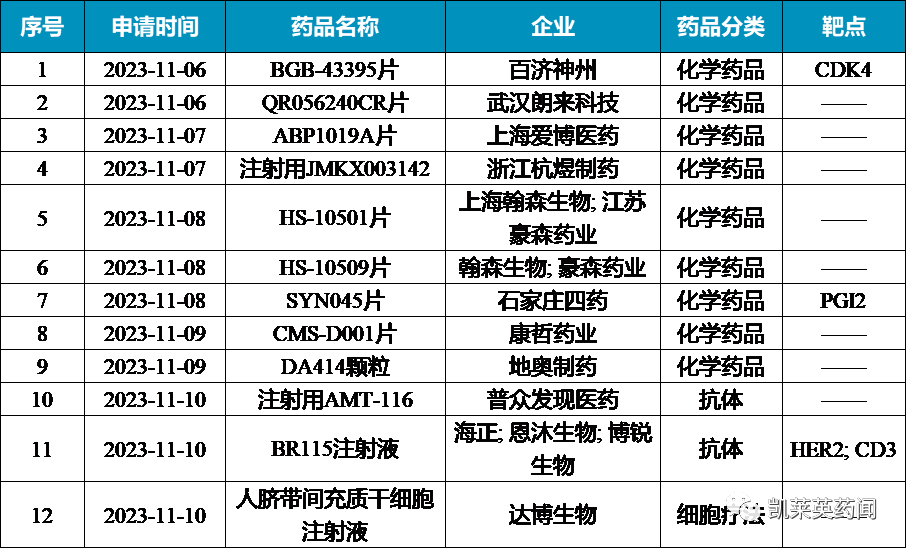
1. Hangyu Pharmaceutical: JMKX003142 for Injection
Mechanism of Action: ——
Indications: Polycystic Kidney Disease
On November 8, the clinical application (IND) of Hangyu Pharmaceutical's injectable JMKX003142 was accepted by the CDE. JMKX003142, independently developed by Shanghai JiYu Small Molecule Innovation Research Institute, is China's first innovative pharmaceutical R&D project for polycystic kidney disease and has the potential to be the best-in-class (BIC) globally. Preclinical animal efficacy studies and safety evaluations have shown that JMKX003142 can inhibit the proliferation of LLC-PK1 cells in a dose-dependent manner and prevent the enlargement of human ADPKD renal cystic cells. It avoids the side effects caused by the Hook effect (proliferation induced at high concentrations) seen with other drugs, offering differentiated global competitive advantages.
2. Shijiazhuang No.4 Pharmaceutical: SYN045 Tablet
Mechanism of Action: PGI2 Receptor Agonist
Indications: Pulmonary Arterial Hypertension
On November 8, the IND for SYN045 tablets developed by Shijiazhuang No.4 Pharmaceutical Co., Ltd. was accepted by the CDE. SYN-045 is a highly selective PGI2 receptor agonist. Preclinical studies have shown that SYN-045 exhibits high target selectivity, with significant anti-pulmonary hypertension effects in animals, low toxicity, and is conducive to long-term oral administration.
3. BoRui/EnMu: BR115 Injection
Mechanism of Action: Targeting CD3/CD19/CD20 Tri-specific Antibody
Indications: Tumor
On November 10, the IND for BR115 Injection, co-developed by Juventas and Enmu, was accepted by the CDE. BR115 is a T cell-mediated tri-specific antibody targeting solid tumors, developed based on Enmu Biotech's multifunctional antibody engineering platform TRIAD. It can simultaneously target different epitopes of CD3 on the surface of T cells and tumor-associated antigens (TAA), offering enhanced tumor specificity while better addressing tumor escape caused by TAA mutations.
It is worth mentioning that the design of BR115 cleverly utilizes the high flexibility of the TRIAD platform. By adjusting the spatial position of the targeting fragment and combining it with the structural characteristics of TAA itself, dual-epitope targeting enables the product to selectively target TAA-overexpressing tumors, demonstrating significantly superior killing effects compared to similar MNC products under research. Moreover, its action on tissues with normal TAA expression is greatly reduced, thus offering better safety.
In November 2022, Bright Biology announced a strategic cooperation agreement with Chengdu Enmu Bio. Bright Biology obtained the preclinical development and clinical registration, development, production, and commercialization rights of Enmu Bio's tri-specific antibody BR115 (CMG6A19) in Greater China (including mainland China, Hong Kong, Macao, and Taiwan). This is another strategic cooperation in the tri-specific antibody field following the signing of the rights cooperation for BR110 (CMG1A46), the world’s first anti-CD3/CD19/CD20 tri-specific antibody, on December 29, 2021.
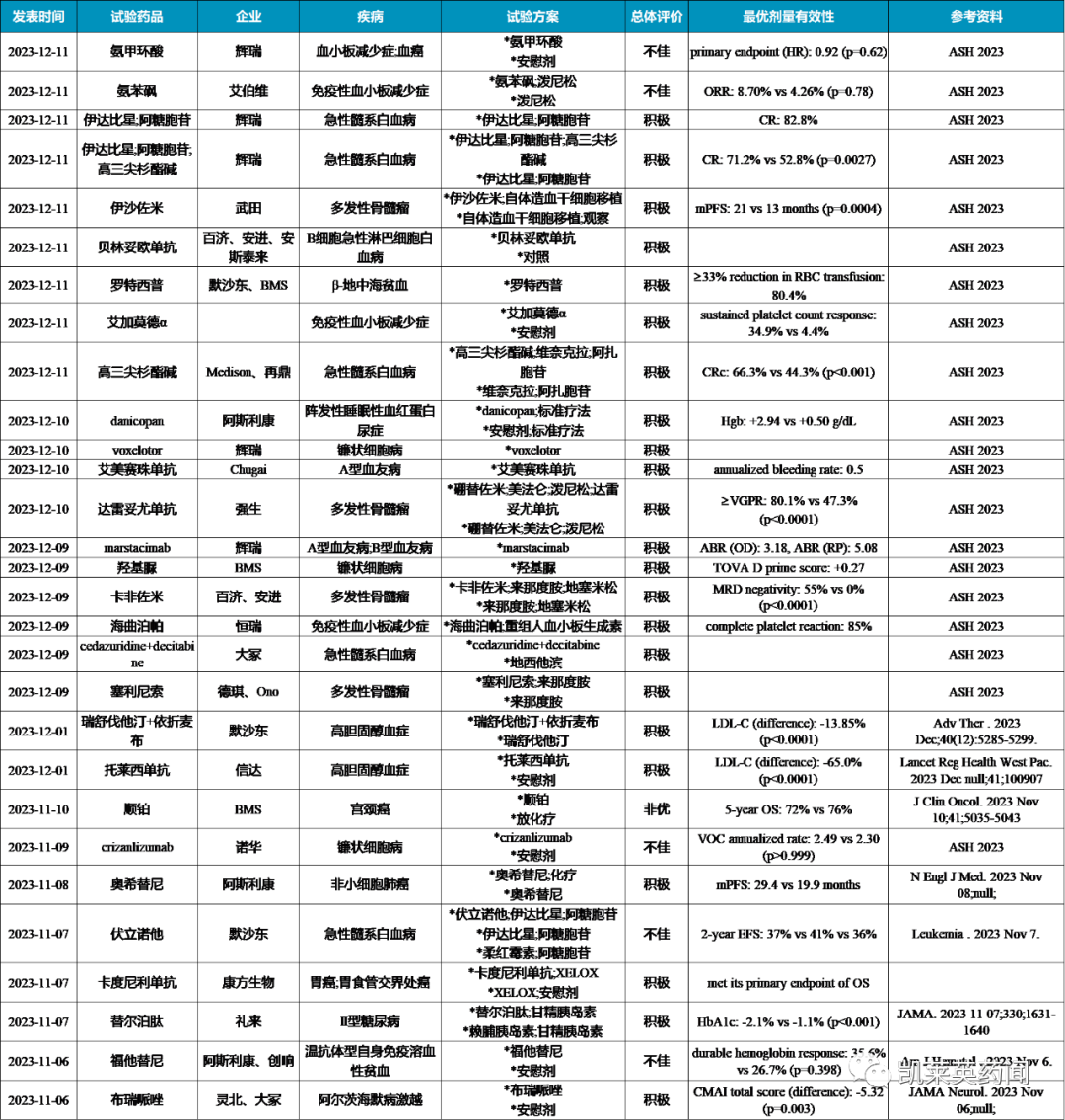
Global Phase III Clinical Summary


"Views"Click once