

DBV Technologies Announces Positive Phase 3 Data for Viaskin Peanut in Toddlers, Advancing Toward BLA Resubmission in a $6B Allergy Market

DBV Technologies
Immunotherapy Developer
On November 9, biopharmaceutical company DBV Technologies (hereinafter referred to as DBV) announced positive interim results from the Phase 3 open-label extension (OLE) study of its peanut allergy patch Viaskin Peanut. Data demonstrated that during the 12th to 24th month of treatment with Viaskin Peanut, efficacy parameters in subjects showed improvement.
Viaskin Peanut is a non-invasive electrostatic patch developed by DBV using the Viaskin™ platform, which can gradually train the human immune system to develop tolerance to peanuts.
The Viaskin Peanut patch contains a dry allergen deposit that can deliver bioactive substances (including allergens) through intact skin without breaking it, based on the theory of epicutaneous immunotherapy (EPIT).
When the patch is applied to intact skin, allergens can be directly delivered to the epidermis and captured by antigen-presenting cells (APCs), which then migrate to the draining lymph nodes. There, APCs activate specific regulatory T cells, thereby suppressing allergic immune responses without allowing allergens to enter the bloodstream.
DBV Technologies conducted three clinical trials for Viaskin Peanut, corresponding to three age groups: toddlers aged 1-3 years, children aged 4-11 years, and adolescents and adults.
This completes the Phase 3 trial of Viaskin Peanut 250 µg [VP250] in children aged 1-3 years.
Data showed that, after 175 subjects were treated with VP250 for 24 months, 83.9% of the subjects responded well. 81.3% of the subjects reached an eliciting dose (ED) of ≥1000 mg, which is approximately the weight of 3-4 whole peanuts; 63.8% of the subjects reached an ED of ≥2000 mg.
In addition, 55.9% of subjects were able to cumulatively tolerate an ED of up to 3444 mg, equivalent to 12–14 peanut kernels, without reaching the pre-defined stopping criteria set by DBV Technologies.
Data Prove the Continued Efficacy, Safety and Tolerance of Viaskin Peanut in Toddlers with Peanut Allergy in a Real-world Setting.
Eleanor Garrow-Holding, CEO of DBV's Food Allergy Team, stated that DBV expects to release the full data from this clinical trial at this year's American College of Allergy, Asthma & Immunology (ACAAI) Annual Scientific Meeting. Furthermore, DBV plans to resubmit a Biologics License Application (BLA) to the FDA for Viaskin Peanut in the future.
In 2015, the U.S. FDA granted Viaskin Peanut a Breakthrough Therapy Designation (BTD) for the treatment of peanut allergy in children. This was the first time the FDA had awarded a breakthrough therapy designation in the field of food allergies, and at that time, Viaskin Peanut was expected to become the world's first approved drug for peanut allergy.
However, until today, Viaskin Peanut has not been officially approved.
At the end of 2017, DBV completed the Phase 3 clinical trial of Viaskin Peanut in the 4-11 age group. However, it failed to reach the primary endpoint, causing its stock price to plummet.
In 2018, DBV submitted the BLA for Viaskin Peanut to the FDA, but the FDA requested more data regarding production procedures and quality control. Subsequently, DBV voluntarily withdrew the BLA, causing its stock price to plummet again.
In August 2019, DBV resubmitted the BLA to the FDA with positive results from the second Phase 3 trial. However, the FDA once again rejected the application for Viaskin Peanut's market approval and issued a Complete Response Letter (CRL), expressing concerns that the patch's adhesion site could affect treatment efficacy. The FDA requested that DBV generate additional clinical data to support the modified patch and provide extra Chemistry, Manufacturing, and Controls (CMC) data.
This time, DBV's stock price plummeted more than 33% in pre-market trading.
In April 2023, DBV received another BLA from the FDA, this time for the Viaskin Peanut in the 1-3 year-old toddler group. The FDA requested that DBV conduct an additional safety trial to increase the number of children in its safety database to nearly 600 patients receiving active treatment.
While DBV was hitting roadblocks one after another, Palforzia, the peanut allergy drug developed by Aimmune Therapeutics (hereinafter referred to as Aimmune), was getting the green light.
In February 2020, Palforzia received FDA approval, becoming the world's first approved therapy for treating peanut allergy, as well as the world's first approved therapy for treating any food allergy. EvaluatePharma, a pharmaceutical market research firm, predicts that Palforzia's sales will reach $1.75 billion by 2024.
In September of the same year, Nestlé announced a $2.6 billion acquisition of Aimmune at a price that represented a 174% premium over Aimmune's stock price at the time. Previously, Nestlé had invested in Aimmune four times, with a total investment of $473 million.
Data show that currently, peanut allergy affects approximately 2% of the population in Western countries, and the prevalence may gradually increase.1According to the "Global Peanut Allergy Treatment Market Report 2023-2029" released by QYResearch, the global peanut allergy treatment market size will reach 6.02 billion US dollars by 2029, with a compound annual growth rate of 21.9% in the coming years.
Facing this potential market, multiple companies have entered this field. The "Peanut Allergy - Pipeline Insight, 2023" report published by DelveInsight shows that more than 10 enterprises are currently developing therapies for peanut allergies.
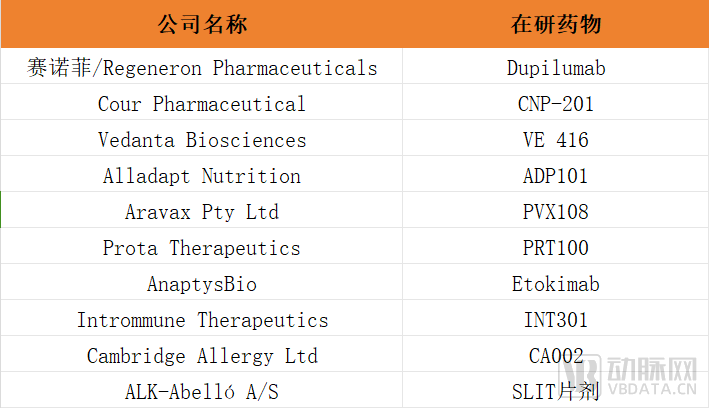
Data Source: Public Information Compilation
DBV Faces Increasing Competition with More Rivals. Notably, Besides Viaskin Peanut, DBV's Pipeline Includes Viaskin Milk and Viaskin Egg, Which Are in Phase 2 Clinical Trials and Preclinical Research Stages, Respectively.
This time, DBV Technologies is moving forward with Viaskin Peanut to the FDA again. If it gets approved successfully, how far would it be from tapping into the milk and egg markets?
References:
1.Lieberman JA, Gupta RS, Knibb RC, Haselkorn T, Tilles S, Mack DP, Pouessel G. The global burden of illness of peanut allergy: A comprehensive literature review. Allergy. 2021 May;76(5):1367-1384. doi: 10.1111/all.14666. Epub 2021 Jan 16. PMID: 33216994; PMCID: PMC8247890.