
Home Roche Partners with Multiple Stakeholders to Deliver a 'China Solution' and Realize the Future of Personalized Healthcare

Roche Partners with Multiple Stakeholders to Deliver a 'China Solution' and Realize the Future of Personalized Healthcare

Nov 13, 2023 09:00 CST Updated 09:00
Roche

Oncology Drug Research, Development, and Manufacturing

Recently, Roche showcased for the first time at the 6th China International Import Expo the practical achievements of its years-long efforts in personalized healthcare in China — a digital decision-support model for liver cancer. This model provides clinical decision-making support for doctors, increases certainty in treatment options, enhances the effectiveness rate at which patients benefit from optimal treatment plans, extends patients' life expectancy and quality of life, and ultimately improves the efficiency of medical resource utilization, promoting high-quality development in the healthcare industry.

With the advancement of science and the deepening understanding of diseases, treatment methods are also constantly evolving. From traditional chemotherapy, which has broad applicability but causes significant harm to the body, to targeted therapies aimed at genetic mutation sites—often referred to as precision medicine—and now with the rapid development in genomics, immunology, and molecular biology, the era of personalized medicine has arrived. Moving from a "one-size-fits-all" approach to "tailored treatments," it helps patients find and obtain the most suitable diagnosis and treatment plan for their specific conditions.

Fan Jia, an academician of the Chinese Academy of Sciences and president of Zhongshan Hospital Affiliated to Fudan University, stated, "Traditional treatment often involves a one-size-fits-all approach with uniform protocols or therapies that may not be targeted or precise. The continuous advancement of personalized treatment can significantly enhance therapeutic outcomes. For each individual, if the previous treatment plan has been ineffective or failed, adopting a precise and personalized treatment strategy could potentially lead to curative results."

Fan Jia, Academician of the Chinese Academy of Sciences, President of Zhongshan Hospital Affiliated to Fudan University

Personalized medicine can break through previous treatment bottlenecks, providing tailored full-course medical solutions for each patient and offering directions and solutions for unresolved medical issues. Therefore, Roche incorporated personalized medicine into its global core strategy as early as 2006. During the first China International Import Expo (CIIE) in 2018, Roche showcased this concept under the theme “Personalized Medicine – Leading the Future of Human Health,” introducing the idea of personalized medicine to the CIIE, an important platform for showcasing new technologies, concepts, and experiences.

As a global advocate and leader in personalized healthcare, Roche is committed to realizing the opportunities brought by personalized healthcare and actively exploring innovative practices in China's personalized healthcare sector. After years of exploration and accumulation, Roche has achieved phased results in the field of personalized healthcare in collaboration with local innovative partners in China, focusing on three key areas: clinical decision support, digital remote patient management, and personalized solutions, submitting a satisfactory "Chinese answer."

Roche China President Bian Xin stated: "In the past few years, Roche has deeply focused on key disease areas such as cancer, neurology, and ophthalmology, actively seeking innovative solutions in collaboration with industry professionals. We have now built a globally leading pipeline for personalized healthcare innovation in China, incubating and advancing more than ten personalized healthcare projects. Roche is prioritizing four strategic directions: laboratory solutions, optimization of clinical practices, clinical decision support, and patient monitoring, aiming to create a patient-centered personalized treatment model with greater speed, higher efficiency, and more precision."

President of Roche Pharmaceuticals China, Bian Xin

The "Healthy China 2030" Planning Outline explicitly proposes to increase the overall five-year cancer survival rate by 15% by 2030, setting higher requirements for proactive prevention and control as well as improving early diagnosis and treatment rates. Currently, liver cancer, one of the most common types of cancer in China, presents a severe situation in terms of incidence and mortality, with 466,000 new cases and 422,000 deaths annually. Data shows that the five-year survival rate for liver cancer patients in China is only 12.1%. "Unlike breast cancer and lung cancer, which have entered the molecular diagnostics and treatment phase, liver cancer still relies on traditional imaging methods and experiential judgment for diagnosis and treatment, lacking a precise system," said Sun Huichuan, Deputy Chief of Liver Surgery at Zhongshan Hospital, Fudan University.
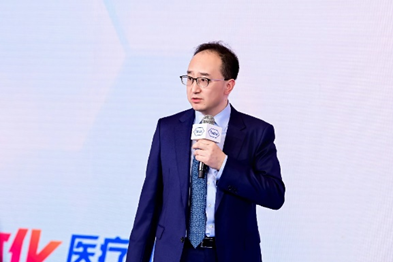
Professor Sun Huichuan, Deputy Director of the Liver Surgery Department at Zhongshan Hospital, Fudan University

With the continuous advancement of medical technology, an increasing number of treatment options have emerged, yet doctors often lack sufficient clinical evidence to choose the most suitable treatment plan for patients. The uncertainty of treatment efficacy can severely undermine both doctors' and patients' confidence in overcoming diseases and is not conducive to the efficient use of medical resources. Addressing the unmet needs in liver cancer diagnosis and treatment, the digital decision-support model for liver cancer led by Professor Sun Huichuan represents a significant milestone in the collaboration with Roche’s personalized healthcare approach. This model can be applied during the liver cancer treatment phase, using digital tools to integrate patients' clinical indicators and predict treatment benefits, enabling patients to receive the most appropriate treatment at the optimal time.

Professor Sun Huichuan stated: "The majority of liver cancer patients in China are already at an advanced stage when first diagnosed, and liver cancer has various molecular subtypes. Even though there have been multiple innovative treatment options available in recent years, the effective treatment rate remains only 20% to 30%. For many patients with advanced liver cancer, they don't have much room for trial and error, nor do they have the financial ability to do so. Therefore, it is urgent to find the best treatment plan related to the patient's disease characteristics in clinical practice to help improve treatment outcomes for liver cancer patients. The digital-assisted decision-making model for liver cancer that we have developed can link the disease characteristics of liver cancer patients with treatment outcomes, optimize the allocation of medical resources across society, and contribute to achieving the goal of Healthy China."

Whether building AI models or patterned AI-assisted products, a vast amount of standardized information is required. For Roche, in the development of personalized healthcare, the demand for data lies not only in breadth but also in depth, namely the continuity of data.

Taking the digital-assisted decision-making model for liver cancer as an example, the high-quality data used for model validation is complete longitudinal data from the start of patient treatment to the treatment outcome. This also incorporates multi-dimensional patient information, such as basic information, imaging data, laboratory results, treatment response data, and endpoint outcome information. Such high-quality data is hard to come by. Shen Xiafang, Director of Medical and Personalized Healthcare at Roche Pharmaceuticals China, explained, "From a global to a Chinese perspective, Roche has been continuously accumulating real-world data. Personalized healthcare can only be achieved through meaningful large-scale data, advanced analytical techniques, and valuable application scenarios. This forms the basis of Roche’s long-term exploration in personalized medicine."

Director of Medical and Personalized Healthcare Department, Roche Pharmaceuticals China, Shen Xiafang

Clinical application scenarios are both the "source" and "beneficiary" of innovation, and advanced analytical technologies are an important way to implement personalized healthcare innovations. Shen Xiafang stated that Roche first establishes itself within these application scenarios, understanding the pain points in clinical applications for doctors and treatment for patients, generating innovative ideas from clinical needs. Then, they focus on valuable application scenarios and appropriate data, using the latest scientific technologies to solve previously unsolvable clinical problems, developing innovative products and solutions that transform clinical treatment paradigms and overturn traditional perceptions.

The transformation of personalized healthcare is a global trend, and the development of artificial intelligence has significantly enhanced clinical diagnosis and treatment in four areas: improving the efficiency of digital early-stage drug research and development, generating electronic medical records, clinical decision support systems, and patient disease monitoring. Roche's personalized healthcare has also made progress in these four aspects. In addition to the liver cancer digital-assisted decision-making model showcased at this year’s CIIE, there are also tools like DPMM (Digital Patient Monitoring & Management) for patient management and case management tools used by doctors. For example, in the field of liver cancer, there are digital management and monitoring tools addressing the issue of postoperative recurrence outside the hospital for patients undergoing hepatectomy. By remotely monitoring patient symptoms and timely managing their conditions, these tools effectively reduce the risk of recurrence and improve patient outcomes.

The remarkable achievements of personalized medicine in China are inseparable from the concerted cooperation and joint promotion of the government, enterprises, hospitals, and other parties. Since personalized medicine entered China, Roche has partnered with leading domestic research hospitals, including Zhongshan Hospital Affiliated to Fudan University in Shanghai, as well as collaborators across various fields, to accelerate the transformation of scientific research results and the implementation of clinical innovations. These efforts aim to provide leading, high-quality personalized medical services for patients in China and around the world, fostering a China-based healthcare ecosystem centered on value and innovation.Kang ShengEcosystem.

Recently, Roche showcased for the first time at the 6th China International Import Expo the practical achievements of its years-long efforts in personalized healthcare in China — a digital decision-support model for liver cancer. This model provides clinical decision-making support for doctors, increases certainty in treatment choices, enhances the efficiency with which patients benefit from optimal treatment plans, extends both the length and quality of patients' lives, and ultimately improves the utilization efficiency of medical resources, promoting high-quality development in the healthcare industry.

With the advancement of science and the deepening understanding of diseases, treatment methods are constantly being iterated and upgraded. From traditional chemotherapy, which has broad applicability but comes with significant side effects ("killing a thousand enemies at the cost of eight hundred of one's own"), to targeted therapies aimed at genetic mutation sites — the "biological missiles" commonly understood as precision medicine — now, with the vigorous development in genomics, immunology, and molecular biology, the era of personalized medicine has arrived. Moving from a "one-size-fits-all" approach to treatments tailored "according to individual differences," it helps patients find and obtain the most suitable diagnosis and treatment plan for their specific conditions.

Fan Jia, an academician of the Chinese Academy of Sciences and president of Zhongshan Hospital Affiliated to Fudan University, stated, "Traditional treatment often involves a one-size-fits-all approach with uniform treatment plans or non-specific, non-targeted therapies. The continuous development of personalized treatment can significantly enhance therapeutic outcomes. For each individual, if the previous treatment plan was ineffective or had no effect at all, adopting a precise and personalized treatment approach could potentially lead to curative results."

Fan Jia, Academician of the Chinese Academy of Sciences, President of Zhongshan Hospital Affiliated to Fudan University

Personalized medicine can break through previous treatment bottlenecks, providing tailored full-course medical solutions for each patient and offering direction and measures for unresolved medical issues. Therefore, Roche incorporated personalized medicine into its global core strategy as early as 2006. During the first China International Import Expo (CIIE) in 2018, Roche showcased with the theme "Personalized Medicine — Leading the Future of Human Health," introducing the concept of personalized medicine to the CIIE, an important platform for showcasing new technologies, ideas, and experiences.

As a global advocate and leader in personalized healthcare, Roche is committed to delivering on the opportunities presented by personalized healthcare, actively exploring innovative practices in China's personalized healthcare landscape. After years of exploration and accumulation, Roche has achieved phased results in the field of personalized healthcare around three key areas: clinical decision support, digital remote patient management, and personalized solutions, submitting a satisfactory "China answer" in collaboration with local innovative partners in China.

Roche Pharmaceuticals China President Bian Xin stated: "In the past few years, Roche has been deeply engaged in key disease areas such as oncology, neurology, and ophthalmology, actively seeking innovative solutions in collaboration with industry professionals. We have now established a globally leading personalized healthcare innovation pipeline in China, incubating and advancing more than a dozen personalized healthcare projects. Roche is focusing on four strategic directions—laboratory solutions, optimizing clinical practices, clinical decision support, and patient monitoring—with the aim of building a patient-centered personalized treatment model at a faster speed, higher efficiency, and with greater precision."

President of Roche Pharmaceuticals China, Bian Xin

The "Healthy China 2030" Plan Outline explicitly proposes to increase the overall five-year cancer survival rate by 15% by 2030, setting higher requirements for active prevention and control as well as improving early diagnosis and treatment rates. Currently, liver cancer, one of the most common types of cancer in China, presents a particularly severe situation in terms of incidence and mortality, with 466,000 new cases and 422,000 deaths annually. Data shows that the five-year survival rate for liver cancer patients in China is only 12.1%. "Unlike breast cancer and lung cancer, which have already entered the molecular diagnostics and treatment stage, liver cancer still relies on traditional imaging methods and empirical judgment for diagnosis and treatment, lacking a precise system for diagnosis and treatment," said Sun Huichuan, Deputy Chief of Liver Surgery at Zhongshan Hospital, Fudan University.

Professor Sun Huichuan, Deputy Director of the Department of Liver Surgery at Zhongshan Hospital, Fudan University

With the continuous advancement of medical technology, an increasing number of treatment options have emerged, yet doctors often lack sufficient clinical evidence to select the most suitable treatment plan for patients. The uncertainty of treatment efficacy can severely undermine both doctors' and patients' confidence in overcoming diseases and is not conducive to the efficient use of medical resources. Addressing the unmet needs in liver cancer diagnosis and treatment, the digital-assisted decision-making model for liver cancer led by Professor Sun Huichuan marks a significant milestone in the collaboration with Roche’s personalized healthcare initiative. This model can be applied during the liver cancer treatment phase, using digital tools to comprehensively analyze patients' clinical indicators and predict treatment benefits, enabling patients to receive the most appropriate treatment at the optimal time.

Professor Sun Huichuan stated: "The majority of liver cancer patients in China are already at an advanced stage when first diagnosed, and liver cancer has various molecular subtypes. Even though there have been multiple innovative treatment options available in recent years, the effective treatment rate remains only 20% to 30%. For many patients with advanced liver cancer, they do not have much room for trial and error, nor the financial ability to do so. Therefore, it is urgent to find the best treatment plan associated with the patient's disease characteristics in clinical practice to help improve treatment outcomes for liver cancer patients. The digital decision-support model for liver cancer that we have developed can link the disease characteristics of liver cancer patients with treatment outcomes, optimize the allocation of medical resources across society, and contribute to achieving the goal of Healthy China."

Whether building AI models or patterned AI-assisted products, a vast amount of standardized information is required. For Roche, in the development of personalized healthcare, the demand for data lies not only in breadth but also in depth, namely the continuity of data.

Taking the digital-assisted decision-making model for liver cancer as an example, the high-quality data used for model validation is complete longitudinal data from the start of a patient’s treatment to the final treatment outcome. This also incorporates multi-dimensional information about the patient, such as basic information, imaging data, laboratory results, treatment response data, and endpoint outcome information. Such high-quality data is hard to come by. Shen Xiafang, Director of Medical and Personalized Healthcare at Roche Pharmaceuticals China, explained, "From a global to a Chinese perspective, Roche has been continuously accumulating real-world data. Individualized healthcare can only be realized through meaningful large-scale data, advanced analytical techniques, and valuable application scenarios—this forms the basis of Roche's long-term exploration in personalized healthcare."

Director of Medical and Personalized Healthcare Department, Roche Pharmaceuticals China, Shen Xiufang

Clinical application scenarios are both the "source" and "beneficiary" of innovation, and advanced analytical technologies are crucial for implementing personalized healthcare innovations. Shen Xiafang stated that Roche first establishes itself within these application scenarios, understanding the pain points in clinical applications for doctors and treatment for patients, generating innovative ideas from clinical needs. Subsequently, they focus on valuable application scenarios and appropriate data, using the latest scientific technologies to address previously unsolvable clinical problems, developing innovative products and solutions that transform clinical treatment paradigms and overturn traditional perceptions.

The transformation of personalized healthcare is a global trend, and the development of artificial intelligence has significantly enhanced clinical diagnosis and treatment levels in four areas: improving the efficiency of digital early-stage drug research and development, generating electronic medical records, clinical decision support systems, and patient disease monitoring. Roche's personalized healthcare has also made progress in these four aspects. In addition to the liver cancer digital-assisted decision-making model showcased at this year’s CIIE, there are tools such as DPMM (Digital Patient Monitoring & Management) for patient management and case management tools used by doctors. For example, in the field of liver cancer, there are digital management and monitoring tools addressing the issue of postoperative recurrence outside the hospital for patients undergoing hepatectomy. Through remote monitoring of patient symptoms and timely management of their conditions, these tools effectively reduce the risk of recurrence and improve patient outcomes.

The remarkable achievements of personalized medicine in China are inseparable from the concerted cooperation and joint promotion of the government, enterprises, hospitals, and other parties. Since personalized medicine entered China, Roche has collaborated with leading domestic research hospitals, including Zhongshan Hospital Affiliated to Fudan University in Shanghai, and partners across various fields to accelerate the transformation of scientific research results and the implementation of clinical innovations. This effort aims to provide leading, high-quality personalized medical services for patients in China and worldwide, fostering a China-based healthcare ecosystem centered on value and innovation.Kang ShengState Circle.