Merck Secures Global Rights to Three Daiichi Sankyo ADCs in $22 Billion Deal

MSD
Pharmaceutical R&D and Manufacturer
Daiichi-Sankyo
Pharmaceutical R&D Developer
On October 19, 2023, MSD and Daiichi Sankyo publicly disclosed a collaboration on their official websites. MSD acquired the global (excluding Japan) rights to three ADC products from Daiichi Sankyo for a total amount of up to 22 billion US dollars.
Under the terms of the collaboration, MSD paid an upfront payment of $4 billion and an additional $1.5 billion over the following 24 months. Moreover, the total value of the collaboration could reach up to $16.5 billion based on sales milestones achieved. This collaboration grants MSD global rights (excluding Japan) to three ADC products from Daiichi Sankyo: patritumab deruxtecan (HER3-DXd), ifinatamab deruxtecan (I-DXd), and raludotatug deruxtecan (R-DXd).
According to Daiichi Sankyo's official website, of the $4 billion upfront payment, HER3-DXd accounted for $750 million, I-DXd accounted for $1.5 billion, and R-DXd accounted for $750 million (totaling $3 billion). In addition, MSD also paid $500 million each for the research and development costs related to HER3-DXd and I-DXd.
Moreover, MSD has the option to pay the remaining $750 million for HER3-DXd after one year and the remaining $750 million for R-DXd after two years. The sales milestones could reach up to $16.5 billion, with each product having a maximum sales milestone of $5.5 billion.
The details of this cooperation agreement show that the partnership between MSD and Daiichi Sankyo is a significant and complex transaction involving a substantial amount of funds and future payment options. This will allow MSD to promote and sell these three ADC products globally (excluding Japan) and achieve sales milestones based on their successful development and sales, further driving the commercial growth of both parties.
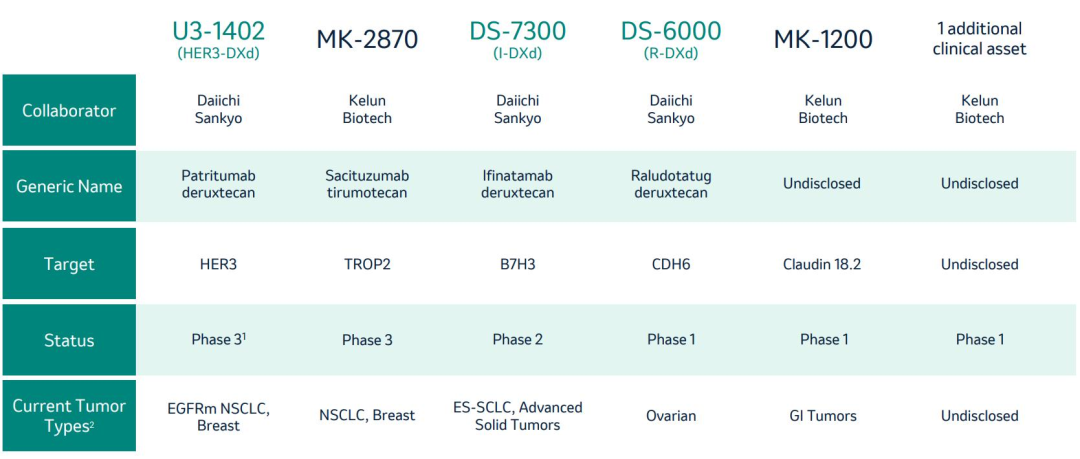
MSD's Product Layout in the ADC Field
01
Transaction Details
This collaboration agreement between MSD and Daiichi Sankyo is considered a significant milestone in the ADC field. The upfront payment is as follows:
patritumab deruxtecan (HER3-DXd)
The down payment is $750 million.
ifinatamab deruxtecan (I-DXd)
The down payment is $1.5 billion
raludotatug deruxtecan (R-DXd)
The down payment is $750 million.
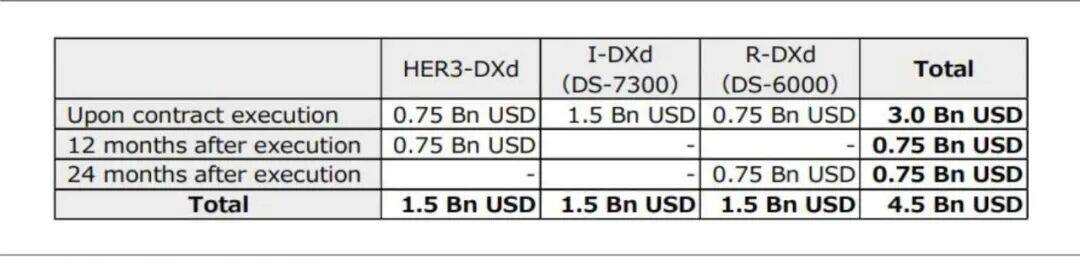
Figure 1 MSD and Daiichi Sankyo Transaction Details
02
Clinical Data Analysis
HER3-DXd, I-DXd, and R-DXd are first-in-class ADC products targeting HER3, B7-H3, and CDH6, respectively. Among them, HER3-DXd is the most advanced HER3 ADC, having received Breakthrough Therapy Designation from the U.S. Food and Drug Administration (FDA) in December 2021. It is intended for third-line treatment of patients with EGFR-mutated non-small cell lung cancer (EGFRm NSCLC) and is expected to submit a Biologics License Application (BLA) to the FDA by the end of March 2024 (based on the HERTHENA-Lung01 trial).
According to the HERTHENA-Lung01 clinical data disclosed this year for HER3-DXd, the trial treated NSCLC patients who had received EGFR-TKI and platinum-based chemotherapy with HER3-DXd at a dose of 5.6mg/kg Q3W. Among 225 patients, a complete or partial response rate (cORR) of 29.8% was achieved, with a median duration of response (mDOR) of 6.4 months, a median progression-free survival (mPFS) of 5.5 months, and a median overall survival (mOS) of 11.9 months. Patient responses were observed across various HER3 membrane expression levels.
In terms of safety, the HERTHENA-Lung01 trial showed a median duration of treatment (DOT) of 5.5 months, with 64.9% of patients experiencing treatment-related adverse events (TEAEs) of grade 3 or higher, and 28.9% experiencing grade 4 or higher TEAEs. The most common grade 3 or higher adverse reactions were hematological toxicities. TEAEs leading to dose interruption occurred in 40.4% of patients, those leading to dose reduction occurred in 21.3%, those leading to treatment discontinuation occurred in 7.1%, and treatment-related TEAEs associated with death occurred in 1.8%. A total of 12 patients (5.3%) were diagnosed with interstitial lung disease (ILD), including one patient with grade 1, eight patients with grade 2, two patients with grade 3, and one patient with grade 5.
These data indicate that HER3-DXd demonstrates certain therapeutic effects in third-line EGFRm NSCLC patients, but also comes with some safety concerns. This study provides a basis for further evaluation of the efficacy and safety of HER3-DXd and offers support for its future clinical application and development.
03
HER3-DXd Clinical Trial Data
The trial covered 225 patients and demonstrated significant clinical efficacy.
The clinical layout of HER3-DXd shows that the Phase 2 pivotal clinical trial for third-line treatment (3L) of EGFR-mutated non-small cell lung cancer (EGFRm NSCLC) has been completed, and the Phase 3 clinical trial for second-line treatment (2L) of EGFRm NSCLC (head-to-head comparison with platinum-based chemotherapy regimens) has already commenced.
In addition, HER3-DXd has also been deployed in early clinical trials for first-line and second-line treatment of EGFRm NSCLC as well as other indications such as breast cancer.
The purpose of these clinical trials is to evaluate the efficacy and safety of HER3-DXd across different treatment stages and indications. By completing the clinical trials and obtaining relevant data, MSD can further understand the performance of HER3-DXd in diverse patient populations and provide support for its future regulatory submissions and clinical applications.
It should be noted that the results of clinical trials may be influenced by subsequent studies, so specific clinical data and progress may be subject to adjustment. These clinical layouts and advancements are based on the provided information and current research plans, which may change over time.
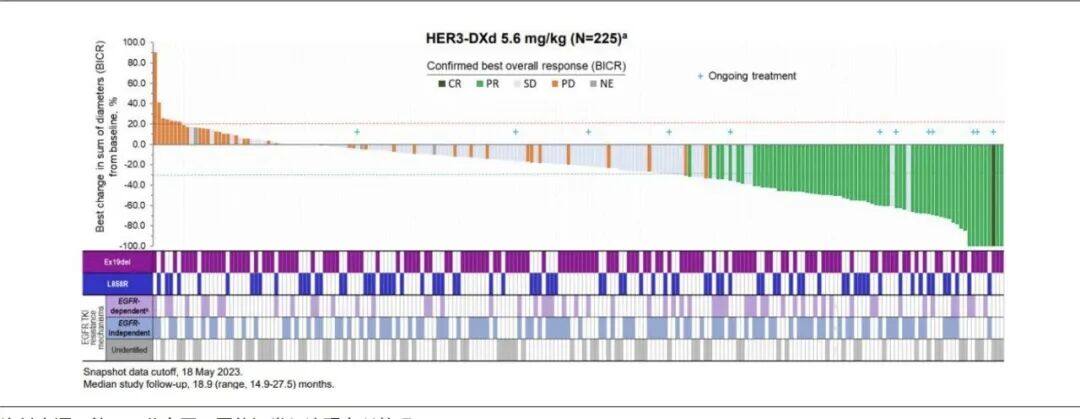
Figure 2: HER3-DXd HERTHENA-Lung01 Clinical Efficacy Data
cORR (Overall Response Rate)Reached 29.8%
mDOR (Duration of Response)For 6.4 months
mPFS (Progression-Free Survival)For 5.5 months
mOS (Overall Survival)For 11.9 months
It is worth mentioning that,The therapeutic effect of HER3-DXd is independent of the patient's HER3 membrane expression level, which means that HER3-DXd has potential therapeutic effects across different patient populations.
In terms of safety, the average duration of treatment (DOT) with HER3-DXd was 5.5 months, indicating that patients can tolerate relatively long-term treatment. However, attention must be paid to adverse reactions during treatment. Among patients, 64.9% experienced treatment-related adverse events (TEAEs) of grade 3 or higher, while 28.9% experienced TEAEs of grade 4 or higher. The most common grade 3 or higher adverse reactions were hematological toxicities. Additionally, 40.4% of patients experienced TEAEs leading to dose interruption, 21.3% experienced TEAEs leading to dose reduction, and 7.1% experienced TEAEs leading to treatment discontinuation, with treatment-related TEAEs associated with death accounting for 1.8%. Among 12 patients (5.3% of the total), ILD (interstitial lung disease) was identified: one case was grade 1, eight cases were grade 2, two cases were grade 3, and one case was grade 5.
These data reveal the potential therapeutic effects of HER3-DXd, but caution is required when managing treatment-related adverse events, particularly with regard to the occurrence of hematological toxicity.
04
Clinical Layout
HER3-DXd demonstrates high efficiency and broad coverage in clinical development.Currently, the drug has successfully completed the pivotal third-line (3L) clinical trial for EGFR-mutated non-small cell lung cancer (EGFRm NSCLC), indicating that the therapeutic efficacy of HER3-DXd in patients with advanced EGFR-mutated NSCLC has been preliminarily validated. Meanwhile, HER3-DXd is undergoing a second-line (2L) clinical trial for EGFRm NSCLC, with a head-to-head comparison against platinum-based chemotherapy regimens. This clinical study design will provide valuable data support for the application of HER3-DXd in earlier treatment stages.
By completing these clinical trials, the efficacy and safety of HER3-DXd have been evaluated across different treatment stages and patient populations. The results of these trials are of great significance for further advancing the regulatory submission and clinical application of HER3-DXd.
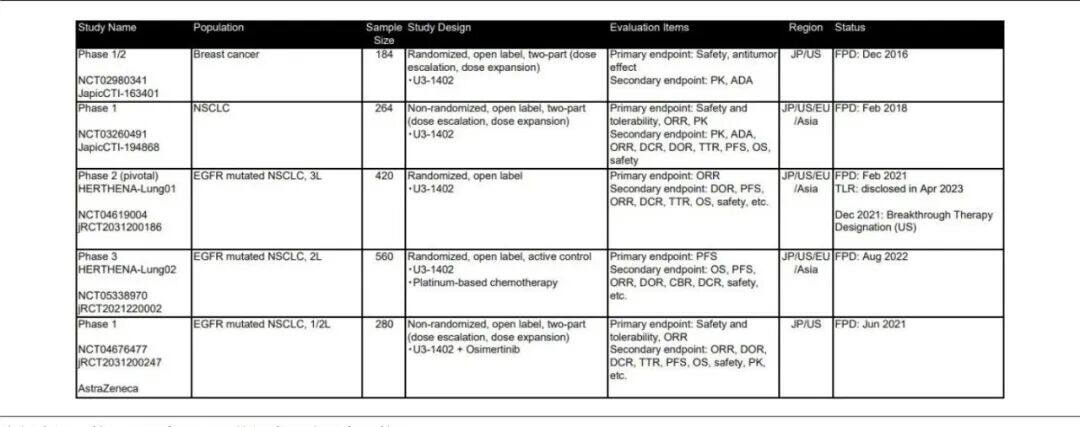
Figure 3 HER3-DXd Clinical Layout
In addition, the clinical research scope of HER3-DXd is not limited to EGFR-mutated non-small cell lung cancer (EGFRm NSCLC) but also includes first-line and second-line treatments for EGFRm NSCLC as well as other indications such as breast cancer. This broad research layout demonstrates the promising potential of HER3-DXd as a multi-indication drug. By conducting multi-level clinical studies across different treatment stages and various types of cancer, HER3-DXd not only expands its therapeutic range but also offers hope to more patients, further solidifying its position in the field of oncology.
05
Global R&D Progress of ADC
Daiichi Sankyo's HER3-DXd is clearly the globally most advanced HER3 ADC.However, it is worth noting that there are other promising HER3 ADC projects in the global ADC field.
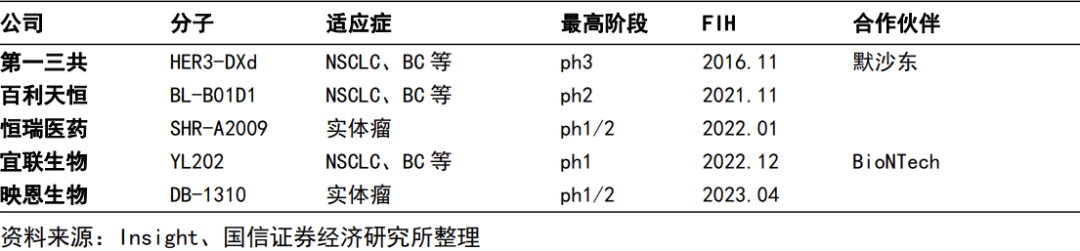
Figure 4: Global R&D Progress of HER3 ADC
In addition to Daiichi Sankyo's HER3-DXd, there are other promising HER3 ADC projects in the global ADC field. These projects include:
1. Baili Tianheng's BL-B01D1: BL-B01D1 is a bispecific antibody-drug conjugate (ADC) targeting EGFR and HER3. This dual targeting may offer enhanced efficacy and is applicable to specific patient populations, making it a highly anticipated drug candidate.
2. Hengrui Medicine's SHR-A2009: Hengrui Medicine has been continuously expanding its oncology treatment pipeline, and SHR-A2009 may become part of its ADC drug portfolio. It is Hengrui Medicine’s candidate drug in the HER3 field, and its R&D progress is worth watching.
3. YL202 by MedLink Biotech: MedLink Biotech has also conducted early research in the HER3 field. The development progress of YL202 is still under observation, but it represents potential competitiveness in this area.
4. DualityBio's DB-1310: DB-1310 is another ADC with HER3 targeting currently under investigation. DualityBio has made progress in its development, and it is worth keeping a close eye on.
These global R&D projects collectively demonstrate the activity in the HER3 field and the promising future of ADC technology. As a precision treatment method, ADCs have potentially huge market prospects, and the investments and competition from different companies are driving progress in this field. This further highlights the potential and promising future of ADCs in the oncology treatment area, offering more treatment options for patients.
06
Explore the Infinite Potential of I-DXd and R-DXd
Data updates presented at this year's World Conference on Lung Cancer (WCLC) revealed clinical outcomes for I-DXd in an extensive subgroup of patients with extensive-stage small cell lung cancer (ES-SCLC).I-DXd is an ADC targeting B7-H3, currently in a phase 2 clinical trial (IDeate-01) for later-line treatment of ES-SCLC.
In this trial, the researchers conducted dose escalation and expansion studies, treating ES-SCLC patients with a median of 2 prior treatment lines using I-DXd doses exceeding 6.4mg/kg. The encouraging clinical efficacy data showed positive results.
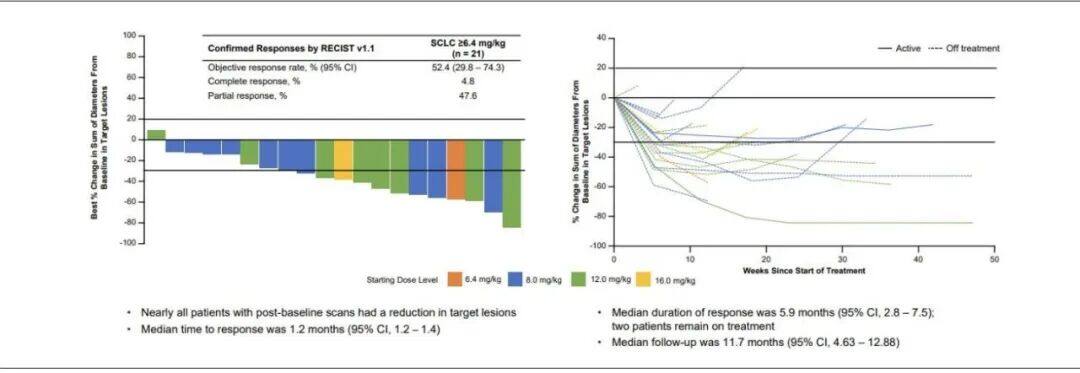
Figure 4 I-DXd Clinical Efficacy Data in ES-SCLC
ORR (Overall Response Rate)Reached 52.4%
Among themCR (Complete Remission)Is 4.8%
PR (Partial Response)Is 47.6%
mDOR (Duration of Response)For 5.9 months
mPFS (Progression-Free Survival)For 5.6 months
mOS (Overall Survival)For 12.2 months
However, it is important to note that treatment-related adverse events (TEAEs) associated with I-DXd were observed to some extent in the study. Data showed that 36.4% of patients experienced Grade 3 or higher TEAEs, and 22.7% of patients discontinued treatment due to TEAEs. This indicates that while I-DXd demonstrates promising efficacy in treating small cell lung cancer, potential adverse events must be managed with caution.
Globally,Advances in the B7-H3 ADC Field Are Gaining Significant Attention.Among them, MacroGenics' MGC-018 is the first B7-H3 ADC to enter the clinical stage. Currently, MGC-018 is undergoing a Phase 2/3 clinical trial for the indication of metastatic castration-resistant prostate cancer (mCRPC). This milestone progress is of great significance, as research on B7-H3 as a tumor target is rapidly expanding, offering new therapeutic hope to more patients.
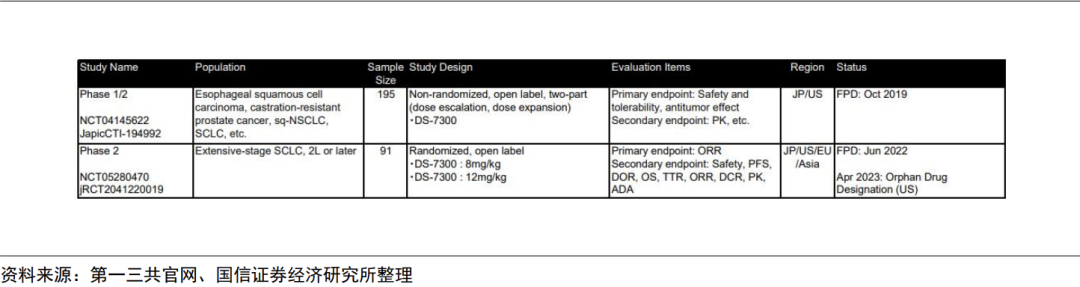
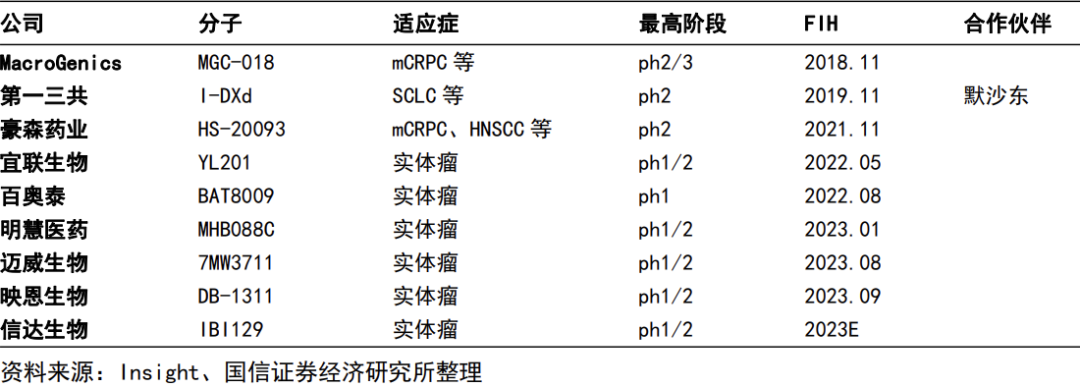
Figure 5 I-DXd Clinical Layout and Global B7-H3 ADC Development Progress
Compared with MGC-018, I-DXd is currently in Phase 2 clinical trials and is under active development.B7-H3, as an emerging tumor target, has attracted the attention of many pharmaceutical companies.In addition to MGC-018 and I-DXd, several other B7-H3 ADC molecules are currently in the early stages of development, indicating that B7-H3 targeted therapies may offer more treatment options in the future. Pharmaceutical companies are actively researching and developing drugs targeting B7-H3, which will provide cancer patients with more therapeutic opportunities.
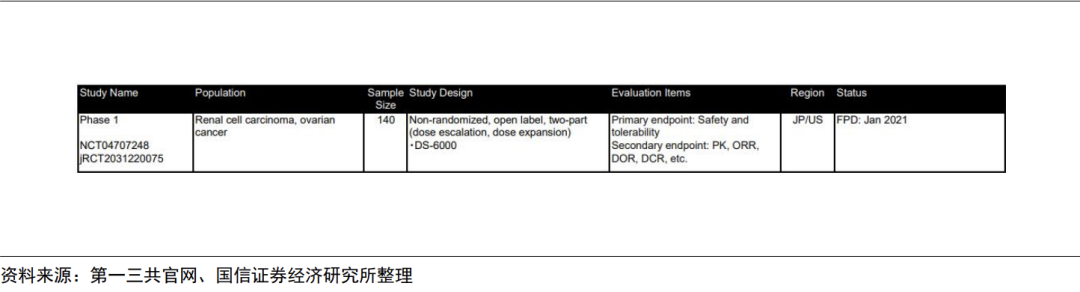
Figure 6 R-DXd Clinical Layout
R-DXd is a CDH6 ADC currently undergoing a Phase 1 clinical trial for the first human use.According to data presented by Daiichi Sankyo at this year's European Society for Medical Oncology (ESMO) conference, the trial yielded some encouraging results.
In the phase 1 dose-escalation trial, researchers gradually increased the dose of R-DXd from 1.6 mg/kg to 9.6 mg/kg. The results showed that 8.0 mg/kg was identified as the maximum tolerated dose (MTD), a key indicator of safety. Subsequently, the study further expanded the dose range from 4.8 to 8.0 mg/kg to gain deeper insights into efficacy and safety.
In terms of safety, the incidence of treatment-related Grade 3 or higher adverse events (TEAEs) was 50%, and the incidence of adverse events (AEs) leading to discontinuation was 14%. This indicates that the use of R-DXd may be associated with some adverse events, requiring effective management during treatment.
Among 34 evaluable patients, the overall response rate (cORR) was 38%. Specifically, the cORR in the 4.8mg/kg dose group reached 67%, while the cORR in the 6.4mg/kg dose group was 33%, and the cORR in the 8.0mg/kg dose group was 31%. These data indicate that R-DXd demonstrates potential clinical efficacy in CDH6-targeted therapy, particularly achieving a higher response rate at lower doses.
07
Other Collaboration Information in the ADC Field
GSK and Hansoh Pharma Reach ADC Collaboration
Hansoh Pharma Recently Announces Major Collaboration: Global Rights (Excluding Greater China) for B7-H4 ADC Product HS-20089 Licensed to GSK
MSD Terminates Part
Preclinical projects in collaboration with Kelun-Biotech
MSD recently announced the termination of part of its collaboration projects with Kelun-Biotech. This includes the termination of the exclusive license granted by Kelun-Biotech to MSD for the development, manufacturing, and commercialization of a preclinical ADC asset, as well as the decision not to exercise the exclusive option granted by Kelun-Biotech to obtain an exclusive license for another preclinical ADC asset. Previously, Kelun-Biotech and MSD had signed multiple licensing and collaboration agreements to jointly develop up to nine ADC assets, three of which have advanced to the clinical stage.
Despite ending the collaboration on these two preclinical assets, Merck Sharp & Dohme AG (MSD) will continue to advance products that have entered the clinical stage, such as SKB264, SKB315, and SKB410. These products play a significant role in MSD's global strategy. SKB264/MK-2870, the core product of the collaboration between Kelun-Biotech and MSD, is currently undergoing a global multicenter clinical trial for EGFRm NSCLC 3L. This project complements Daiichi Sankyo’s products and provides strategic support for MSD's pipeline in major disease areas such as lung cancer and breast cancer.
MSD's decision underscores their strategic shift in the ADC field, focusing resources on core projects. While collaborations on some preclinical products have been terminated, this will not impact the advancement of other products.
ADC, as a precision therapy, has expanded the target range for cancer treatment and demonstrated potential when used in combination with current therapies. Across multiple indications, ADCs have shown excellent clinical data, highlighting their potential advantages in the field of oncology.
Some domestically produced ADC projects adopt differentiated molecular designs, placing them at the forefront of global R&D progress and demonstrating outstanding early clinical data. These projects, through external licensing, are expected to enter the global market and become competitors. Therefore, leading domestic ADC companies with global innovation capabilities, such as Kelun-Biotech-B, Hengrui Medicine, and Baili Tianheng-U, are expected to play significant roles in the international market and gain more growth opportunities.


All articles reproduced in this official account are intended to convey more information, with the source and author clearly indicated. Media or individuals who do not wish to be reprinted may contact us (cbplib@163.com), and we will immediately delete the content. All articles represent the views of the author and do not represent the position of this website.