 In recent years, emerging immunotherapy has become a breakthrough in cancer treatment. However, only a minority of patients can continuously benefit from immunotherapy, as most cancer patients either do not respond to the treatment or are prone to developing resistance. Therefore, identifying new targets to broaden the applicability of tumor immunotherapy and thereby benefiting more patients has become a major challenge.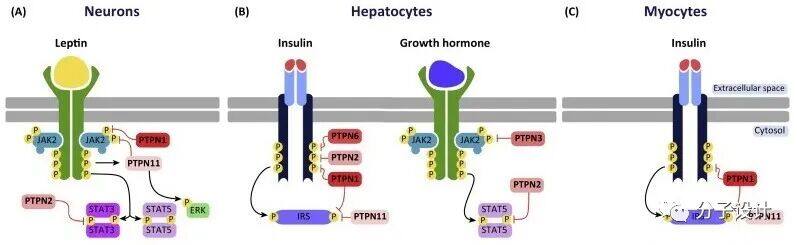
Protein Tyrosine Phosphatase PTPN2 (also known as TC-PTP) and its paralog PTPN1 (also known as PTP-1B) can promote anti-tumor immune responses when genetically depleted in tumor or immune cells. Therefore, unlike current treatment methods, PTPN2/N1-targeted therapy can achieve a dual anti-cancer mechanism by directly acting on tumor cells and enhancing the anti-tumor activity of immune cells. However, phosphatases are considered "undruggable" targets due to their highly polar active sites. Given the importance of PTPN2/N1 in tumor and immune cells, as well as the high homology of their active sites, researchers have attempted to discover small molecule inhibitors targeting these two phosphatases. Recently, AbbVie and Calico Life Sciences LLC. collaborated to designA small molecule capable of entering cells and binding to PTPN2 and PTPN1 phosphatases can effectively achieve tumor treatment through immune modulation.。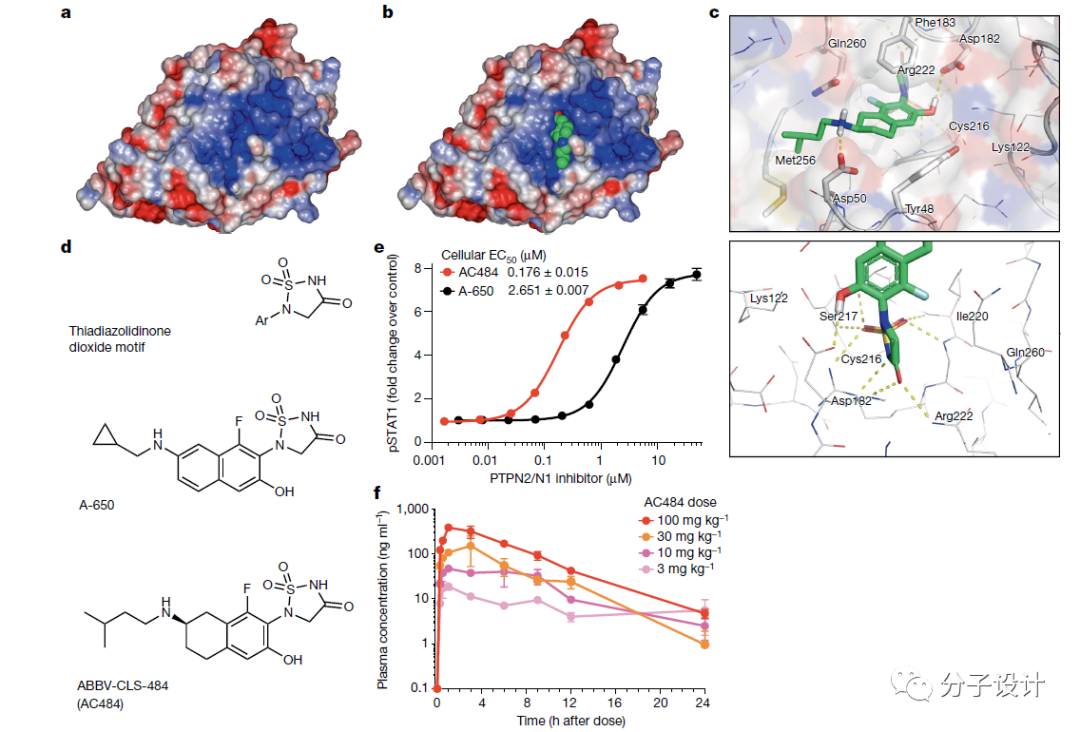
First, the researchers used Thiadiazolidinone as a lead compound and designed a series of small molecules capable of interacting with PTPN2 and PTPN1 based on structure-based drug design. Subsequently, by optimizing the interactions near the dithiadiazolidinone ring and naphthalene side chain, they discovered A-650, which exhibits strong inhibitory effects on PTPN2 and PTPN1. However, its poor physicochemical properties hindered further optimization of A-650. Afterwards,The corresponding aminotetrahydronaphthalene was obtained by partially saturating the naphthalene core, and optimizing the amine side chain, ultimately yielding the preferred molecule AC484.The crystal structure of PTPN2 protein with AC484 confirmed the formation of several key interactions in the active site Cys216 region. The cellular potency of AC484 was significantly improved, and oral administration effectively achieved potent in vivo drug levels.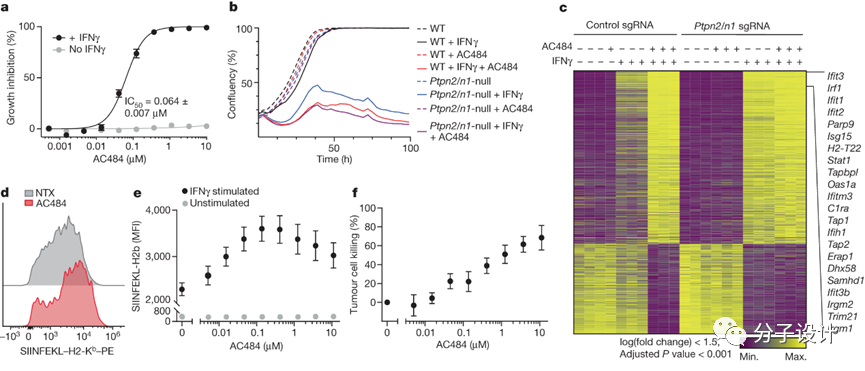 Genetic ablation of PTPN2 or PTPN1 in tumor cells enhances the signaling transduction of both type I and type II IFNs, increasing downstream effects including cell growth arrest, production of immune cell chemokines, and enhanced antigen presentation. They compared the impact of PTPN2/N1 inhibition on IFNγ gene deficiency and found that AC484 can dose-dependently enhance IFNγ-driven growth arrest in vitro, consistent with findings in PTPN2/N1-deficient B16 tumor cells. Further transcriptome analysis showed that AC484-treated and PTPN2/N1-deficient tumor cells exhibited highly similar overall transcriptional responses to IFNγ treatment.
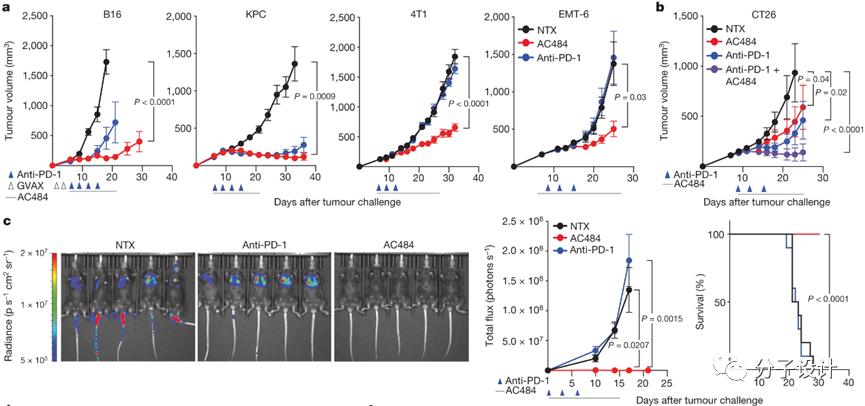 In four tumor models treated with AC484, significant tumor regression was observed in the AC484 group, along with improved survival rates in mice. In each model, the tumor regression and survival rate in the AC484 group were comparable to or better than those in the anti-PD-1 group. In the CT26 model,AC484 Combined with Anti-PD-1 Further Enhances Efficacy and Survival, Indicating a Synergistic Effect of the Two Treatment ApproachesMetastasis is the leading cause of cancer-related death. Researchers used the B16 lung metastasis model, where mice in the untreated group and anti-PD-1 group developed lung metastases by day 10, while mice in the AC484 group showed no detectable disease and had a 100% survival rate. In summary,AC484 treatment not only enhanced the control of established solid tumors but also improved the survival of metastatic tumors.。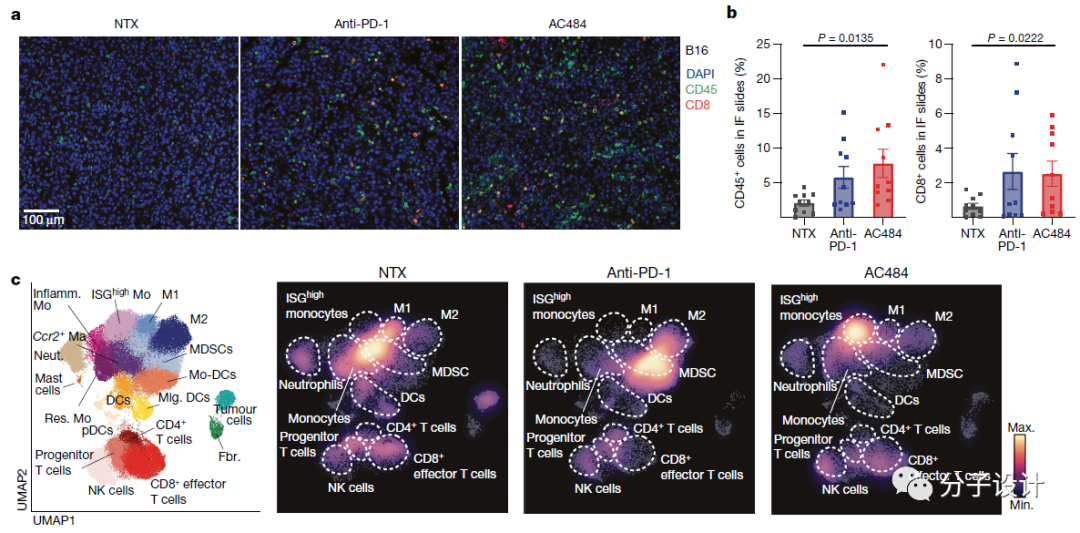
To further study the inhibitory effects of PTPN2/N1 on lymphocytes, they separately re-clustered CD4+ T cells, CD8+ T cells, and NK cells, which provided higher clustering resolution for phenotypically distinct T cell and NK cell populations. After AC484 treatment, the number of cytotoxic NK cells significantly increased, FOXP3+ regulatory T cells relatively decreased, and CD8+ T cells were the most abundant.To investigate the effect of AC484 treatment on CD8+ T cell exhaustion, they categorized tumor-infiltrating SLAMF6+ (progenitor exhausted) and TIM-3+ (terminally exhausted) CD8+ T cells from untreated mice, AC484-treated mice, and anti-PD-1-treated mice. In transcriptional and epigenetic PCA, SLAMF6+ and TIM-3+ samples clustered together, while the AC484-treated group showed separation within the SLAMF6+ and TIM-3+ subsets.
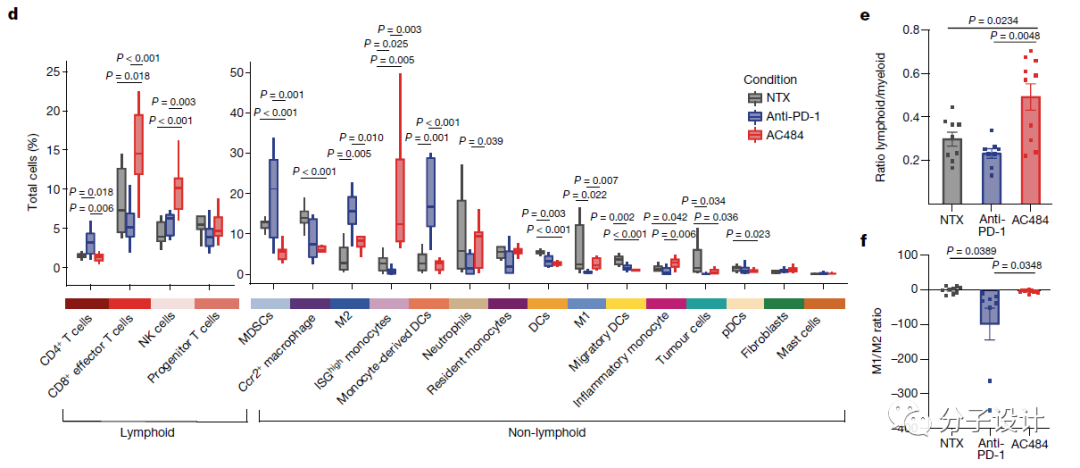
Differential gene analysis showed that, compared with anti-PD-1-treated mice, memory and effector gene markers were enriched and exhaustion-related genes were reduced in TIM-3+ T cells of AC484-treated mice. Inflammatory response, IL-6-JAK-STAT3 signaling, and IL-2-STAT5 signaling were the most abundant signals in both datasets, consistent with the increased JAK-STAT signaling pathway resulting from PTPN2/N1 inhibition. Therefore,AC484 treatment enhances the JAK-STAT signaling pathway, leading to transcriptional and epigenetic reprogramming of effector CD8+ T cells, thereby promoting effector cell function and reducing T cell exhaustion.。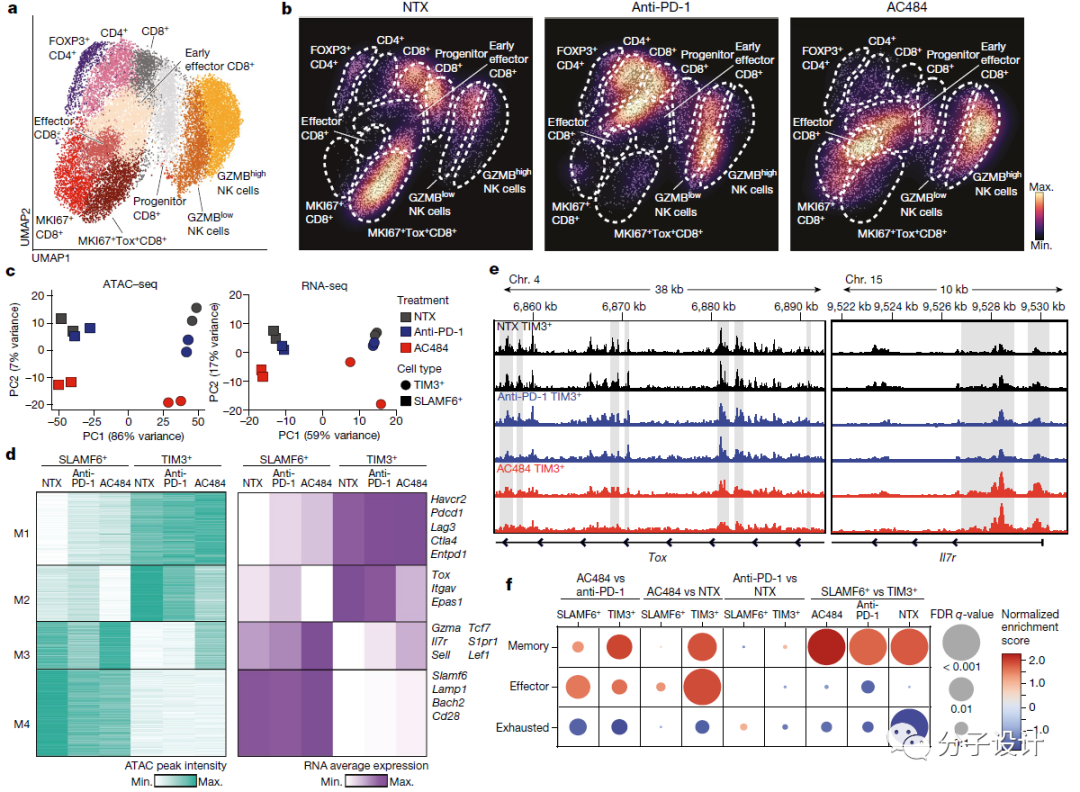
AC484 led to an increase in CD45+ immune cell infiltration, a relative reduction in regulatory T cells, and an increase in NK cell infiltration. In AC484-treated tumors, CD8+ T cells exhibited lower TIM-3 and TOX expression, with an overall decrease in the frequency of TIM-3+ TOX+ cells compared to untreated mice and anti-PD-1 treated mice. The pSTAT5 MFI significantly increased in AC484-treated samples compared to untreated controls. Thus, researchers confirmed at the protein level that systemic inhibition of PTPN2/N1 induces STAT5 pathway activation and reduces markers associated with T-cell exhaustion.
Compared with the control group, AC484 increased the maximum oxygen consumption rate and extracellular acidification rate of activated primary mouse T cells, indicating enhanced mitochondrial and glycolytic metabolic activity. After treating SIINFEKL-specific OT-I transgenic CD8+ T cells with AC484 or a control drug for four days, researchers removed the drug and transferred the T cells into mice bearing EL4-OVA tumors. Only the recipients of AC484-treated T cells were able to inhibit the growth of EL4-OVA tumors, with 4 out of 10 mice showing complete responses. Thus, AC484 treatment induces epigenetic and metabolic changes associated with improved CD8+ T cell effector function, which persist even after drug removal.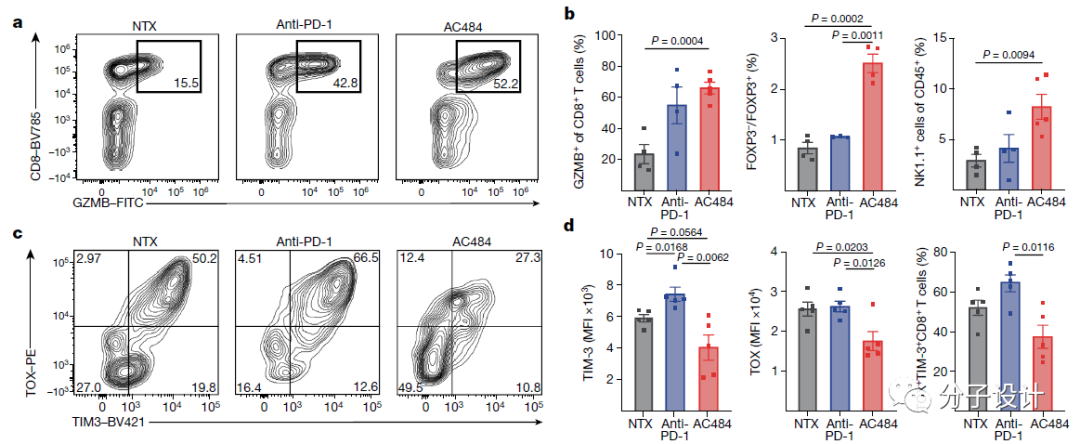
To functionally assess the impact of AC484 on CD8+ T cell cytotoxicity and exhaustion, researchers repeatedly stimulated CD8+ T cells isolated from OT-I transgenic mice for 5 days with or without AC484 treatment, then evaluated their phenotype and functionality. AC484 significantly reduced the expression levels of TOX and PD-1 as well as the frequency of PD-1+TOX+ CD8+ T cells during chronic antigen stimulation. Additionally, AC484 induced a threefold increase in T cells producing IFNγ and TNF, a hallmark of multifunctionality. However, chronically stimulated and AC484-treated T cells exhibited significantly enhanced cytotoxic activity. Thus, AC484, by inhibiting PTPN2/N1 during chronic antigen exposure, markedly decreased the expression of T cell exhaustion-associated genes while enhancing cytokine production and cytotoxic activity in CD8+ T cells and NK cells.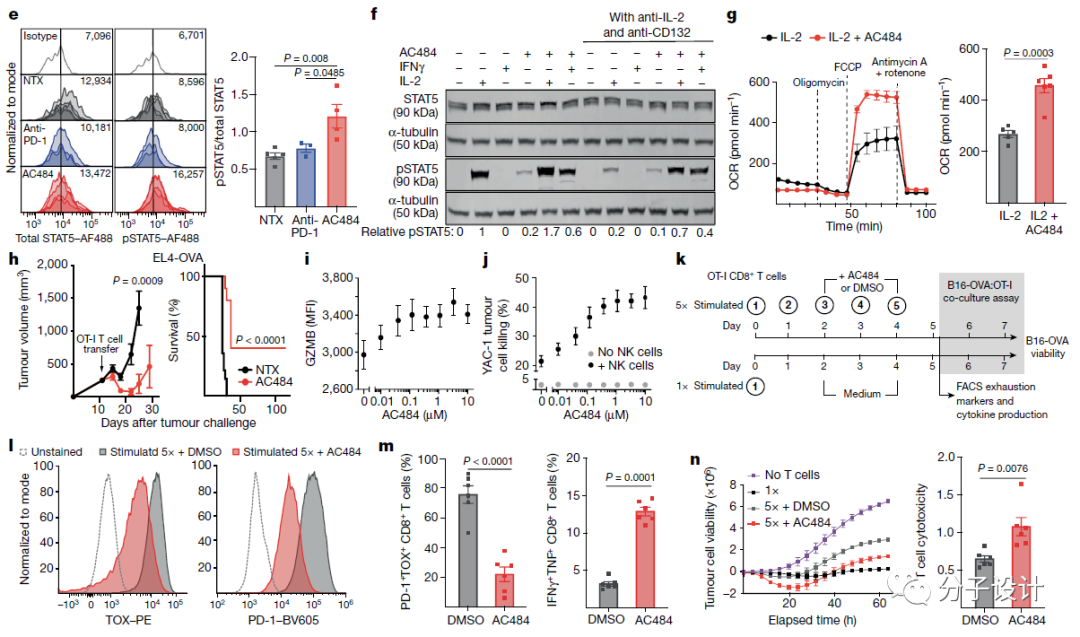
In summary, the researchers reported a novel orally bioavailable PTPN2/N1 active site inhibitor, AC484, and completed its series of preclinical characterizations as an anticancer drug. Meanwhile, the researchers demonstrated that AC484 effectively enhanced the sensitivity of cancer cells to IFNγ and augmented the activation and effector functions of T cells and NK cells. Currently, AC484 is being evaluated in Phase I clinical trials as a monotherapy and in combination with anti-PD-1 for the treatment of solid tumors.Christina K Baumgartner, Hakimeh Ebrahimi-Nik et al. The PTPN2/PTPN1 inhibitor ABBV-CLS-484 unleashes potent anti-tumour immunity. Nature 2023, 622(7984):850-862.