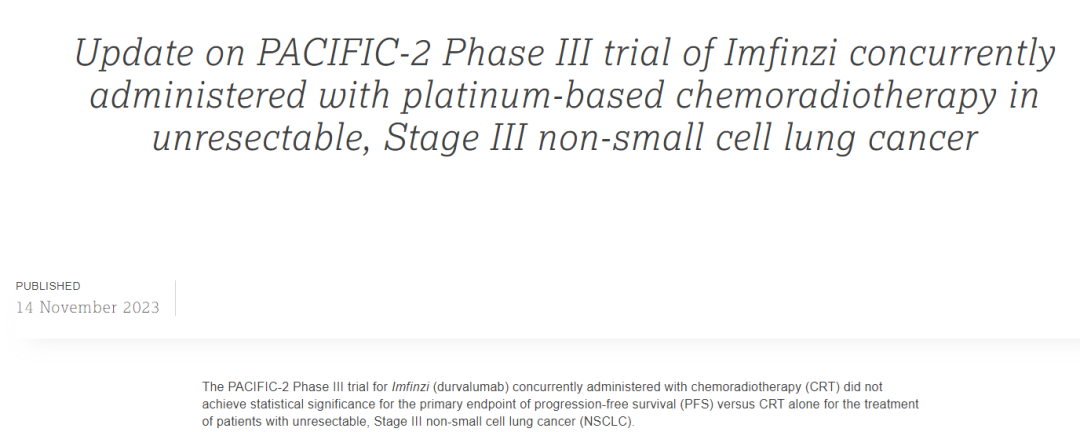
On November 14, AstraZeneca updated the results of the Phase III PACIFIC-2 study on durvalumab (Imfinzi) in combination with platinum-based chemoradiotherapy (CRT) for the treatment of unresectable non-small cell lung cancer (NSCLC). Compared with CRT alone, durvalumab+CRT did not demonstrate a statistically significant improvement in progression-free survival (PFS).PACIFIC-2 is a randomized, double-blind, placebo-controlled multicenter Phase III clinical trial designed to evaluate the efficacy and safety of durvalumab in combination with CRT in patients with unresectable NSCLC. The trial was conducted across 88 centers in more than 20 countries, enrolling a total of 328 participants. The primary endpoint is PFS, with secondary endpoints including overall survival (OS), overall response rate (ORR), and duration of response (DOR).The press release shows that, based on the results of the Phase III PACIFIC study, sequential treatment with durvalumab after platinum-based CRT is the established global standard of care for patients with unresectable Stage III NSCLC. The initiation of the PACIFIC-2 trial aims to evaluate the efficacy of durvalumab when used concurrently with CRT, with the goal of addressing the clinical needs of patients who are unsuitable for the PACIFIC regimen, i.e., those who progress or discontinue treatment during CRT.For this patient populationDurvalumabPreliminary analysis of the safety and tolerability of CRT suggests that these characteristics are generally consistent with known features, but an increased infection rate was observed during the concurrent treatment period in the experimental group.Susan Galbraith, Executive Vice President of Oncology R&D at AstraZeneca, stated: "The goal of our PACIFIC-2 study was to address an unmet clinical need by introducing immunotherapy earlier, while administering durvalumab alongside chemoradiotherapy. Although the results of PACIFIC-2 did not reach statistical significance, we will learn from this trial and continue our commitment to improving patient outcomes by extending the benefits of immunotherapy across various treatment settings."Copyright © 2023 PHARMCUBE. All Rights Reserved.
Welcome to forward, share, and reasonably cite. When citing, please clearly indicate the source of the article.For reprint, please leave a message or send a message to the WeChat Official Account backend, and indicate the name and ID of the official account.
Disclaimer: The information in this WeChat article is for general reference only and should not be directly used as decision-making content. PharmaCube assumes no responsibility for any loss incurred by any party due to the use of the content herein.