

Tech giants take the leap: how China Telecom and ByteDance are shaking up AI drug discovery

Tencent
Internet Comprehensive Service Provider

BioMap
Developer of Innovative Drug R&D Platform
At the recently concluded China International Fair for Trade in Services (CIFTIS), China Telecom teamed up with global pharma leaders including Bayer, Hengrui, and IQVIA to launch the "AI Drug R&D Public Service Platform" — a move that marks its formal entry into AI-driven drug discovery.
Almost simultaneously, ByteDance's Protenix team reported a research breakthrough: its PXDesign system achieved a 20%-73% hit rate for nanomolar-level binders on five out of six protein targets, outperforming existing methods like AlphaProteo by 2-6-fold. These twin announcements quickly reignited industry excitement, returning AI drug discovery to the spotlight.
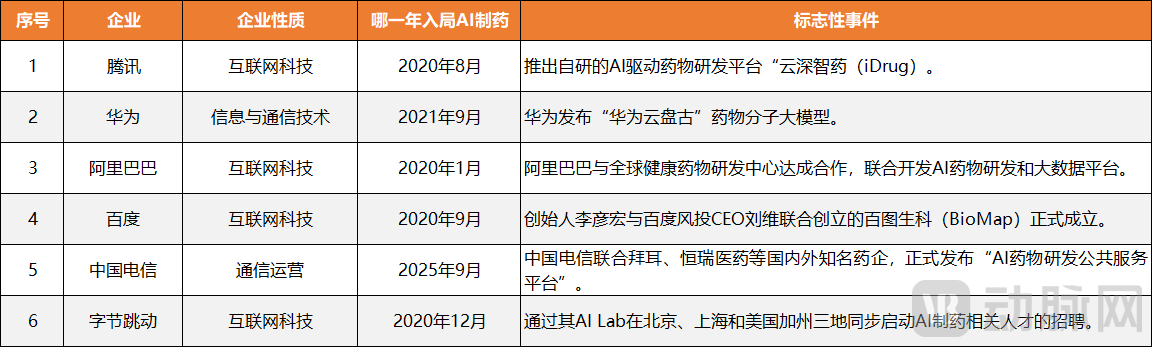 Figure 1: Timeline of Major Tech Companies Entering AI Drug Discovery (2020-2025)
Indeed, cross-border entry into AI-driven drug discovery by Chinese internet giants is not a new phenomenon. During the peak of 2020-2021, companies like Tencent, Baidu, Alibaba, and Huawei had already made their forays through various initiatives.
For instance, Baidu's founder Robin Li took a hands-on approach by personally funding the establishment of BioMap, which is now pushing for an IPO. Tencent has also made substantial moves, not only launching its in-house platform "Tencent iDrug" but also investing in dozens of AI drug R&D companies, with total investments exceeding RMB 5 billion. The influx of these tech giants once propelled AI drug discovery into an unprecedented spotlight.
According to incomplete statistics, China now boasts 108 AI drug R&D companies, marking the industry's official entry into the "era of a hundred enterprises." While major business development deals and high-value investments continue to emerge, the sector is simultaneously undergoing a shakeout, with frequent reports of bankruptcies, layoffs, pipeline cuts, and asset fire sales.
Amid these contrasting realities, a critical question grows louder: how should these prominent cross-sector players navigate the complex currents of AI drug development?
What Is Driving Such Aggressive Investments?
In April 2025, industrial software giant Siemens announced the acquisition of life sciences data company Dotmatics for US$5.1 billion, aiming to accelerate the expansion of its industrial software business from traditional manufacturing into the life sciences sector and further advance the R&D and industrial application of AI-driven drug discovery.
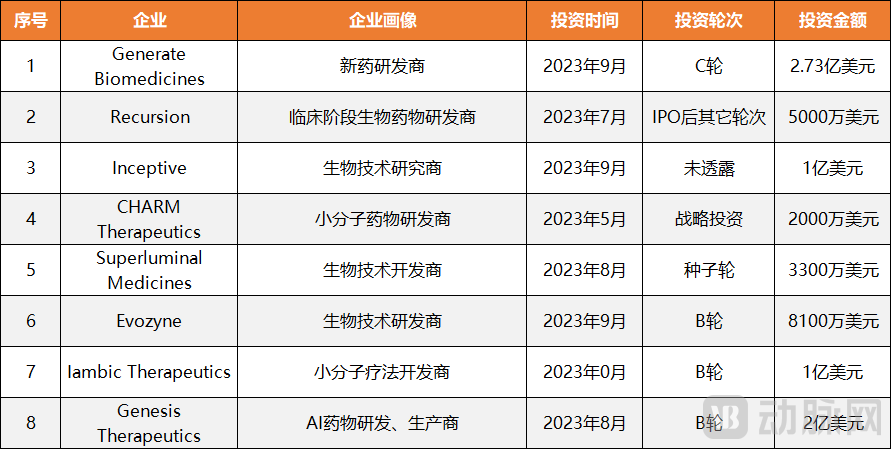 Figure 2: NVIDIA Invested in 8 AI Pharmaceutical Companies in a Year
This high-profile acquisition quickly drew industry-wide attention, but it was far from an isolated case. In the race to dominate AI-driven drug discovery, major players have engaged in remarkably aggressive moves. For instance, Nvidia invested in eight AI biotech companies within a single year—a pace surpassing even that of many dedicated investment firms. While Chinese tech giants like Tencent and Baidu appeared more restrained, they have also made substantial commitments, with founders taking hands-on roles and corporate resources being deployed in an "all-in" manner.
So, what truly drives this concentrated rush of giants into AI drug development?
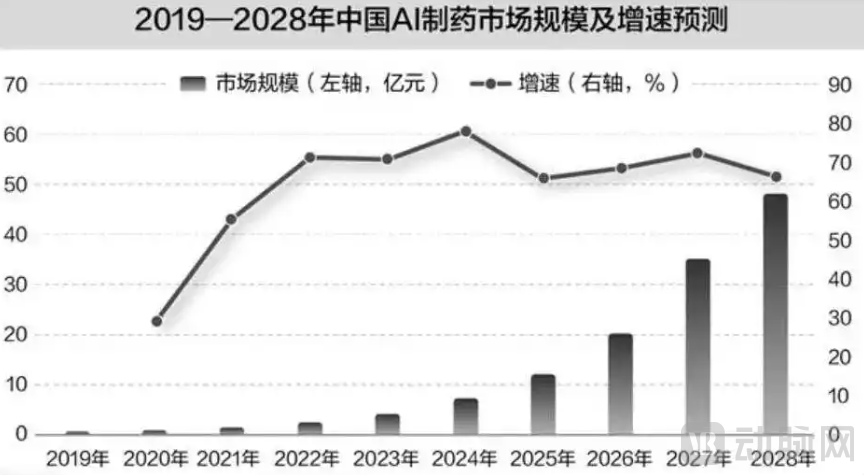 Figure 3: China's AI Pharmaceutical Market Size and Growth Rate (2025-2028)
VCBeat has summarized three key drivers, with the first being the vast market potential of AI-driven drug discovery. A 2024 Morgan Stanley report indicated that the global market for AI in pharmaceuticals has already reached $50 billion in the short term and is poised for further expansion. Focusing on China, data from LeadLeo Research shows that the country's AI drug discovery market is projected to grow from RMB 1.21 billion in 2025 to RMB 5.86 billion in 2028, representing a compound annual growth rate of 68.3%.
This undoubtedly represents a massive market opportunity, underpinned by the high expectations that AI holds for revolutionizing traditional drug development processes. It is reported that conventional drug R&D is trapped in the "double-ten dilemma": developing a new drug takes over a decade and requires R&D investments as high as $1 billion, yet the success rate remains a mere 1%. In contrast, AI-driven drug discovery aims to reduce the timeline for key stages—such as target identification, molecular design, and clinical prediction—by over 50%, cut costs to tens of millions of dollars, and increase Phase II clinical trial success rates from the traditional 25%–30% to 60%–70%.
Secondly, AI-driven drug discovery is now transitioning from the proof-of-concept stage to a phase of tangible value release, with numerous groundbreaking achievements on the horizon. In June 2025, Insilico Medicine announced Phase IIa clinical trial data for its small-molecule drug Rentosertib (ISM001-055). A multi-center study in China involving 71 idiopathic pulmonary fibrosis (IPF) patients showed that the group receiving a 60mg daily dose experienced an average increase of 98.4 ml in lung capacity, while the placebo group saw a decrease of 20.3 ml. These results underscore the potential of the world's first AI-discovered drug to reach Phase II clinical trials. To date, over ten drug candidates developed using AI in China have advanced to Phase II clinical trials, demonstrating significant therapeutic potential in areas such as oncology, autoimmune diseases, and neurological disorders.
The final point lies in the strategic fit between major tech companies and the AI-driven drug discovery industry. It is well known that leaders of global top tech firms almost universally harbor a strong enthusiasm for biotechnology. Among various biotech fields, AI-driven drug discovery stands out as the most compatible domain for them. It merges biotechnology with AI and other information technologies, presenting these leaders with a familiar landscape within an unfamiliar industry. This makes cross-sector ventures more manageable and allows them to more effectively leverage their own resources and technical expertise to make precise judgments and efficient strategic deployments in the AI drug discovery arena.
In fact, the development of AI-driven drug discovery truly needs the influx of these giants. Whether it's internet majors like Baidu and Tencent, or information hardware producers like Huawei and NVIDIA, their algorithmic capabilities and hardware infrastructure play pivotal roles in advancing AI-driven drug discovery.
"Cross-sector expansion by giants doesn't happen overnight," commented a senior investor. "It must meet certain prerequisites—for instance, the market must be sufficiently large, with high implementation feasibility, and ideally align with their existing technology and resources. AI drug discovery fulfills all these criteria. That's why tech giants are entering this field so aggressively, even treating it as a long-term strategic deployment."
Early Results: From IPOs to Major Exits
In May 2025, BioMap CEO Liu Wei announced the company's plan to actively pursue a public listing in Hong Kong within the next year and a half. Three months later, the largest BD transaction in the field of AI-driven drug discovery was finalized — XtalPi (Jingtai Technology) announced a pipeline collaboration agreement with DoveTree Medicines, with a total order value of approximately HKD 47 billion. As an investor, Tencent is poised to receive favorable returns from this deal. On the research and development front, companies like Huawei, ByteDance, and Alibaba have already achieved multiple breakthroughs in AI-driven drug discovery.
It is evident that, after years of dedicated efforts and accumulation, major tech giants have now entered the harvest phase in the field of AI-driven drug discovery. What exactly have they done right, and what future possibilities remain for AI in drug development? To address these questions, VCBeat has focused its analysis on three representative companies.
Taking Baidu as an example, it stands out as the only major tech company that independently established an AI-driven drug discovery enterprise – BioMap, which has now entered a mature phase. To date, BioMap has achieved state-of-the-art performance in over 200 task models across critical fields such as drug discovery, biomanufacturing, and healthcare. The company has provided high-quality services to more than 300 clients globally, accumulating total customer orders exceeding US$2 billion. This has significantly supported users in achieving breakthroughs in cutting-edge areas including AI-powered novel protein design, AI-driven target discovery, and AI-enabled enzyme design.
In October 2024, BioMap launched its full-modality biomolecular model xTrimo V3. With 210 billion parameters, it set a new global record as the largest AI foundation model in life sciences. Over the next three years, BioMap plans to further expand the model's parameters and incorporate additional modalities such as metabolomics and microbiomics, aiming to achieve comprehensive modeling from molecular levels to ecosystems. Regarding this, Professor Li Ziqing, Chief Scientist of BioMap, stated in a media interview, "BioMap is implementing a three-dimensional strategy—'foundation model + vertical scenarios + open ecosystem'—to strive for leading China in securing a commanding position in the global biocomputing competition."
Unlike Baidu's all-in approach with BioMap, Tencent has adopted a more diversified strategy in the AI drug discovery sector, primarily operating through two parallel pathways: one relies on its self-developed AI drug R&D platform "Tencent iDrug," while the other extends across the entire AI pharmaceutical industry chain through strategic investments.
Starting with "Tencent iDrug," this is the company's first AI-driven drug discovery platform, capable of reducing the screening cycle for small-molecule drugs from several months to just a few days. It has already supported over ten drug R&D projects, covering areas such as oncology and autoimmune diseases. On the investment front, Tencent has executed more than ten transactions in the AI pharmaceutical space, with notable portfolio companies including XtalPi, Insilico Medicine, Evopoint Biosciences, and DP Technology. Through these investments, Tencent has established a comprehensive closed-loop ecosystem spanning "data, computing power, and application scenarios."
At the recently held "2025 Tencent Global Digital Ecosystem Summit," Liu Wei, Head of AI Drug Discovery Technology at Tencent, also shared his vision for the future: "Through in-depth research on atomic interactions and the structure of atomic aggregates, Tencent Healthcare will enable models to adapt to various drug development scenarios, providing foundational support for the R&D of drugs across different modalities. For example, in DNA and protein structure prediction, Tencent will integrate atomic-level large models with computational methods such as molecular dynamics simulations to significantly enhance the accuracy of structure prediction from sequences or existing structures, and gradually extend these capabilities to nucleic acid drug development and RNA-related fields."
Finally, focusing on ByteDance, although the company entered the field relatively later than other tech giants, it has already delivered numerous achievements in AI-driven drug discovery. For instance, internally, its self-developed, AI-driven integrated drug discovery platform, developed by the AIDD team, has identified multiple promising preclinical candidate compounds in areas such as oncology and neurological diseases. Externally, through strategic investments, ByteDance has formed deep collaborations with biotechnology companies, demonstrating significant potential in key areas like target discovery and molecule generation, and has successfully advanced several drugs to the IND application stage.
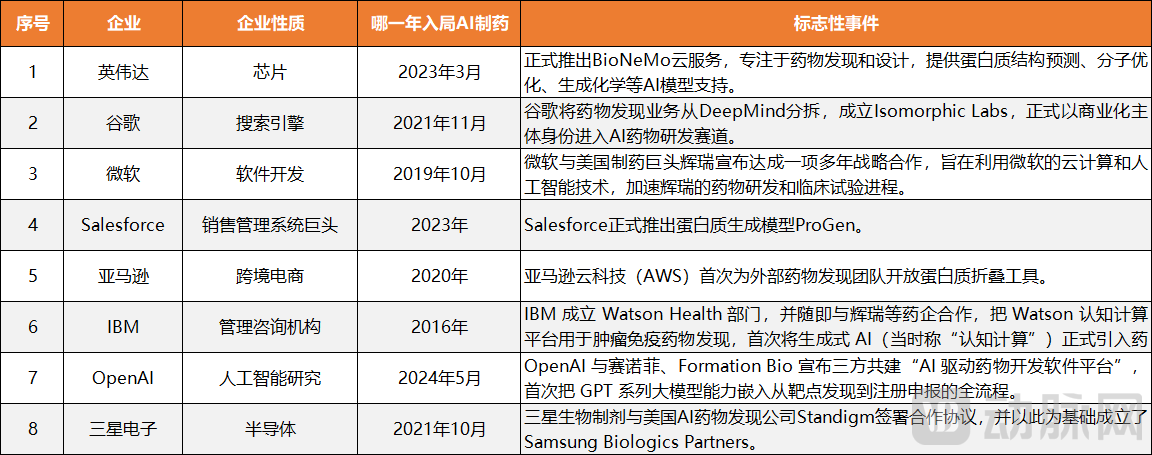 Figure 4: Timeline and Milestone Events of Global Pharmaceutical Giants Entering AI Drug Development
Of course, global tech giants have also been actively advancing and achieving remarkable results in the field of AI-driven drug discovery. For instance, in July 2025, Isomorphic Labs, Google's secretive drug development subsidiary, was set to initiate the first human trials of an AI-designed drug—a significant milestone marking the transition of AI-driven drug discovery from proof-of-concept to practical application. Also in July, Microsoft Research's AI for Science team collaborated with Freie Universität Berlin and Rice University to launch BioEmu, which introduced the first scalable "protein equilibrium ensemble simulator" based on a diffusion generative model. Using just a single consumer-grade GPU running for tens of minutes, it can now generate protein dynamics data that previously required supercomputers running for 100,000 hours, with predicted protein stability deviating from experimental results by less than 1 kcal/mol.
These developments demonstrate that on the challenging path of cross-sector AI drug discovery, these giants are not merely relying on financial muscle for publicity, but are leveraging their unique technological moats to accelerate toward key milestones.
AI Drug's "Two Extremes" Market Reality
According to VCBeat's incomplete statistics, from January to August 2025, China's AI drug discovery sector has completed over 10 business development transactions, with the total deal value reaching a staggering $30 billion. Major multinational pharmaceutical companies including AstraZeneca, Sanofi, Eli Lilly, and Pfizer have all made strategic investments in this field.
The influx of massive capital and the increased participation of leading pharmaceutical companies unequivocally demonstrate that this remains a sector brimming with potential and imagination.
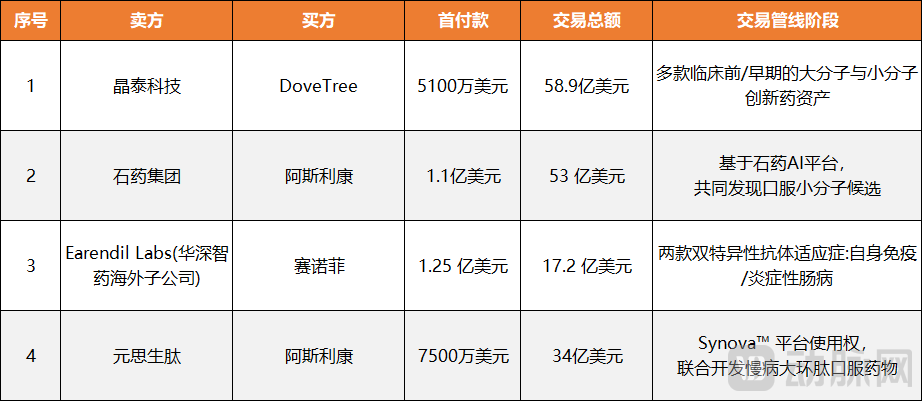 Figure 5: Notable BD Deals in China's AI Pharma Sector (2023-2025)
However, the AI drug discovery sector continues to witness frequent reports of bankruptcies, layoffs, and pipeline failures, with industry bubbles bursting one after another. In September 2024, AI pharmaceutical leaders Recursion and Exscientia announced a merger, marking the largest M&A deal in AI drug discovery to date. However, this merger was widely perceived as a strategic move for mutual survival between established AI drug companies facing challenges. Financial reports revealed that Recursion's net loss reached $463.7 million in 2024, a 41.3% year-on-year increase, while Exscientia had only $178 million on its books before the acquisition—insufficient to sustain its operations through 2024.
This "dual reality" of market conditions demonstrates that the AI drug discovery industry is transitioning from speculative fantasy to pragmatic implementation, with increasing emphasis on tangible technological value and commercial sustainability.
A specialized investor commented, "The field of AI drug discovery is entering a correction phase following over-optimistic expectations. There's growing recognition that initial assumptions about AI's integration with life sciences were overly optimistic—it's actually a marathon rather than a sprint. Consequently, the industry is now compelled to address self-sustainability, shifting focus toward clinical validation and commercial monetization of R&D pipelines."
This implies that cross-sector entrants will face new industry challenges. On one hand, they must intensify focus on developing and clinically implementing their achievements—whether through continuous technological innovation to enhance R&D efficiency, or by applying AI technologies across more clinical scenarios while accelerating tangible outcomes. These efforts require heightened commitment from leadership and organizational restructuring to support the evolving demands.
On the other hand, in terms of business models, industry giants need to identify the most suitable commercial approaches and achieve rapid monetization. It is reported that Chinese AI drug discovery companies currently focus on three main business directions: Biotech, CRO, and SaaS. Among these, the Biotech path is currently the most prevalent commercial model in China. This approach involves using AI to rapidly generate preclinical pipelines, advance them to clinical stages, and then license them out to secure upfront payments, milestone payments, and sales royalties.
In October 2023, BioMap secured a major $1 billion deal with Sanofi, validating the feasibility of this business model. After clearing the collaboration threshold with multinational corporations, BioMap swiftly entered a phase of accelerated growth. Amid the ongoing boom in business development transactions, numerous AI drug discovery companies are racing to demonstrate their capabilities to MNCs—a trend equally relevant to cross-sector entrants.
The reality is that AI-driven drug discovery embodies a dual nature: the relentless speed of AI technology versus the decade-long refinement cycle of the pharmaceutical industry. This inherent contradiction makes the development of the AI drug discovery sector particularly challenging. Yet, within these challenges lie unprecedented opportunities. For cross-sector pioneers, the golden era of AI drug discovery is just beginning. To ultimately stand out, they will need to demonstrate even stronger technological capabilities and greater patience.