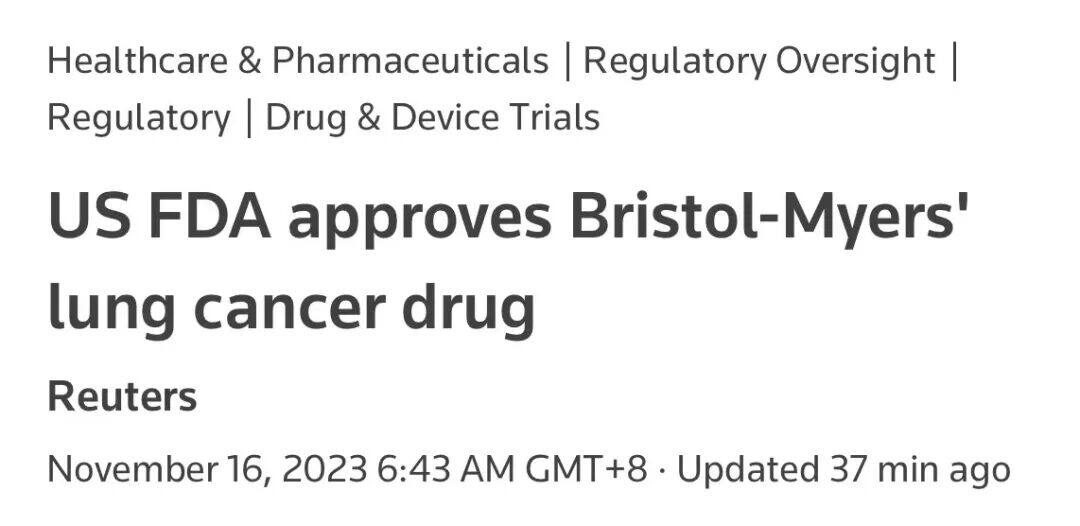
According to foreign media reports, BMS's new generation ROS1/NTRK inhibitor Repotrectinib (Ripretinib) has been approved by the FDA for marketing. It is used to treat ROS1-positive locally advanced or metastatic non-small cell lung cancer (NSCLC) patients, and its trade name is Augtyro.Repotrectinib is a next-generation ROS1/NTRK inhibitor with best-in-class potential developed by Turning Point. Patients with tumors carrying ROS1 and NTRK gene fusions often develop resistance mutations after receiving currently approved targeted therapies. These mutations limit drug binding to the target, ultimately leading to tumor progression. Repotrectinib is the first next-generation TKI for ROS1 or NTRK-positive metastatic NSCLC, uniquely designed to address the key drivers of disease progression.In July 2020, Zai Lab acquired the development and commercialization rights of Repotrectinib in Greater China (mainland China, Hong Kong, Macao, and Taiwan) from Turning Point for an upfront payment of $25 million and potential milestone payments of up to $151 million.In June 2022, BMS acquired Turning Point for a total transaction amount of $4.1 billion, gaining this product.Repotrectinib has been granted three Breakthrough Therapy designations by the FDA: 1) In December 2020, for the first-line treatment of ROS1-positive metastatic NSCLC patients who have not received ROS1 inhibitor therapy; 2) In October 2021, for patients with advanced solid tumors harboring NTRK gene fusions who have progressed after receiving 1-2 prior targeted therapies; 3) On May 10, 2022, for ROS1-positive metastatic NSCLC patients previously treated with a ROS1 inhibitor and who have not received platinum-based chemotherapy.This FDA approval is mainly based on the Phase I/II TRIDENT-1 study.Extreme results. Data as of February 11, 2022. The global safety data analysis included a total of 380 patients from all cohorts of the TRIDENT-1 study, combining phases 1 and 2. The global efficacy data analysis included phase 1 patients at all dose levels (with ROS1 fusion confirmed by NGS) and phase 2 patients. All patients had taken repotrectinib at least once and were followed up for more than 4 months. The majority of patients who achieved relief have received at least 6 months of duration of response (DOR) follow-up.The specific efficacy data are shown in the figure below.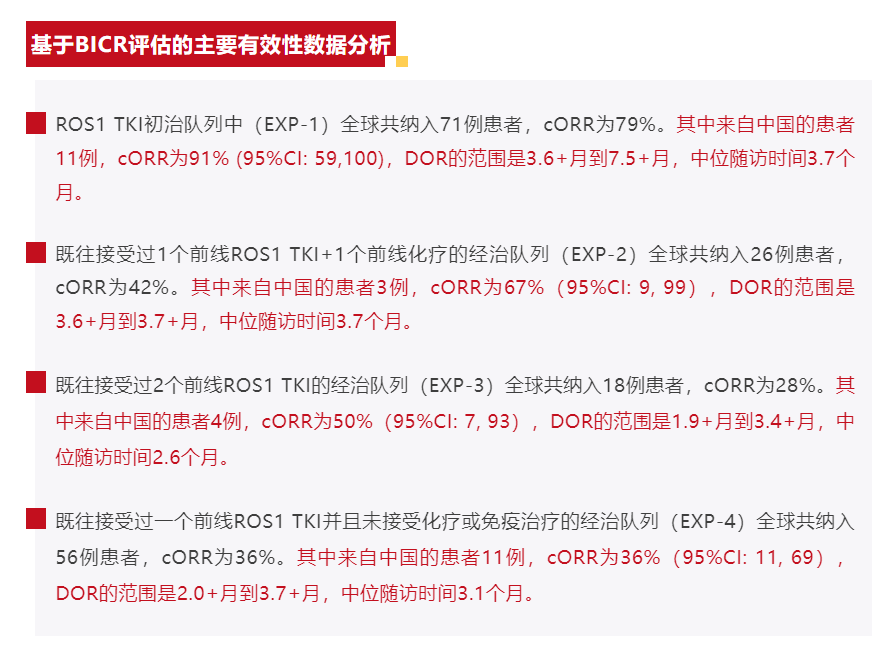 In terms of safety, Repotrectinib was generally well-tolerated in a total of 380 patients, with its safety and tolerability consistent with previously reported results. The most common adverse event during treatment was dizziness, with an overall incidence rate of 61%, of which 76% were Grade 1 severity.Among 287 patients receiving the Phase 2 dose treatmentIn patients receiving treatment, the safety profile was consistent with the overall population.
Copyright © 2023 PHARMCUBE. All Rights Reserved.
Welcome to forward, share and reasonably cite. When citing, please clearly indicate the source of the article;For reprint, please leave a message or send a message to the WeChat Official Account backend, and indicate the name and ID of the official account.
Disclaimer: The information in this WeChat article is for general reference only and should not be used directly as decision-making content. PharmaCube assumes no responsibility for any loss incurred by any party due to the use of the content herein.
PharmaCube Reader Survey Questionnaire
Thank You for Your Support. We Look Forward to Your Feedback.
Scan the QR code to provide valuable suggestions